
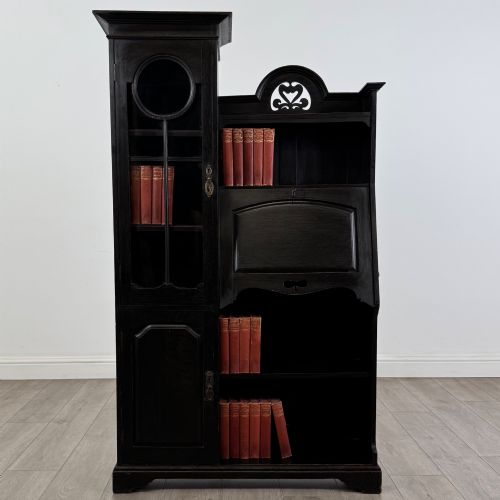
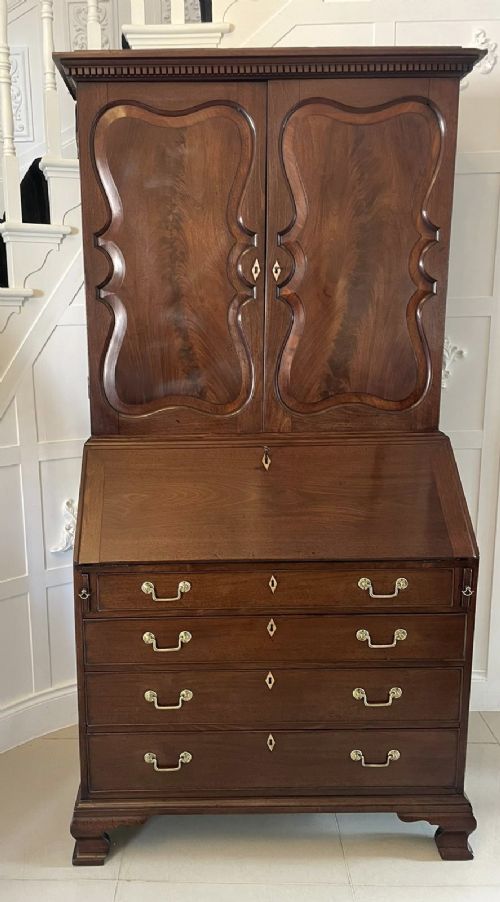
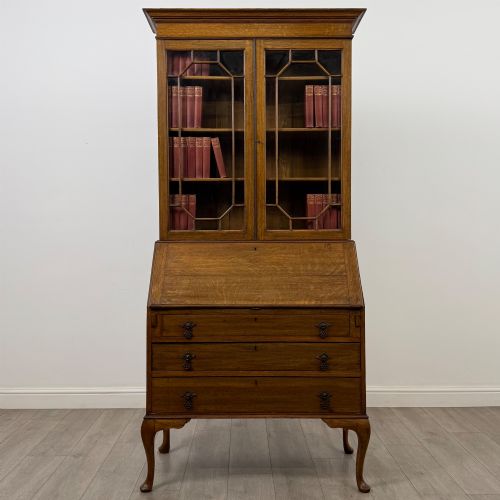
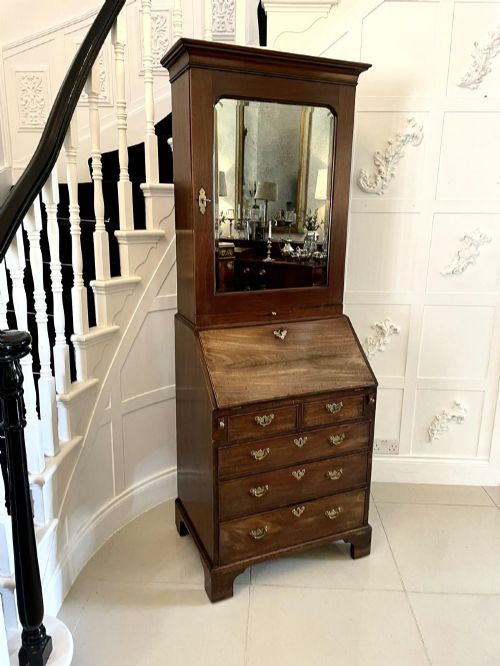


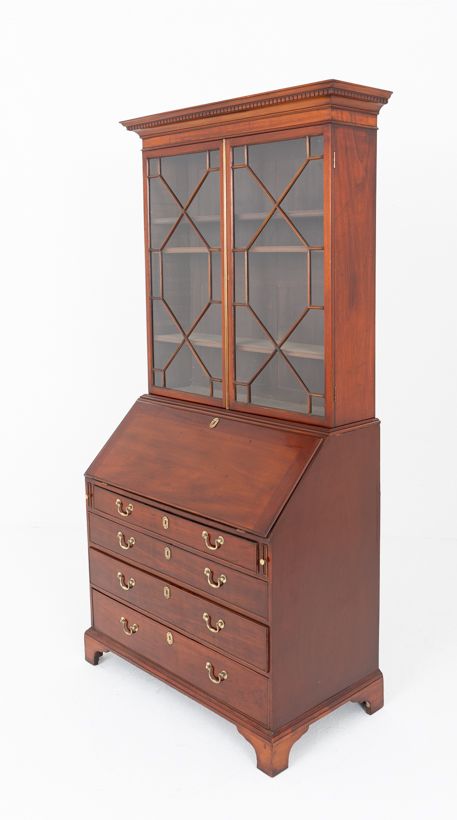
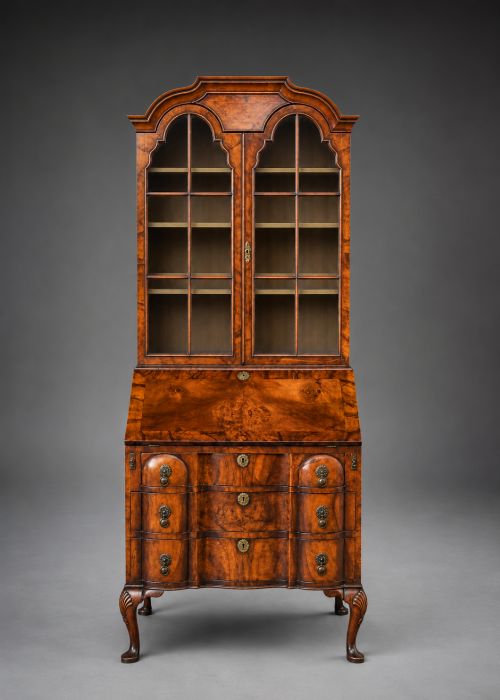
Slant Front Bureau Bookcase
A slant front bureau bookcase combines a writing slope and a shelved cabinet, offering concealed workspace and display storage in a single architectural piece.
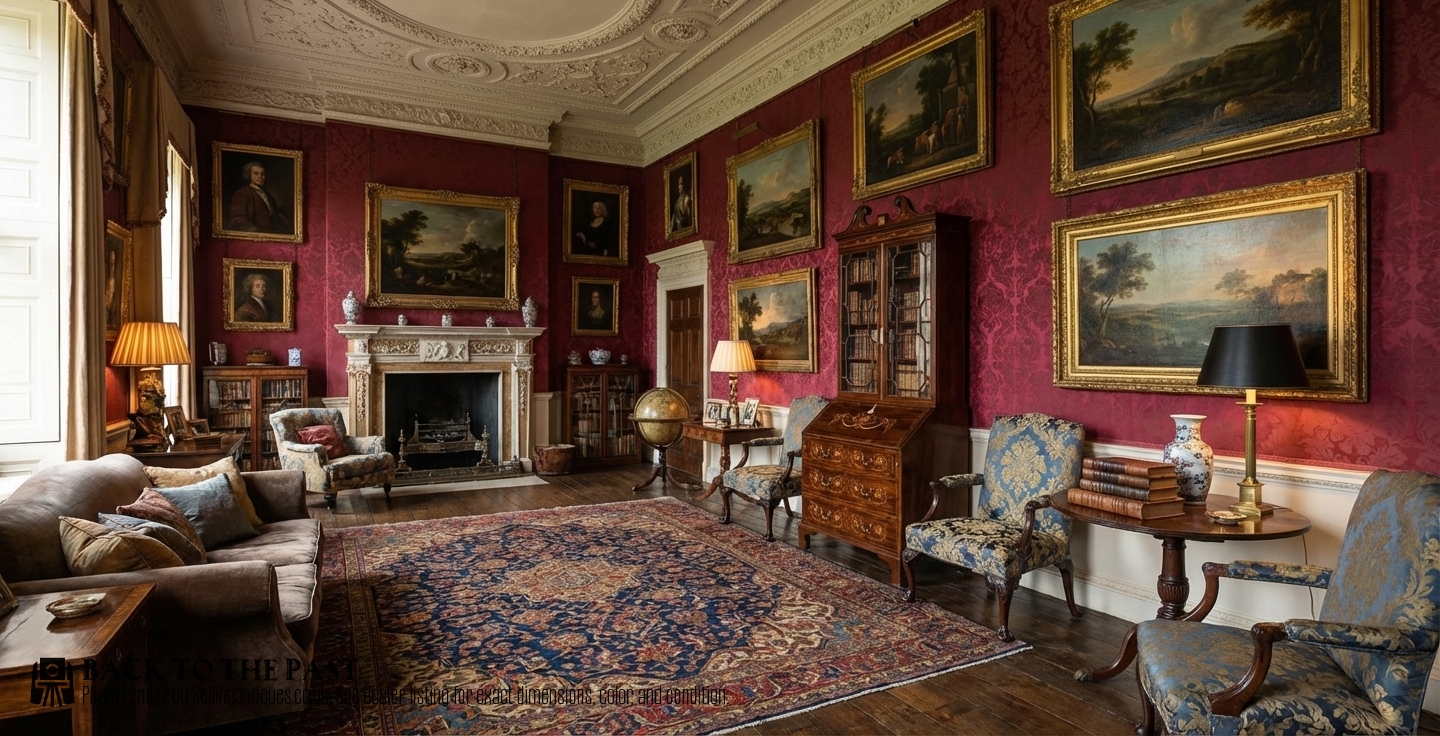
Slant Front Bureau Bookcase
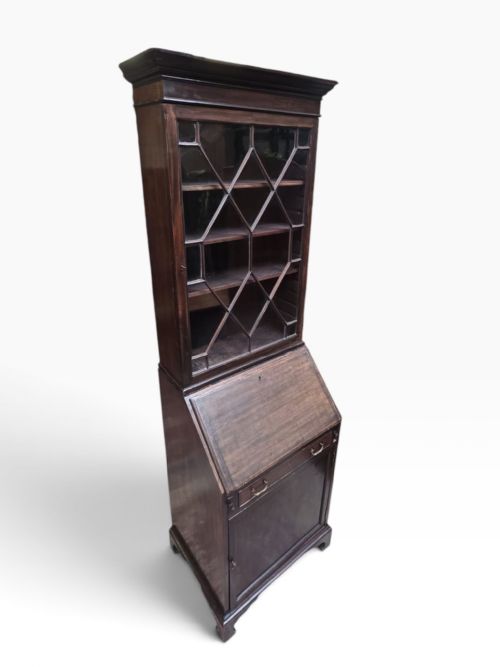
A slant front bureau bookcase pairs an upper glazed or panelled cabinet with a lower section featuring a sloping fall-front desk. This dual-purpose furniture evolved to house libraries while providing a private writing surface that conceals papers when closed.
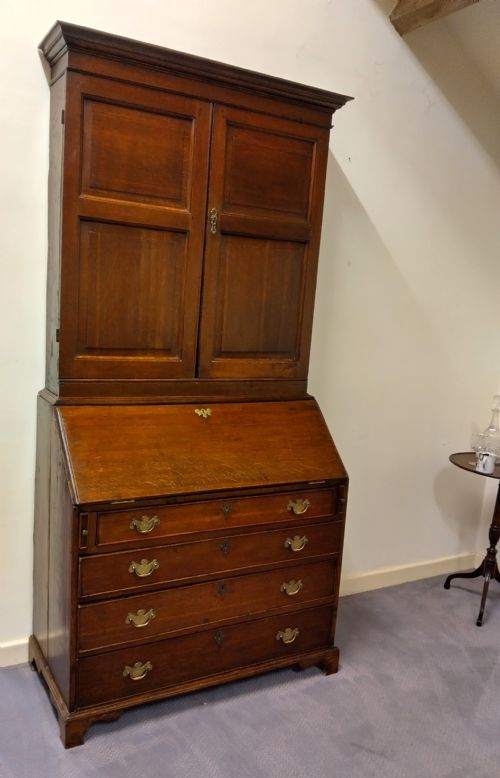
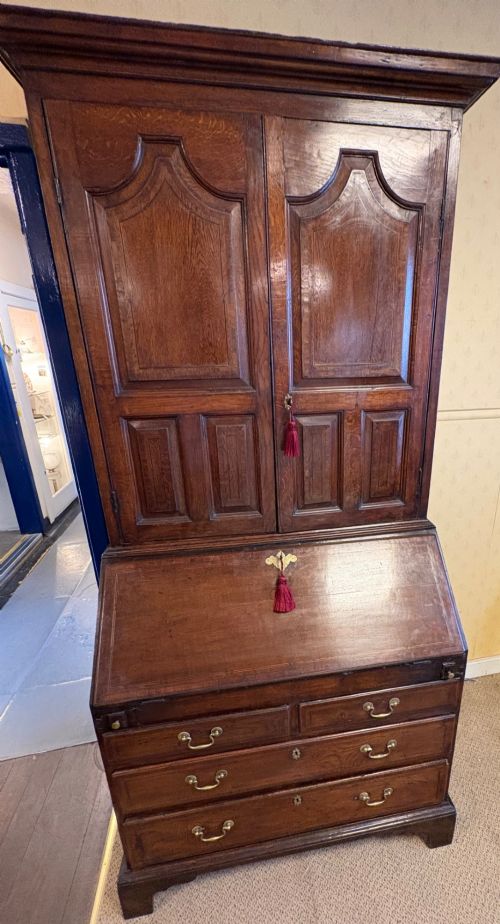
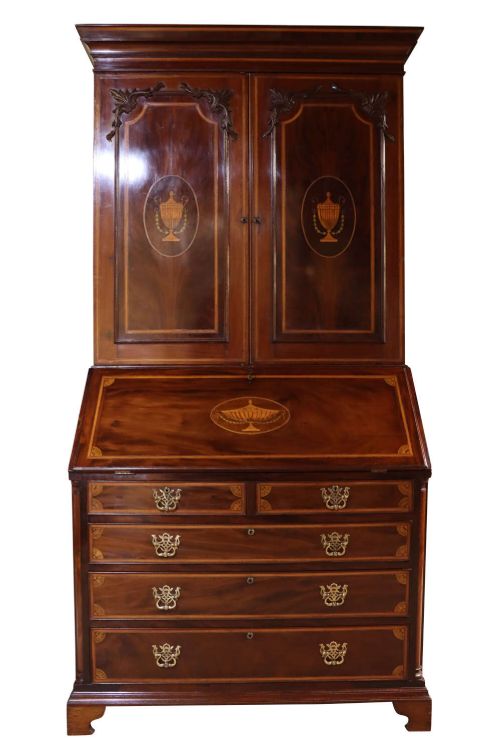
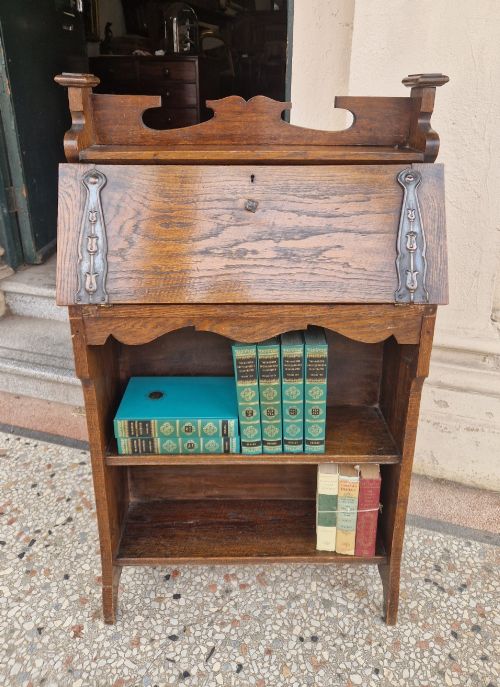
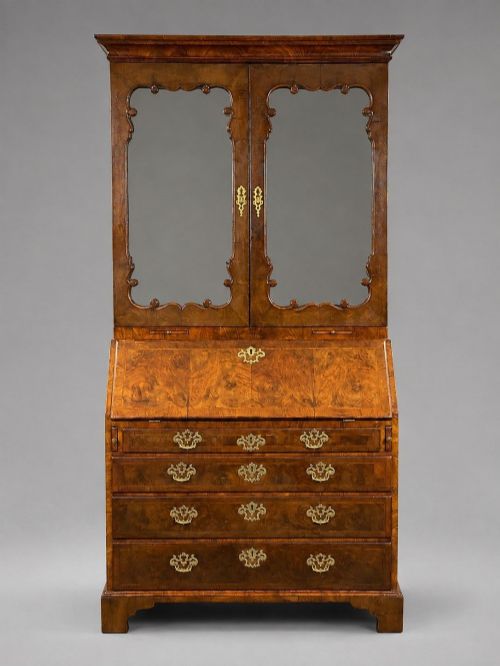
The versions most frequently encountered range from eighteenth-century walnut and mahogany examples to Edwardian and later oak iterations. Formats vary from tall, imposing three-section carcasses down to neat proportions intended for more modest rooms.
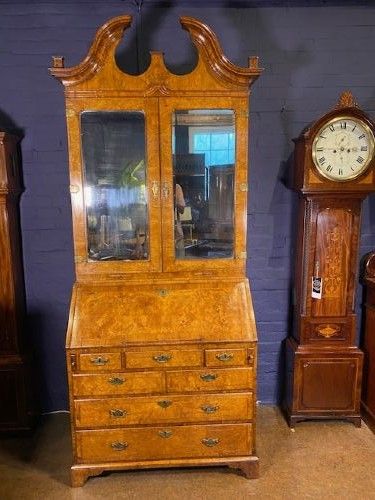
Originating in periods spanning the seventeenth through to the twentieth century, these pieces encompass formal Georgian proportions, Queen Anne burr walnut, and later revivals including Jacobean and Arts and Crafts styles.
Materials and construction
Cabinetmakers constructed these pieces primarily using dense timbers such as oak, mahogany, and walnut, often applying decorative veneers like burr walnut or tulipwood over secondary woods. Figured grain patterns and subtle wood inlay provided visual richness without relying on excessive carving.
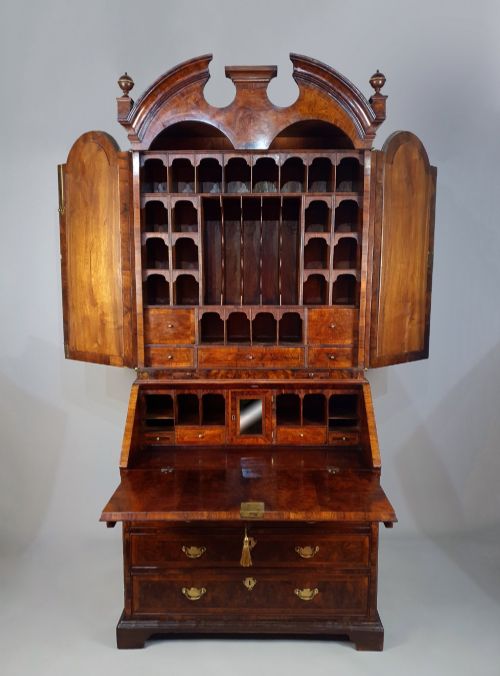
Upper cabinets incorporate glazed doors to protect bound volumes, while the lower slant front opens to reveal fitted interiors containing pigeonholes, small drawers, and occasionally secret compartments. Brass hardware such as escutcheons, hinges, and carrying handles reinforced structural joints and added functional contrast.
Listings feature pieces spanning from the seventeenth century through the Edwardian era, constructed in oak, walnut, mahogany, and yew wood.
Assessing craftsmanship and proportion
Quality reveals itself in the selection of timber veneers and the continuity of grain across the fall-front flap and drawer fronts. Superior examples demonstrate precise dovetail joinery in the drawer construction and well-balanced architectural proportions across the upper and lower sections.
Fitted desk interiors indicate the tier of a piece; simple compartments contrast with intricate stepped drawers, sliding wells, and candle slides that pull out beneath the upper cabinet. The integration of original brasses and clean glass panes within the bookcase doors further separates utilitarian workshop output from master cabinet work.
The Slant Front Bureau Bookcase Glossary
- Slant front
- The angled hinged writing flap that folds down to create a horizontal desk surface. When closed, it protects the fitted interior from dust and prying eyes.
- Fitted interior
- The arrangement of small drawers, pigeonholes, and central compartments revealed when the bureau flap is opened. These compartments often include secret locking drawers.
- Glazed top
- The upper bookcase section enclosed by glass-paned doors. This design allows books and porcelain to be displayed while remaining protected.
- Burr walnut
- Timber harvested from walnut tree growths, producing swirling, highly figured grain patterns prized for cabinet fronts. It defines much of the finest Queen Anne and Georgian furniture.
- Candle slide
- A pull-out wooden board mounted beneath the upper bookcase doors. These slides historically held tapers to illuminate the writing surface below.
Slant Front Bureau Bookcase: Frequently Asked Questions
How do I use a bureau bookcase today?
The drop-down desk surface provides a compact writing or laptop station that shuts away paperwork at the end of the day. The upper glass shelves serve to display books, ceramics, or collections while keeping them dust-free.
Lower drawers offer practical storage for household items, making these pieces suitable for living rooms, studies, or bedrooms where floor space is at a premium.
How do I distinguish George I from George III pieces?
George I pieces frequently utilise figured walnut veneers, herring-bone banding, and smaller proportions with bracket feet. The focus rests heavily on rich grain patterns and meticulous interior compartment layouts.
George III examples transition towards solid or veneered mahogany, occasionally featuring satinwood stringing and inlay. Their overall architectural lines often appear sharper, reflecting neoclassical design shifts.
Are the desk interiors always original?
Most fitted interiors remain intact because they are built directly into the carcass framework behind the fall-front. Minor repairs to small drawer runners or interior dividers can occur over centuries of use.
Significant alterations, such as converted television spaces or replaced writing leather, are usually evident upon closer inspection of the wood colour and joinery inside the desk well.
What is the purpose of candle slides?
Candle slides pull forward from the panel beneath the upper bookcase doors to hold lighting before electricity existed. They positioned illumination directly over the writing slope without dripping wax onto papers.
They appear primarily on walnut and mahogany bureau bookcases from the eighteenth century, serving as a reliable indicator of period functionality.