
Six Oak Dining Chairs
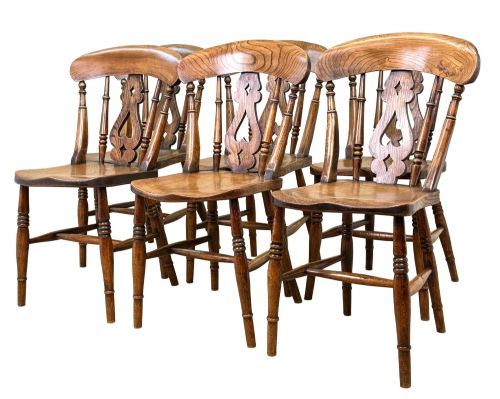
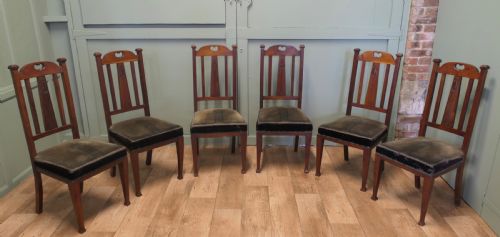
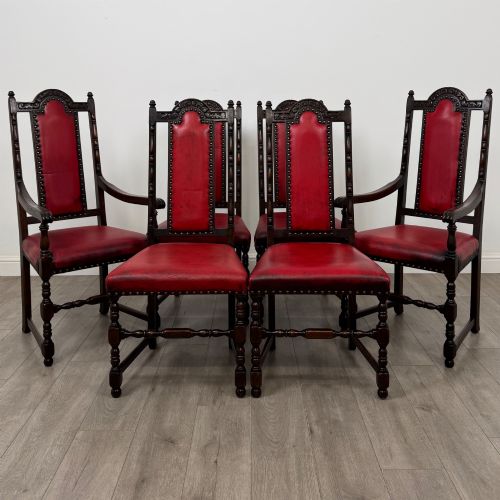
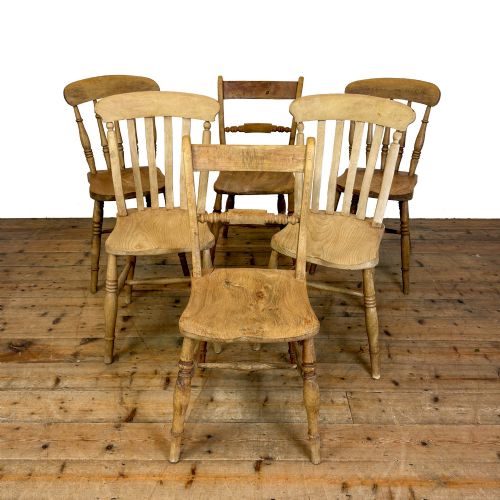
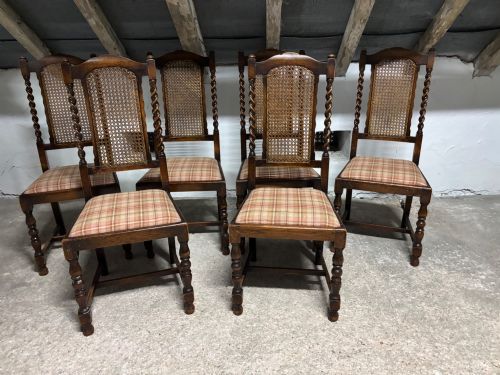
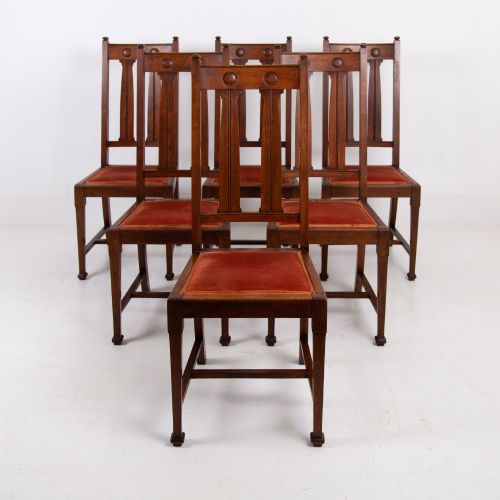
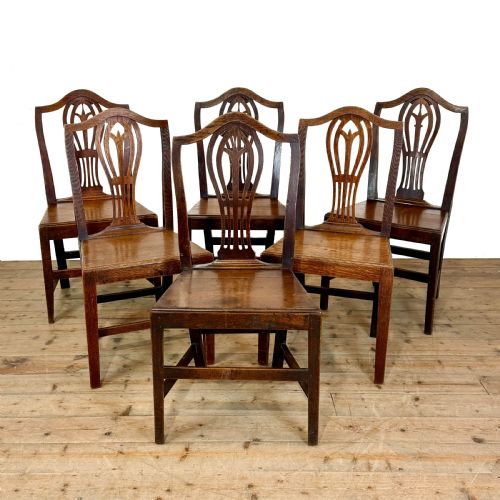
When buying six oak dining chairs, you are looking at sets spanning country kitchens to Arts and Crafts dining rooms.
Six Oak Dining Chairs
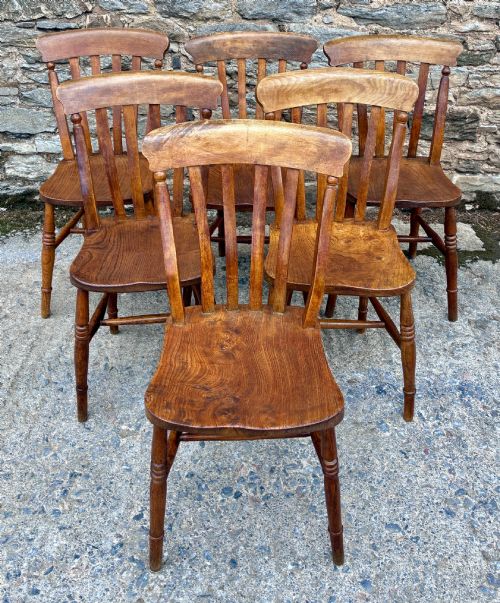
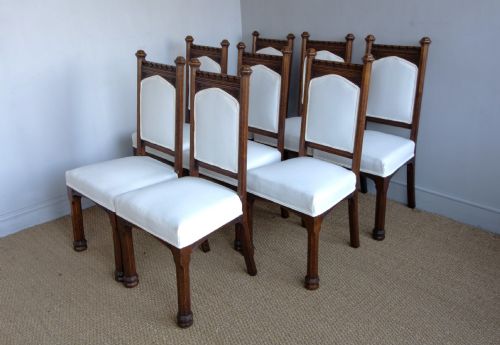
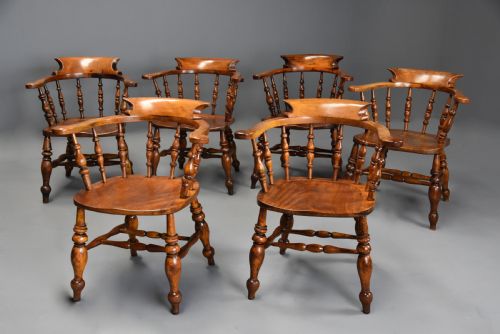
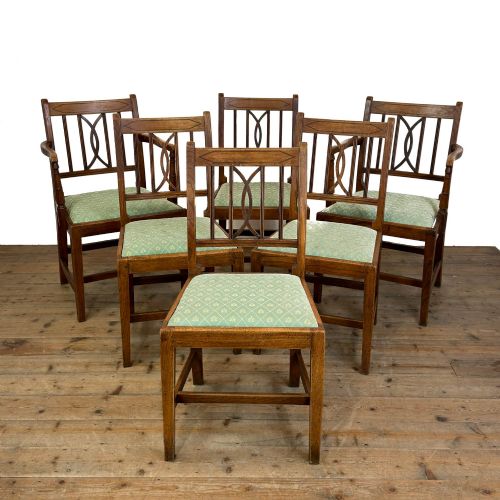
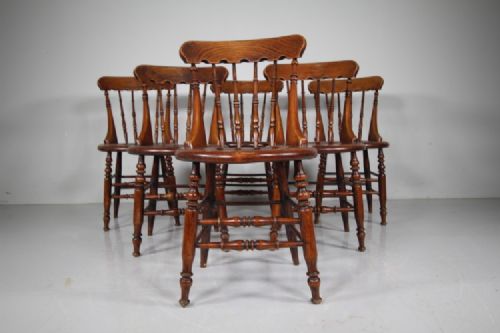
Six oak dining chairs bring together matching seating intended for the dining table, sourced from periods ranging from the nineteenth century into the twentieth century. These sets include country farmhouse ladder backs, Windsor kitchen chairs, and revival styles reflecting Jacobean, Gothic, and Tudor influences.
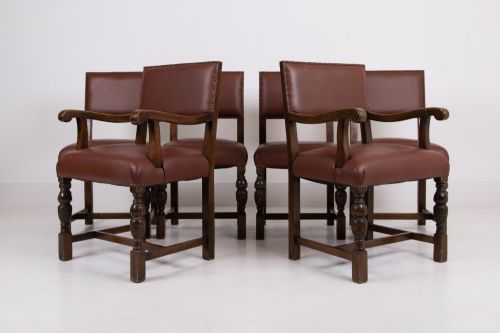
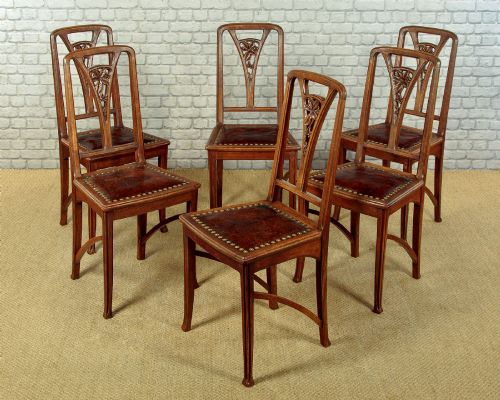
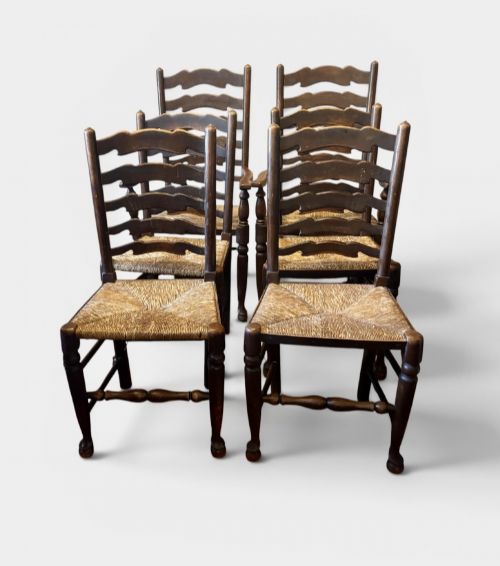
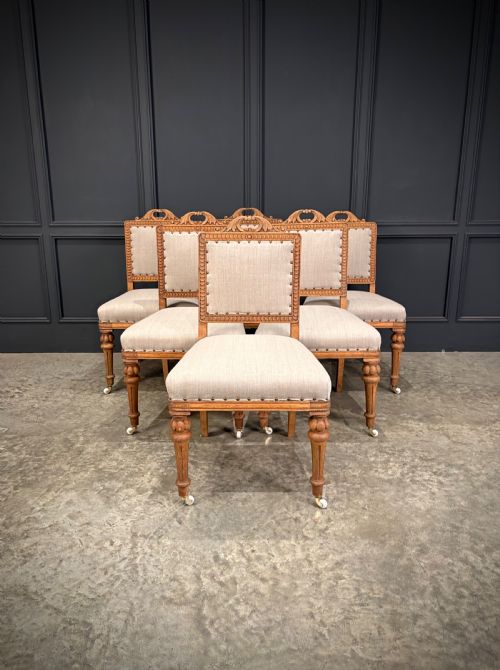
Buyers frequently encounter English country designs alongside Arts and Crafts creations and matched sets assembled from rural workshops. The groupings range from rush-seated ladder backs to leather-padded seats and carved oak frames.
Origins span English, Welsh, French, and Scottish makers, encompassing both utilitarian kitchen seating and refined parlour dining suites. Sets often feature armchairs alongside side chairs, providing complete seating arrangements for the dining room.
What varies in quality
The distinction between ordinary and superior sets lies in the integrity of the timber selection and the retention of a true, matching uniformity across all six pieces. Sets carved from quarter-sawn oak displaying strong medullary rays command greater appreciation than those fashioned from plain boards.
Originality of surface finish and uncompromised structural joinery separate untouched examples from those heavily restored or married together from disparate sources over time. Maker attribution, through labels or distinctive regional regional construction, further elevates a set.
Design styles span English country farmhouse, Gothic revival, Arts and Crafts, and French Louis XV vernacular forms.
LAMBS of MANCHESTER·CHARLES BEVAN·Heals of London·Mouseman·Gordon Russell·Fritz Hansen
The Six Oak Dining Chairs Glossary
- Ladder back
- A chair back featuring multiple horizontal arched slats between the upright rear posts. This form is common in country and vernacular seating.
- Windsor
- A chair constructed with a solid wooden seat into which the legs, back spindles, and bow are separately dowelled. These sturdy chairs originated in rural workshops.
- Arts and Crafts
- A design movement prioritising honest construction, visible joinery, and natural materials over mass-produced ornamentation. Pieces from this tradition often highlight the grain of the oak.
- Lathe back
- A chair back constructed with turned spindles or vertical slats shaped on a woodturning lathe. This style appears frequently in nineteenth-century kitchen seating.
- Rush seat
- A seating platform woven from dried marsh rushes around a wooden frame. It provides a flexible and durable surface found traditionally on country chairs.
- Jacobean Revival
- A nineteenth-century style imitating seventeenth-century furniture forms, characterised by heavy turned legs, carved strapwork, and rectilinear frames.
Six Oak Dining Chairs: Frequently Asked Questions
Are six oak dining chairs suitable for daily family use?
Solid oak construction provides exceptional durability, making these chairs well-suited for everyday dining table use.
Traditional joinery methods ensure the frames withstand regular movement and weight over decades.
How do I identify a matched set versus a true set of six?
True sets share identical wood grain patterns, tool marks, and wear characteristics across all six frames from the same workshop.
Matched sets bring together individual chairs of similar style and period assembled by dealers to make up the required number.
How should I care for antique oak and leather seats?
Maintain the timber by applying a quality beeswax periodically to nourish the grain and preserve the original surface sheen.
Treat leather pads with suitable conditioners to prevent cracking while keeping them away from direct heat sources.
What is the difference between Windsor and ladder back chairs?
Windsor chairs utilise a solid shaped seat base with inserted spindles and a bentwood bow back for ergonomic support.
Ladder back chairs rely on post-and-rung framing with horizontal wooden slats forming the back support.