

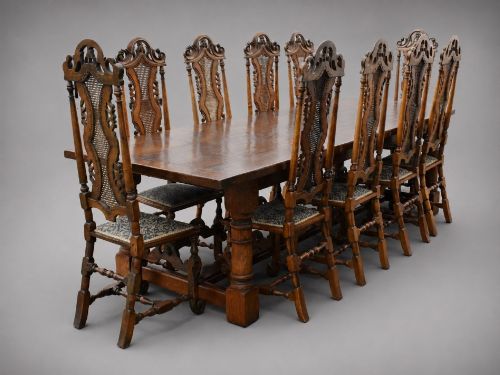
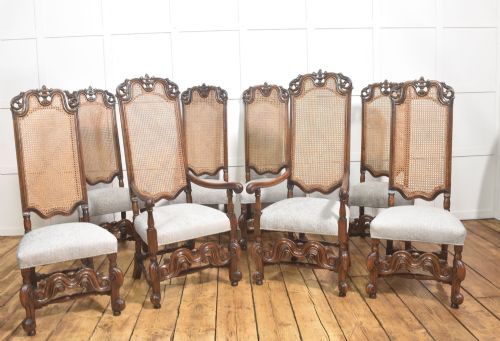
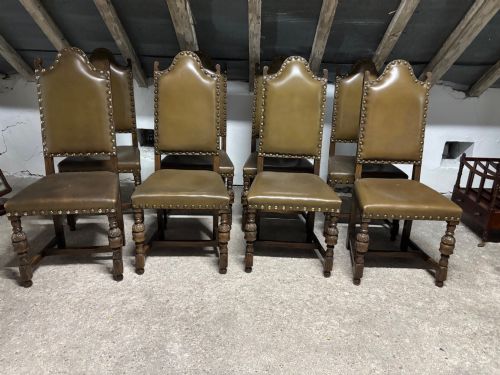
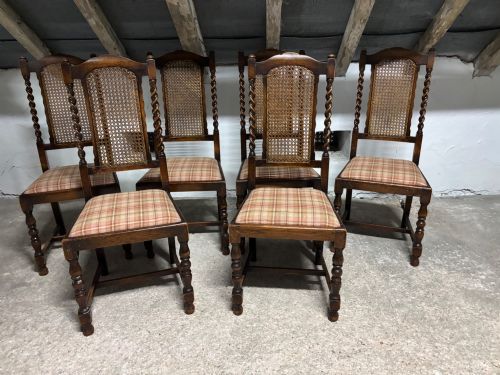





Carolean Style Dining Chairs
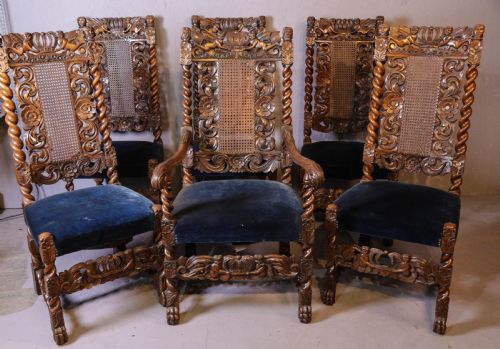
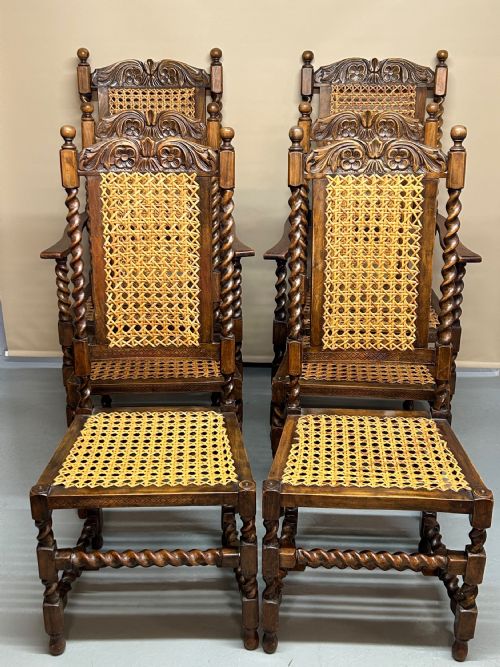
Carolean style dining chairs bring grand 17th-century carved frames and high backs to the table.
Carolean Style Dining Chairs
The materials span sturdy oak and rich walnut, often paired with cane, woven rattan, or upholstered panels of leather, fabric, and velvet. These pieces echo the aesthetics of Jacobean, Queen Anne, and Restoration revivals while maintaining the distinct towering proportions characteristic of the look.
Evaluating Quality
Quality rests upon the depth and crispness of the carved ornamentation, distinguishing sharp, hand-tooled execution from softer, mass-produced moulding. The integrity of the timber framing, particularly the weight and seasoning of the oak or walnut, dictates long-term stability.
The choice of secondary materials also alters the character, where tightly woven cane or fine leather upholstery elevates the piece above simpler variations. Consistency across a set marks the distinction between matched historical assemblies and later gathered groupings.
Listings span periods from the seventeenth century through Victorian revivals and the nineteen-twenties, utilising oak and walnut.
The Carolean Style Dining Chairs Glossary
- Carolean
- The decorative style associated with the reign of King Charles II, marked by lavish carving, scrolls, and crown motifs. This aesthetic saw major revivals during the Victorian and Edwardian eras.
- Cane
- Woven rattan material used for chair backs and seats. It offers flexibility and a lighter visual weight within heavy wooden frames.
- High-Back
- A chair proportion featuring an elongated vertical backrest designed to show off elaborate crest rails and carved panels. Such forms dominate seventeenth-century revival seating.
- Jacobean Revival
- A nineteenth-century design movement mimicking the heavy, rectilinear furniture of the early seventeenth century. It frequently overlaps with Carolean styles in dining sets.
- Bergere
- An enclosed upholstered or caned chair style featuring woven panels set into a wooden frame. These appear in several revival dining chair variations.
Carolean Style Dining Chairs: Frequently Asked Questions
How do I spot a true Carolean chair?
Authentic pieces from the seventeenth century utilise period construction methods, native timbers like unbleached oak or walnut, and patination acquired over centuries of use.
Revival pieces, conversely, often show nineteenth or twentieth-century tool marks and standardised turnings beneath the historical styling.
Are these chairs comfortable for daily dining?
The high straight backs provide firm upright support, though the lack of deep padding differs significantly from modern seating.
Sets featuring upholstered pads or flexible caned panels offer more give during long periods at the table.
How should I care for caned backs?
Caned panels require occasional light dusting and humidity control to prevent the natural rattan from becoming brittle and snapping.
Avoid placing these chairs directly against heat sources that dry out the woven material.