




Carolean Revival Dining Chairs
Carolean revival dining chairs bring the high backs and elaborate scrolling work of the seventeenth century into later dining rooms.
Carolean Revival Dining Chairs
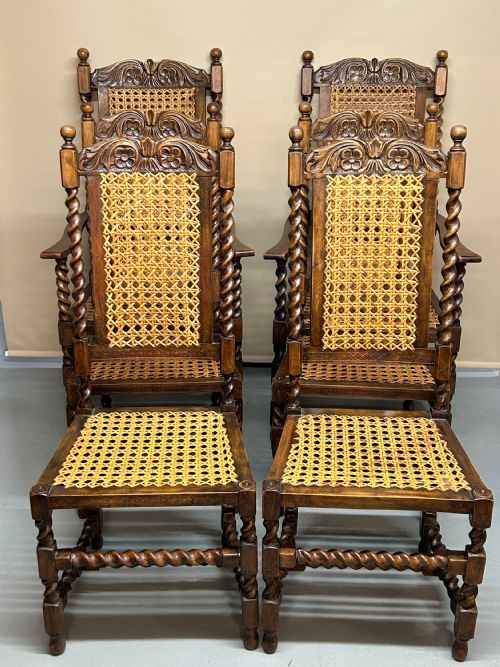
These carolean revival dining chairs take their cues from seventeenth-century seating, typically offering high backs and turned supports for formal dining spaces. You will encounter various forms across this selection, ranging from individual side chairs to large sets suited for a full dining table.
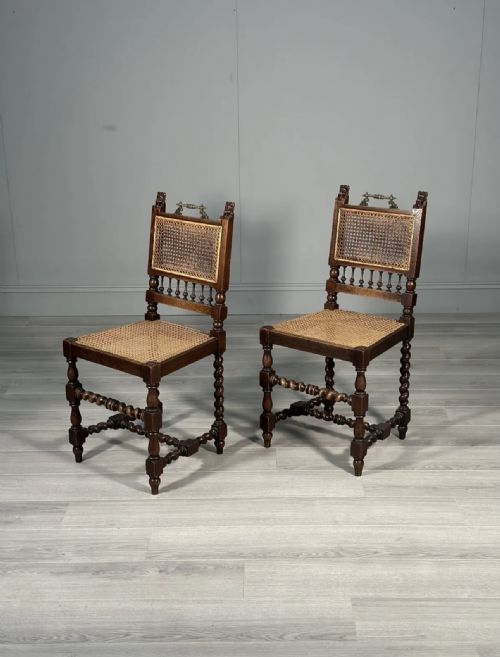
The materials and periods span widely, drawing heavily on nineteenth-century and early twentieth-century interpretations in oak and walnut. Makers often turned to cane, velvet, and fabric to finish seats and backs, echoing earlier seventeenth-century methods.
How they were made
Carpenters relied primarily on solid oak and walnut timber, shaping the frames through detailed carving and traditional joinery. Many examples incorporate cane work or upholstered pads in velvet and fabric, secured with brass detailing.
Surface treatments range from dark finishes to bleached wood and ebonisation, reflecting the shifting tastes of the nineteenth and early twentieth centuries.
Carolean Revival Dining Chairs Retail Price Guide 2026
Typical asking prices for carolean revival dining chairs among the pieces listed under this phrase on Sellingantiques today, from the lower quarter to the upper quarter. They describe what is for sale here now, not the wider market.
Several chairs feature exceptionally tall backs designed to catch the eye and block cold drafts in high-ceilinged rooms.
What varies in quality
Depth and crispness of the carved ornamentation separate standard production from finer work, particularly along the crest rails and front stretchers. The choice of primary timber, whether dense walnut or figured oak, also dictates the calibre of the piece.
Integrity of the structural joints and the execution of turned elements determine how well a chair withstands daily use around a dining table.
The Carolean Revival Dining Chairs Glossary
- Crest rail
- The top horizontal member of a chair back, frequently carved with scrolls or crest motifs in revival seating.
- Stretcher
- A horizontal timber connecting the legs of a chair to provide structural stability and rigidity.
- Cane
- Woven rattan material used to form breathable seat panels or chair backs.
- Ebonisation
- A chemical or pigment treatment applied to timber to imitate the appearance of expensive ebony.
Carolean Revival Dining Chairs: Frequently Asked Questions
How do I care for cane seats?
Keep cane panels clean with a slightly damp cloth to prevent the natural fibres from becoming brittle over time.
Avoid placing these chairs near direct heat sources that might dry out the wood and woven elements.
Are these chairs comfortable for long dinners?
High-backed styles offer substantial upper back support, though comfort largely depends on whether the seat is cushioned with upholstery or fitted with cane.
Adding loose squab cushions can improve comfort without altering the historic appearance of the timber frame.
How do I distinguish revival pieces from seventeenth-century originals?
Revival chairs generally display nineteenth or twentieth-century secondary timbers, machine-turned elements, and standardised joinery methods.
Tool marks and wear patterns on true seventeenth-century pieces differ significantly from later revival production.
Can I mix these with modern dining tables?
The strong architectural silhouettes and dark woods of carolean revival dining chairs pair effectively with clean, contemporary table designs.
Their striking high backs create a deliberate visual contrast in a modern interior.