




Twist Leg Chairs
Twist leg chairs bring tactile warmth to a room, offering sturdy seating carved with spiral turnings from the Georgian, Victorian, and later periods.
Twist Leg Chairs
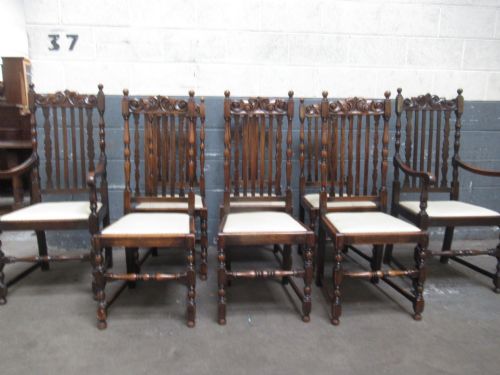
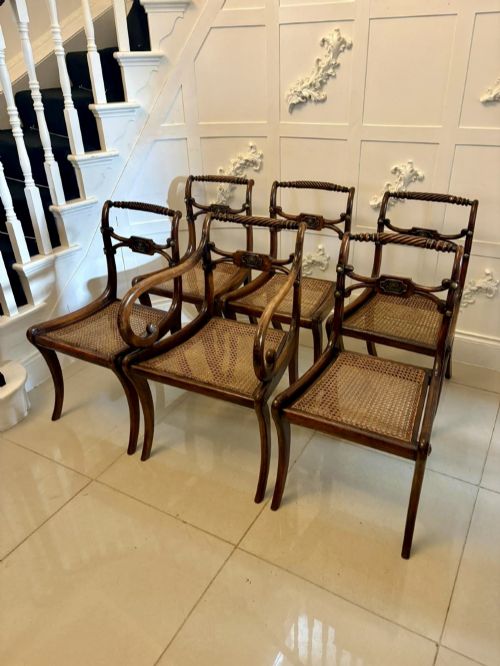
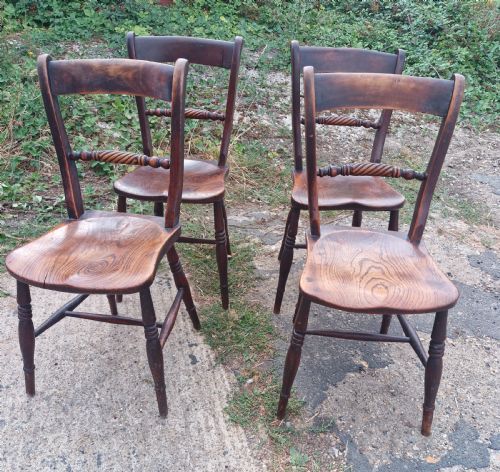
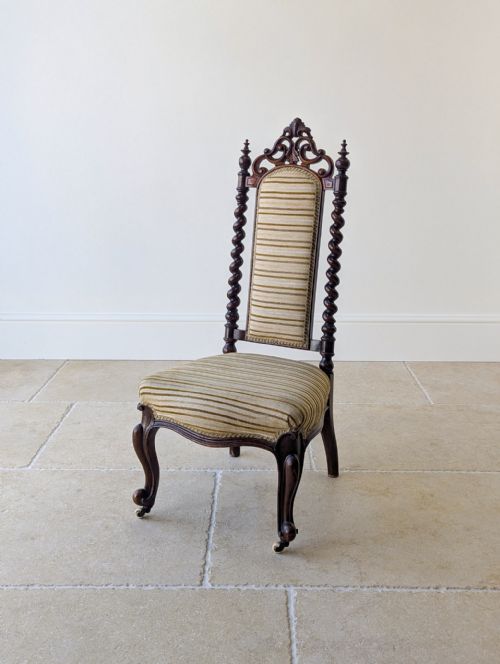
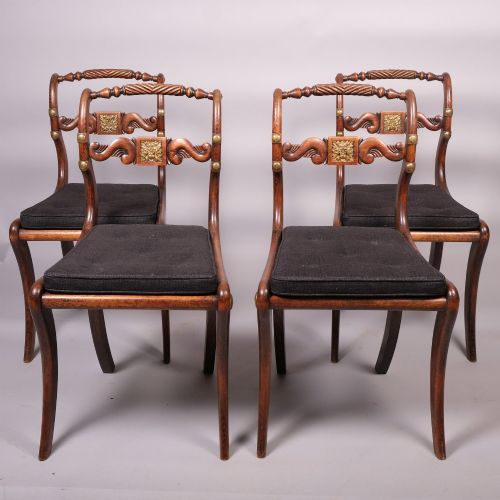
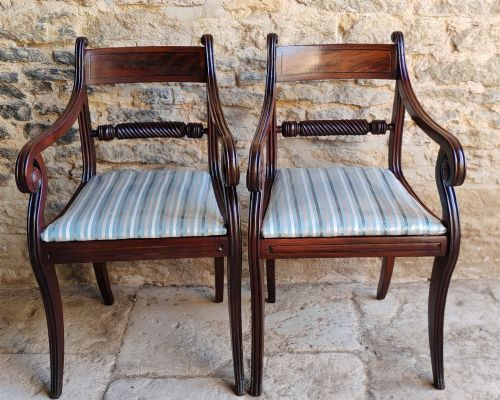
Twist leg chairs encompass seating designed with spiral-turned supports, appearing across dining chairs, carvers, armchairs, and stools. The selection spans formal mahogany Regency sets to robust oak and ash seating from the Victorian and Edwardian eras.
Buyers most frequently encounter dining sets and occasional chairs rendered in oak or mahogany, featuring either timber panels, cane work, or upholstered seats. These pieces range from simple country farmhouse designs to more elaborate revival styles.
What Varies in Quality
The definition and depth of the spiral carving separate standard workshop output from finer examples, with crisper turns reflecting greater skill. Timber selection also dictates grade, where dense, well-figured mahogany or quarter-sawn oak elevates the piece.
Original structural integrity and the retention of period components, such as matching frames and authentic cane or upholstery foundations, determine the standing of individual chairs within a set.
Liberty & Co
The Twist Leg Chairs Glossary
- Carver chair
- An armchair designed with open sides, traditionally placed at the head of a dining table. These pieces match smaller side chairs in a larger set.
- Barley twist
- A spiral turning resembling a stalk of barley, carved into table legs and chair supports. This decorative motif appears prominently in Jacobean revival and later pieces.
- Caning
- A seating material woven from peeled rattan strips, providing a flexible and light surface. It is frequently found on Regency and Edwardian chair seats and backs.
- Simulated rosewood
- A painted or stained finish applied to a lighter timber to imitate the rich grain of genuine rosewood. Cabinetmakers utilised this technique during the Regency period.
Twist Leg Chairs: Frequently Asked Questions
How do I date twist leg chairs?
Dating relies on identifying timber species, construction methods, and stylistic cues such as the sharpness of the spiral turning. Earlier pieces often employ solid oak and pegged joints, while later revival models show different lathe techniques.
Comparing the chair's overall proportions and secondary woods against known period examples helps narrow down the decade of manufacture.
Are twist leg chairs comfortable for daily use?
Comfort varies depending on the seat type, with upholstered and bergere panels offering more padding than solid timber or cane surfaces. Armchairs and carvers provide additional support for extended sitting.
Many period chairs accommodate modern cushions or have been restored with updated webbing to improve daily comfort while retaining their original frames.
Can I mix twist leg chairs with a modern table?
Mixing these chairs with a contemporary table creates a deliberate contrast in textures, pairing sleek modern surfaces with rich timber grains and turned legs. Oak and mahogany versions adapt well to diverse interior schemes.
Matching the scale and wood tone of the chairs to the surrounding furniture ensures a cohesive arrangement in the room.
How should I care for antique wood and cane?
Maintaining these pieces involves applying appropriate beeswax to nourish the timber and keeping cane seats hydrated with a damp cloth to prevent snapping. Avoiding direct sunlight and sudden temperature changes protects the finish.
Routine dusting with a soft cloth preserves the surface without buildup, ensuring the carved turnings remain clear.