
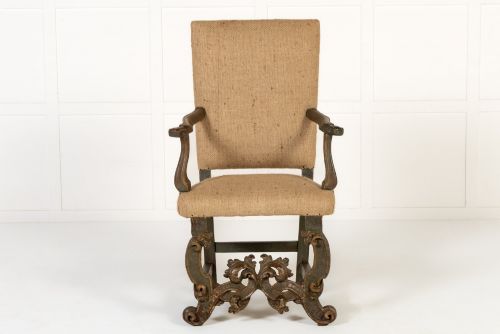
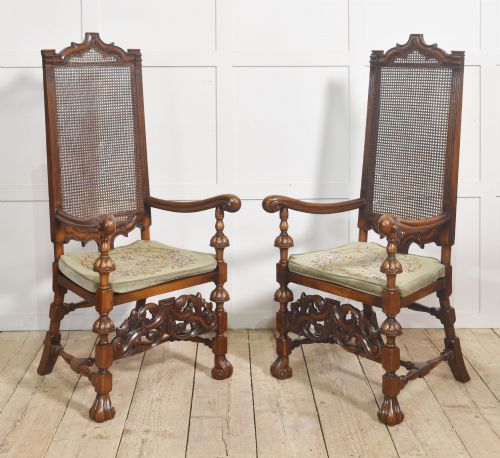
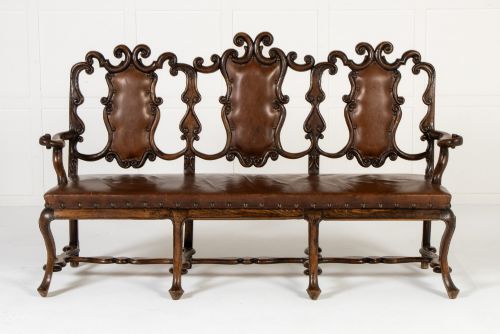
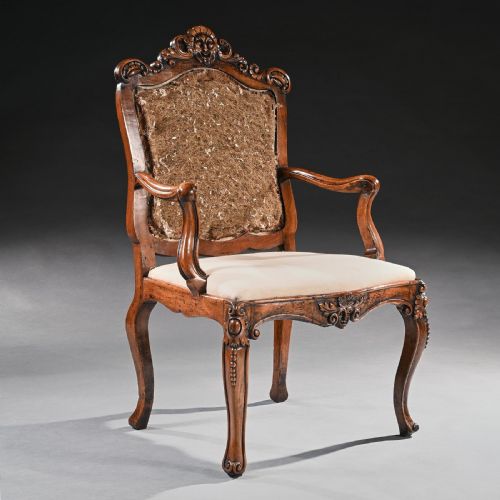

Baroque Carved Walnut Chairs
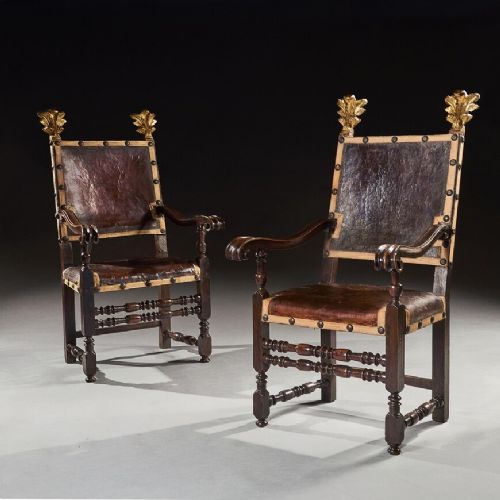
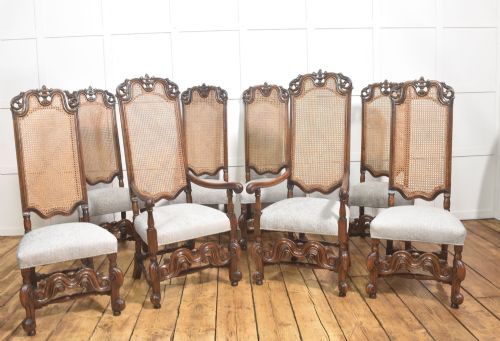
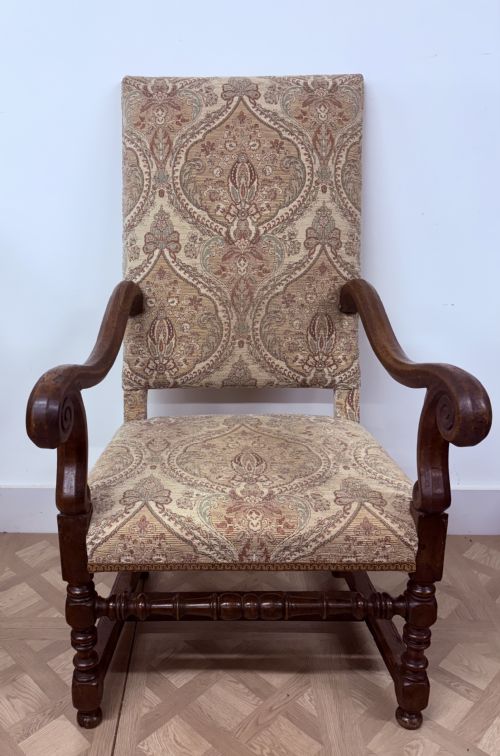
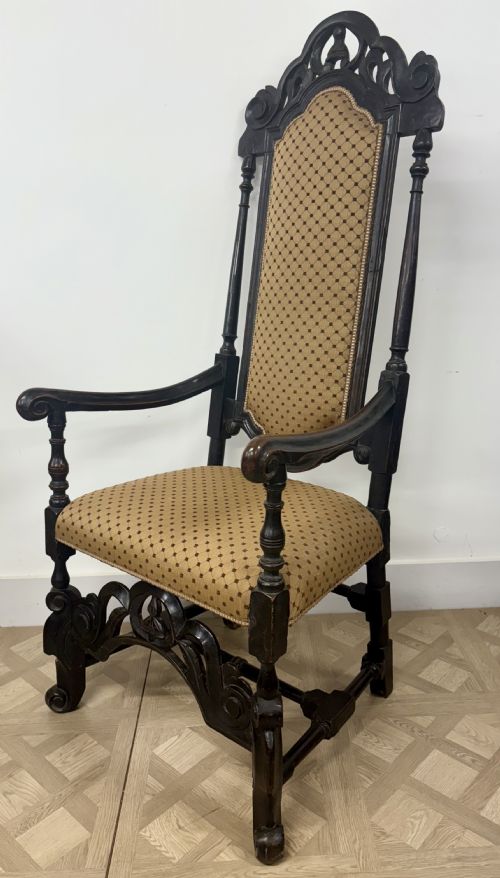
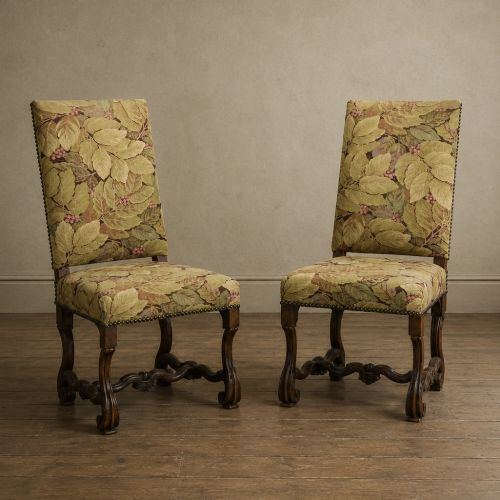
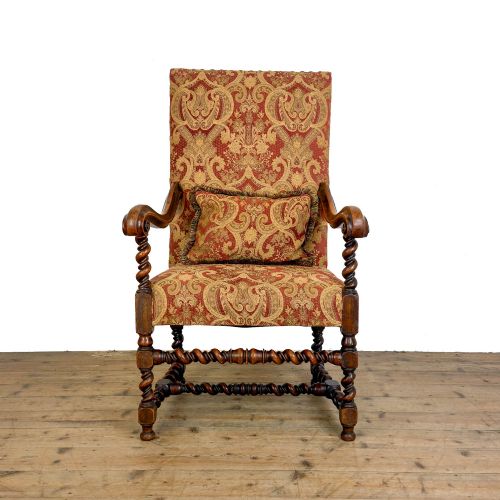
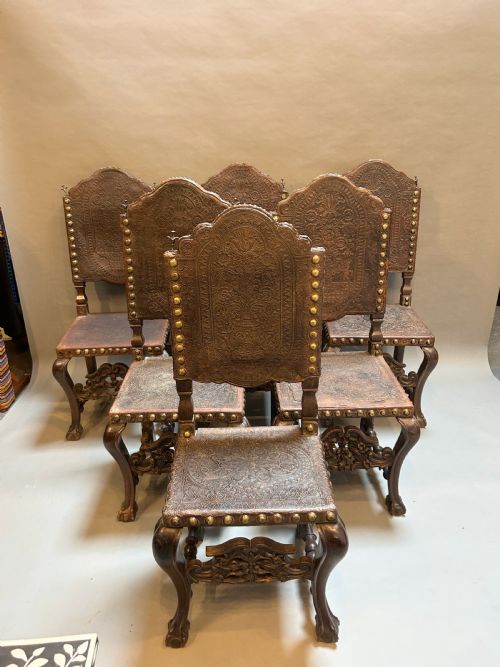
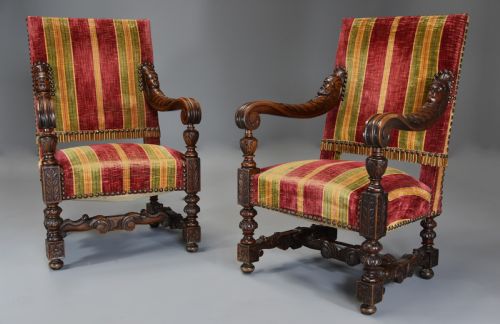
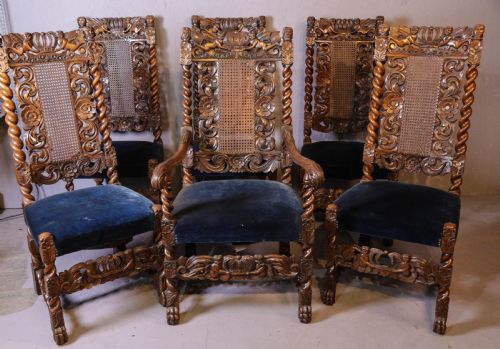
These baroque carved walnut chairs bring heavy carved detail, cane, and rich upholstery from the seventeenth century and its later revivals into any room.
Baroque Carved Walnut Chairs
Baroque carved walnut chairs encompass high-back armchairs, dining chairs, side chairs, and settees originating from seventeenth-century workshops through to nineteenth-century revival movements. A buyer searching this phrase encounters pieces drawing on Italian, French, English Carolean, and Spanish traditions, alongside later interpretations from the Victorian era and the early twentieth century.
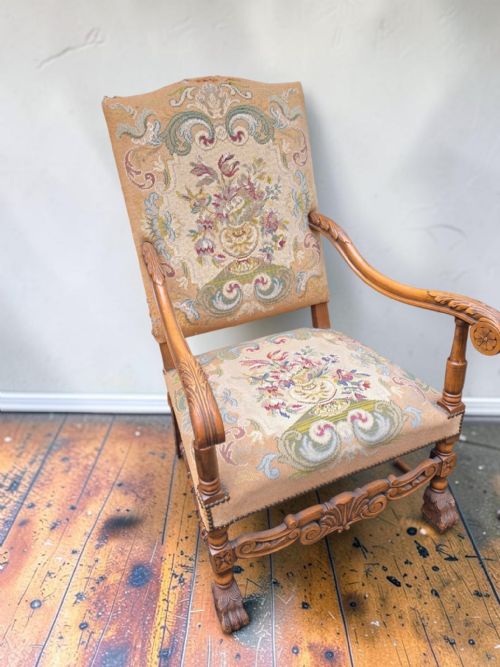
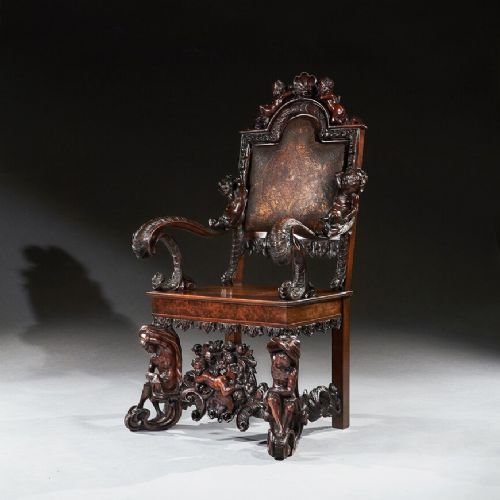
The selections available range from seventeenth-century originals with deep relief carving and caned seats to nineteenth-century revival armchairs built in the Louis XIV, William and Mary, and Italian Baroque styles. Dining chairs appear in sets alongside pairs of open armchairs and solitary throne chairs framed in solid walnut.
How They Were Made
Cabinetmakers worked with solid walnut to form sturdy frames capable of supporting elaborate chisel work, deep piercing, and sculptural scrolls. Frames frequently incorporate parcel-gilt highlights, bone inlay, or bobbin-turned supports depending on the regional workshop and period.
Upholstery methods varied from woven cane panels set into high backs to padded seats and backs covered in velvet, leather, tapestry, needlepoint, and fabric. Brass tacks often secure the textile edges to the walnut framework.
Several armchairs arrive with bone inlay, proving that historical woodworkers enjoyed a spot of unexpected flash just as much as modern ones.
What Varies in Quality
Quality depends upon the depth, crispness, and ambition of the walnut carving, separating simpler vernacular seating from exhibition-quality pieces after makers such as Andrea Brustolon. The sophistication of the overall proportion and the integrity of the original timber frame dictate the standing of each piece.
The secondary materials and upholstery execution also define the tier of the chair, ranging from standard fabric coverings to hand-worked needlepoint, tapestry, and parcel-gilt embellishments.
Andrea Brustolon
The Baroque Carved Walnut Chairs Glossary
- Parcel-Gilt
- Partially gilded with gold leaf to highlight specific carved details on the walnut frame. This technique adds contrast against the dark wood.
- Cane
- Woven rattan material used for the backs and seats of seventeenth-century chairs. It provides a light yet supportive structure.
- Carolean
- English style dating from the reign of Charles II, characterised by rich walnut carving and crown motifs. It experienced revivals during the Victorian period.
- Fauteuil
- An open-armed upholstered armchair of French origin. The wooden armrests typically feature padded elbow rests.
- Needlepoint
- Stitched textile work executed on canvas, frequently found on eighteenth-century chairs. It displays pictorial or floral patterns.
Baroque Carved Walnut Chairs: Frequently Asked Questions
How do I identify a seventeenth-century original?
Original seventeenth-century pieces display period joinery techniques, genuine wear patterns on the walnut timber, and period upholstery foundations.
Revival pieces from the nineteenth century often feature heavier proportions and machine-assisted carving details alongside later textiles.
Can I use these chairs for everyday dining?
Dining chairs and side chairs from this selection suit regular use provided the walnut frames remain structurally stable and joints are secure.
Armchairs with delicate caning or historic tapestry upholstery require more careful placement to preserve fragile materials.
What is the difference between Italian and French baroque styles?
Italian baroque chairs often exhibit theatrical, highly sculptural carving with dramatic scrolls and figures reflecting makers like Andrea Brustolon.
French baroque examples adhere more closely to courtly Louis XIV symmetry, featuring tall padded backs and structured upholstery.
How should I care for antique walnut frames?
Maintain walnut frames by dusting gently with a dry cloth and avoiding direct sunlight or rapid temperature changes that dry out the timber.
Wax polish should be applied sparingly only when the wood appears dry, avoiding any fabric or cane surfaces.