



Vintage Baroque Armchairs
These vintage baroque armchairs bring high-backed drama and carved presence into a room, offering both historical weight and deep-seated comfort.
Vintage Baroque Armchairs
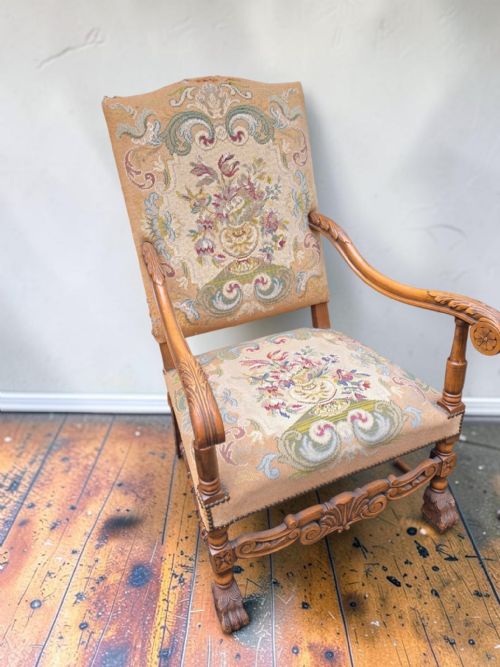
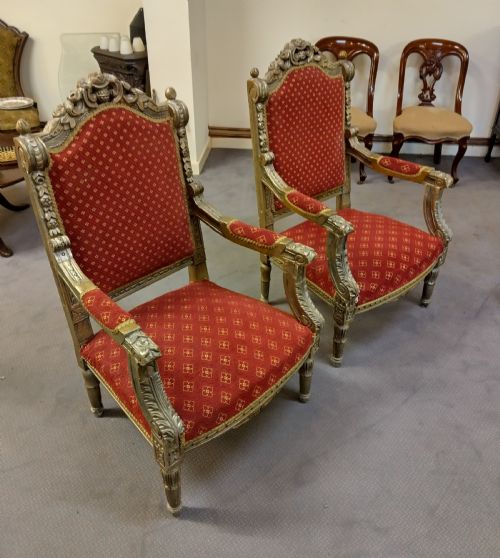
When you search for vintage baroque armchairs, you encounter grand seating rooted in historical revival movements alongside earlier centuries of craftsmanship. The selection encompasses forms ranging from heavy walnut elbow chairs to gilt finish pairs with detailed carvings.
The pieces on this page span several distinct periods, including the Victorian era, the nineteenth century, and specific years such as 1700, 1890, 1910, and 1920. You will find object types classified broadly as armchairs or dining chairs, reflecting varied domestic uses.
Stylistic influences vary widely across the inventory, moving from Baroque Revival and French Baroque Revival to Italian Baroque Revival, English and Carolean Revival, Venetian Rococo, and Anglo-Indian Baroque. This diversity means you might select an emerald silk Louis XIV style chair or a padouk wood armchair depending on your interior focus.
How they were made
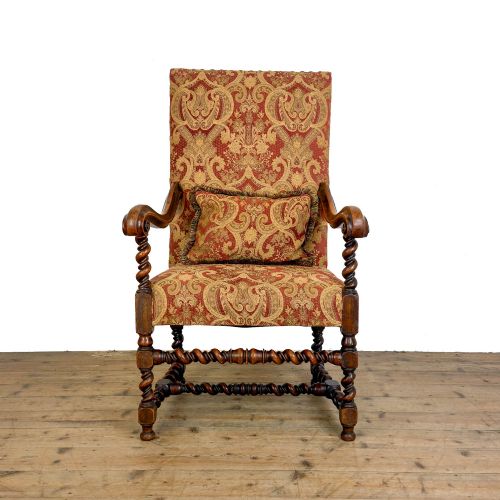
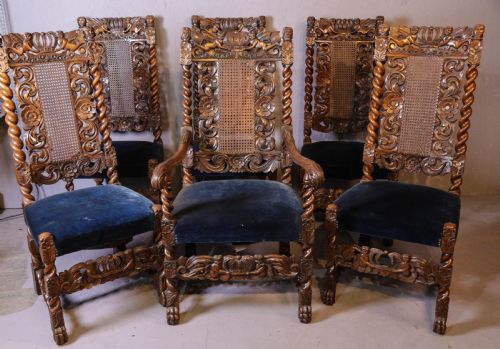
The construction of these chairs relies heavily on timber framing, predominantly utilising walnut alongside padouk wood and painted wood surfaces. Carving is a central technique, seen in heavily carved walnut frames and well-detailed decorative woodwork.
Upholstery defines the seating area, utilising materials such as tapestry, needlework, velvet, fabric, wool, and emerald silk. Structural supports also incorporate bobbin turned elements and gilt finishes to achieve the characteristic ornate appearance.
Vintage Baroque Armchairs Retail Price Guide 2026
Typical asking prices for vintage baroque armchairs among the pieces listed under this phrase on Sellingantiques today, from the lower quarter to the upper quarter. They describe what is for sale here now, not the wider market.
One chair arrives ready to debate statecraft from an emerald silk throne.
What varies in quality
The distinction between standard and superior pieces rests largely on the depth and execution of the woodwork. Heavily carved frames and well-detailed carvings indicate a higher level of artisanal input than simpler turned elements.
The choice and preservation of the covering material also alter the character of the chair. Original or period-appropriate tapestry, needlework, and silk upholstery elevate the visual and tactile depth compared to basic fabric.
The Vintage Baroque Armchairs Glossary
- Carolean Revival
- A design movement looking back to the reign of Charles II, characterised by rich walnut frames, scrolled details, and elaborate crest rails. These chairs often show strong Flemish influence.
- Giltwood
- Timber that has been coated with a thin layer of gold leaf or gilt finish. This technique creates a luminous surface that catches candlelight or natural illumination.
- Savonarola chair
- A folding armchair constructed from multiple intersecting wooden slats, forming an X-shape frame. It typically includes a wooden backrest and armrests.
- Needlework
- Hand-stitched textile work utilised for upholstery. It provides durable and highly decorative surfaces using wool or silk threads on a canvas ground.
Vintage Baroque Armchairs: Frequently Asked Questions
How do I identify a revival piece?
Revival pieces are generally identified through nineteenth-century manufacturing techniques and secondary stylistic markers. They combine earlier seventeenth-century motifs with the construction methods of later decades.
Examine the timber framing and the underside of the seat for clues regarding the period of assembly. Stylistic titles often explicitly reference the revival era or specific historical monarchs like Louis XIV.
Where were these chairs used?
These seating forms historically occupied the principal rooms of country houses and urban residences. Throne armchairs and large upholstered seats served as statement pieces for reception rooms.
Dining chairs and elbow chairs were arranged around large tables or placed along hallways. Their heavy carving and rich fabrics were designed to signal status and comfort.
How should I live with tapestry upholstery?
Living with tapestry or needlework upholstery requires careful management of light and environmental humidity. Direct sunlight can fade wool and silk threads over extended periods.
Regular, gentle surface cleaning helps maintain the integrity of the stitched fibres. Position these chairs away from direct heat sources to prevent the underlying timber and textiles from drying out.
What is a gondola chair?
A gondola chair is an upholstered seat with a curved, enclosing backrest that sweeps forward. The shape resembles the traditional Venetian boat.
This form provides an enveloping feel for the sitter. Eighteenth-century examples often combine this curved silhouette with classical carving.