

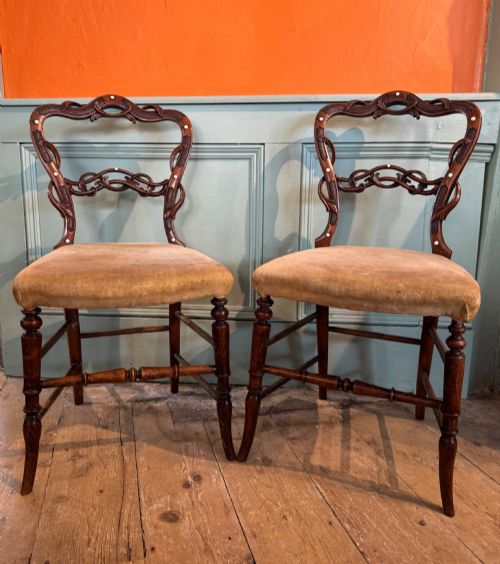
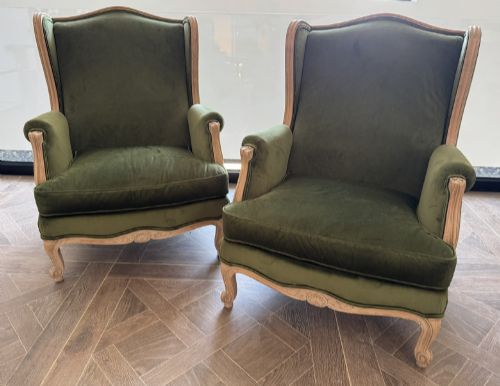
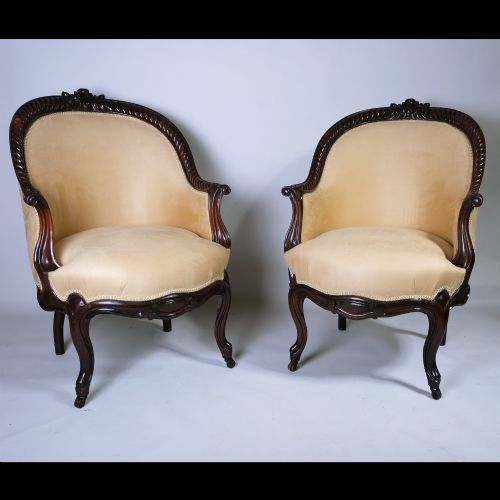
Carved Wood Velvet Chairs
Carved wood velvet chairs bring tactile warmth and solid timber framing together, spanning dining rooms, parlours and drawing rooms across multiple periods.
Carved Wood Velvet Chairs
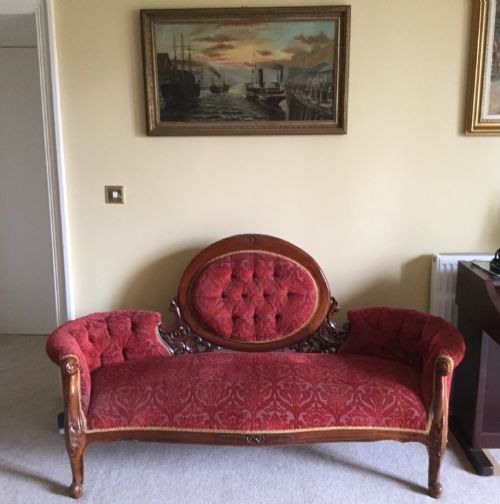
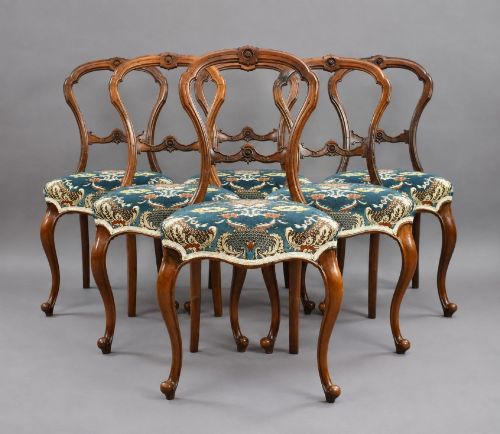
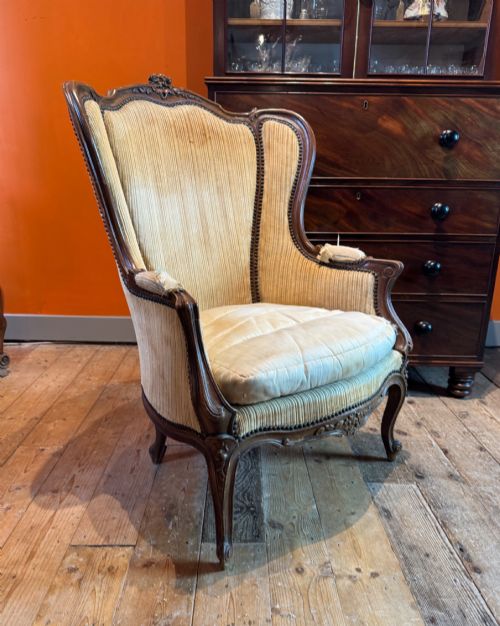
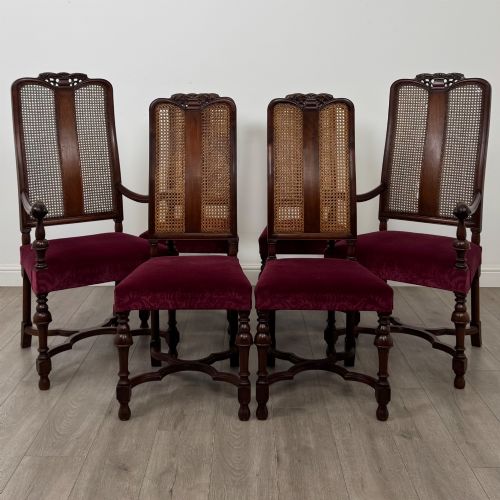
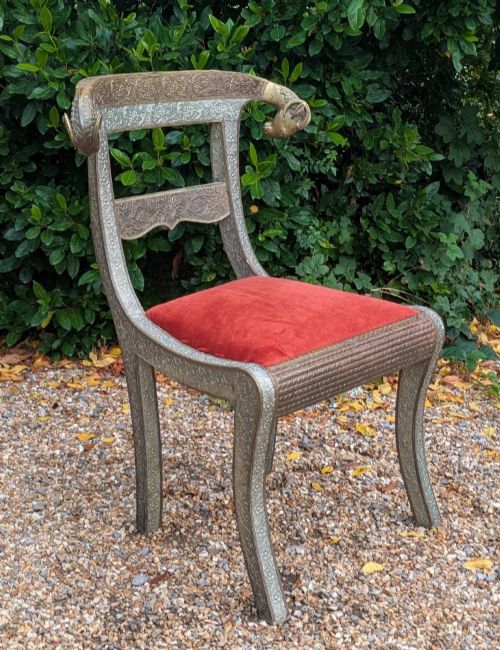
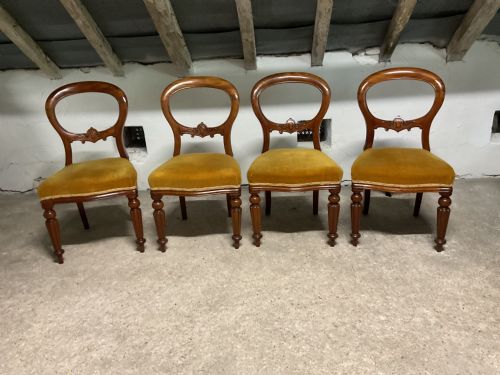
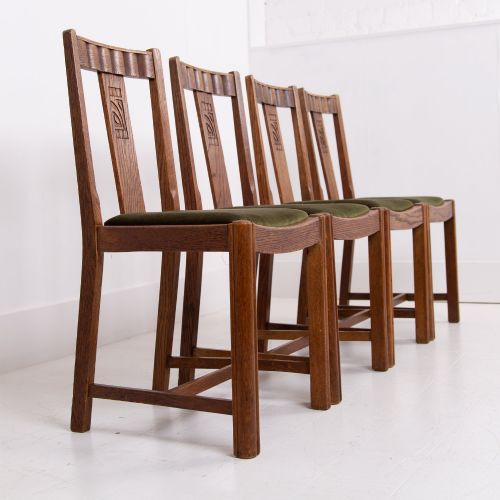
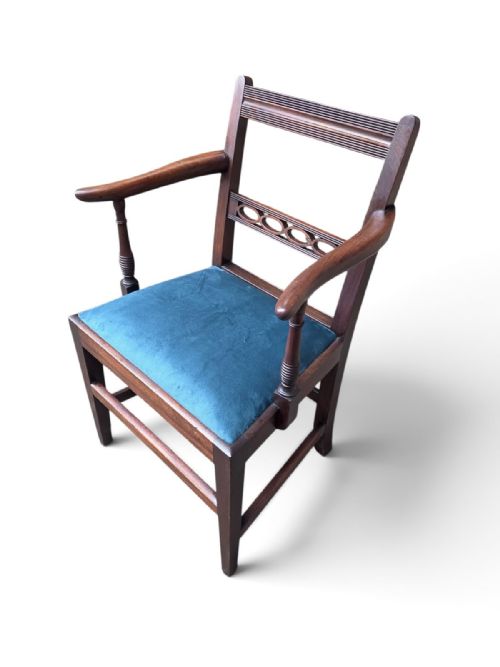
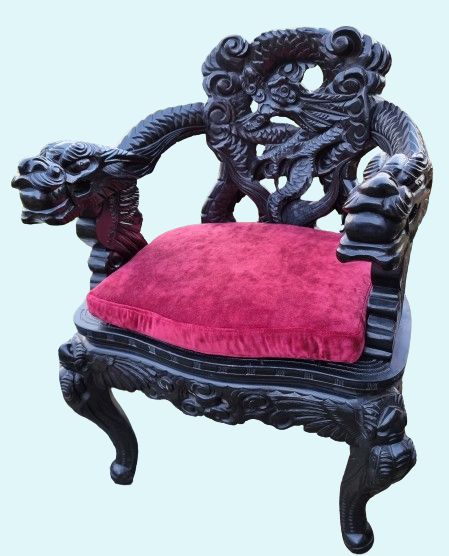
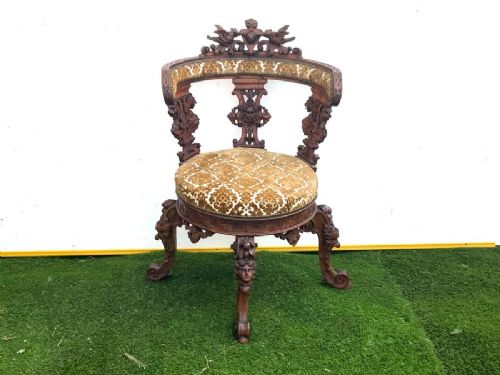
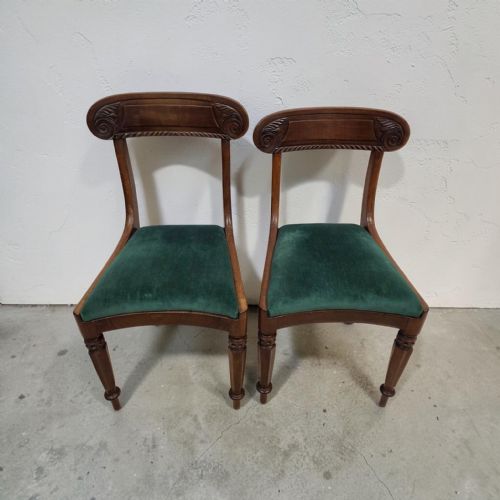
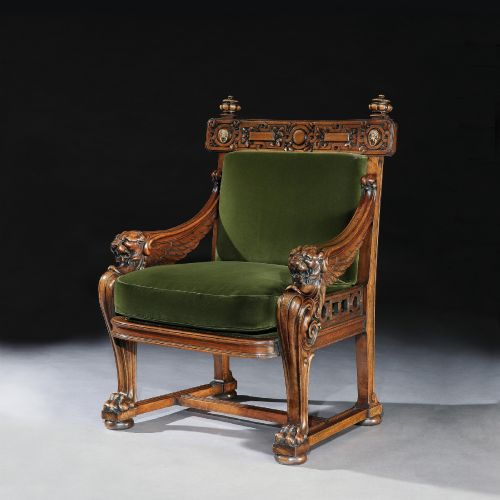
Carved wood velvet chairs encompass a diverse selection of seating, from sets of dining chairs and side chairs to single armchairs, bergères, fauteuils, and salon chairs. You will frequently encounter Victorian and Edwardian examples alongside pieces styled after the Regency, Louis XV, and Louis XVI periods.
The timber frames utilise various woods including mahogany, walnut, rosewood, oak, giltwood, and goncalo alves, paired with velvet, brocade, and textile upholstery. Forms range from balloon back dining chairs and open armchairs to rocking chairs, music stools, and double-ended sofas.
Origins span English, French, Italian, and Anglo-Indian workshops, with dates stretching from the eighteenth century through the nineteenth and into the early twentieth century. Sets of dining chairs appear alongside pairs of bedroom chairs and single decorative pieces designed for specific domestic roles.
How they were made
Frames are constructed from dense hardwoods like mahogany, walnut, and rosewood, shaped by hand carving to produce scroll arms, cabriole legs, and ornate back rails. Giltwood pieces employ applied leaf on prepared surfaces, while other frames rely on the natural grain and polished finish of the timber.
Upholstery techniques involve securing textiles such as velvet and brocade over sprung bases, drop-in seats, or padded frames using traditional stuffing materials. Brass tacks, gimp braids, and piping frequently finish the edges where the fabric meets the carved wooden structure.
Periods represented span the eighteenth century, the nineteenth-century Victorian and Edwardian eras, and early twentieth-century revivals.
What varies in quality
The depth, crispness, and definition of the wood carving separate ordinary frames from superior examples, as skilled carvers achieve greater three-dimensional movement and precision in motifs like acanthus leaves, scrollwork, and monopodia. The choice of dense, finely figured timber such as quarter-sawn mahogany or burr walnut also indicates a higher standard of manufacture.
The structural integrity of the joinery and the execution of the upholstery dictate the overall standard, with tightly sprung seats and hand-stitched fabric edges outlasting simpler padded insertions. Matching sets maintain higher desirability when all constituent chairs share uniform timber patination and identical carving details without later alterations.
The Carved Wood Velvet Chairs Glossary
- Bergère
- An enclosed upholstered armchair with wooden sides and back frame, often utilising cane or upholstered panels. These French-origin seats frequently feature padded armrests and loose seat cushions.
- Fauteuil
- An open-arm armchair with exposed wooden framing, originating in France. The arms typically have upholstered pads where the elbows rest, set above open sides.
- Cabriole leg
- A furniture leg that curves outward at the knee and tapers inward toward the ankle, ending in a pad, claw and ball, or scroll foot. This form draws inspiration from animal legs and appears frequently on mid-Victorian seating.
- Balloon back
- A rounded, oval-shaped wooden chair back that resembles the outline of a hot air balloon. This silhouette is characteristic of many Victorian dining and side chairs.
- Monopodia
- A carved furniture support taking the form of a single lion's leg and paw, often seen on Regency and revival pieces. It derives from classical Roman furniture designs.
- Giltwood
- Timber that has been coated with a thin layer of gold leaf or gold paint. This finish appears on revival armchairs and decorative salon seating.
Carved Wood Velvet Chairs: Frequently Asked Questions
How do I clean velvet upholstery?
Velvet requires gentle brushing with a soft-bristled brush to maintain the pile direction and remove surface dust. Avoid harsh rubbing or excessive moisture, which can crush or damage the textile fibres.
For stubborn marks, professional textile cleaning is recommended to prevent water rings or discolouration on older fabrics. Regular light maintenance keeps the deep pile soft and prevents flattening over time.
Can I mix different chair styles around a dining table?
Mixing different styles, such as pairing a set of mahogany dining chairs with distinct carver armchairs at the table ends, creates a collected interior aesthetic. Ensuring similar timber tones or matching wood types helps maintain visual harmony across the arrangement.
Scale and seat height remain the primary considerations when combining varied seating around a single table. Matching the approximate period or upholstery colourway also unifies disparate chairs into a cohesive dining setting.
What is the difference between an armchair and a salon chair?
Armchairs are generally constructed for primary seating and heavy daily use, featuring sturdy frames, robust armrests, and deep padding for comfort in studies or living rooms. Salon chairs are lighter, more decorative pieces intended for formal entertaining rooms and reception spaces.
Salon chairs often display more delicate carving, gilded surfaces, or slender cabriole legs with less emphasis on deep lounging comfort. Their smaller proportions allow them to be positioned easily around the perimeter of a drawing room.
How can I tell a Victorian chair from an Edwardian one?
Victorian chairs frequently feature heavier timbers, darker finishes, and dense ornamentation such as balloon backs, heavy scrollwork, or deep-buttoned velvet upholstery. The proportions tend to be robust and grounded, reflecting nineteenth-century domestic tastes for substantial furniture.
Edwardian pieces often display lighter construction, simpler neoclassical revival influences, and brighter wood tones or painted finishes. Upholstery on Edwardian seating can be more restrained, occasionally utilising brighter floral or pastel textiles alongside traditional velvet.