
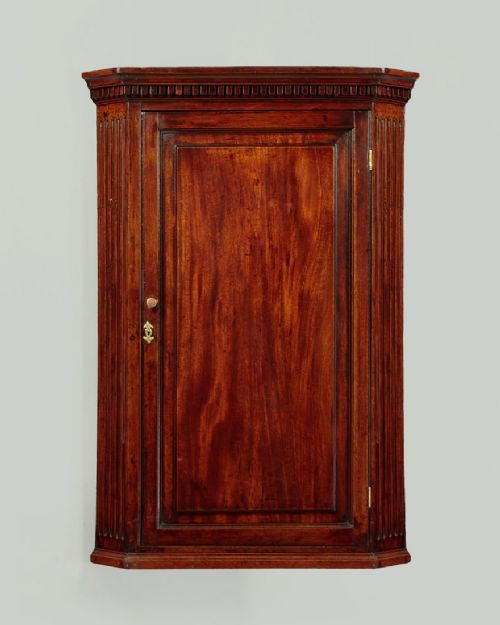

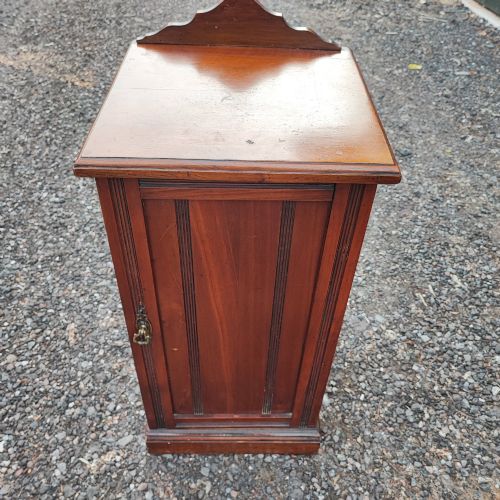
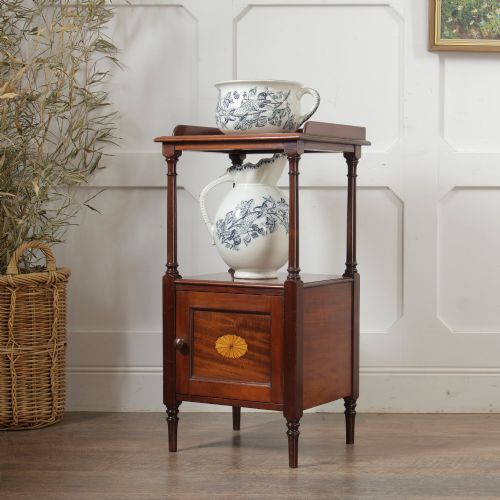
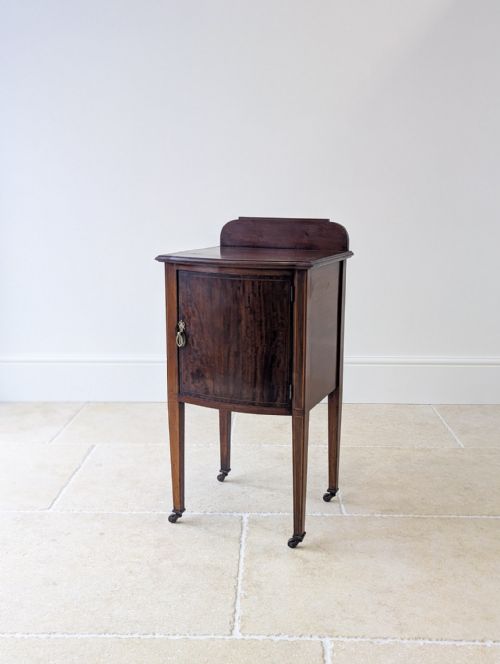
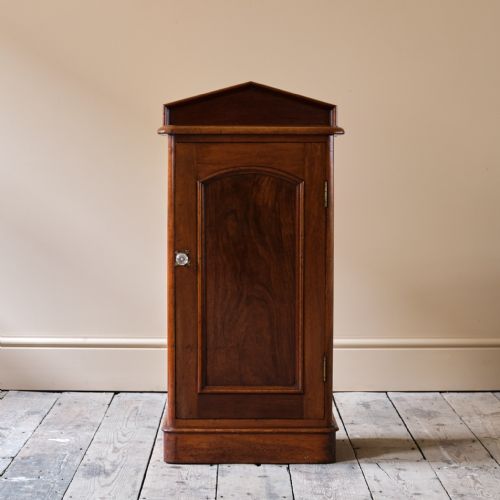
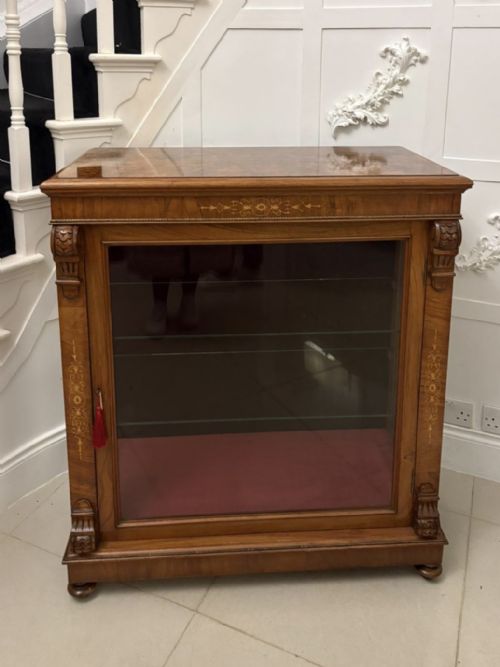
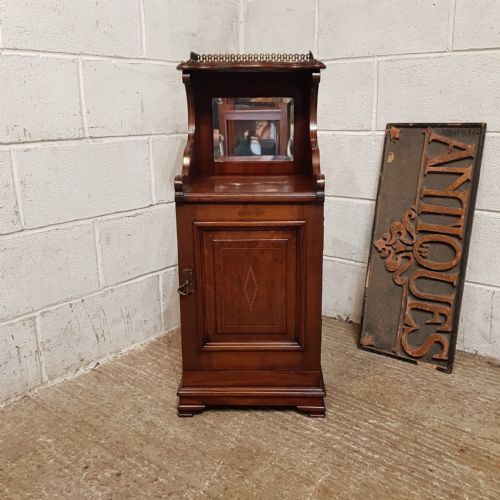
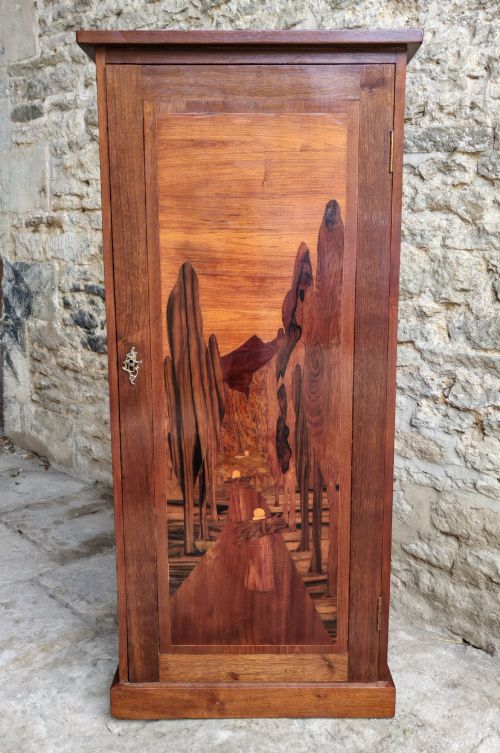
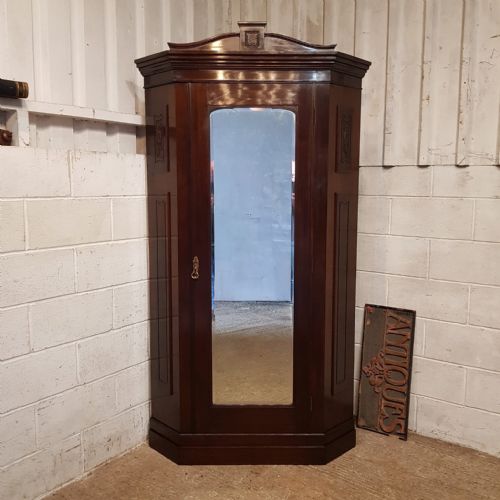


Single Door Mahogany Cupboard
A single door mahogany cupboard offers compact utility and rich timber grain, fitting neatly into period interiors and modern spaces alike.
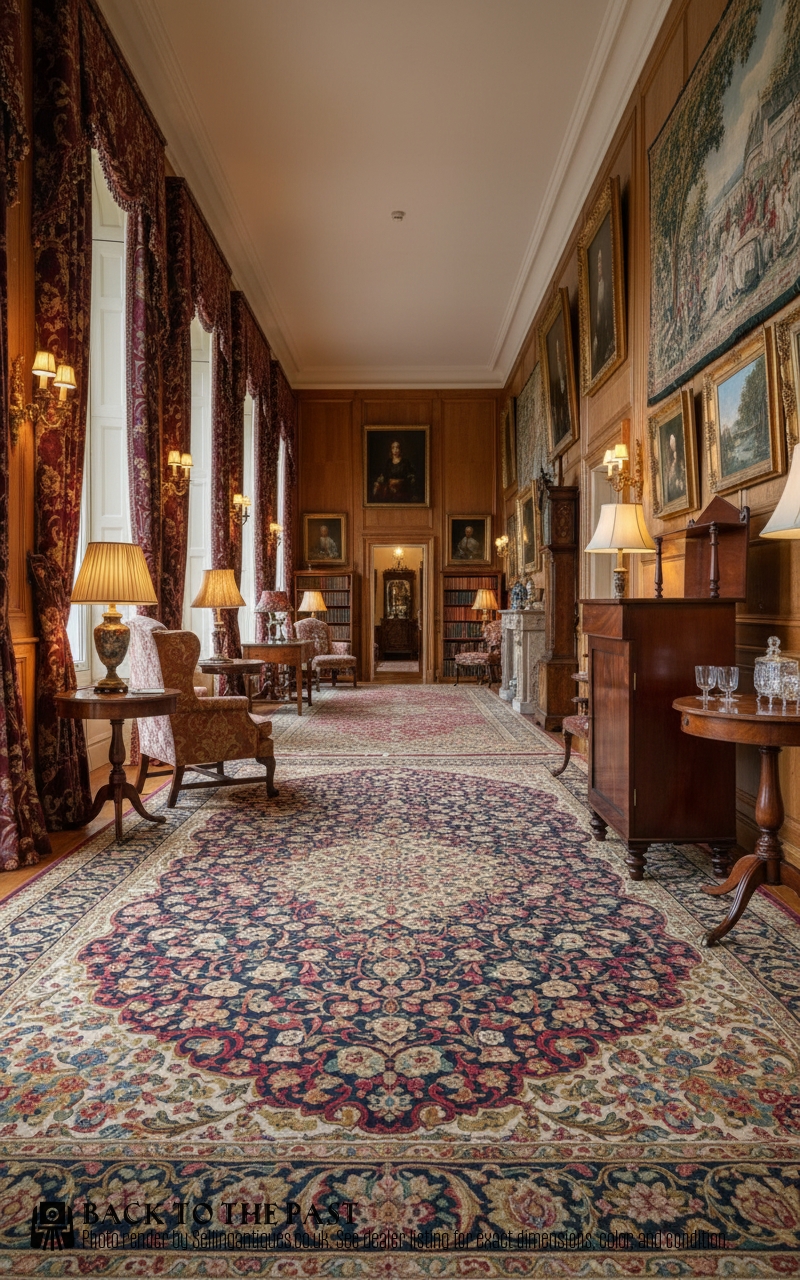
Single Door Mahogany Cupboard
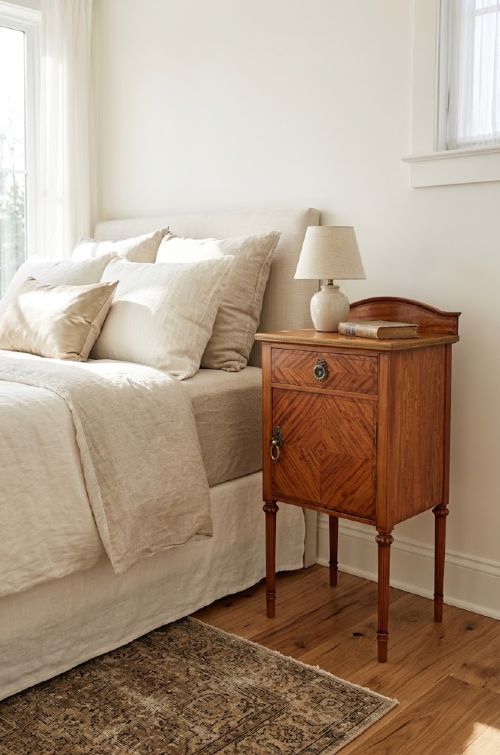
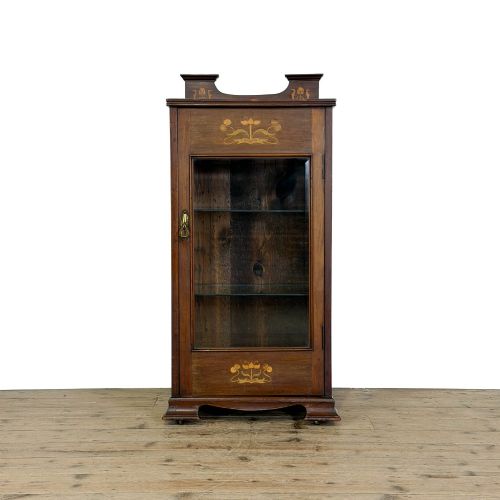
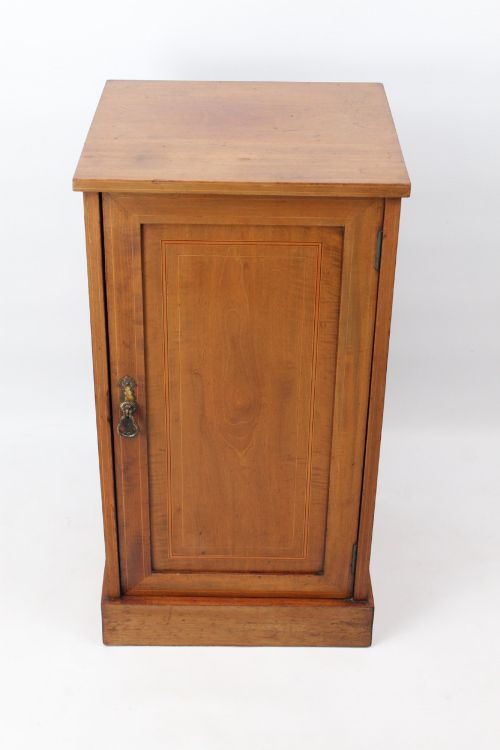
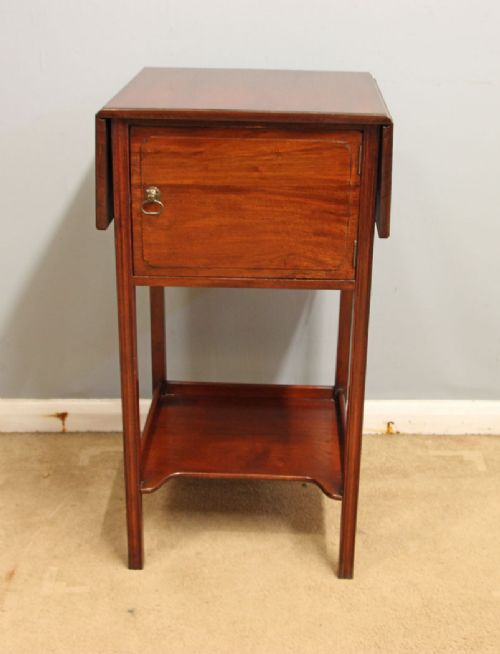
When you search for a single door mahogany cupboard, you encounter a practical storage piece designed for domestic utility. These items range from small bedside cabinets and pot cupboards to taller hall cupboards, display cabinets, and wardrobes.
The versions met most frequently on this page date from the Victorian and Edwardian periods, alongside pieces from the Georgian and Regency eras. Their forms vary from compact bedside tables with single doors to slim hall wardrobes and corner cupboards.
Makers and workshops of the nineteenth and early twentieth centuries produced these items in solid mahogany and mahogany veneers. They served various household functions, holding chamber pots, bedside essentials, books, or garments in domestic rooms.
How they were made
Cabinet makers utilised solid mahogany and flame mahogany veneer applied to secondary woods, often accented with satinwood inlay, boxwood stringing, and brass hardware. Glass panels appear on display variants, while fabric lines select interior shelving.
Construction techniques involve traditional joinery suited to housing a single hinged door, sometimes incorporating a drawer to the base or a marble top on bedside variants. Timber selection dictated the visual depth of the grain, enhanced through polishing.
Listings span the Georgian, Regency, Victorian, and Edwardian periods, utilising mahogany, satinwood inlay, brass, and glass.
What varies in quality
Quality rests in the selection of the timber and the precision of the inlay rather than sheer scale. Pieces featuring figured flame mahogany veneer or crisp satinwood and boxwood inlay stand apart from plain utility items.
The refinement of the brass mounts, the integrity of the door hinges, and the subtlety of the proportions distinguish standard domestic furniture from finer workshop productions.
HOWARD & SONS·Heals·Holland & Sons
The Single Door Mahogany Cupboard Glossary
- Pot cupboard
- A small bedside cabinet designed originally to house a chamber pot behind a single door. These pieces often feature an enclosed compartment above a drawer or lower cupboard space.
- Flame mahogany veneer
- A sheet of timber sliced from the point where a branch joins the main tree trunk, displaying a distinctive flickering flame pattern. Cabinet makers applied this to door panels for visual impact.
- Satinwood inlay
- Contrasting pale timber inserted into recesses within the darker mahogany surface to form geometric or floral patterns. This decorative technique appears frequently on Edwardian pieces.
- Corner cupboard
- A storage unit constructed with an angled back to fit neatly into the corner of a room. These items maximise floor space while providing shelved interior storage behind a single door.
- Pedestal cupboard
- A single door cabinet built with a tall, column-like proportion. They function as bedside or side storage units within nineteenth-century bedrooms.
Single Door Mahogany Cupboard: Frequently Asked Questions
What is a pot cupboard?
A pot cupboard is a small bedside cabinet featuring a single door, built originally to enclose a chamber pot.
Over time, these versatile pieces adapted into standard bedside tables used for general nighttime storage.
How do I date a mahogany cupboard?
Dating relies on observing structural characteristics, hardware, and decorative details like inlay styles.
Georgian and Regency pieces display simpler architectural lines, while Victorian and Edwardian examples often incorporate rich veneers and satinwood stringing.
Where were these cupboards used?
These items served primarily in bedrooms as bedside storage for personal items and washing equipment.
Taller variants functioned in hallways and living spaces as slim wardrobes, corner units, or display cabinets.
What wood was used?
Mahogany served as the primary timber, appearing in both solid form and as flame mahogany veneer.
Cabinets frequently feature secondary woods alongside decorative accents of satinwood, boxwood, and brass hardware.