

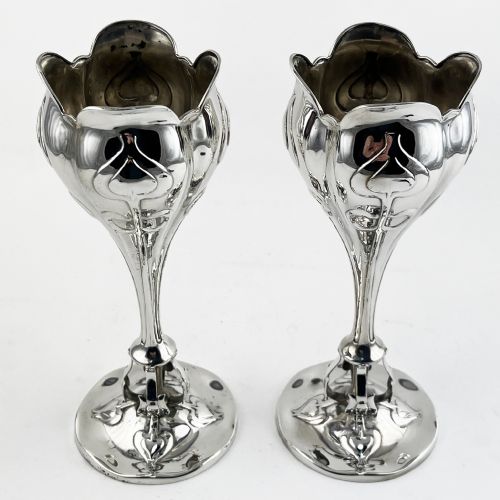


Silver Trumpet Vase
A silver trumpet vase brings upright, flared elegance to a table, combining polished metal with glass or ceramic inserts for floral displays.
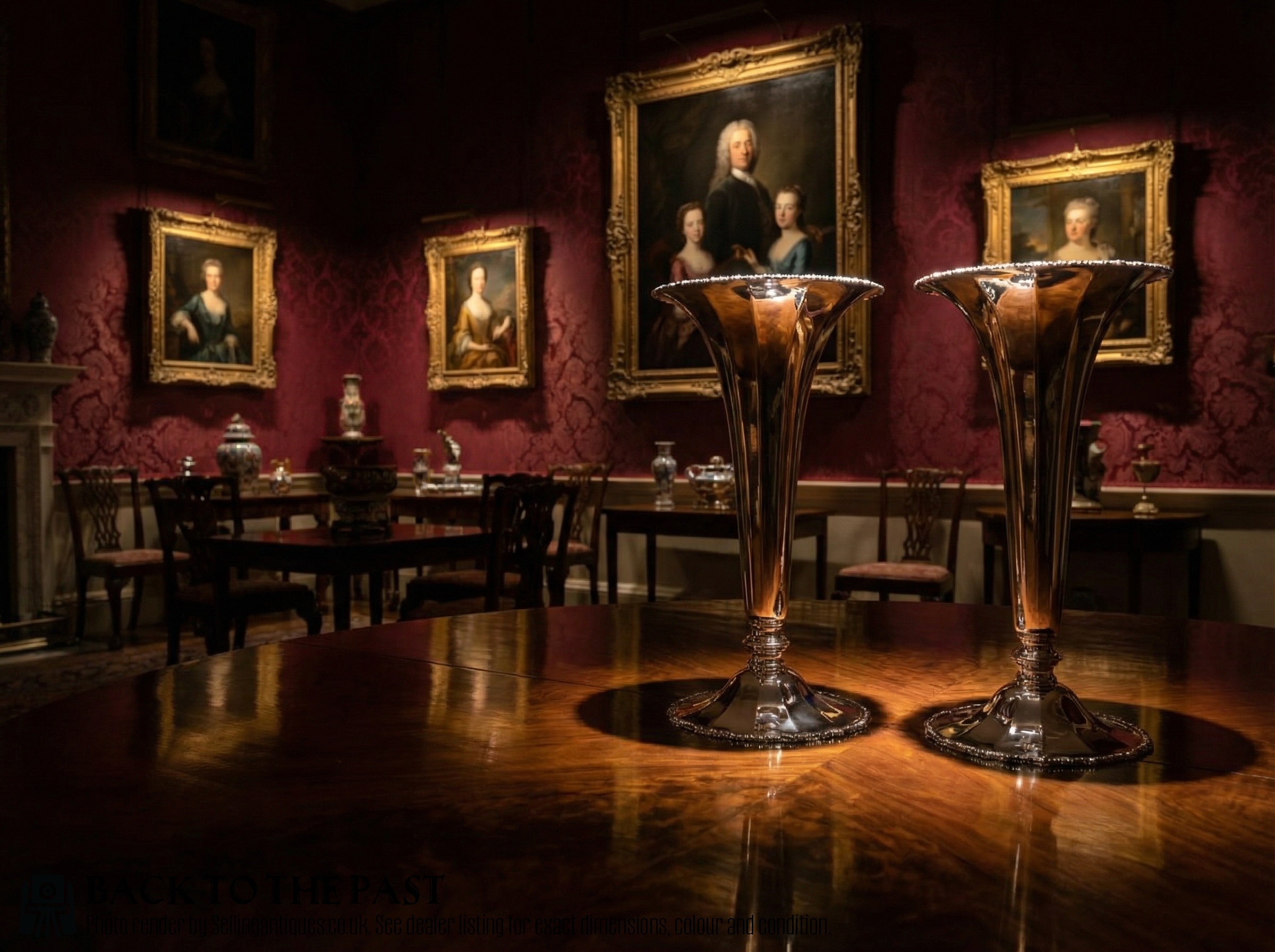
Silver Trumpet Vase
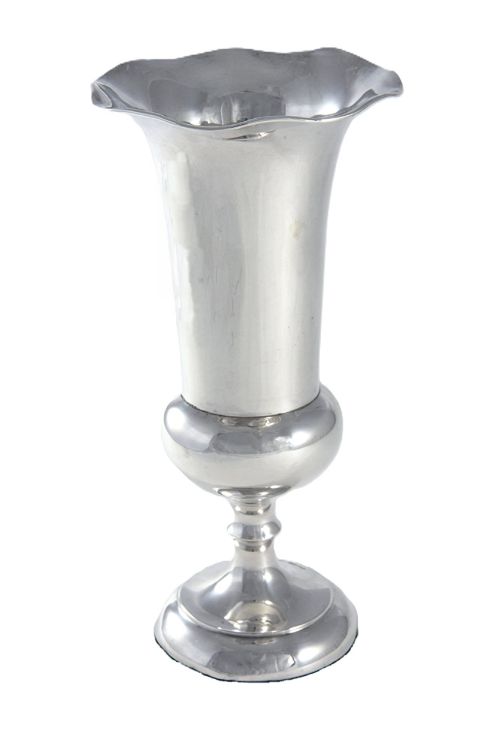
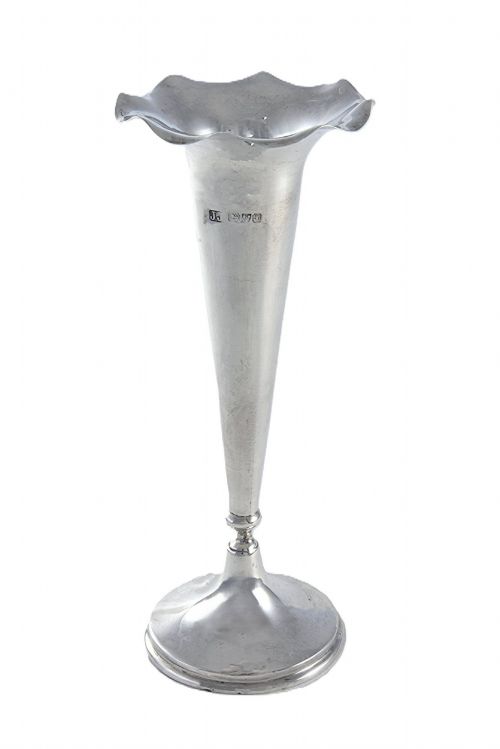
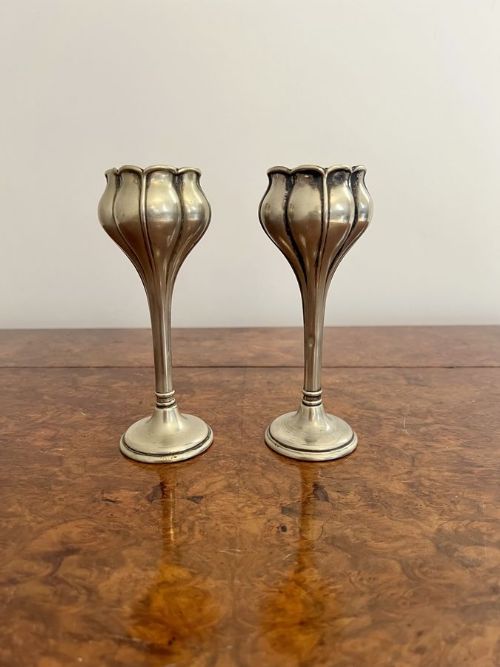
A silver trumpet vase takes the form of an expanding, flared funnel supported on a weighted or unweighted foot, appearing frequently as single display pieces or in matched pairs. When searching for a silver trumpet vase, buyers encounter items spanning from the late nineteenth century through the Edwardian era and into the Art Deco period.
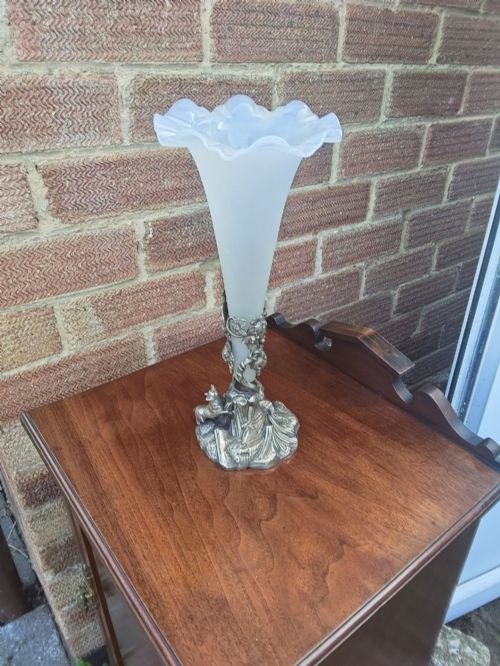
The inventory on this page demonstrates that these vessels were produced as standalone posy vases, spill vases, multi-flute epergnes, and table centrepieces. Edwardian and Victorian examples dominate the selection, often accompanied by silver plated or white metal variants from the same decades.
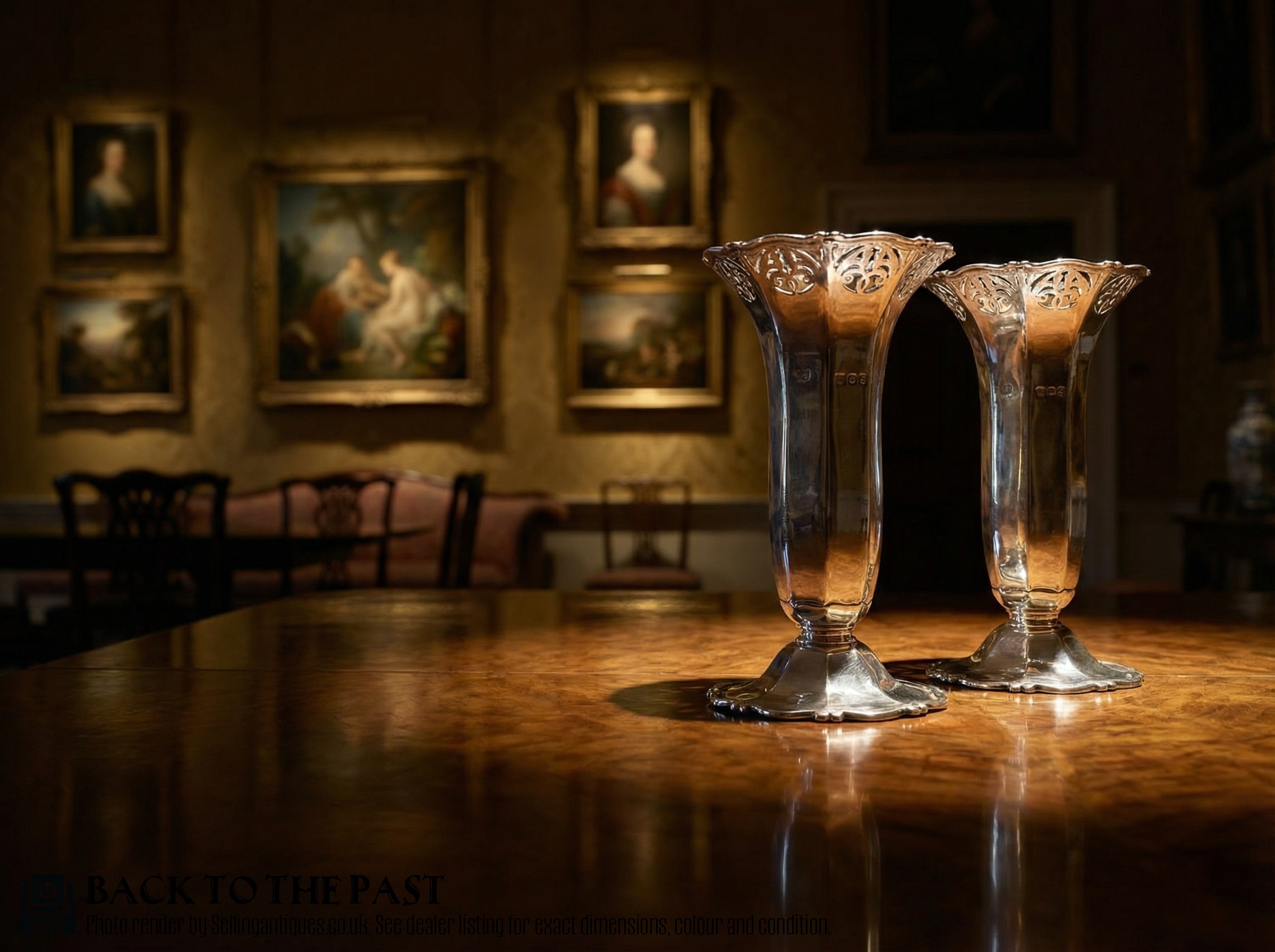
Materials and Construction
Makers combined solid sterling silver, silver plate, and white metal with cut glass, opaque glass, vaseline glass, and pearlescent glass inserts. Metal bodies were shaped through spinning or pressing, frequently embellished with pierced work, cast floral mounts, and fluted rims.
Glass components were blown or moulded to fit the metal trumpet frames, sometimes utilising removable glass liners held within pierced silver cylinders.
Silver Trumpet Vase Retail Price Guide 2026
Typical asking prices for silver trumpet vase among the pieces listed under this phrase on Sellingantiques today, from the lower quarter to the upper quarter. They describe what is for sale here now, not the wider market.
Craftsmanship and Proportion
Quality rests in the weight of the silver, the crispness of any pierced or cast ornamentation, and the balance of the flared rim against the foot. Superior pieces maintain harmonious proportions without heavy weighting masking thin metal walls.
The integrity of the accompanying glass inserts and the precision of the maker marks further separate standard production items from finer workshop output.
Fox & Grapes·Daniel & Arter·Josiah Williams & Co·William Comyns·Sampson Mordan & Co·Walker & Hall·J. Gloster Ltd·Mappin & Webb
The Silver Trumpet Vase Glossary
- Trumpet vase
- A vessel shaped like an inverted trumpet with a narrow base expanding upwards to a wide, flared rim. This silhouette is typical for floral display pieces from the Victorian and Edwardian periods.
- Epergne
- A central table ornament featuring a large main bowl or stand fitted with multiple smaller hanging or standing vases. These structures often combine silver frames with coloured glass flutes.
- Posy vase
- A small personal vase designed to hold a tight cluster of cut flowers rather than large arrangements. They frequently appear in pairs on dining tables.
- Vaseline glass
- A transparent or translucent glass coloured with uranium oxide that exhibits a distinct yellow-green fluorescence under ultraviolet light. It is commonly found combined with Victorian silver mounts.
- Spill vase
- A tall, slender container historically used to hold wooden spills for lighting fires or candles. In later periods, they functioned primarily as decorative floral vases.
Silver Trumpet Vase: Frequently Asked Questions
How do I clean a silver trumpet vase?
Wash the glass and metal parts separately in warm soapy water using a soft cloth, avoiding abrasive pads on plated or sterling surfaces.
Dry thoroughly with a lint-free cloth and apply a gentle silver polish only to solid or plated metal sections, keeping polish away from glass inserts.
Were these vases made as pairs?
Makers produced many trumpet vases in matched pairs for symmetrical placement on dining tables or mantelpieces. Single pieces also occur frequently, particularly when surviving from larger epergne sets or centrepieces.
How do I date an Edwardian silver piece?
Examine the hallmarks stamped on the metal body, which typically include a maker's mark, a purity standard mark, a town assay office mark, and a date letter.
Matching the stamped date letter against official assay office tables reveals the exact year of manufacture.
Can I use these vases for fresh flowers?
These vessels accommodate fresh flowers, provided you use the original glass liners or internal glass tubes to protect the metal from water corrosion.
Ensure unlined silver bodies remain dry inside or use a discreet modern plastic insert if the original liner is missing.