
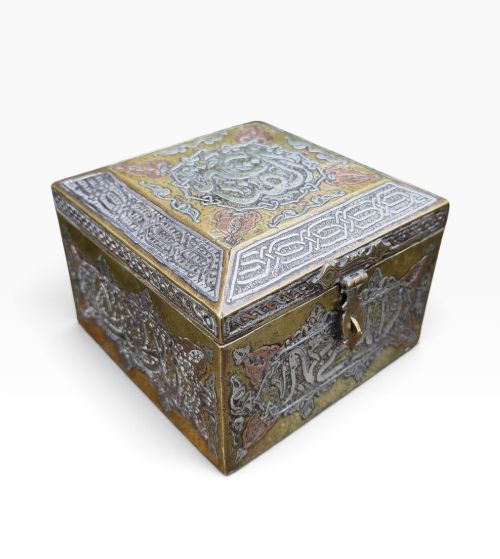
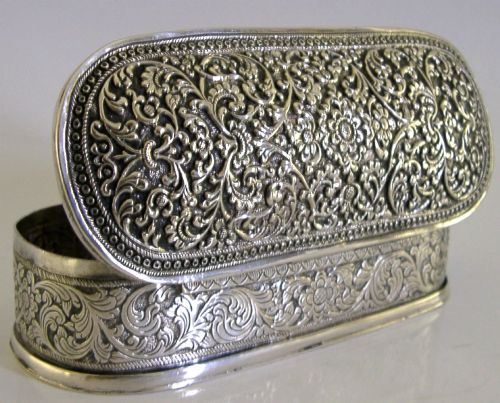
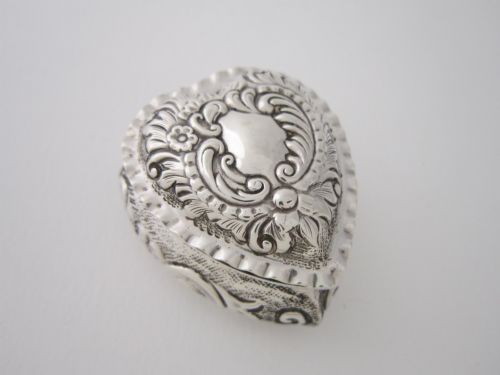
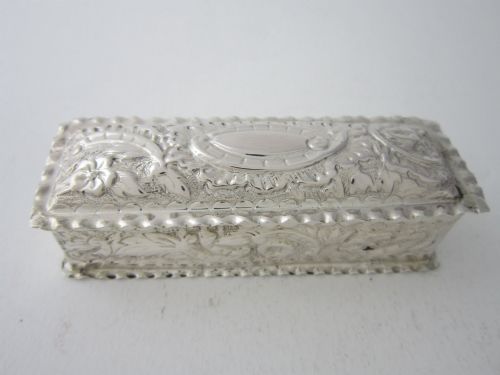
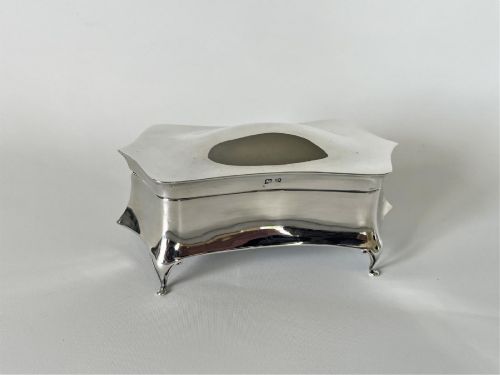
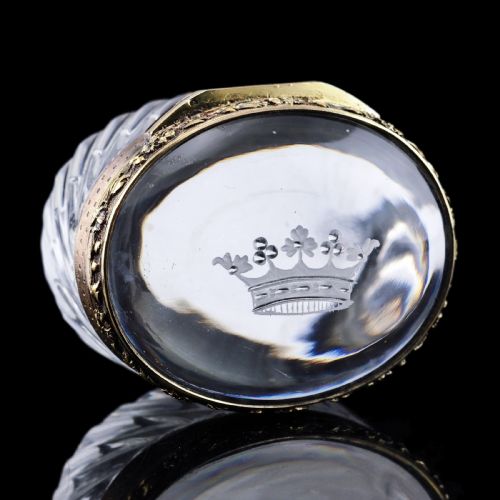
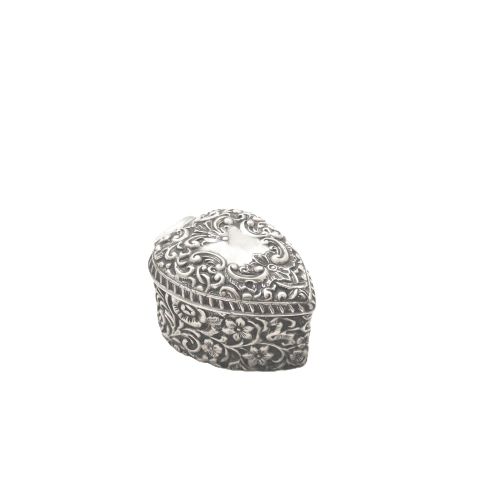
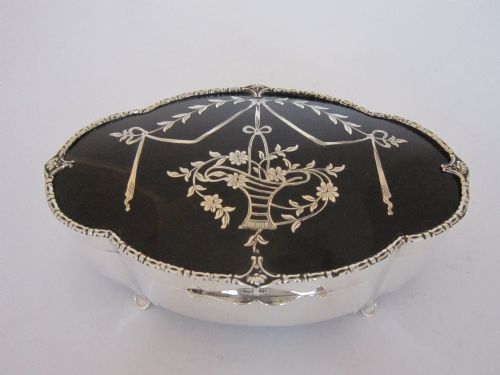
Silver Trinket Casket
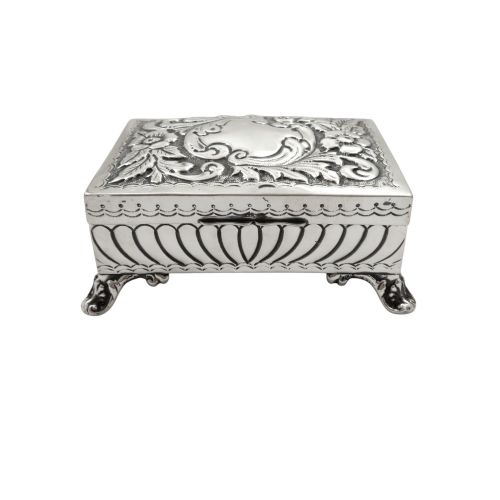
A silver trinket casket guards small valuables on a dressing table, bringing polished metal and velvet to daily routines.
Identifying silver trinket caskets
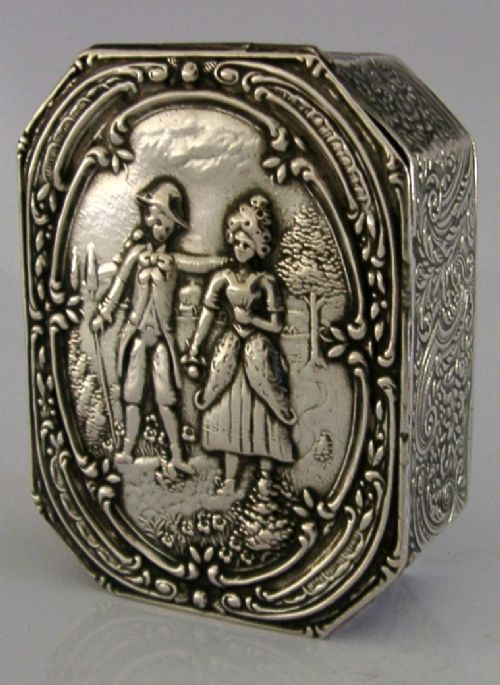
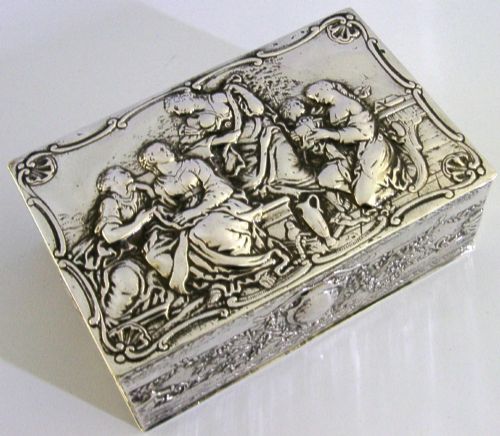
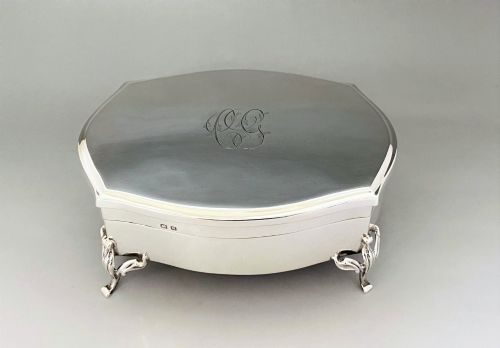
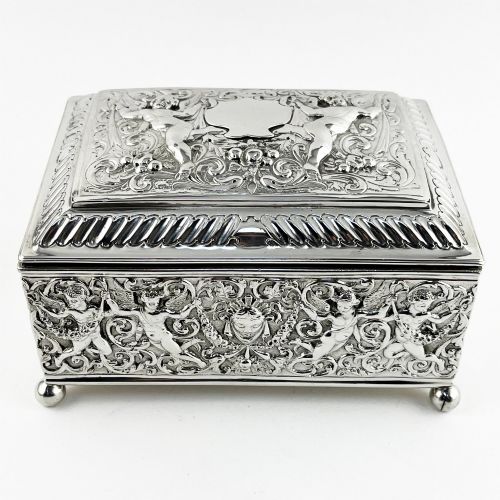
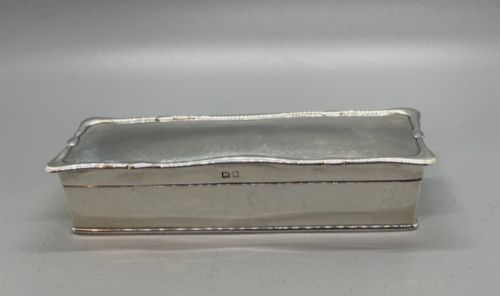
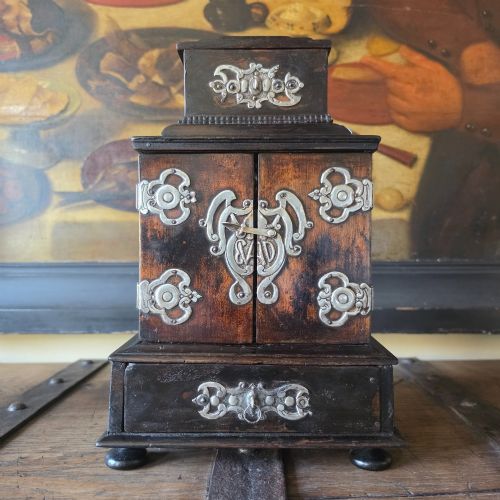
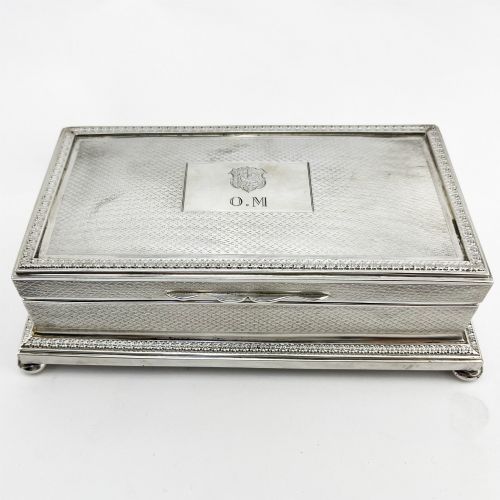
When buyers search for a silver trinket casket, they encounter portable boxes designed for jewellery and small keepsakes. These pieces appear in forms such as jewellery boxes and trinket boxes, constructed during the Victorian, Edwardian, and Neoclassical Revival eras. The selection on this page also includes Arts and Crafts examples from the archive, showing the range of design across these periods.
Most items you meet here originate from around 1890 to 1920, reflecting standard domestic production of those decades. Dressing table accessories often incorporate mirrors or fitted interiors to hold rings and brooches securely. The forms vary from simple rectangular containers to figural designs intended for prominent display on vanity surfaces.
Materials and construction
The primary material across these listings is sterling silver, frequently paired with internal gilding and glass components. Smiths shaped the metal body through sheet fabrication and casting, applying decorative motifs that align with Victorian and Edwardian tastes.
Gilt linings provide a warm contrast to the bright exterior silver, while glass elements offer transparent panels or internal dishes. Makers utilised Birmingham assay offices for hallmarking, ensuring standard purity across the surviving pieces.
Listings on this page span the Victorian and Edwardian periods, featuring sterling silver, glass, and gilding.
Judging quality in silver caskets
Quality rests on the crispness of the chasing, the thickness of the silver gauge, and the integrity of any internal gilding or glass. Superior pieces display finely articulated figural details or balanced Neoclassical Revival ornamentation rather than mass-produced stamped decoration.
The refinement of the hinges, the snug fit of the lid, and the clarity of the Birmingham hallmarks contribute to an object's overall standing. Finer examples maintain original internal linings and retain structural rigidity without excessive wear to the metal surface.
A & J Zimmerman Ltd·J W Tiptaft
The Silver Trinket Casket Glossary
- Sterling silver
- An alloy comprising 92.5 percent silver and 7.5 percent other metals, typically copper, used for British domestic silverware. This standard has governed quality assurance for centuries.
- Gilding
- A gold wash or thin layer applied to the interior surface of the silver box. This technique protects the metal from tarnishing when in contact with cosmetics or skin oils.
- Neoclassical Revival
- A design style drawing on classical Greek and Roman motifs, popular during the Victorian and Edwardian periods. It relies on symmetry, urns, swags, and architectural proportions.
- Hallmark
- A series of stamped marks indicating the metal standard, assay office, and date letter. British silver relies on these stamps to establish provenance and authenticity.
Frequently Asked Questions
What is a silver trinket casket?
A silver trinket casket is a small lidded box made from sterling silver, designed to hold rings, brooches, and personal valuables.
These pieces typically sit on dressing tables or sideboards as both functional storage and decorative objects.
How old are these silver boxes?
The pieces recorded here date from the late Victorian period through the Edwardian era, spanning the years around 1890 to 1920.
Stylistic cues and hallmarks help narrow down the exact decade of manufacture.
How do I care for antique silver?
Antique silver requires gentle cleaning with a soft cloth and specialised silver polish to maintain the shine without removing fine details.
Avoid harsh abrasives and store the boxes in stable humidity to protect any internal fabric or glass.
What is a gilt lining?
A gilt lining is a thin application of gold over the interior silver surface of the box.
This decorative finish adds a warm yellow tone inside and prevents the silver from reacting directly with stored items.