


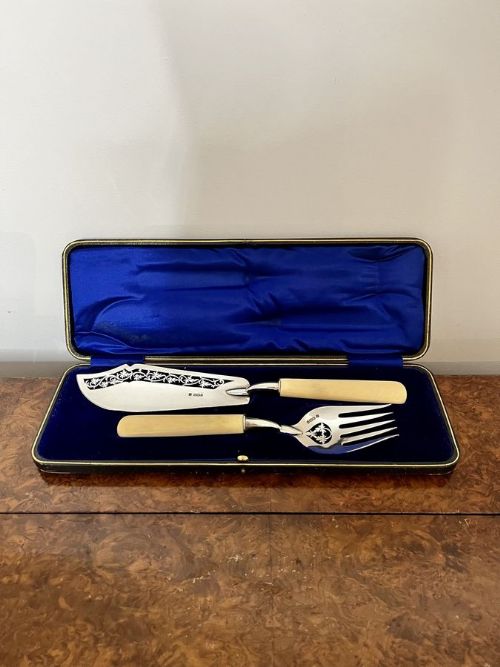

Silver Serving Knife
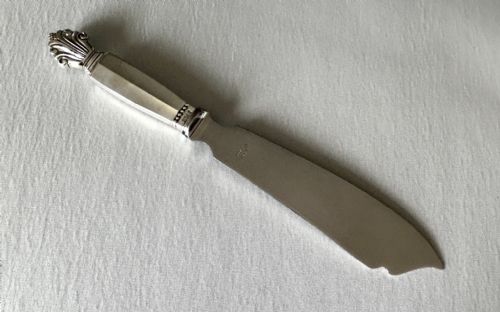
A silver serving knife is an elegant dining implement designed for presentation, most commonly met here as Victorian sterling silver fish servers and mid-century slices.
Silver Serving Knife
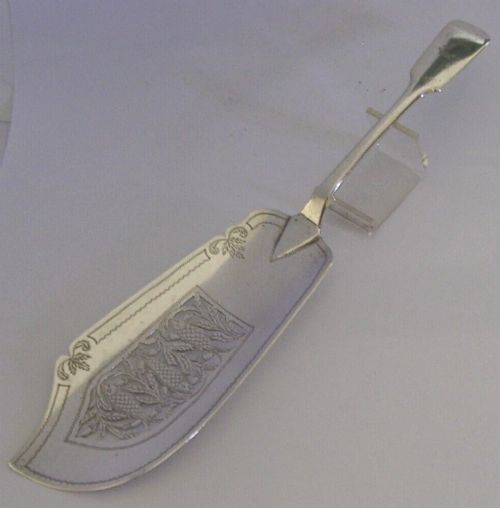
When you search for a silver serving knife, you encounter specialised implements including fish slices, cake knives, and sardine servers designed for specific dining tasks. The selection spans the nineteenth and twentieth centuries, taking forms from George IV fiddle pattern slices to Art Deco cake servers and French silver-plated dessert sets.
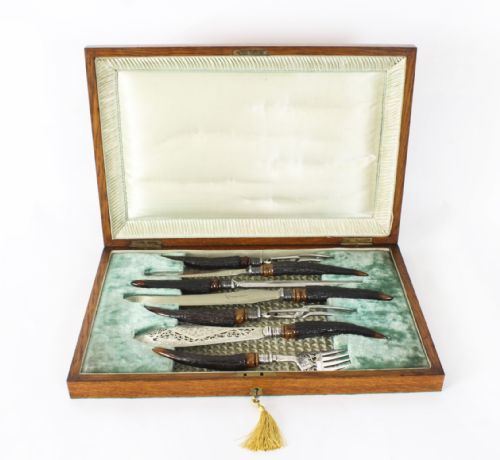
Victorian sterling silver fish servers dominate the variety on offer, often accompanied by fitted presentation cases, engraved blades, and organic handles made of bone, mother of pearl, or antler. Mid-century examples introduce simpler lines, such as Georg Jensen silver-handled slices, alongside Old Sheffield plated trays and specialised cutlery sets.
Materials and construction methods
The pieces combine solid sterling silver or silver plate with handles fashioned from natural materials such as wood, velvet, silk, bone, mother of pearl, and antler. Blades and slices frequently feature detailed pierced work, engraved hunting motifs, or family crests.
Manufacturing techniques range from traditional silversmithing in London and Sheffield to French silver plating and specialised casting for fruit knives and fish servers. Fitted wooden cases lined with silk and velvet accompany many of the cased Victorian and Edwardian sets.
Listings feature items from the Victorian, Edwardian, and Mid-Century Modern periods, utilising sterling silver, silver plate, bone, and mother of pearl.
Evaluating craftsmanship and execution
Quality rests in the crispness of the blade piercing, the depth of the hand engraving, and the balance of the piece in the hand. Maker attribution, such as work by George Adams or Charles Boyton, elevates a piece through documented London provenance and precise hallmarks.
The integrity of natural handles, whether carved bone, antler, or mother of pearl, together with the survival of original fitted presentation cases, distinguishes standard production from finer exhibition examples.
Georg Jensen·Creswick·George Adams·Charles Boyton
The Silver Serving Knife Glossary
- Sterling silver
- A silver alloy containing 92.5 percent pure silver and 7.5 percent other metals, typically copper, used for higher-grade dining implements. It carries official hallmarks indicating the assay office and date.
- Silver plate
- A base metal coated with a layer of pure silver through electroplating or older methods like Old Sheffield plating. This technique provided the visual appeal of solid silver at a lower cost.
- Fish slice
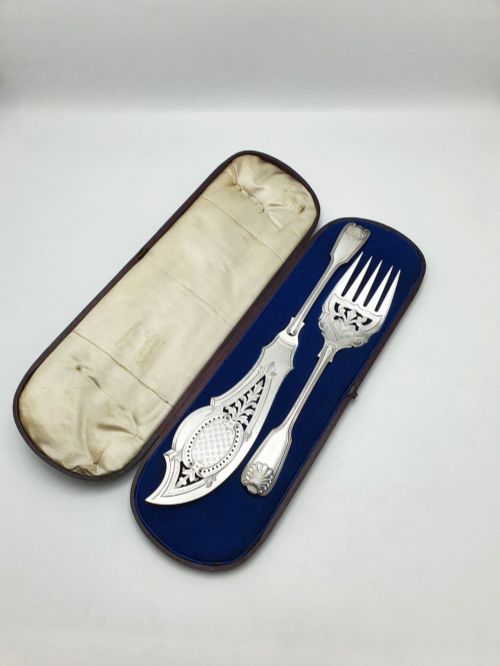
- A wide, flat serving implement, often pierced with decorative designs, specifically shaped for lifting portions of fish at the dining table. They frequently appear as matched pairs with a companion fork.
- Fiddle pattern
- A nineteenth-century flatware design characterised by a slender stem that broadens into a shoulder and flares at the terminal in the shape of a violin. It remains a defining feature of Georgian and Victorian table service.
- Hallmark
- An official stamp applied to precious metals indicating the maker, standard of purity, assay office, and year of manufacture. These marks provide the primary evidence for dating antique silver.
Silver Serving Knife: Frequently Asked Questions
What is a fish slice used for?
A fish slice is a wide-bladed serving utensil designed to lift delicate portions of fish cleanly from a platter to a plate without breaking the flesh.
These pieces often feature pierced decoration to allow juices to drain, and they frequently appear paired with a matching serving fork in fitted nineteenth-century presentation cases.
How do I care for antique silver?
Antique silver requires gentle cleaning with specialised silver polish and a soft cloth to maintain its finish without wearing away thin plating or engraved details.
Store pieces in tarnish-resistant cloth or dry environments, and keep natural handles made of bone or antler away from prolonged exposure to water or heat.
What is Old Sheffield plating?
Old Sheffield plating is an early method of fusing a thin sheet of silver to a thicker copper base before rolling them into sheets for smithing.
This technique produces a rich warmth and allows keen observers to spot thin lines of exposed copper wear along high friction edges.
Are cased sets original?
Many Victorian and Edwardian serving sets were retailed in fitted wooden boxes lined with silk and velvet specifically tailored to the utensils.
Original cases provide secure storage and often feature interior retailer stamps that help trace the commercial history of the pieces.