
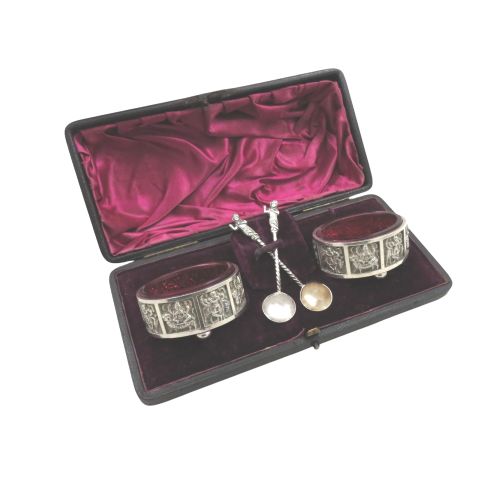
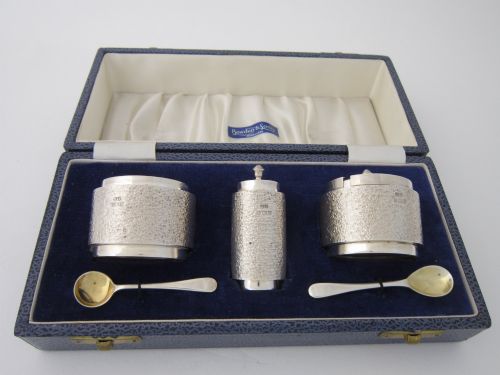


Silver Salt Spoons Set
A silver salt spoons set brings miniature craftsmanship to the dining table, offering fitted cases and matching cellars for formal dining.
Silver salt spoons set
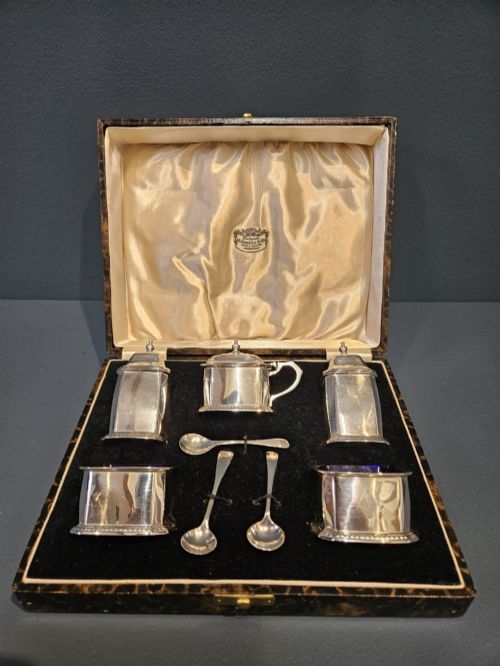
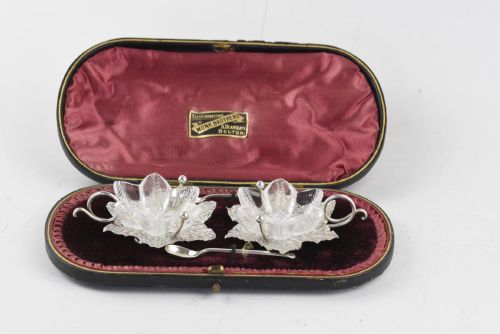
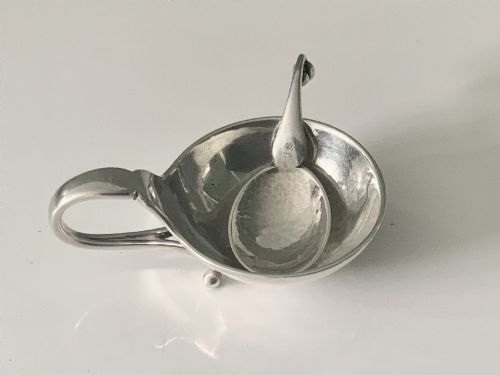
A silver salt spoons set comprises small spoons paired with open salt cellars, frequently housed in fitted cases lined with velvet, silk, or leather. These groupings emerge primarily from the nineteenth century, including Victorian, Edwardian, and earlier George III examples.
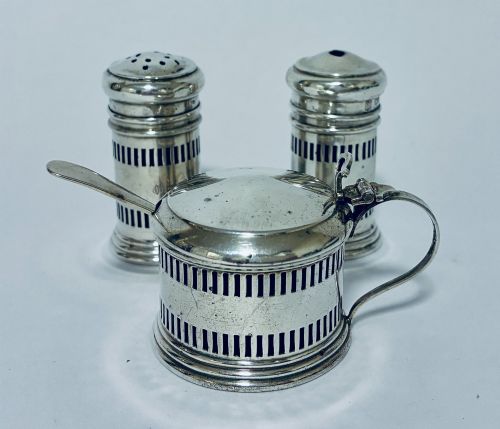
The configurations vary from pairs and trios to sets of four or six pieces, often accompanied by matching mustard and pepper pots within condiment sets. The forms span lobed cellars, cut glass vessels with silver rims, and shell patterns originating from English, Scottish, and Anglo-Indian makers.
Materials and construction
The items utilise sterling silver, solid silver, and silver plate, alongside gold gilt interiors and cobalt glass inserts. Fitted presentation boxes incorporate protective outer coverings of leather enclosing interiors of silk and velvet.
Silversmiths shaped the spoons and accompanying salt cellars through casting, hammering, and engraving techniques, producing specific handle designs such as the Onslow and King's patterns.
Retail Price Guide 2026
Typical UK retail prices for silver salt spoons set, calculated from the Sellingantiques database of over a million retail prices indexed since 2003. This retail price guide relies exclusively on Sellingantiques data; no external sources or auction records are used, so the figures do not describe the wider market.
Listings feature items spanning the eighteenth, nineteenth, and early twentieth centuries, including Victorian and Edwardian periods.
Distinctions in craftsmanship
Quality rests upon the preservation of the original fitted case and the completeness of the matching set. Pieces retaining their original velvet or silk linings and matching salt cellars command higher regard.
The crispness of the hallmarking and the execution of distinct handle patterns, such as Onslow or King's pattern, separate standard production from finer silversmith work.
Vale Brothers and Sermon·Martin Hall·Elkington and Co·HJ Lias and Son·Charles Boyton·James Dixon and Sons
The Silver Salt Spoons Set Glossary
- Sterling silver
- An alloy containing a high proportion of pure silver combined with other metals to ensure durability in small tableware. This standard is frequently denoted by official assay office hallmarks.
- Salt cellar
- A small open vessel designed to hold salt at the dining table before the widespread adoption of individual shakers. These containers often feature cobalt glass liners or lobed sterling silver bodies.
- Gold gilt
- A thin layer of gold applied to the interior surface of a silver salt cellar to prevent the salt from corroding the silver metal. This technique adds a bright contrast to the silver exterior.
- Onslow pattern
- A decorative handle style characterised by a distinctive scrolled terminal often found on eighteenth and nineteenth-century spoons. This design requires precise silversmithing to achieve its curved form.
- King's pattern
- An ornate, elaborately moulded handle design featuring shell and floral motifs popular during the Victorian period. It provides a heavy, decorative grip on small condiment spoons.
Frequently Asked Questions
What is a silver salt spoons set?
A silver salt spoons set consists of small spoons paired with open salt cellars, designed for dipping fine salt at the dining table. Many examples include fitted presentation cases lined with velvet or silk.
These sets date predominantly from the nineteenth and early twentieth centuries, encompassing Victorian, Edwardian, and Georgian periods. They frequently arrive alongside matching condiment vessels like mustard pots.
How were these sets used?
Before free-flowing table salt and shakers became common, guests used miniature spoons to transfer salt from an open cellar to their plate. The small scale of the spoons was matched specifically to the open salt cellars.
Complete sets were housed in fitted boxes for storage and presentation on the dining sideboard. They formed part of larger condiment services that included mustard and pepper containers.
How do I date a set?
Dating relies heavily on the assay office hallmarks stamped onto the sterling silver components. These marks reveal the city of origin and the specific year of production.
Stylistic indicators such as the King's pattern or Onslow pattern handle designs also help place the items within the Victorian, Edwardian, or Georgian eras.
How should I care for silver salt spoons?
Gentle cleaning with a soft cloth helps preserve the silver and any gold gilt interiors without removing the historic patina. Avoiding harsh abrasive polishes protects delicate engravings and hallmarks.
Storing the spoons within their original fitted cases or a tarnish-resistant environment protects the silk and velvet linings from moisture and wear.