
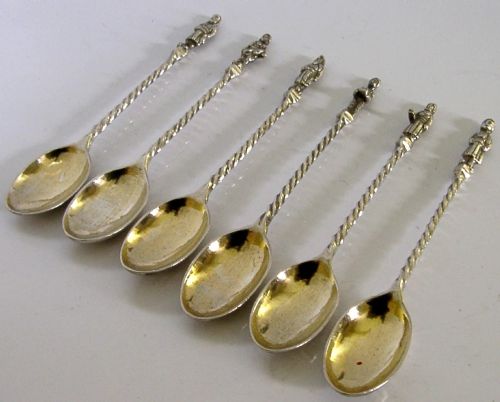
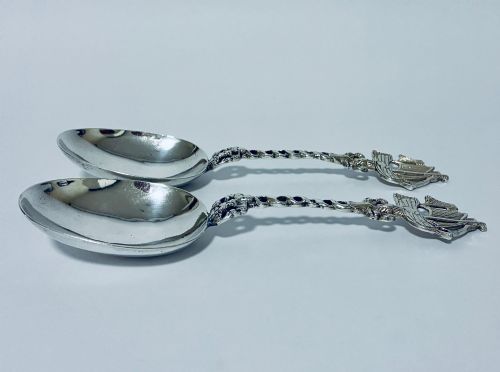
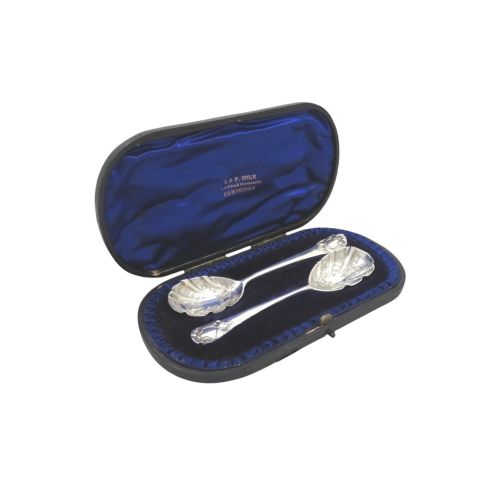


Silver Preserve Spoon
When you search for a silver preserve spoon, you are looking at small utensils designed for serving fruit spreads.
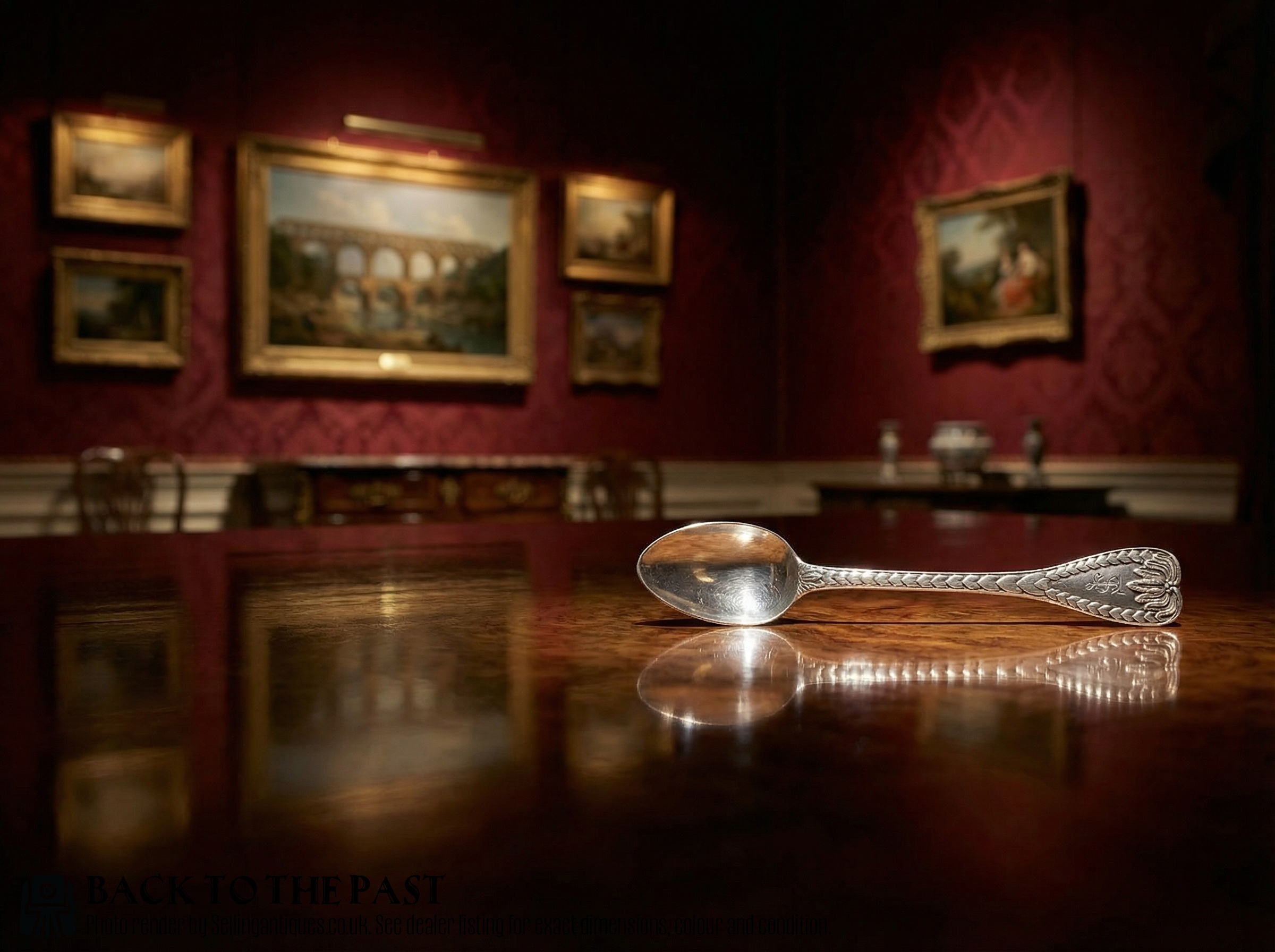
Silver Preserve Spoon
A silver preserve spoon is a specialist utensil designed specifically for serving jam, marmalade and fruit preserves from a jar or bowl to a plate. These pieces often appear alongside cut glass, cranberry glass and leatherette fitted presentation cases, sometimes paired with jars or pots.
The examples found on this page span several decades, stretching from early Victorian examples through Edwardian sets to later twentieth-century designs. You will encounter standalone spoons alongside complete cased sets and fitted glass pots intended for the breakfast table.
Makers and designers worked within various stylistic movements, producing items reflecting Victorian naturalistic tastes, Art Nouveau fluidity and Arts & Crafts simplicity. Whether plain or heavily figural, each piece serves the same traditional function at the dining table.
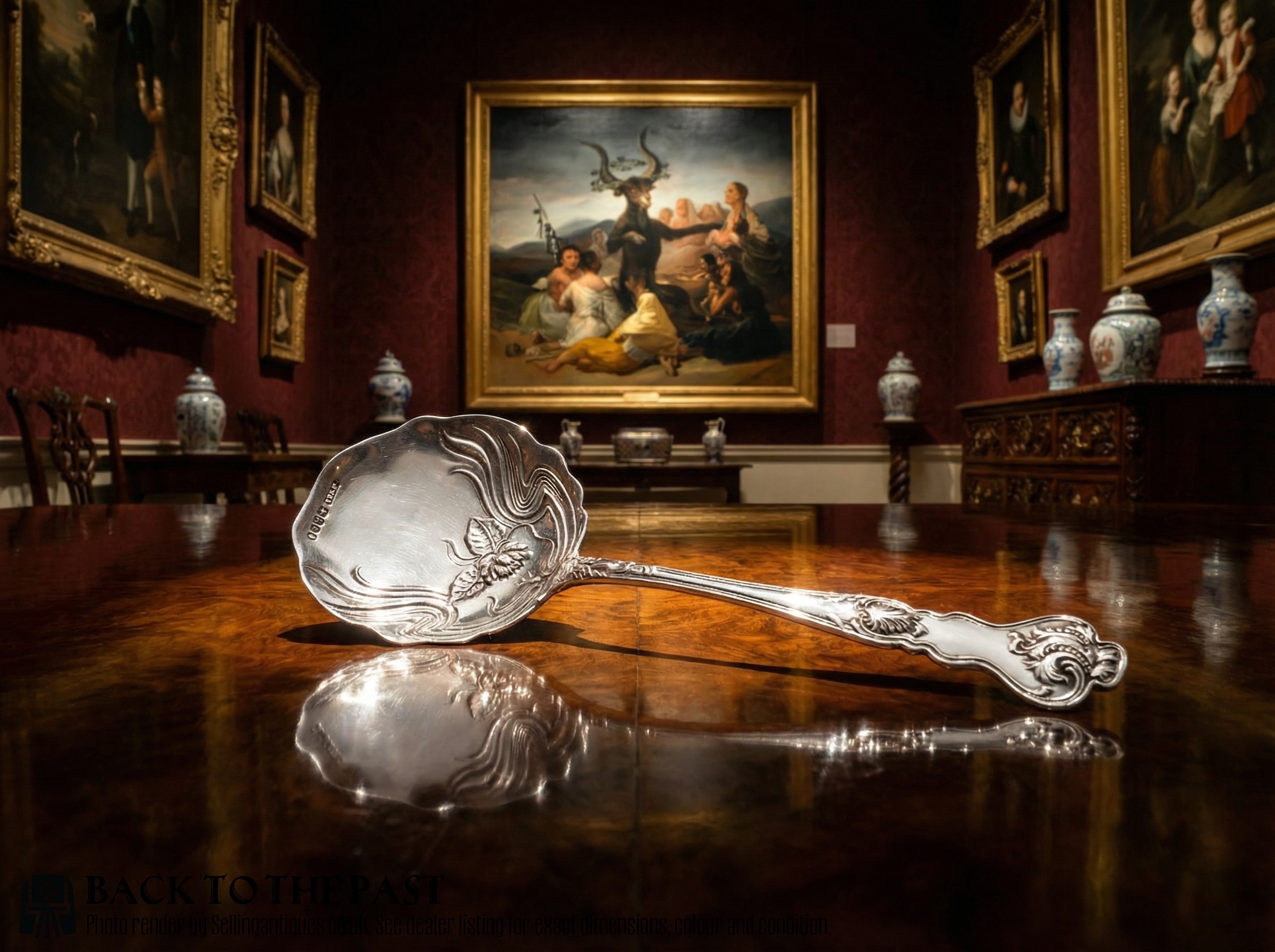
Materials and methods
Makers utilised sterling silver, solid silver and silver plate for the bowls and handles of these utensils, frequently combining them with cut glass, cranberry glass, velvet and leatherette for presentation vessels. Metalworking techniques involved casting, piercing and stamping to create decorative bowls and patterned stems.
Artisans applied various finishes and styles, including silver gilt highlights on naturalistic leaf designs and engraved or etched details on the accompanying glass dishes. Workshops also produced figural and geometric patterns, such as the palm and King Edward motifs, using traditional silversmithing methods.
Silver Preserve Spoon Retail Price Guide 2026
Typical asking prices for silver preserve spoon among the pieces listed under this phrase on Sellingantiques today, from the lower quarter to the upper quarter. They describe what is for sale here now, not the wider market.
Some preserve pots were shaped entirely like apples, waiting quietly on the sideboard for toast.
Distinctions in quality
Quality in a silver preserve spoon rests upon the weight of the metal, the crispness of any pierced or cast decoration, and the integrity of the maker's mark. Heavier gauges of solid silver or sterling silver indicate superior construction compared to lighter silver-plated alternatives.
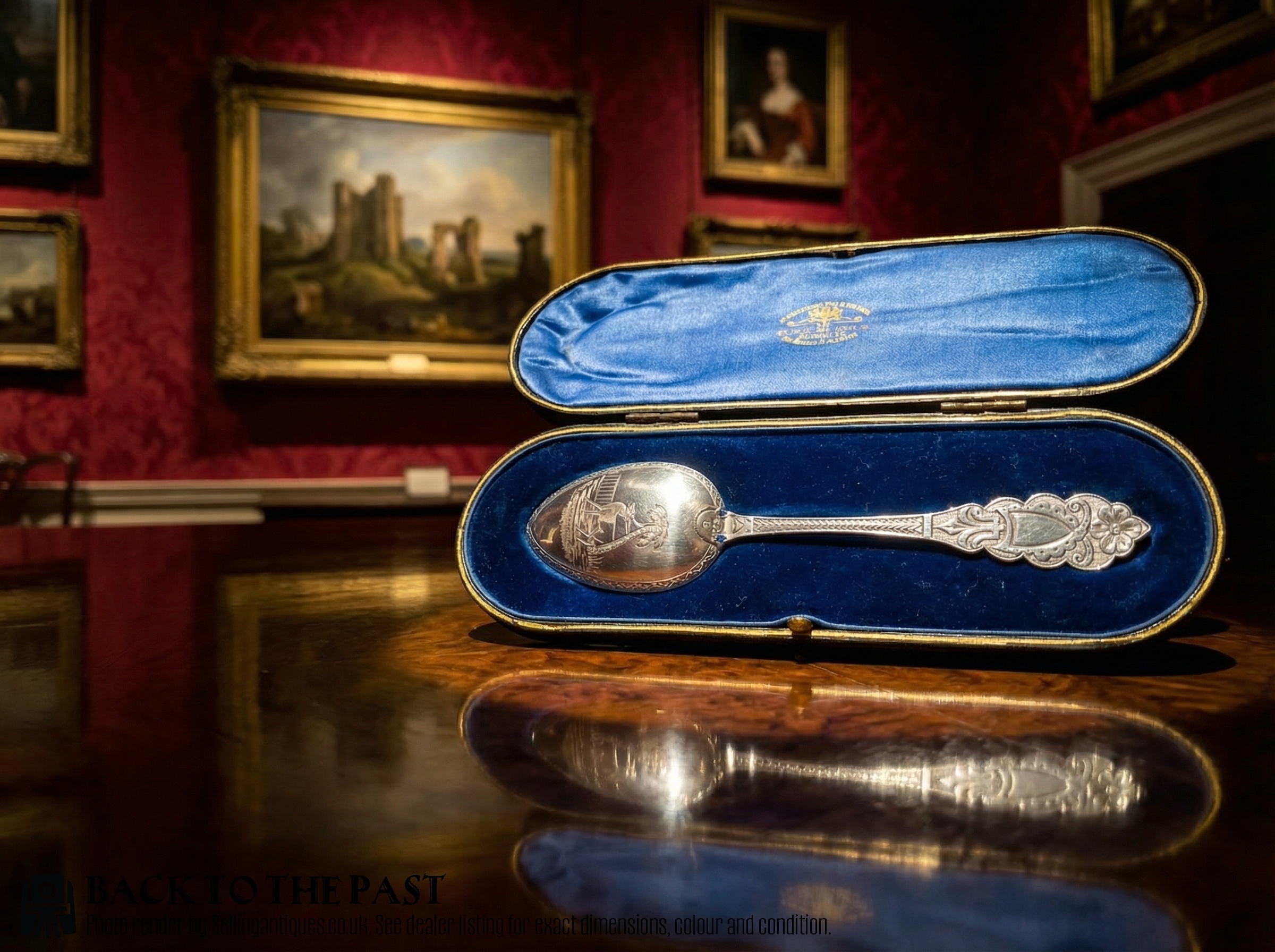
The standard of craftsmanship is also evident in the harmony between the spoon and its accompanying glass container when part of a set. Superior items display careful attention to detail in engraved handles, gilt washes and fitted presentation cases.
Amy Sandheim·Sebastian Crespell·Whiting Co.·George Unite·Georg Jensen·Mappin & Webb·Gwendoline Whicker·Adie & Lovekin·William Creswick·Hukin & Heath
The Silver Preserve Spoon Glossary
- Sterling silver
- A silver alloy containing 92.5 percent pure silver and 7.5 percent other metals, usually copper, ensuring durability for tableware.
- Silver gilt
- Silver that has been coated with a thin layer of gold on its surface, often applied to the interior of spoon bowls.
- Pierced work
- Metal that has been cut through with patterns or open spaces, frequently seen on the bowls of jam spoons.
- Cranberry glass
- A rich red glass coloured with gold chloride, popular in Victorian and Edwardian preserve dishes.
- Naturalistic
- A design style mimicking organic forms such as leaves, stems and flowers, prominent in nineteenth-century decorative arts.
Silver Preserve Spoon: Frequently Asked Questions
What is a silver preserve spoon used for?
These utensils are designed to transfer jam, marmalade and fruit spreads from a central jar or bowl onto an individual plate. Their small bowls and often angled handles suit the task of reaching into glass preserve pots.
Historically, they formed part of a well-appointed breakfast or afternoon tea table setting. Many were sold alongside matching glass jars or housed within fitted presentation boxes.
How do I date a silver preserve spoon?
Dating relies heavily upon the hallmarked letters and symbols stamped into the metal by official assay offices. These marks indicate the year of testing and the city where it took place.
Stylistic indicators also help narrow down the period, such as flowing Art Nouveau lines or elaborate Victorian naturalistic leaf motifs. Comparing the handle pattern to known historical designs provides further chronological clues.
Were these spoons sold individually?
Makers retailed them both as standalone items and as part of cased sets alongside butter knives and pickle forks. Boxed pairs were particularly common during the Edwardian era for wedding gifts.
Some were also manufactured specifically to accompany glass jam pots, sold as a matched set with a fitted lid and matching spoon.
What is the difference between solid silver and silver plate?
Solid silver or sterling silver items consist entirely of silver alloys throughout the entire thickness of the object. These pieces carry official hallmarks indicating the purity of the metal.
Silver plate involves a thin layer of silver bonded over a base metal foundation, such as copper or nickel brass. Plated items generally show wear over long periods of heavy use where the base metal beneath becomes exposed.