

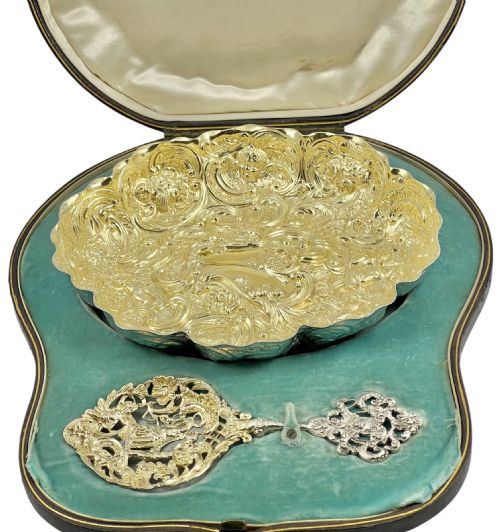


Silver Presentation Spoons
Silver presentation spoons are formal commemorative pieces often preserved in fitted cases, combining ornate craftsmanship with personal or civic history.
Silver Presentation Spoons
Silver presentation spoons are celebratory tableware items created to mark significant personal milestones, civic events, or formal awards. Buyers searching for silver presentation spoons encounter commemorative sets and single presentation pieces spanning the Victorian, Edwardian, and later periods.
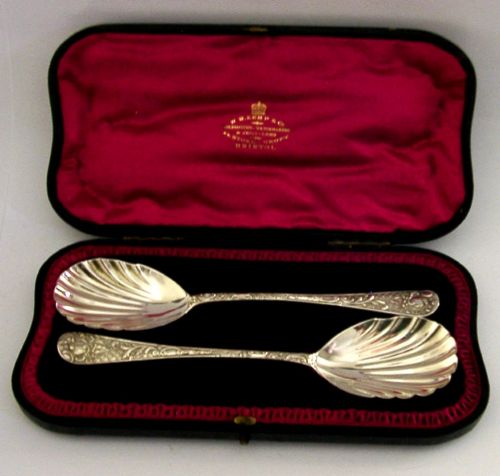
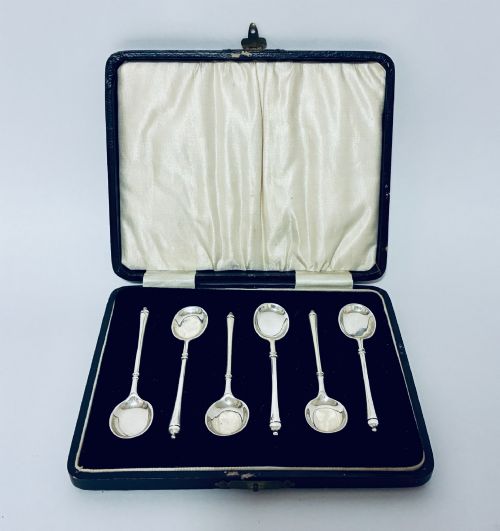
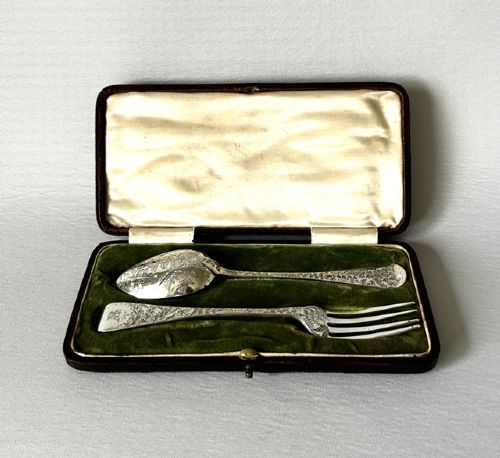
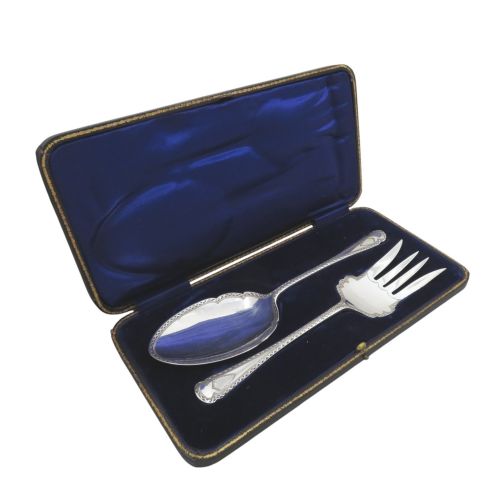
The assortment on this page includes individual presentation spoons featuring specific heraldic or figural details, alongside cased pairs and sets intended for christenings, fruit serving, or sugar sifting. Many survive alongside their original fitted presentation boxes lined with velvet, silk, or satin.
Forms range from large serving spoons and dessert pieces to smaller christening sets, coffee spoons, and sugar sifters. Styles traverse Victorian exuberance, Edwardian refinement, Art Deco geometry, and traditional Dutch Continental designs.
Materials and Technique
These pieces utilise sterling silver and solid silver, frequently enhanced with partial silver gilt finishes to highlight intricate bowls and handles. Manufacturing techniques span traditional smithing and casting, alongside specialised embellishments like gilding and piercing.
Storage vessels utilise protective materials including leather, leatherette, velvet, silk, and satin to line custom cases designed to preserve the silver. Tortoiseshell appears in specific box constructions housing spoons.
Evaluating Quality
Quality rests upon the crispness of the chasing, engraving, or cast ornamentation on the spoon stem and bowl. Superior examples display deep relief work and well-balanced proportions that indicate skilled silversmithing.
The integrity and original condition of the accompanying presentation case significantly influence the overall character of the piece. Fitted boxes retaining their original silk and velvet linings add context and protection to the silver within.
Robert Stebbings·John Round
The Silver Presentation Spoons Glossary
- Sterling silver
- An alloy containing 92.5 percent silver and 7.5 percent other metals, typically copper, used for durability and standard British plate.
- Silver gilt
- Silver that has been coated with a thin layer of gold on its surface, often applied to the interior bowls of sugar sifter spoons.
- Presentation case
- A fitted box, frequently covered in leather or leatherette and lined with silk or velvet, designed to house and display specific silverware.
- Sifter spoon
- A spoon featuring a pierced or perforated bowl designed for dusting sugar over fruit or desserts.
- Assay office
- An organisation charged with testing the purity of precious metals and stamping items with hallmarks.
Silver Presentation Spoons: Frequently Asked Questions
What are silver presentation spoons?
Silver presentation spoons are commemorative items created to mark formal occasions, awards, or personal milestones. They are distinguished by careful ornamentation and are frequently housed in dedicated fitted boxes.
These pieces encompass large serving implements, christening sets, and sugar sifters from various nineteenth and twentieth-century periods. Their design often reflects the specific stylistic preferences of their manufacturing era.
How were presentation spoons used?
Many presentation spoons served ceremonial or display functions rather than everyday dining tasks. They were often given as gifts to mark christenings, retirements, or civic achievements.
When utilised at the table, specific forms like berry spoons and sifter spoons managed desserts, sugar, or fruit service during formal meals.
How do I care for silver presentation spoons?
Care involves gentle cleaning using appropriate silver polish and soft cloths to maintain the metal surface without wearing down engraved details. Storing the spoons in their original fitted cases protects them from tarnish and airborne pollutants.
Avoid abrasive materials and harsh chemical dips that can damage delicate gilding or the texture of the silver.