


Cased Berry Spoons
These cased berry spoons are tailored serving sets housed in fitted presentation boxes, perfect for bringing formal fruit desserts to the table.
Cased Berry Spoons
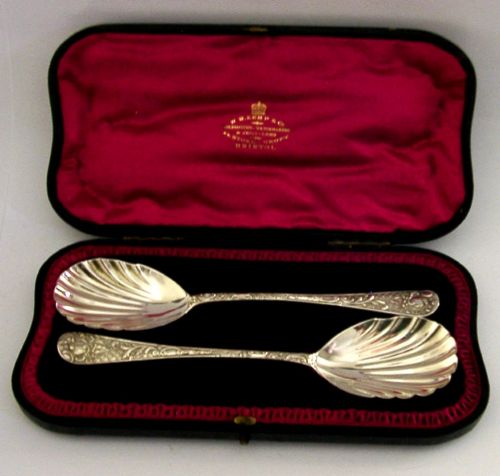
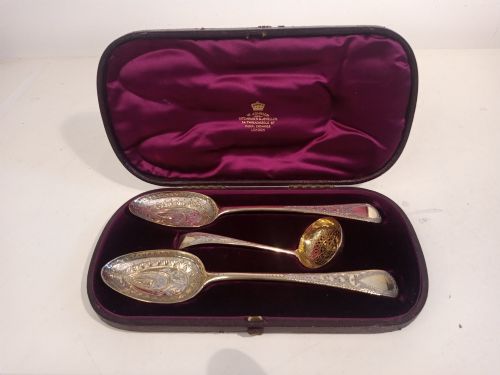
Cased berry spoons encompass serving flatware and fruit sets originally designed for dessert courses, frequently pairing large bowls with matching sugar sifters. The pieces encountered here span the Georgian and Victorian eras, alongside Edwardian and Art Nouveau examples.
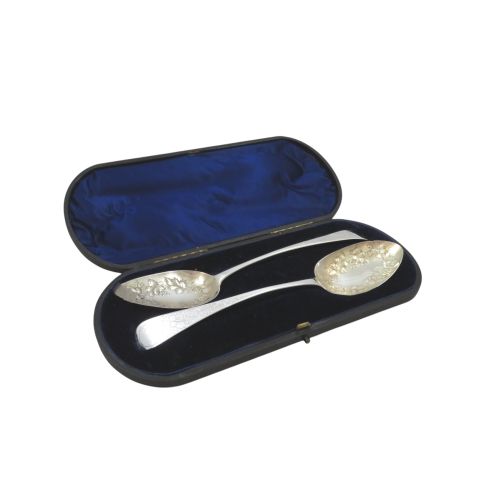
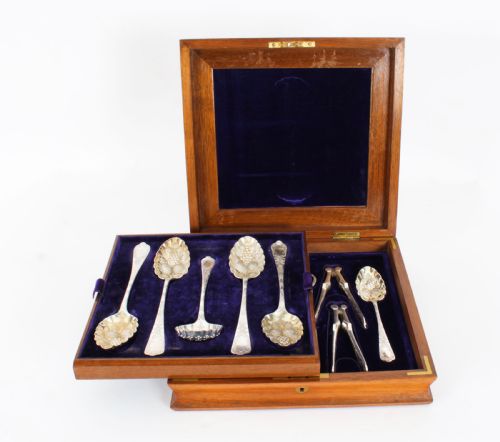
Most entries comprise pairs or small matched sets nestled inside fitted presentation boxes lined with silk, velvet, or satin. Collectors encounter both sterling silver and silver-plated iterations, sometimes complemented by accessories like nutcrackers or grape scissors.
Materials and construction
Silversmiths formed the spoons from sterling silver or silver-gilt, occasionally applying heavy gilding to the bowl interiors to resist the acidic juices of fresh fruits. Handles often display ornate repoussé work, chasing, or hand-engraved detailing.
The protective outer cases rely on rigid leatherette or cardboard structures lined internally with soft fabrics such as velvet, silk, or satin to cradle each utensil securely.
Listings feature sterling silver and silver plate across Georgian, Victorian, and Edwardian periods.
Distinctions in quality
Quality rests heavily upon the crispness of the engraved or chased decoration across the bowls and handles, where deeper hand-tooling creates sharper floral and fruit motifs. The thickness and weight of the metal itself also separate standard production items from more substantial silversmith work.
The integrity and original condition of the fitted presentation box matter significantly, particularly the preservation of the interior velvet or silk lining and the exterior leatherette finish.
Bateman·Hukin and Heath·George Smith III
The Cased Berry Spoons Glossary
- Berry spoon
- A large serving spoon with a wide bowl, typically featuring fruit and floral motifs added to the surface. These pieces were adapted during the Georgian period for serving soft fruits.
- Sugar sifter
- A matching spoon with a perforated bowl designed for dusting powdered sugar over fruit. It usually accompanies berry spoons inside fitted presentation cases.
- Silver-gilt
- Sterling silver that has been coated with a thin layer of gold. This finish provides a warm yellow tone and protects the silver from tarnishing when in contact with acidic foods.
- Leatherette
- A synthetic material textured to resemble leather, commonly used to cover the exterior of nineteenth-century presentation boxes. It offers a durable shell for delicate flatware.
- Repoussé
- A metalworking technique where the design is hammered into relief from the reverse side. This method creates the raised fruit and leaf patterns seen on many serving spoons.
Cased Berry Spoons: Frequently Asked Questions
What are cased berry spoons?
These items are specialised serving spoons housed in protective presentation boxes, often accompanied by matching sugar sifters or fruit utensils.
They were created primarily for serving soft fruits and desserts during formal dining occasions in the Georgian and Victorian periods.
How were berry spoons used?
Hosts used these large spoons to serve berries and other delicate fruits from a communal bowl onto individual dessert plates.
The accompanying sifter spoon allowed diners to sprinkle powdered sugar over the fruit as it was served.
Are these spoons made of solid silver?
The listings include both sterling silver items and silver-plated alternatives, depending on the specific period and maker.
Silver-gilt versions feature a gold wash applied directly over the silver surface of the bowl.
How do I store a cased set?
Keep the spoons inside their original fitted presentation box to protect the delicate silk or velvet lining and prevent movement.
Store the box in a dry environment away from direct sunlight to preserve the leatherette exterior and the metal finish.