
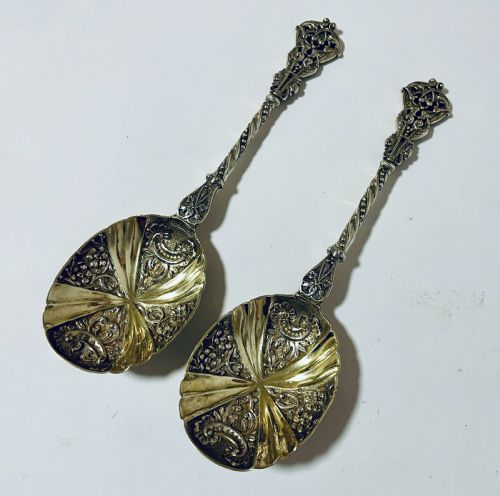
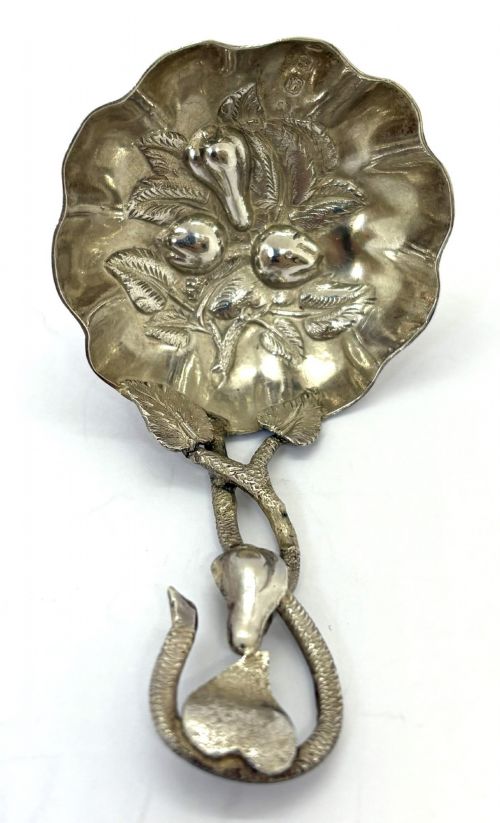
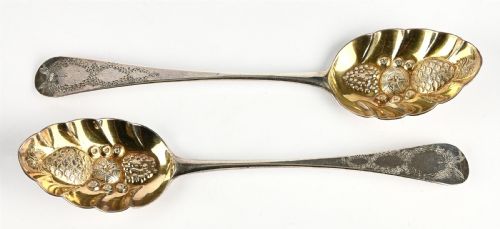


Embossed Silver Spoon
These embossed silver spoon examples bring tactile texture and raised ornamentation directly to the table, uniting Georgian elegance with Victorian craftsmanship.
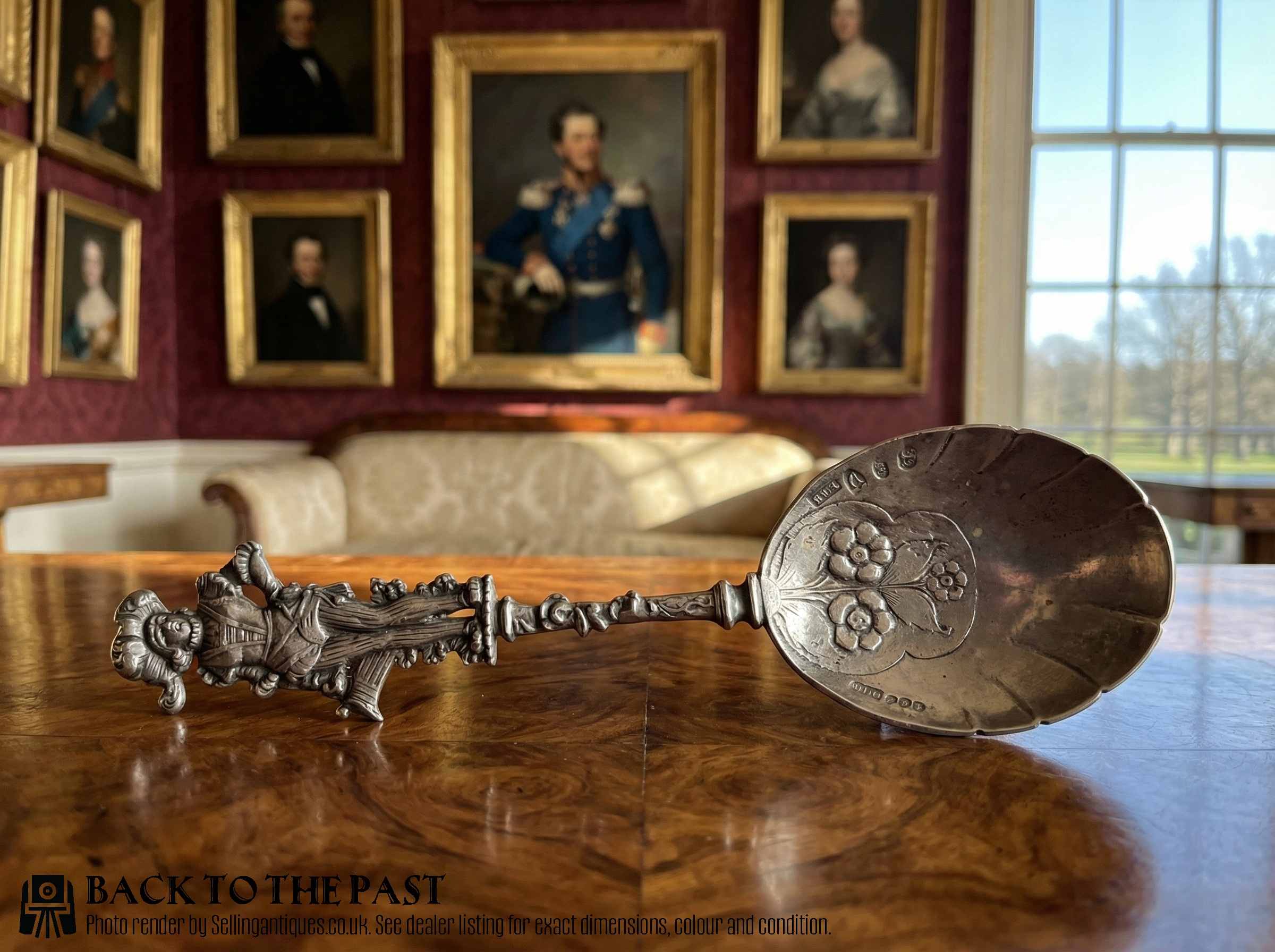
Embossed Silver Spoon
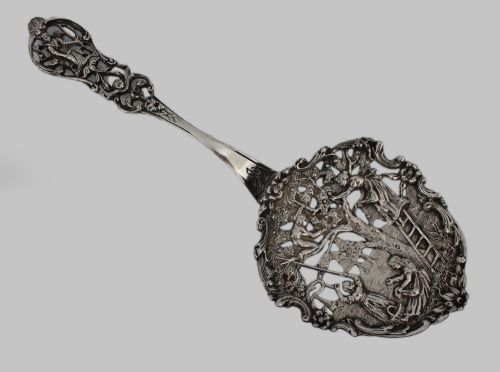
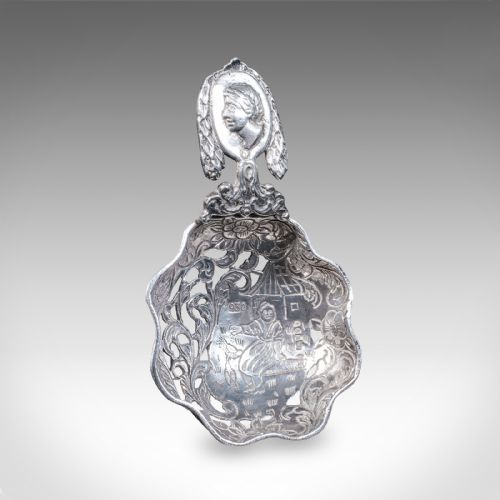
When you search for an embossed silver spoon, you are looking at functional tableware rendered decorative through raised patterns hammered or pressed into the metal. The items seen here range from berry spoons and caddy spoons to sugar sifters and dessert servers.
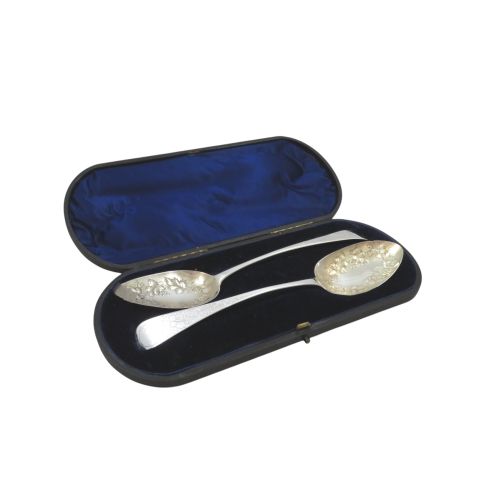
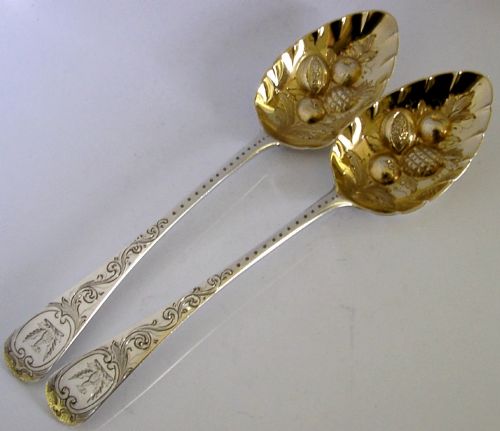
The versions most likely to meet you on this page date from the Georgian and Victorian periods, often appearing in matched pairs or original fitted cases. These pieces frequently display floral motifs, fruit designs, and crests worked across the bowl or handle.
How they were made
Silversmiths utilised sterling silver and silver gilt, hammering the metal from behind to push the design forward into relief, a technique known as repoussé. Chasing tools were then applied to the front surface to refine details like fruit leaves, scrolls, and flower petals.
Some examples incorporate pierced work alongside the embossed sections, creating openwork patterns in fruit spoons and sugar sifters. Gilded finishes, velvet linings in cases, and engraved handles complete the construction recorded in these pieces.
Listings span the Georgian, Victorian, and Edwardian eras, utilising sterling silver, silver gilt, and velvet-lined presentation cases.
What varies in quality
The distinction between average and exceptional work lies in the crispness and depth of the relief work across the bowl. Superior examples retain sharp leaf edges and defined scrollwork without the metal thinning excessively from over-hammering.
Maker execution and heavier gauge silver elevate certain pieces, particularly where engraving on the handle matches the ambition of the embossed bowl. Original cases and matched pairings also distinguish the better items in this category.
peter & Anne Bateman·William Chawner II·Berthold Herman Muller·Henry William Curry·George Smith III
The Embossed Silver Spoon Glossary
- Repoussé
- A metalworking technique where the design is hammered into relief from the reverse side. This method creates the raised ornamentation seen across the bowls of berry spoons and caddy spoons.
- Berry spoon
- A large serving spoon, often Georgian or Victorian, featuring fruit and foliage embossed or chased onto the bowl long after initial manufacture. They were traditionally used for serving soft fruits.
- Caddy spoon
- A small spoon designed for measuring loose tea leaves from a caddy, frequently produced in silver with embossed or shovel-shaped bowls during the eighteenth and nineteenth centuries.
- Silver gilt
- Sterling silver that has been coated with a thin layer of gold, providing a rich yellow sheen. This finish appears frequently on dessert and fruit serving pieces.
- Sifter spoon
- A spoon with a pierced or slotted bowl used for dusting sugar over desserts or fruit. These often accompany sugar bowls in matched sets.
Embossed Silver Spoon: Frequently Asked Questions
What is a berry spoon used for?
Berry spoons were traditionally designed for serving fresh soft fruits like strawberries and raspberries during formal dining.
Over time, many plain eighteenth-century spoons were later embellished with fruit and leaf motifs to serve this specific Victorian dining trend.
How do I care for silver gilt spoons?
Silver gilt requires gentle handling because aggressive polishing will wear away the gold layer over time.
Wash them in warm soapy water with a soft cloth and avoid chemical dips that strip the gilt finish.
Are caddy spoons different from regular spoons?
Caddy spoons are noticeably smaller and feature shallower, wider bowls tailored for scooping dry tea leaves from storage containers.
Their short handles and decorative embossed designs distinguished them as specialised tea paraphernalia on the Victorian table.
How can I tell Georgian spoons from Victorian ones?
Georgian pieces generally exhibit simpler lines and cleaner hallmarks, though many earlier bowls received Victorian embossed alterations later in the nineteenth century.
Examining the duty marks and style of the repoussé work helps determine the primary period of manufacture versus later decorative updates.