
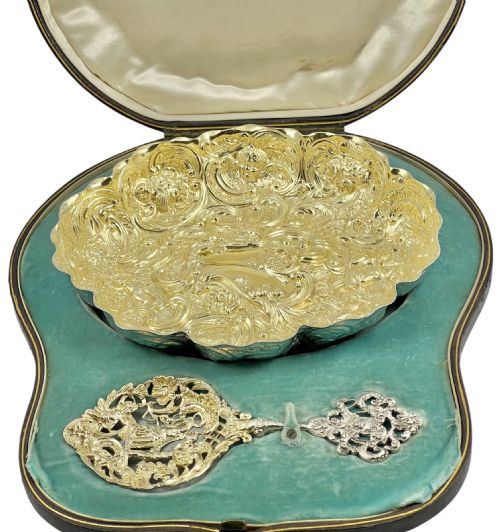


Ornate Silver Spoon
An ornate silver spoon brings weight, decoration, and history to the table through elaborate scrollwork and cast detail.
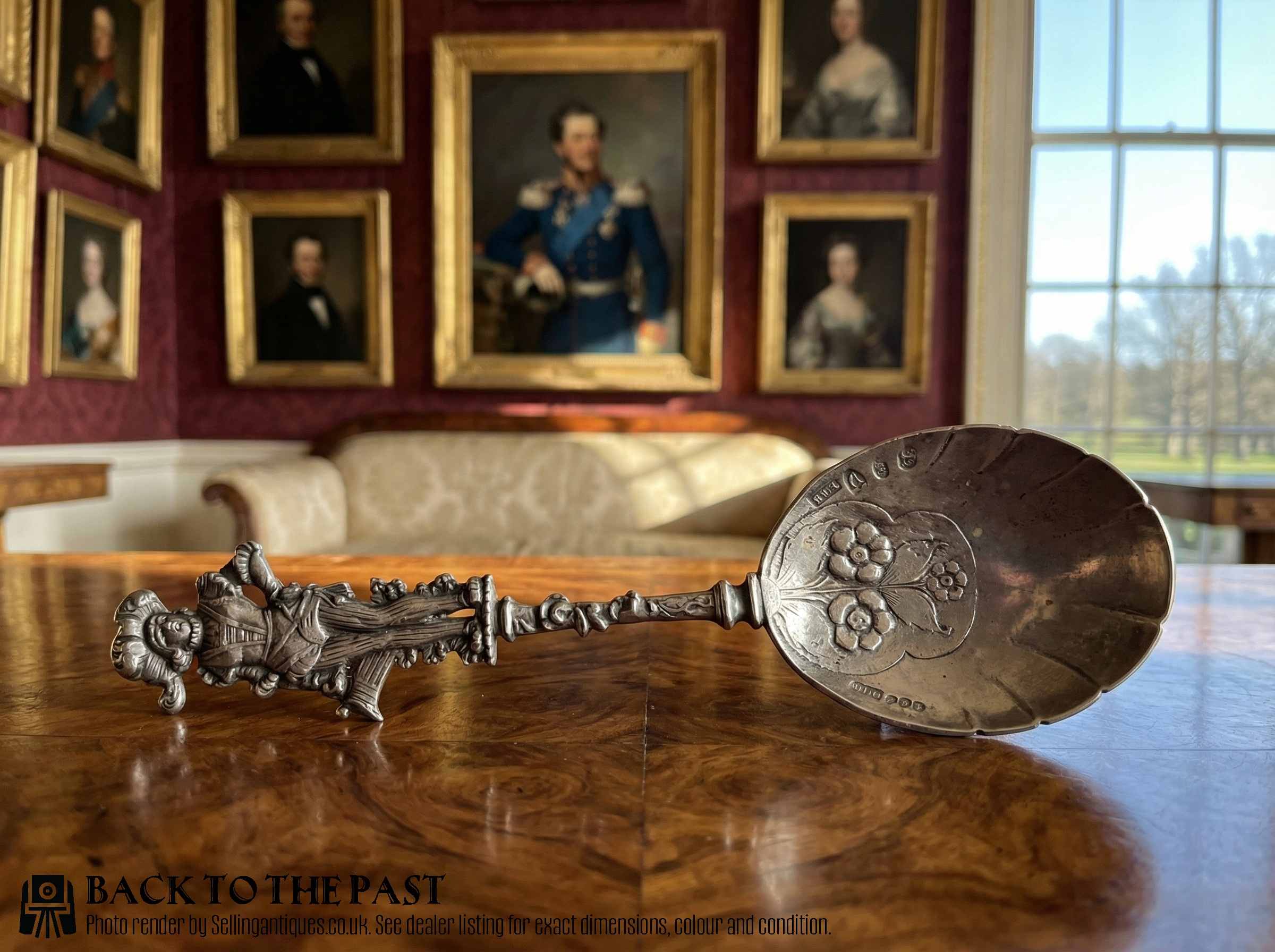
Ornate Silver Spoon
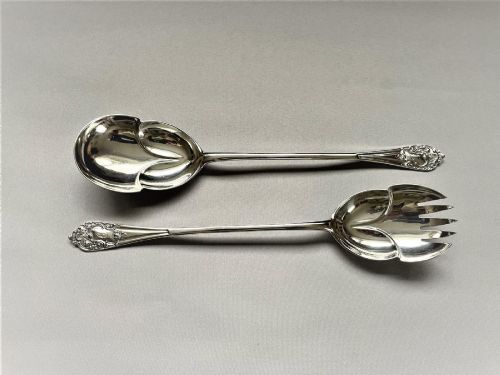
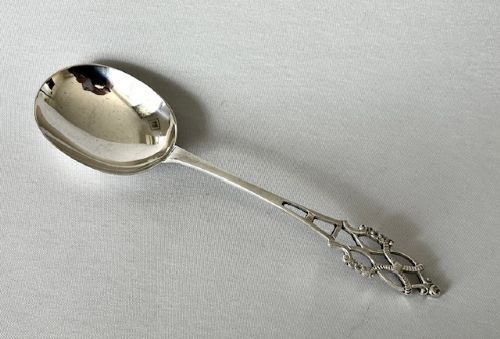
An ornate silver spoon is a functional or decorative utensil defined by heavy embossing, chased patterns, and sculptural bowls that span the Victorian, Edwardian, and early twentieth-century periods. These pieces appear as individual serving spoons, salad servers, gravy spoons, sugar bowls with matching spoons, sauce ladles, and cased sets.
The version most commonly met on this page is the Victorian or Edwardian sterling silver serving piece, often featuring repoussé work, scrollwork, or traditional decorative motifs like the Queens pattern and King Edward pattern. Makers shape these utensils for specific dining tasks, ranging from berry service to condiment handling.
Origins stretch from English assay offices in London, Sheffield, and Birmingham, capturing late nineteenth-century and early twentieth-century domestic silver production. Collectors encounter both solid sterling pieces and silver-plated examples housed in fitted velvet or leather presentation boxes.
Materials and construction
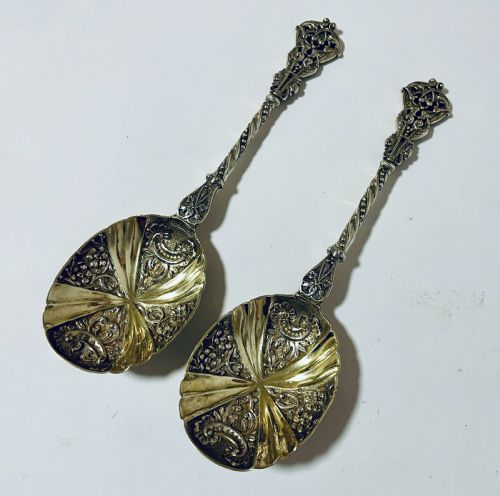
Makers utilise sterling silver, solid silver, and silver plate as the foundational metals for these spoons, occasionally applying silver gilt or vermeil to highlight specific design elements. The application of gold wash over silver creates a two-tone visual contrast on bowls and detailed handles.
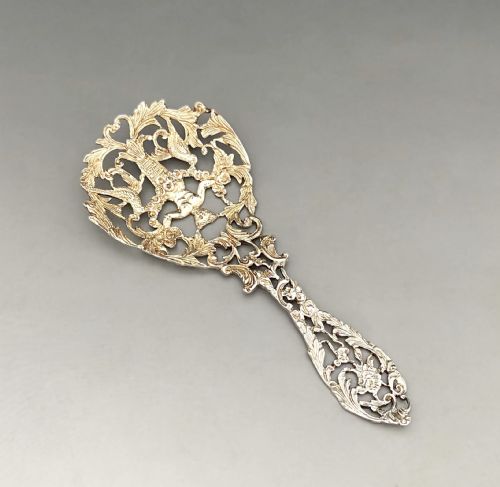
Craftsmen employ casting, repoussé, and chasing techniques to achieve high-relief scrollwork and figural designs directly onto the metal surface. Spoons featuring cast elements often incorporate detailed shell bowls, figural handles, and pierce-work derived from traditional anointing designs.
Distinctions in craftsmanship
The depth and clarity of the repoussé work and the crispness of cast scrollwork separate standard production items from superior examples. Hand-wrought chasing and detailed pierce-work demand advanced silversmithing skill, ensuring the decorative relief remains sharp across the handle and bowl.
The inclusion of original fitted cases lined with velvet or leather, alongside complete matched pairs or larger cased services, elevates the standing of a piece. Hallmarks indicating specific makers, precise assay years, and solid sterling standards provide verifiable markers of origin and material integrity.
William Comyns·Berthold Herman Muller·Whiting Co.·Lee & Wigfull·John Henry Lias
The Ornate Silver Spoon Glossary
- Repoussé
- Metalworking technique where patterns are hammered into relief from the reverse side. This method creates the raised floral and scroll motifs seen on many decorative bowls.
- Silver-Gilt
- Sterling silver that has been coated with a thin layer of gold. This treatment provides a rich interior finish to bowls designed for sugar or berries.
- Sterling Silver
- An alloy consisting of pure silver and other metals to ensure structural durability. British pieces meeting this standard carry the lion passant hallmark.
- Caddy Spoon
- A short-handled spoon specifically designed for measuring loose tea leaves from a caddy. These pieces frequently display highly decorative figural or embossed bowls.
- Sauce Ladle
- A small ladle with a deep bowl used for serving gravies and sauces. They share the ornate scrollwork and pattern designs of larger tableware.
Ornate Silver Spoon: Frequently Asked Questions
How do I clean an antique silver spoon?
Clean these spoons gently using a specialised silver cloth to preserve the dark patina in the recessed areas of the repoussé work.
Avoid harsh abrasive dips that strip away the historical character and soften the fine details of the cast scrollwork.
Were these spoons used for dining?
Many of these pieces served specialised dining functions such as serving berries, ladling sauces, or dispensing sugar during formal meals.
Larger serving spoons and salad servers were standard accompaniments to nineteenth-century dining tables and sideboard displays.
How do I read silver hallmarks?
Hallmarks stamped into the metal indicate the assay office location, the standard of silver, and the specific year of production.
Letters and symbols direct researchers to records identifying the exact maker and town of origin for each piece.
Can I use silver gilt spoons daily?
Silver gilt items tolerate gentle use, though hand washing protects the delicate gold wash layer from premature wear.
Storing pieces in fitted velvet or leather cases prevents surface scratching when the utensils are not on display.