


Silver Plated Goblet
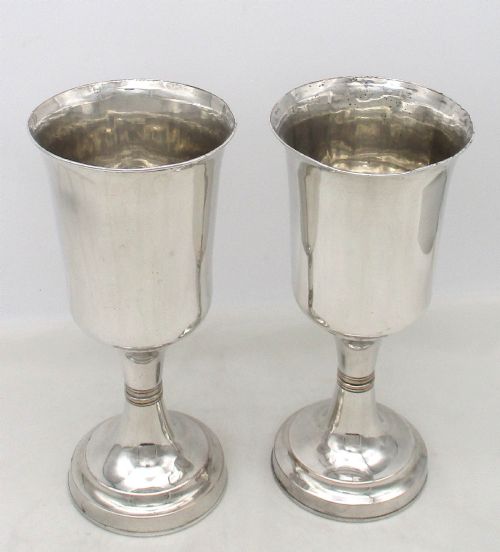
These silver plated goblet pieces bring tactile weight and historical substance to a table, combining durable base metals with bright metallic surfaces.
Silver Plated Goblet
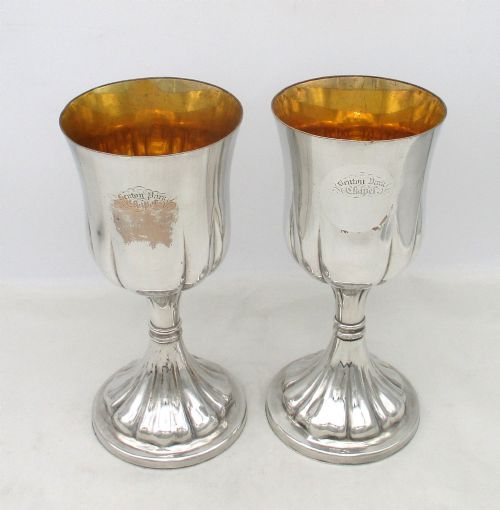
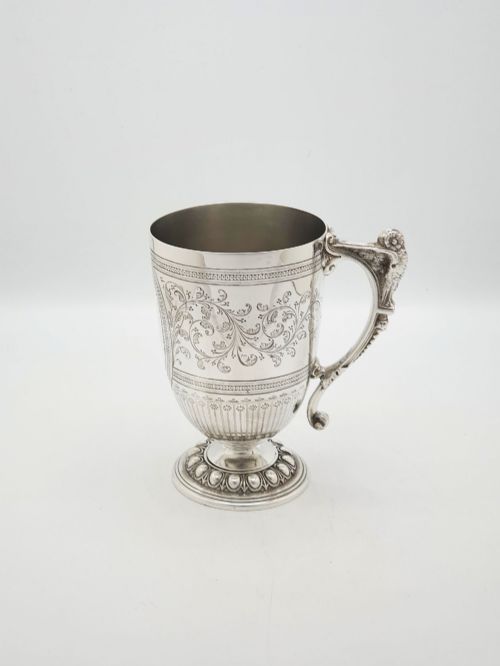
A silver plated goblet represents a long tradition of drinking vessels and ecclesiastical plate, spanning domestic tankards, loving cups, and church chalices. When exploring this category, buyers encounter forms ranging from Georgian and Victorian church vessels to Edwardian tankards and twentieth-century cocktail pieces.
The domestic and ecclesiastical pieces on this page draw from periods including the eighteenth, nineteenth, and early twentieth centuries. These vessels often appear as single presentation items or in matched pairs and sets, reflecting formal dining and ritual use.
Materials and production methods
Many early vessels utilise Old Sheffield Plate, a method fusing a thin layer of silver onto a thicker copper base. Later nineteenth-century examples often employ electroplating techniques, applying silver particles to nickel silver, copper, or electrotype metal.
Makers enhanced these forms through hand-embossing, engraving, hammer work, and applied details such as cast handles. Some pieces incorporate internal gilt or gold gilding finishes to protect the metal from acidic contents.
The selection includes domestic drinking vessels alongside ecclesiastical church chalices and communion sets from various British manufacturing centres.
Evaluating craftsmanship and condition
Quality rests upon the crispness of chased and embossed decoration and the structural integrity of the underlying metal. Fine examples maintain clean joint lines and balanced proportions, whether plain or heavily ornamented.
The preservation of the silver layer over the base metal determines the visual success of a piece. Superior items show careful handling that respects the original plating thickness and retains sharp surface detail.
Henry Bourne·Richard Morton·Elkington Mason·Joseph Rodgers & Sons·Atkin Brothers·Walker & Hall
The Silver Plated Goblet Glossary
- Old Sheffield Plate
- A composite material made by fusing silver sheet to a copper ingot before rolling into sheets. This technique predates modern electroplating and produces characteristic subtle copper seams.
- Electroplate
- A process using electrical current to deposit a layer of silver onto a base metal object. This innovation superseded Old Sheffield Plate during the nineteenth century.
- Chalice
- A stemmed sacramental cup used for drinking wine during religious communion services. Many church examples survive within this category due to their robust construction.
- Loving Cup
- A large two-handled drinking vessel traditionally passed among guests at banquets and celebrations. These pieces often feature substantial capacity and decorative handles.
- Gilt
- A thin application of gold or gold wash applied to the interior or exterior surfaces of a metal vessel. This treatment provides a rich contrasting colour and prevents tarnishing from liquids.
Silver Plated Goblet: Frequently Asked Questions
How do I clean a silver plated goblet?
Wash the vessel gently in warm water with mild soap, using a soft cloth to remove dust and residues. Avoid harsh abrasive dips that can strip thin plating from the underlying metal.
Dry the surface completely with a soft lint-free cloth to prevent water spots. Store the piece away from damp environments to maintain the finish.
What is Old Sheffield Plate?
Old Sheffield Plate is an early composite material created by fusing a sheet of silver to a thick copper base before shaping. This method creates a durable substance where the metals are bound together under heat and pressure.
Items made this way often reveal faint hints of copper along cut edges or high points where decades of use have worn the outer silver layer.
Were these goblets used for drinking?
Many domestic goblets, tankards, and loving cups served practical roles at the dining table or during formal gatherings. They held wine, ale, and other beverages for toasts and communal drinking.
Other examples served religious functions as church chalices and communion flagons, while some twentieth-century pieces functioned as cocktail shakers and presentation trophies.
How can I tell the age of a piece?
Dating relies on manufacturing techniques, stylistic cues, and maker marks stamped into the metal. Eighteenth and early nineteenth-century items frequently utilise Old Sheffield Plate methods and Georgian or Regency aesthetic forms.
Later nineteenth and twentieth-century examples display electroplate signatures, Victorian ornamentation, or Art Deco geometric hammering. Comparing weight, form, and surface wear helps place an object within its correct period.