


Silver Plated Glass Basket
These silver plated glass baskets bring together pressed or blown coloured vessels and metal mounts to serve fruit, sugar or sweets.
Silver Plated Glass Basket
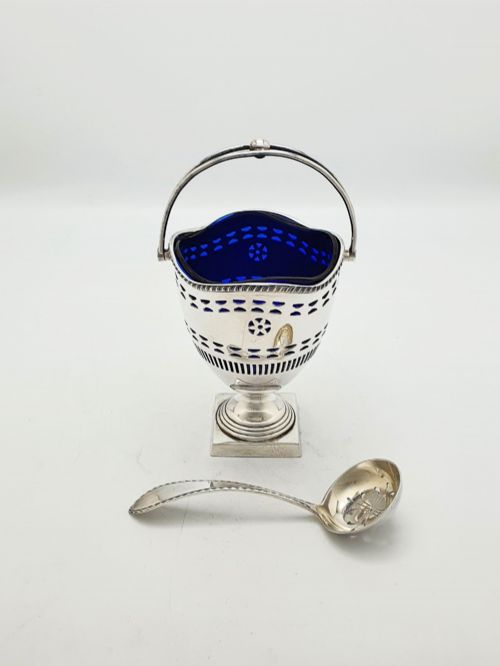
A silver plated glass basket pairs a coloured glass vessel with a metal frame, handle or stand, appearing frequently in Victorian and Edwardian dining arrangements. These tablewares function as sugar baskets, bonbon dishes or table centrepieces depending on their scale and depth.
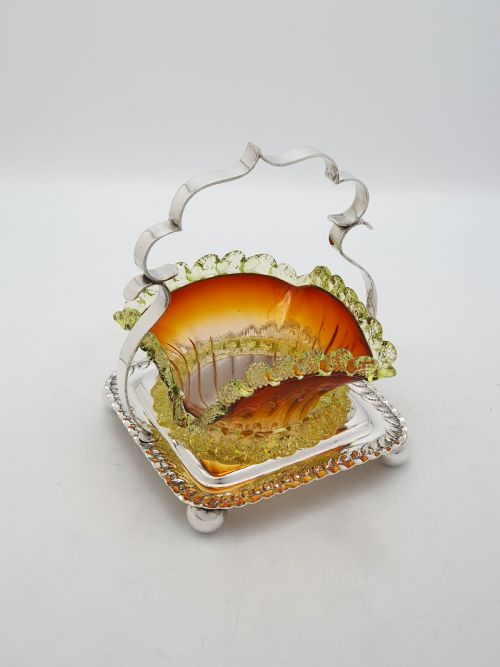
The glass liners often arrive in striking hues such as cranberry, vaseline, cobalt, amber and opaline, shaped with frilled rims or optic ribbing. Pierced or reticulated silver plate frames cradle these vibrant inserts to let the colour catch the light from every angle.
Materials and construction methods
Silversmiths utilised electroplating techniques over base metals to create durable metal mounts, often shaping the outer frames with pierced, cast or reticulated patterns. Swing handles fixed to the rims allow the pieces to be lifted easily during service.
Glassmakers blew or pressed molten material into moulds to produce liners tailored to fit the metal baskets precisely. The resulting vessels combine contrasting textures of reflective metal and transparent or opaque coloured glass.
Listings for silver plated glass baskets feature periods spanning from 1860 to 1910, encompassing Aesthetic Movement, Victorian and Art Nouveau styles.
Judging the range of quality
The weight and crispness of the metal mounting define the upper tier of these objects, where pierced patterns show sharp internal edges and solid casting. Heavier gauge silver plate resists bending along the swing handle joints and rim mounts.
Glass quality appears in the depth of colour, uniformity of thickness and complexity of surface form, such as hand-crimped rims or integrated cut crystal facets. Matching an original liner securely to its specific plated stand indicates deliberate pairing by the maker.
WMF
The Silver Plated Glass Basket Glossary
- Silver plate
- Base metal coated with a thin layer of silver through an electrolytic process. This method became widespread during the nineteenth century for decorative tableware.
- Vaseline glass
- Translucent yellowish-green glass containing uranium dioxide that glows under ultraviolet light. It appears frequently in late nineteenth-century table pieces.
- Cranberry glass
- Transparent pinkish-red glass produced by adding gold chloride to the molten batch. It forms a staple colour for Victorian preserve dishes and liners.
- Reticulated
- Metalwork formed into an open network or mesh pattern resembling a net. This technique lightened the visual weight of sugar baskets and centrepieces.
- Bonbon dish
- A small vessel designed to hold sweets or confectionery on a table or sideboard. These items often feature swing handles and coloured glass inserts.
Silver Plated Glass Basket: Frequently Asked Questions
What were silver plated glass baskets used for?
These vessels held sugar, preserves, bonbons or small fruits for formal dining and tea service. Their open framework displayed coloured glass liners while allowing guests to serve themselves easily.
Over time, they moved from functional dining room accessories to decorative display objects on sideboards and mantelpieces. Their portable nature made them practical for passing treats around a table.
How do I identify a Victorian basket?
Victorian examples often combine heavy cast or pierced silver plate mounts with rich glass colours like cranberry, blue or opaline. Many feature swing handles attached to circular or oval frames designed to hold fitted liners.
Stylistic cues from the Aesthetic Movement or early Art Nouveau appear on the metalwork of pieces dating from the late nineteenth century. Examining the construction of the handle joints and the thickness of the plating helps place the item in its period.
What is vaseline glass?
Vaseline glass is a transparent or translucent yellow-green material that gained popularity during the Victorian era. The distinctive hue comes from small amounts of uranium added to the glass batch during production.
These pieces often show a bright green glow when exposed to ultraviolet light. They appear frequently in table centrepieces and sweetmeat dishes paired with silver plated stands.
How should I clean the metal frame?
Silver plate requires gentle cleaning with a soft cloth and a specialised silver polish formulated to preserve the thin metal layer. Avoid abrasive cleaners that can wear away the plating over the raised details and pierced sections.
Removing the glass liner before polishing prevents any residue from lodging in the crevices between the metal and the glass. Regular dusting with a dry microfiber cloth helps maintain the shine without chemical intervention.
Are the glass liners removable?
Most glass liners lift out of their silver plated frames to allow for easy washing after use. The metal baskets are constructed with enough clearance to let the shaped glass drop in securely.
When handling these pieces, lift the glass separately from the metal stand to prevent accidental slips. Original liners fit the contours of the pierced frame without excessive movement.