


Crystal Bowl on Stand
A crystal bowl on stand brings sparkling presence to a table, uniting heavy glass with elevated metal mounts.
Crystal Bowl on Stand
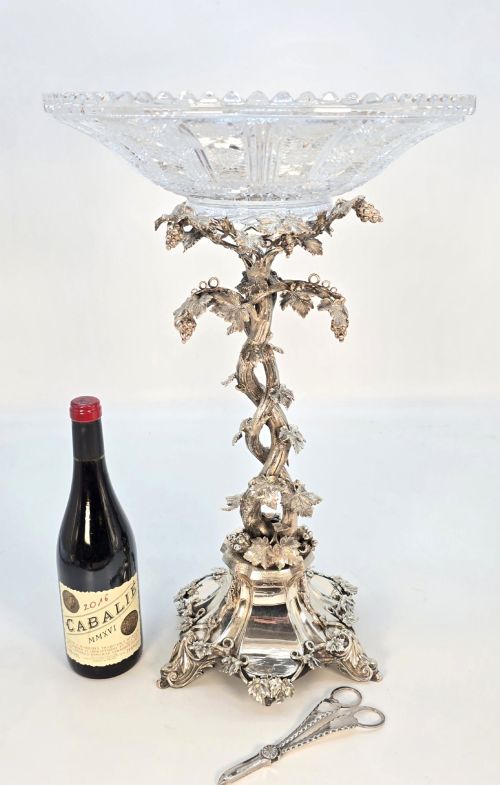
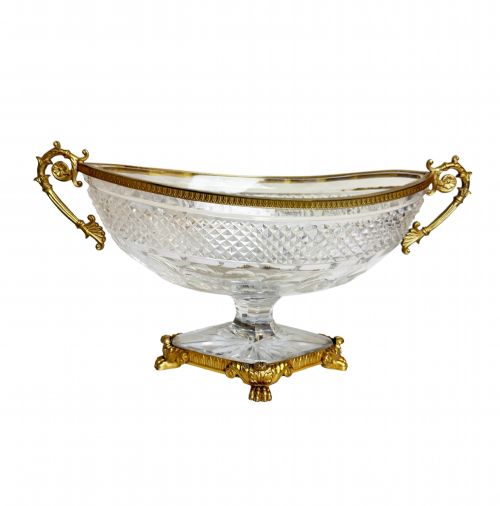
A crystal bowl on stand combines a heavy glass vessel with an elevated support, serving as a striking focal point for a table or sideboard. These pieces frequently appear as tazzas, epergnes, and table centrepieces from the Georgian, Victorian, and Edwardian eras. French and English makers dominate the selection, offering substantial decorative bowls raised on silver plate, Old Sheffield plate, gilt bronze, or ormolu bases.
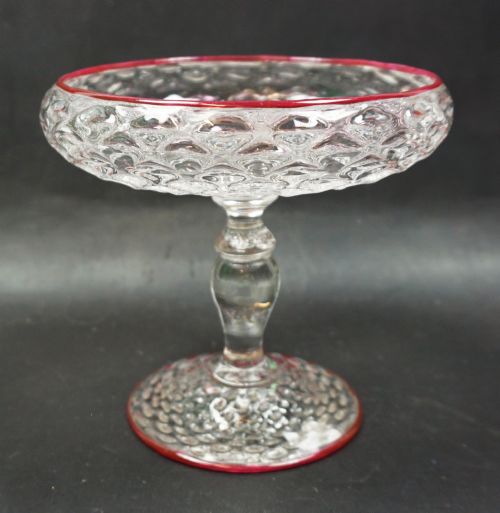
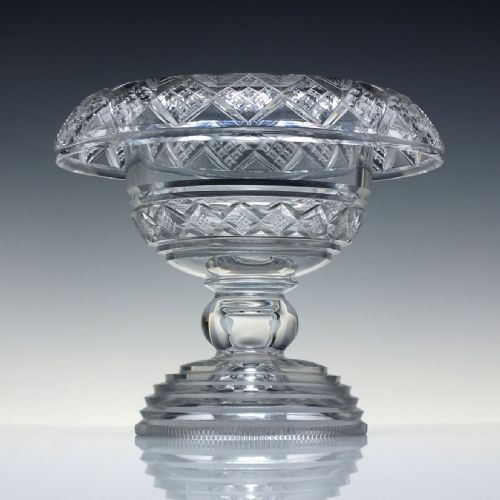
The glass element takes many forms, including honeycomb moulded vessels, etched lead crystal, cased glass with red or yellow overlay, and deep-cut crystal designs. Stands range from simple plated rings to elaborate nautical motifs and sculptural bronze mounts that elevate the bowl well above the surface. Buyers most often encounter Victorian cut glass tazzas and silver-plated centrepieces alongside earlier Georgian Irish standing bowls.
Manufacturing and Materials
Makers fashioned the bowls from heavy lead crystal or standard crystal glass, employing mould-blowing, wheel-cutting, and cased glass techniques to achieve deep facets and vibrant colour overlays. Artisans shaped the supporting stands using silver plate, Old Sheffield plate, gilt bronze, and ormolu, often casting intricate figural or botanical details to secure the heavy glass vessels safely.
Techniques such as acid etching and honeycomb moulding added textural contrast to the clear or coloured glass bodies. Metalwork mounts were constructed separately through casting or plating processes before being joined securely to the crystal bowls or fitted with internal supports.
English and French workshops produced the majority of these centrepieces, utilising traditional techniques like honeycomb moulding and cased glass overlay.
Assessing Quality
Quality rests upon the depth and crispness of the glass cutting, the weight of the metal stand, and the harmonious proportion between the two elements. Superior pieces display sharp, clean facets on heavy lead crystal without cloudiness or surface distortion, paired with substantial silver plating or cast bronze mounts that show meticulous chasing.
The integration of the stand reveals the maker's skill, where mounts fit the contours of the bowl precisely and maintain absolute stability. Finer examples utilise complex materials like cased glass with contrasting colour layers or feature intricate figural elements in the ormolu and silvered bronze bases.
Christofle et Cie
The Crystal Bowl on Stand Glossary
- Tazza
- An ornamental shallow bowl or dish mounted upon a stem and foot. This form serves as a classic display piece for fruit or sweetmeats on a formal dining table.
- Epergne
- A large table centrepiece featuring a central bowl surrounded by smaller hanging baskets or dishes. These elaborate metal and glass structures dominated formal dining arrangements in the Georgian and Victorian periods.
- Old Sheffield Plate
- A composite material formed by fusing a thin sheet of silver to a thicker copper base. Makers utilised this technique before the invention of electroplating.
- Cased Glass
- Glass composed of two or more distinct layers of different colours. Artisans cut through the outer layer to expose the contrasting colour beneath.
- Ormolu
- Gilded bronze used extensively for decorative mounts and decorative stands. The technique involves applying a gold amalgam to a bronze base.
Crystal Bowl on Stand: Frequently Asked Questions
What is a crystal bowl on stand used for?
These pieces served primarily as decorative table centrepieces, holding fruit, flowers, or sweetmeats during formal dining occasions. Their elevated stands placed the sparkling glass bowls at eye level to catch the candlelight.
Today, they function as striking decorative centrepieces for sideboards or dining tables, continuing their traditional role as focal points of a room.
How do I distinguish Georgian pieces from Victorian ones?
Georgian examples often feature heavier Irish lead crystal with deep, hand-cut facets and simpler, robust proportions. The glass tends to have a characteristic greyish hue and distinct weight.
Victorian pieces introduce greater variety in colour, such as cased glass with red or yellow overlay, alongside more complex moulded patterns and elaborate silver-plated stands.
What metal is used for the stands?
Stands commonly utilise silver plate, Old Sheffield plate, gilt bronze, or ormolu. The choice of metal often reflects the period and origin of the piece, with French makers favouring ormolu and bronze.
English makers frequently employed silver plating over base metals to provide a durable and bright foundation for the heavy glass bowls.
How do I clean a crystal bowl on stand?
Wash the glass bowl gently in warm soapy water using a soft cloth, avoiding abrasive sponges that might scratch the surface. Metal stands require careful polishing with appropriate cleaners designed for silver plate or bronze.
Keep the metal polish away from the glass to prevent residue buildup in the cut facets or etched patterns.