
Victorian Silver Plate Holders
These Victorian silver plate holders span elegant dining table centrepieces, desk accessories and bottle stands.
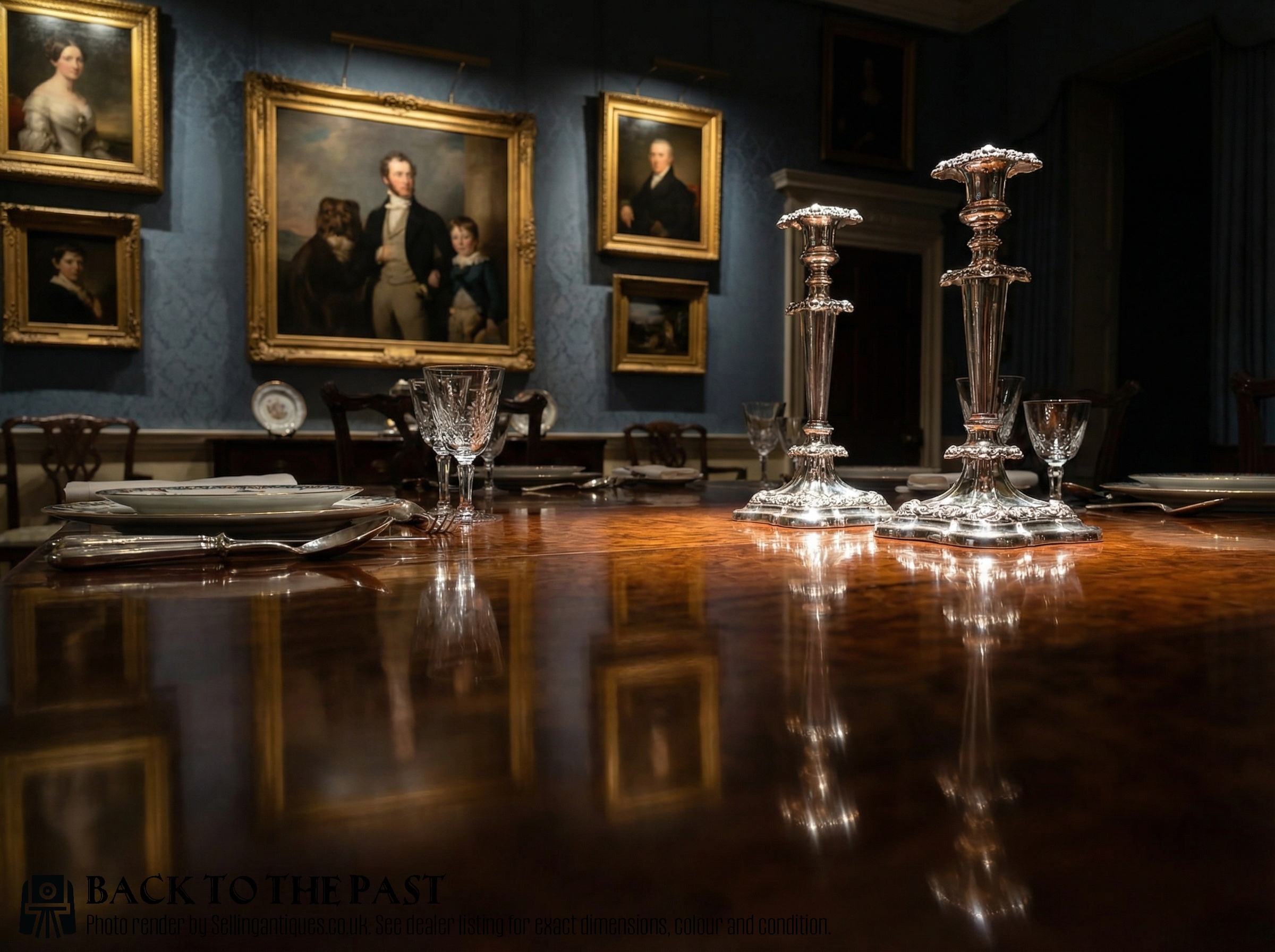
Victorian Silver Plate Holders
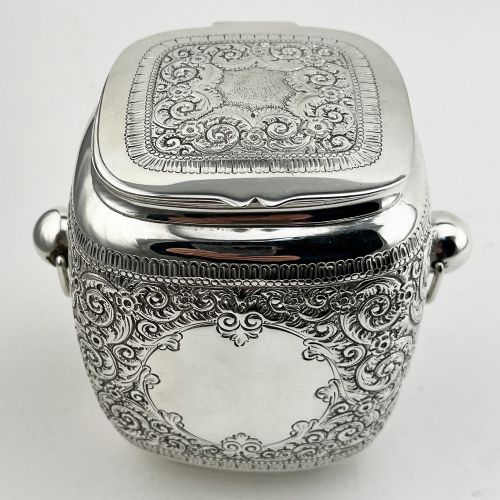
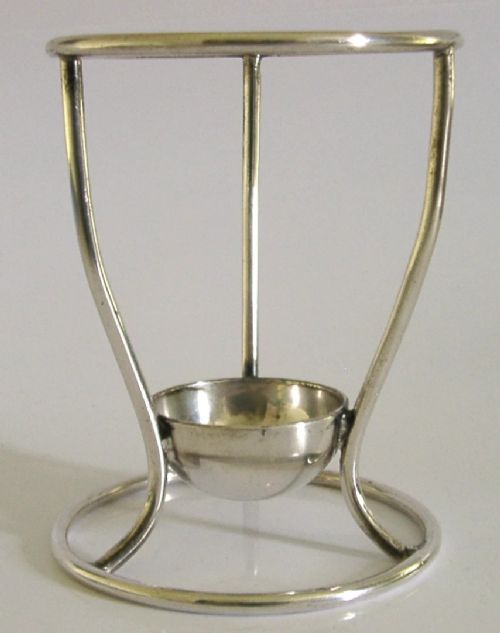
Victorian silver plate holders encompass a diverse range of functional dining and desk accessories produced throughout the nineteenth century and into the early twentieth century. Buyers encounter domestic metalware designed for specific domestic rituals, including candlesticks, candelabras, toast racks, napkin rings, knife rests, spoon warmers, inkstands and bottle stands.
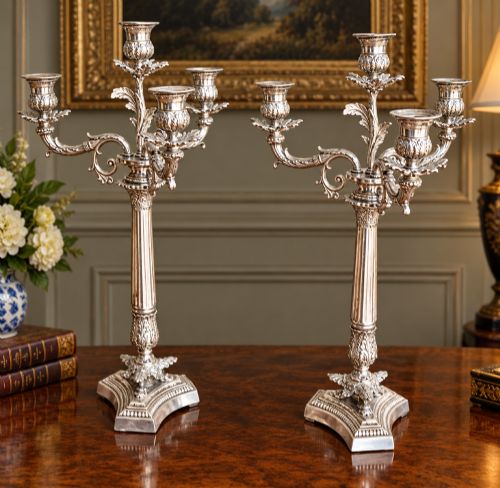
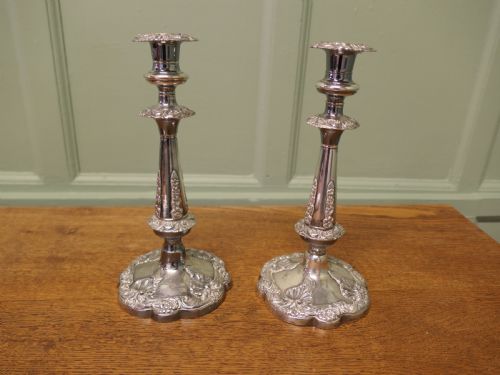
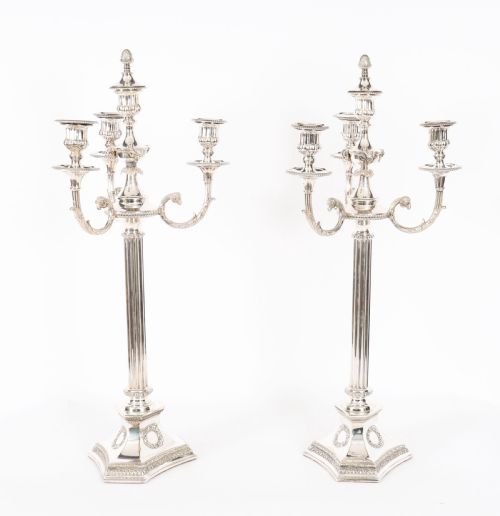
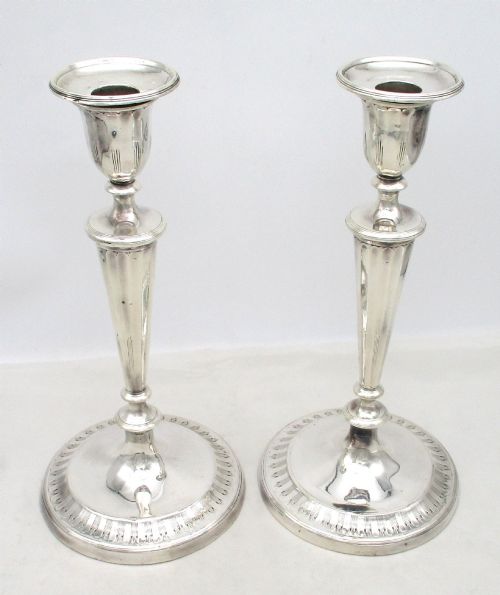
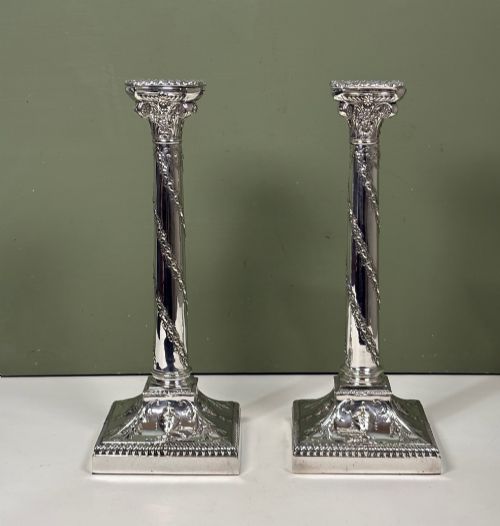
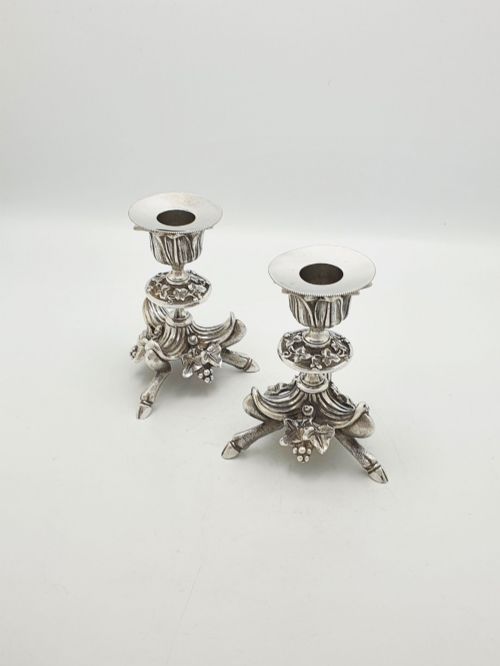
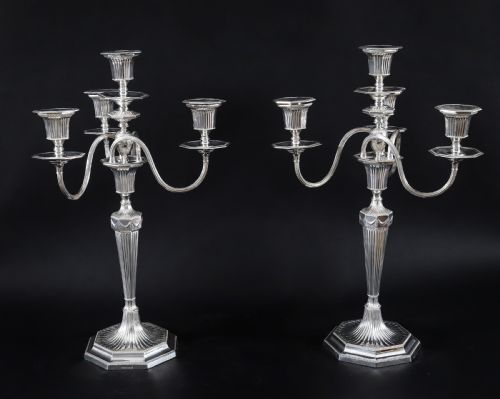
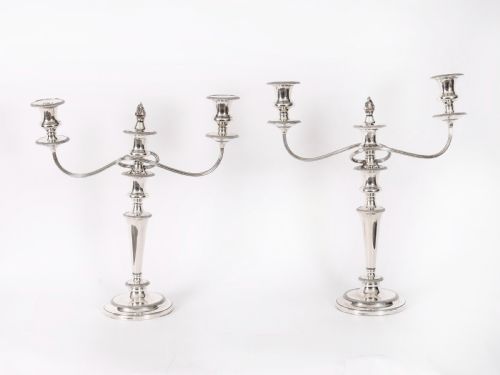
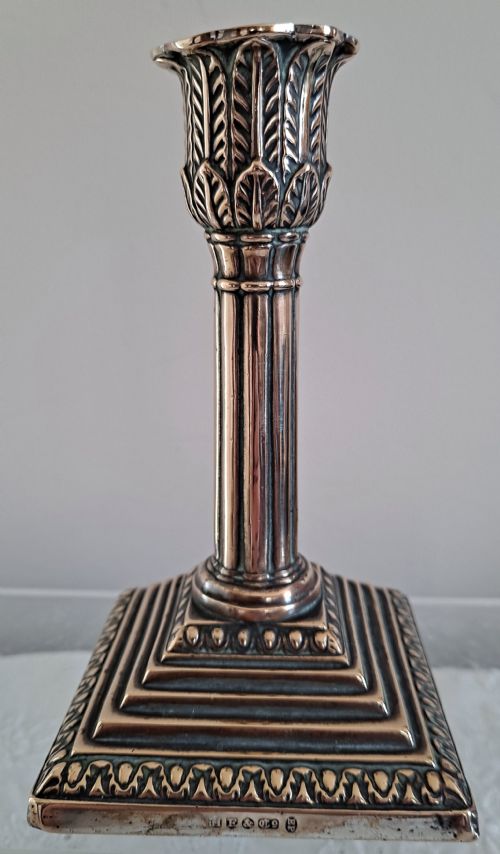
The items listed here heavily feature lighting wares, with numerous pairs of candlesticks and multi-light candelabras dominating the selection. Alongside these lighting pieces, table service accessories such as figural napkin rests, bottle holders and desk tidies appear frequently, reflecting the formal dining and correspondence habits of the period.
How They Were Made
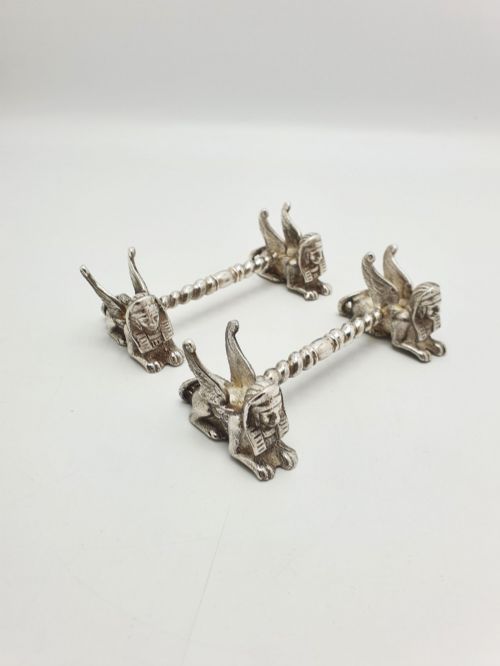
Manufacturers utilised base metals such as nickel silver, brass and copper as the foundation for electroplated wares, applying a thin coating of pure silver over the substrate. This electroplating technique, developed in the mid-nineteenth century, allowed workshops to produce complex forms including figural napkin rings, sphinx knife rests and ornate candelabra branches much more efficiently than traditional Sheffield plating.
Detailing often involved cast applied ornaments, hand chasing and pierced metalwork soldered onto the plated body. Glass components, including cut glass inkwells and cranberry preserve bowls, were frequently integrated into metal frames for desk stands and preserve holders.
Dining tables gained immense theatricality through silver-plated palm tree centrepieces and miniature bulldog knife rests.
What Varies in Quality
Quality rests upon the crispness of the cast ornamentation and the structural integrity of the base metal beneath the silver layer. Pieces demonstrating sharp relief in figural elements, such as cavalier and lady candlesticks or sphinx knife rests, represent superior manufacturing standards compared to softer, worn castings.
The weight of the object and the retention of the original silver plating significantly influence the standard of the piece. Substantial gauge metal and intact mercury or electroplated silver surfaces distinguish fine domestic metalware from heavily worn or thin commercial production.
Martin Hall & Co·Elkington·Walker & Hall·Hawksworth Eyre·Garrard & Co·WMF·Smith & Sissons & Co
The Victorian Silver Plate Holders Glossary
- Electroplated Nickel Silver
- A base alloy of copper, nickel and zinc coated with a layer of pure silver through an electrolytic process. This method largely replaced older fused plating techniques by the mid-nineteenth century.
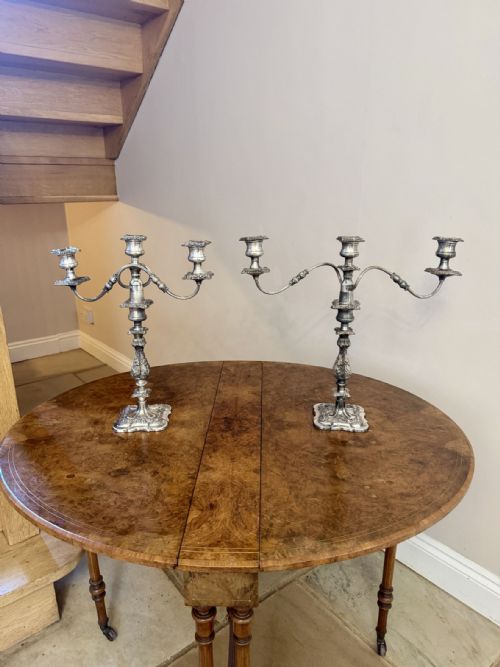
- Candelabra
- A branched lighting fixture designed to hold multiple candles simultaneously. These often feature detachable branches to allow conversion between single candlesticks and multi-light configurations.
- Spoon Warmer
- A specialised Victorian tableware vessel shaped like a shell, urn or animal body filled with hot water to warm spoons before serving soup or dessert. They highlight the elaborate dining customs of the period.
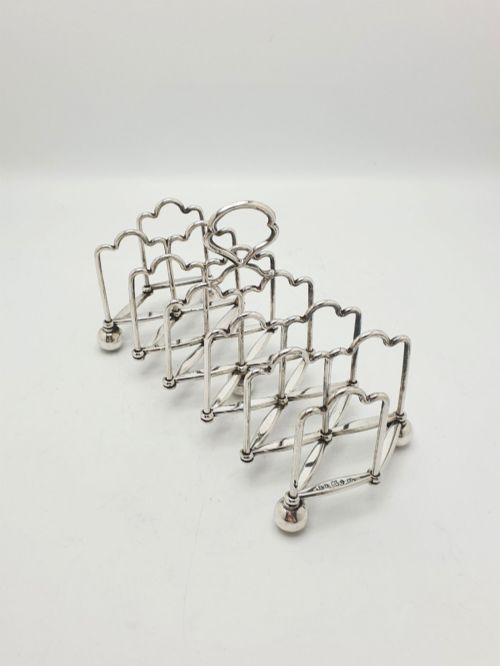
- Toast Rack
- A domestic table accessory featuring parallel metal loops designed to hold slices of toast upright and prevent condensation from making the bread soggy. They frequently incorporate arched wirework or cast decorative handles.
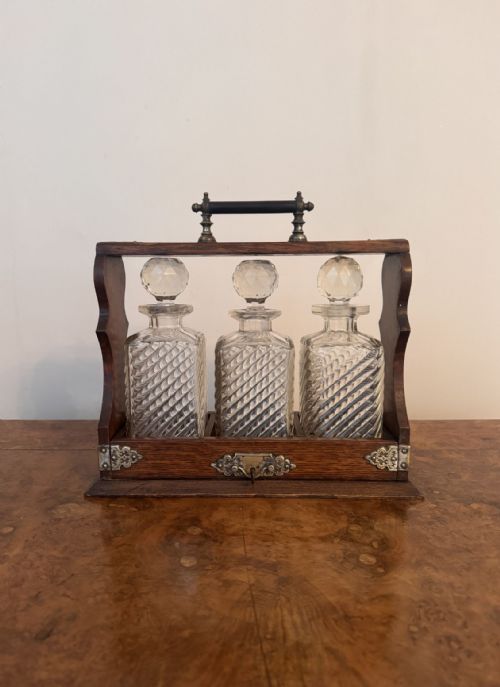
- Tantalus
- A locking beverage cabinet fitted with a metal security bar that prevents the removal of decanters without a key. The frame holds cut glass bottles securely within a wooden or metal base.
Victorian Silver Plate Holders: Frequently Asked Questions
What were silver plated bottle holders used for?
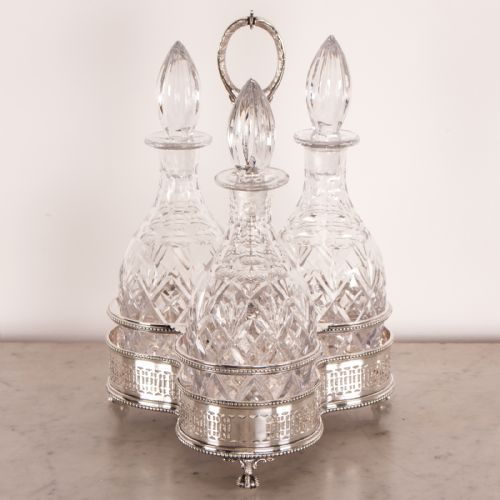
Bottle holders and coasters kept wine bottles stable on the dining table and protected polished wood surfaces from moisture rings. They were passed around the table during the port and claret courses.
Many examples featured pierced metal sides or wooden bases with green baize lining on the underside to glide smoothly across the mahogany.
Are these items made of solid silver?
The majority of these pieces consist of a base metal, typically nickel silver, brass or copper, covered with a thin coating of real silver. Manufacturers marked them as silver plate to indicate the plating process rather than solid precious metal.
Makers often applied stamps denoting electroplate alongside their company hallmarks to show the specific plating standard used during manufacture.
How can I date my silver plate holder?
Dating relies on combining stylistic clues, such as aesthetic movement or neoclassical revival motifs, with any manufacturer stamps or registration marks stamped into the metal. Design patents and registry lozenges found on the underside provide specific year or month indicators.
Form also guides dating, as heavy figural pieces and specific desk accessories frequently align with stylistic shifts across the decades of the nineteenth century.