

Silver Plated Champagne Cooler
A silver plated champagne cooler brings heavy metal presence and chilled service to a dining room from centuries of formal entertaining.
Silver Plated Champagne Cooler
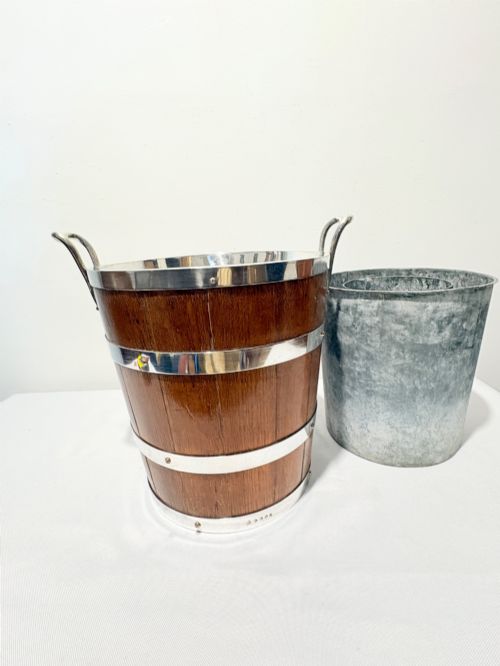
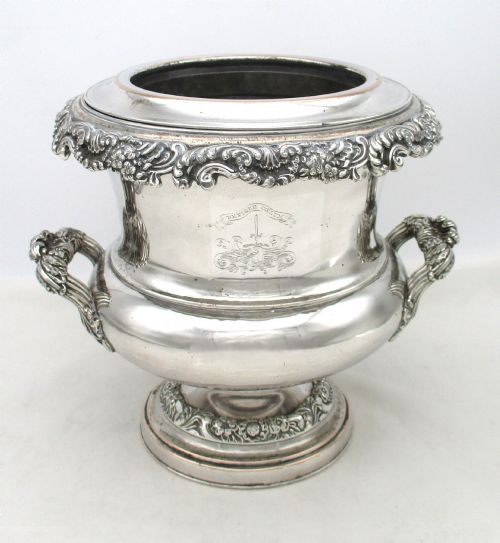
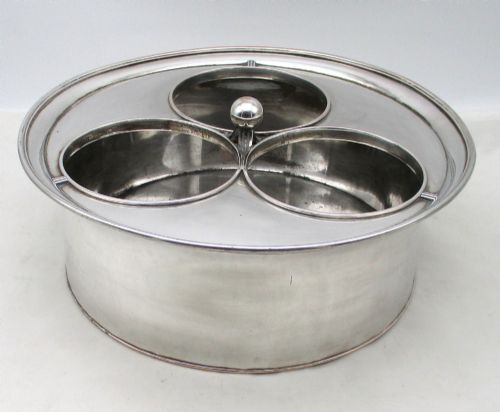
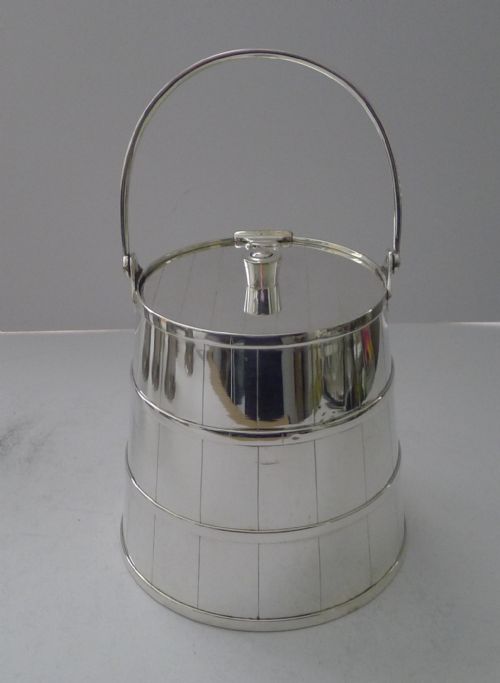
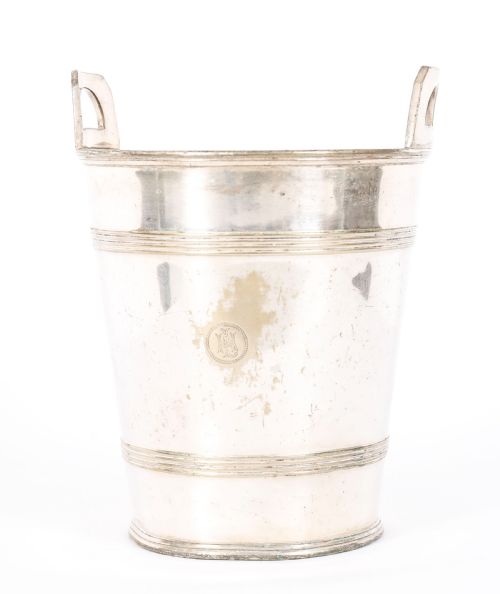
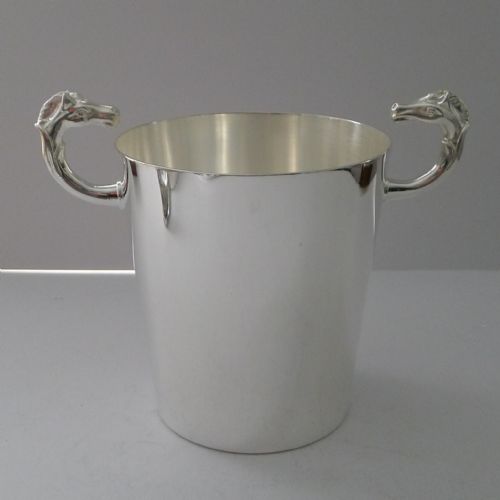
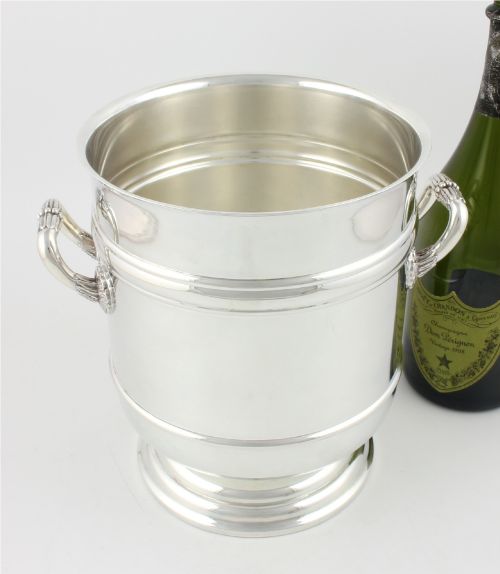
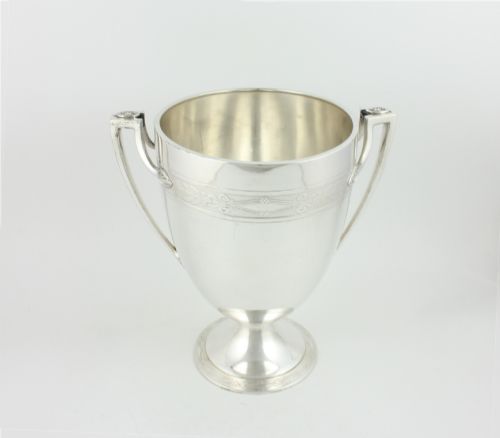
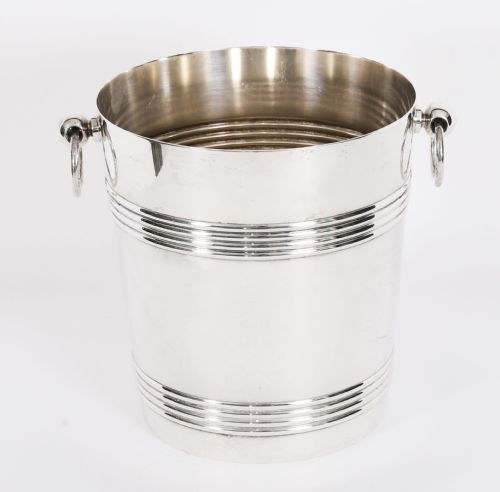
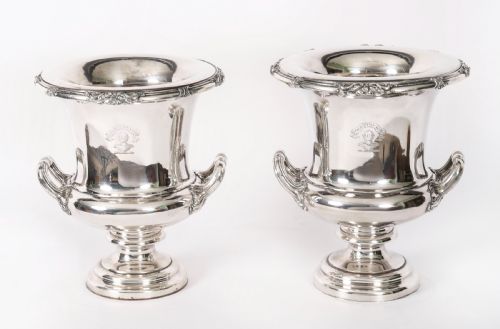
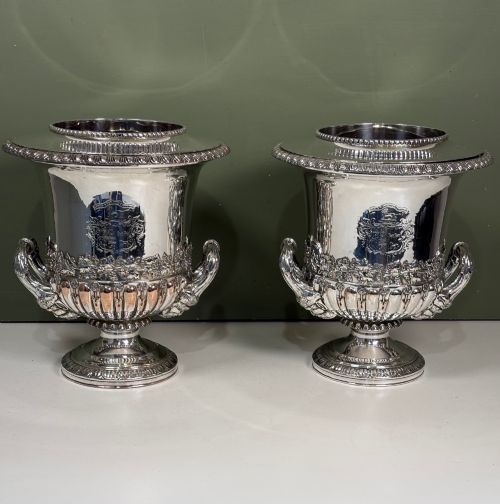
A silver plated champagne cooler serves to chill bottles at the table, taking the form of deep vessels, footed urns, and twin-handled pails designed for ice and water.
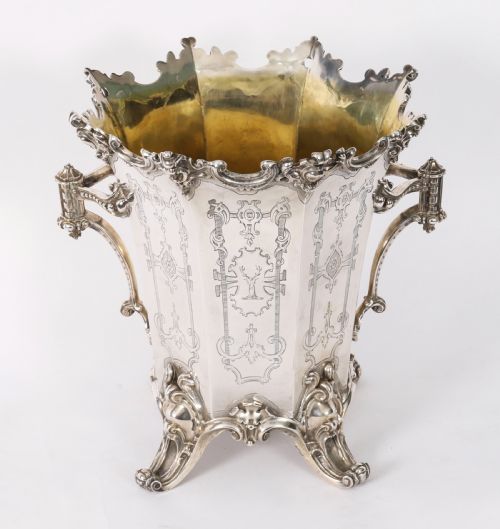
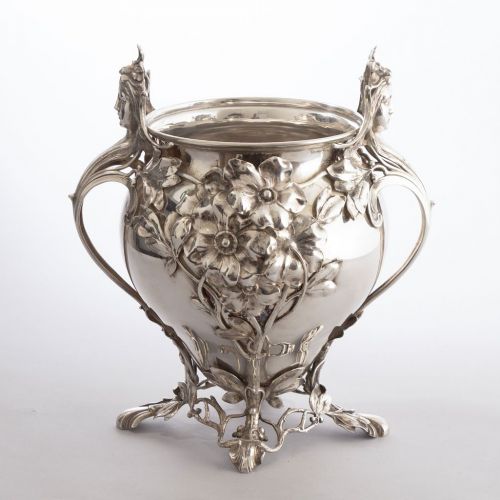
The pieces on this page span from Georgian and Regency Old Sheffield Plate through Victorian revivalism and clean-lined Art Deco forms up to Mid-Century modern French production.
Buyers encounter both single-bottle vessels and substantial multi-bottle coolers or floor-standing variations intended for grand dining spaces.
How They Were Made
Early examples utilise Old Sheffield Plate, fusing a layer of silver to a copper core, which produces a characteristic warm glow as the base metal shows through wear.
Later manufacturing shifts to electroplating silver over base metals like copper or white metal, allowing for heavier embossing, cast handles, and sharp Art Deco geometric lines.
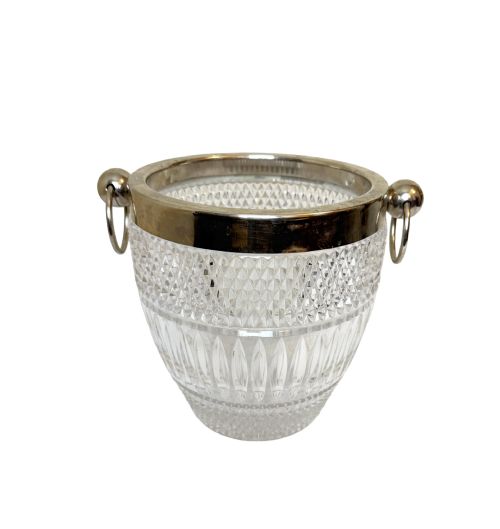
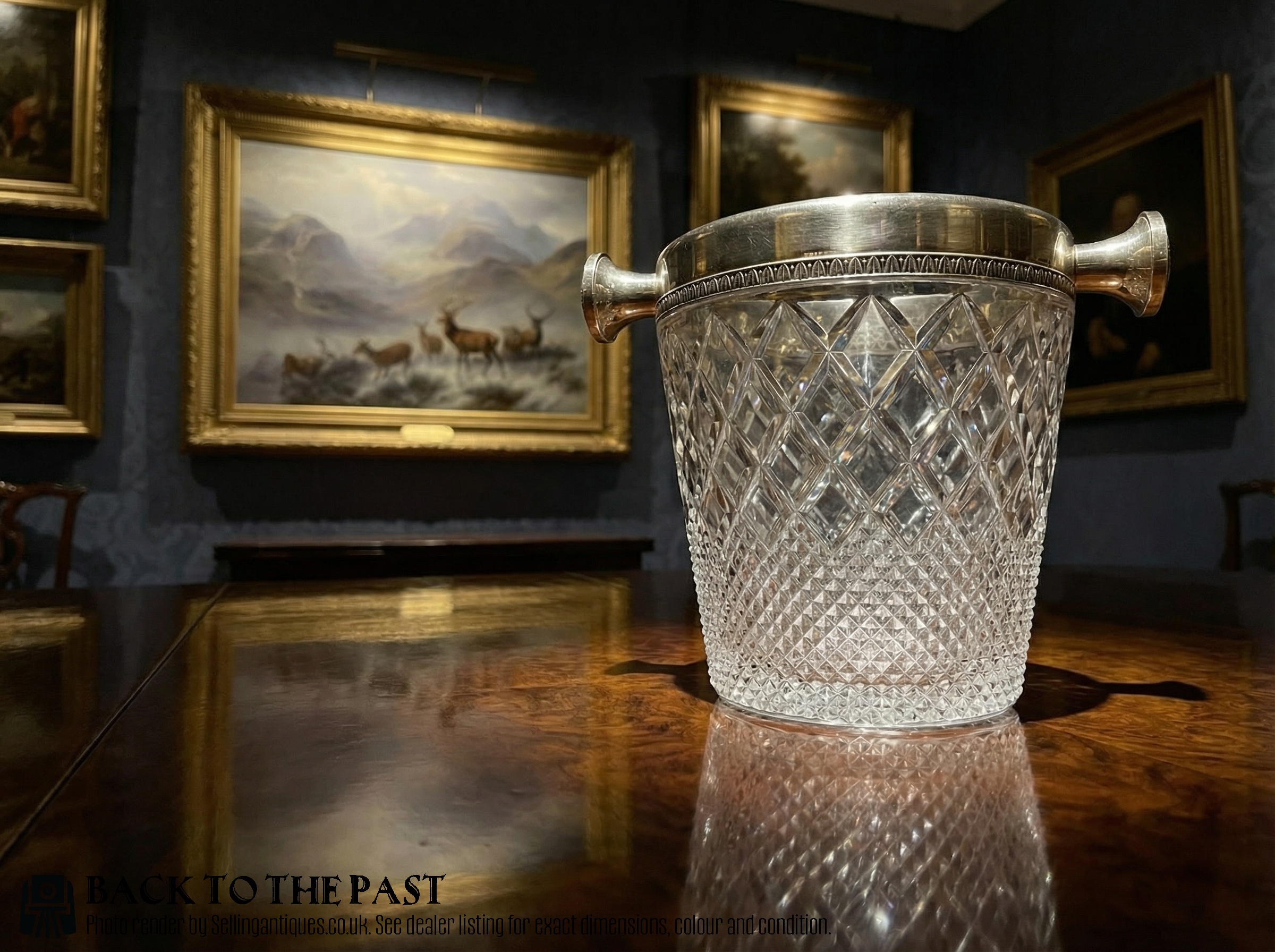
Combinations of silver plate with cut lead crystal or brass accents appear across French and English workshops, adding textural contrast to the reflective metal surfaces.
Listings span from the 18th century through the 1960s, documenting shifts from copper fusion to electroplate across English and French makers.
What Varies in Quality
Quality rests on the crispness of cast heraldic crests, applied handles, and decorative borders, where hand-finishing distinguishes workshop production from mass output.
The thickness of the original silver plating dictates longevity, particularly where polishing over generations reveals the underlying copper or base metal.
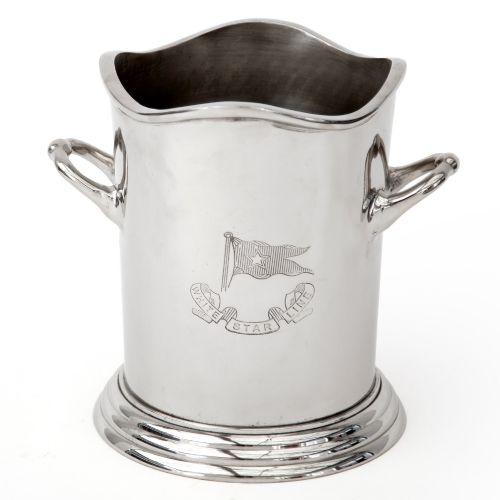
Proportion and structural weight separate standard utility vessels from exhibition-grade presentation pieces designed for specific regimental messes or shipping lines.
Hutton Sheffield·Christofle·Elkington Mason And Co·WMF·Mappin And Webb·Barker Ellis·Ercuis·Puiforcat·Lee And Wigfull·St Medard
The Silver Plated Champagne Cooler Glossary
- Old Sheffield Plate
- An early fusing technique where a sheet of silver is melted onto a copper ingot before rolling, creating pieces where copper telegraphs softly at the edges.
- Electroplate
- A mid-nineteenth century chemical process that deposits a uniform coat of silver onto a base metal substrate, replacing older fusion methods.
- Pontil mark
- A scar left on the base of cut crystal liners where the punty rod was detached during glassblowing.
- Bague
- A reinforced rim applied to the top edge of metal vessels to prevent distortion from heavy ice and bottles.
- Coupe
- A wide, open bowl form utilised for multi-bottle chilling or punch service rather than single-bottle confinement.
Silver Plated Champagne Cooler: Frequently Asked Questions
How do I clean a silver plated champagne cooler?
Wash the vessel in warm soapy water using a soft cloth, avoiding abrasive pads that strip thin plating from high points. Dry thoroughly with a lint-free cloth to prevent water spots.
Apply a dedicated silver cream only when tarnish requires removal, working gently around engraved crests or embossed tendrils to preserve the underlying metal.
Can I use an antique cooler for daily dining?
These vessels were built for active hospitality, handling ice and bottles across domestic and institutional settings for generations. Their solid construction suits regular service.
Users should avoid leaving salt or melting ice sitting against the interior lining for extended periods after the meal concludes.
What is the difference between Old Sheffield Plate and later silver plate?
Old Sheffield Plate involves physically fusing solid silver to a copper block before shaping, which leaves subtle copper lines visible along cut edges and high wear points. Later silver plate uses electricity to bond a thin coat of pure silver over a base metal.
This chemical method created uniform surfaces without the characteristic edge-bleed found in eighteenth and early nineteenth-century work.
How do I date a silver plated wine cooler?
Stylistic cues provide the clearest timeline, moving from neoclassical Regency urns and heavy Victorian rococo revival embossing to geometric Art Deco angles and Mid-Century French minimalism. Maker marks and registration stamps stamped to the base offer further chronological anchor points.
Weight, construction methods, and plating techniques also distinguish Georgian fused pieces from later electroplated output.