
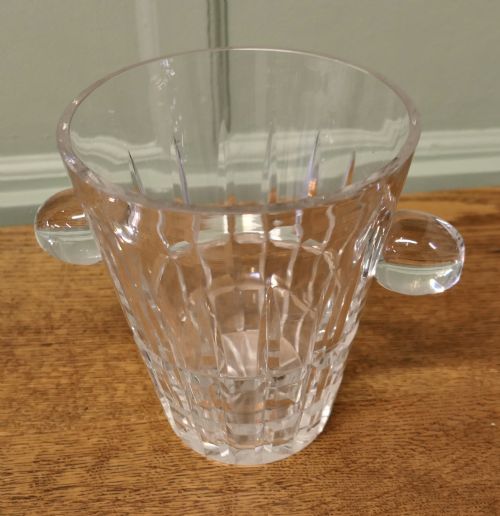
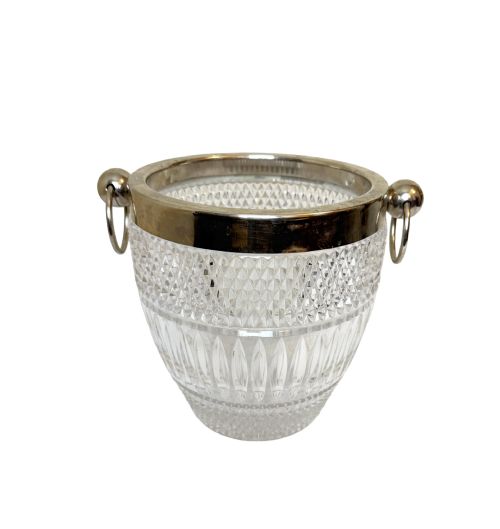


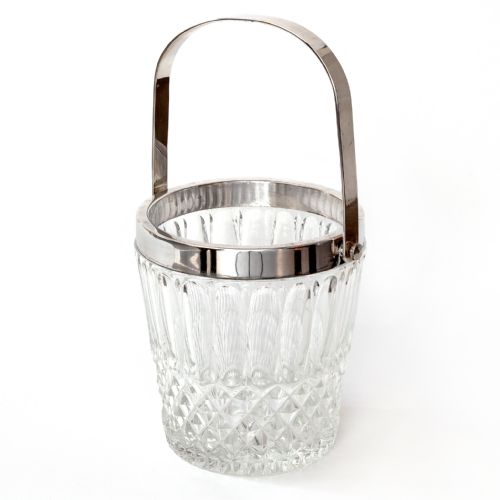


Crystal Champagne Cooler
These crystal champagne cooler examples bring serious presence to a table, combining weighty glass bodies with silver plate, brass, or gilt bronze mounts.
Crystal Champagne Cooler
When you search for a crystal champagne cooler, you are looking at substantial vessels designed to chill wine and champagne at the table. The pieces available here span from the early nineteenth century through the Art Deco era, taking the form of ice buckets, wine coolers, and combined ice buckets and coolers.
You are most likely to meet French and English examples on this page, often combining cut crystal or lead crystal with silver plate, silverplate, or gilt bronze mounts. These functional items range from personal-sized vessels to large, heavy statement pieces from the nineteen-twenties and nineteen-forties.
How they were made
Makers shaped these vessels using hand-blown or heavy moulded glass, then applied deep wheel-cut decoration to create faceted surfaces that catch the light. The resulting crystal body provides the main weight and visual texture of the object.
Metal elements such as silver plate, silver-plate, brass, and gilt bronze were then fitted as mounts, rims, handles, or bases to complete the structure. These mixed-media pieces required skilled collaboration between glasscutters and metalworkers.
One French piece is specifically described as a personal champagne ice cooler, suggesting an era of very committed individual refreshment.
What varies in quality
The distinction between ordinary and exceptional pieces lies primarily in the crispness of the glass cutting and the thickness of the crystal. Heavy lead crystal and hand-cut details show a depth and clarity that lighter, plain glass lacks.
Quality also rests in the execution of the metal mounts, whether silver plate, brass, or gilt bronze. Secure fittings, substantial weight, and refined decorative styling separate standard production items from grander dining pieces.
The Crystal Champagne Cooler Glossary
- Cut Crystal
- Glass containing lead oxide that has been carved or faceted with rotating wheels. This process produces sharper angles and greater light refraction than standard pressed glass.
- Silver Plate
- A base metal coated with a thin layer of silver. This technique offered the visual appeal of solid silver at a more accessible cost for dining accessories.
- Gilt Bronze
- Bronze metal treated with a fine layer of gold or gold-coloured alloy. It provides a rich, warm metallic contrast against clear crystal.
- Art Deco
- A design style spanning the nineteen-twenties characterised by geometric symmetry and clean lines. Pieces from this period often feature bold, streamlined cutting.
- Regency
- An English design period from the early nineteenth century known for classical elegance. Items from this era display restrained proportions and formal mounts.
Crystal Champagne Cooler: Frequently Asked Questions
What is a crystal champagne cooler?
A crystal champagne cooler is a decorative vessel designed to hold ice and water to chill wine bottles at the dining table. They combine heavy glass bodies with metal hardware.
These pieces function as both practical tableware and decorative centrepieces, originating across various historic periods from the nineteenth century onward.
How do I use a champagne cooler?
Fill the glass vessel with a mixture of ice and water before placing the wine or champagne bottle inside. The heavy crystal walls help maintain the low temperature.
Ensure you lift the piece by its base or sturdy metal mounts rather than relying solely on decorative elements when full.
How do I clean my cooler?
Wash the crystal body gently in warm soapy water using a soft cloth or non-abrasive sponge. Avoid harsh scrubbing on any silver plate or gilt bronze mounts.
Dry the metal mounts promptly after washing to prevent water spots and preserve the finish of the silverplate or brass.
How do I date an ice bucket?
Examine the cutting style, metal mounts, and overall weight to determine the period of manufacture. Art Deco pieces show geometric forms, while Regency items display classical detailing.
Materials like silver plate versus gilt bronze and the specific clarity of the lead crystal also offer clues to the era of production.