
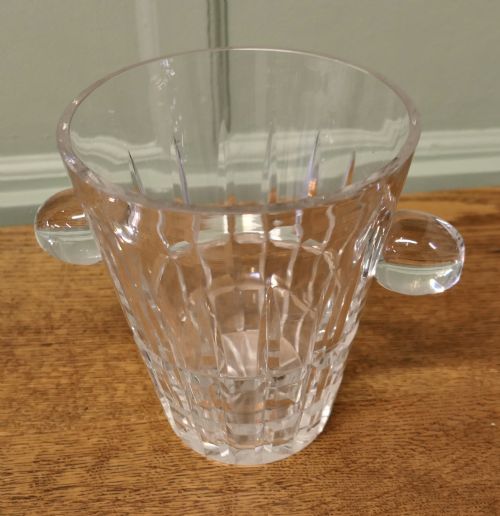
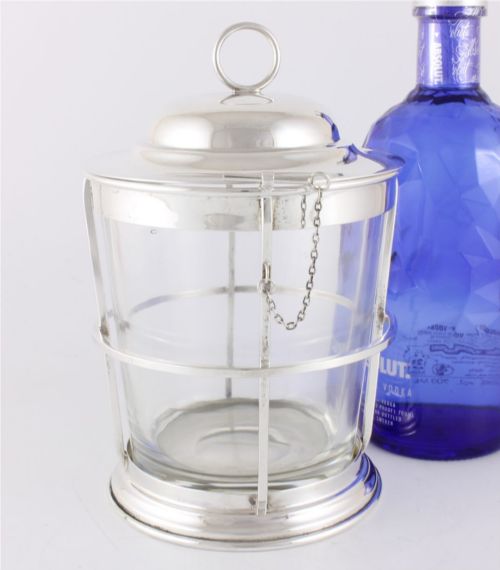
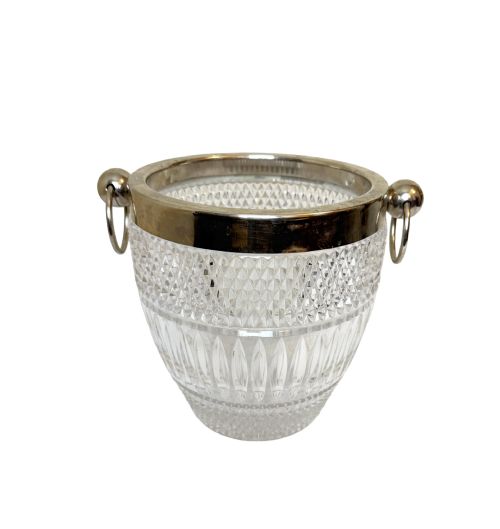


Clear Glass Ice Bucket
These clear glass ice bucket examples bring functional elegance to any bar, combining heavy crystal and bright metalwork from across the past two centuries.
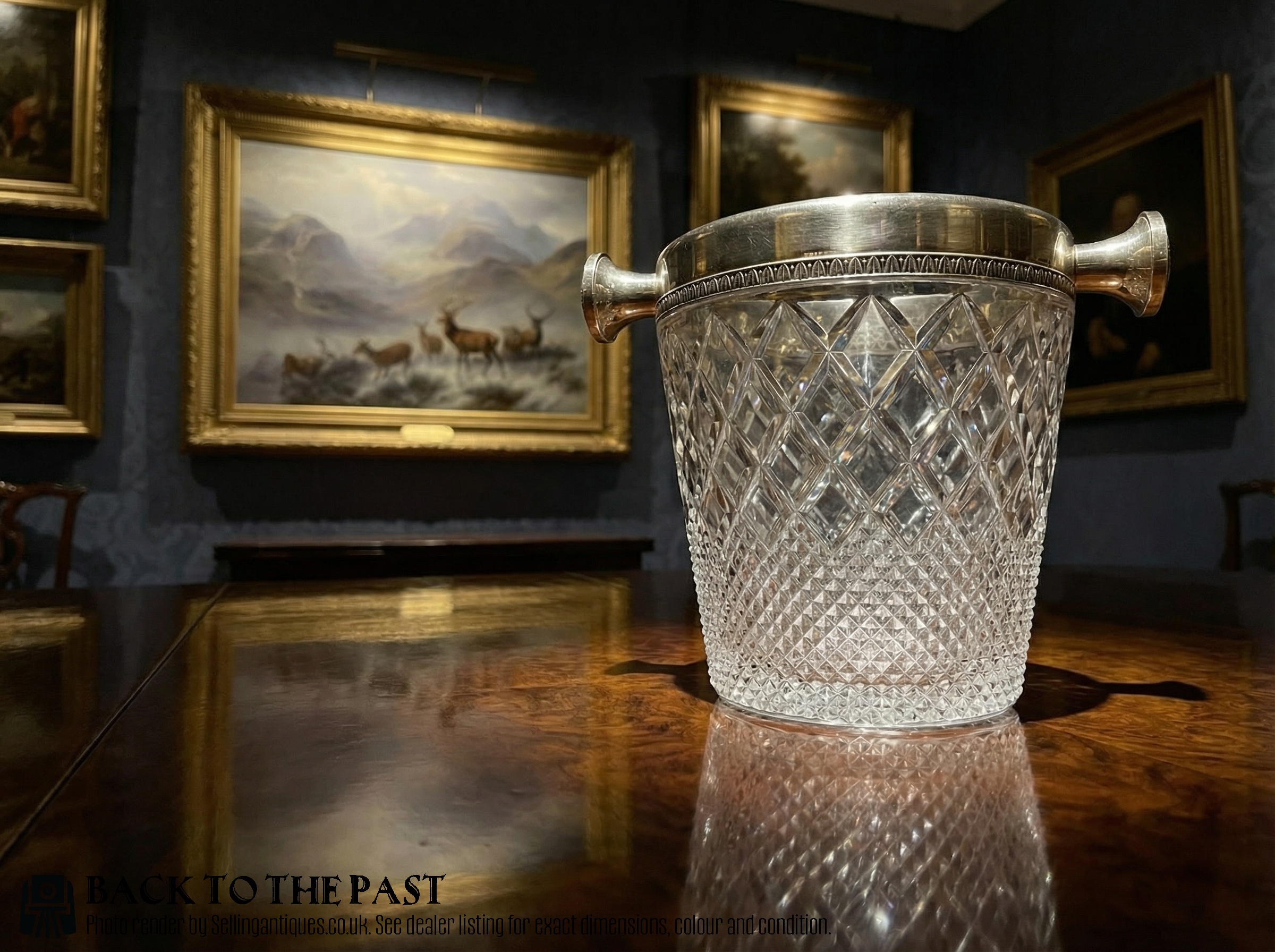
Clear Glass Ice Bucket
When you search for a clear glass ice bucket, you encounter vessels designed to chill wine, champagne, and ice for entertaining. These pieces range from modest domestic ice pails to substantial champagne coolers intended for formal dining.
You are most likely to meet twentieth-century interpretations on this page, particularly robust Art Deco and mid-century designs. Earlier nineteenth-century examples appear less frequently, often featuring finer hand-cut crystal and heavier proportions.
The category overlaps closely with wine coolers, champagne buckets, and occasionally biscuit barrels mounted in metal. Each object serves the dual purpose of keeping contents cold while displaying the clarity and refraction of the glass.
How They Were Made
The primary material is glass, frequently upgraded to lead crystal or hand-cut crystal to enhance brilliance and weight. Artisans shaped these vessels through blowing and pressing before applying intricate wheel-cut patterns or leaving the surfaces smooth and clear.
Metal mounts in silver-plate, brass, and gilt bronze provide structural support, rims, handles, and swing Bails. These metallic elements are securely fitted to the glass bodies, occasionally accompanied by matching tongs or specialised hardware.
Listings feature glass ice buckets spanning from the Regency period through to the 1950s, utilising cut crystal, silver plate, and gilt bronze.
What Varies in Quality
The quality of a clear glass ice bucket rests largely on the thickness and purity of the glass vessel itself. Heavy lead crystal with deep, crisp hand-cutting sits at the top of the range, offering superior weight and light refraction compared to thinner, pressed alternatives.
The execution of the metal mounts also dictates standard. Solid brass, heavy silver-plate, and cast gilt bronze with secure joints and crisp detailing elevate an object above those with thin plating and simple, stamped fittings.
PH Vogel·Rene Lalique
The Clear Glass Ice Bucket Glossary
- Lead Crystal
- Glass containing metallic oxide to increase weight, brilliance, and workability for cutting. This material allows for deeper facets and sharper refractive edges.
- Silver Plate
- A thin layer of silver applied to a base metal such as copper or brass. It provides the appearance of solid silver while maintaining durability for handling.
- Gilt Bronze
- Bronze metal treated with a gold or gold-coloured wash or amalgamation. It is frequently employed for decorative mounts and handles on nineteenth-century coolers.
- Biscuit Barrel
- A covered container used originally for storing dry biscuits at the table. Many share similar glass and metal construction methods with standard ice pails.
Clear Glass Ice Bucket: Frequently Asked Questions
What is the difference between an ice bucket and a wine cooler?
Ice buckets are generally smaller vessels designed to hold ice cubes for drinks service at a table or bar. Wine and champagne coolers feature deeper, wider bodies to accommodate a bottle alongside ice and water.
Despite their original intended uses, many historical examples cross over between categories. Collectors frequently utilise smaller champagne coolers as substantial ice buckets during modern gatherings.
How can I tell an Art Deco ice bucket from an Edwardian one?
Art Deco pieces from the 1920s and 1930s tend to feature geometric cuts, streamlined silhouettes, and bold, heavy glass forms. They often embrace industrial symmetry and clean lines.
Edwardian examples from the opening decade of the twentieth century generally display softer, more traditional floral or ribbon motifs. Their metal mounts often reflect revived historical styles rather than modernist abstraction.
Are silver-plated mounts difficult to maintain?
Silver-plate requires occasional polishing with a dedicated cloth to remove natural tarnish and maintain its brightness. The frequency depends on atmospheric humidity and how often the piece is handled.
Leaving the metal unpolished over long periods causes darker oxidation to form. Regular, gentle care preserves the finish without damaging the underlying plate.