

Silver Plated Champagne Bucket
When choosing a silver plated champagne bucket, you select a functional vessel designed to chill wine for the table.
Silver Plated Champagne Bucket
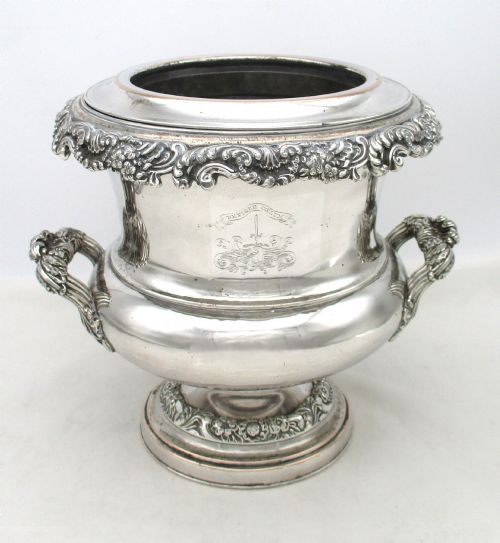
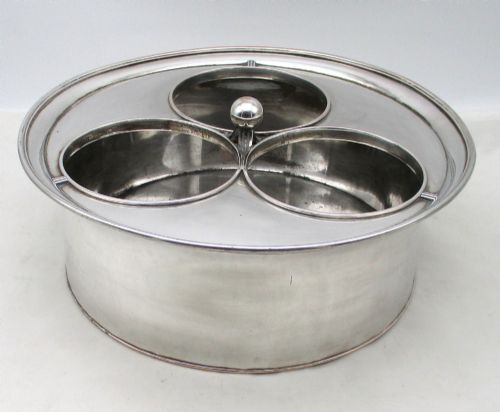
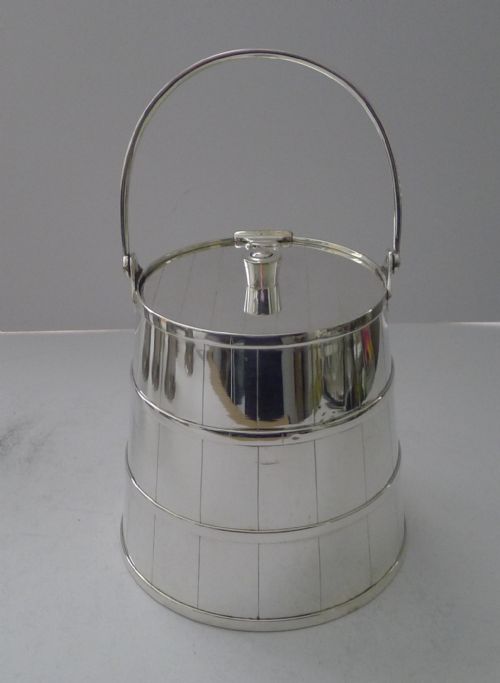
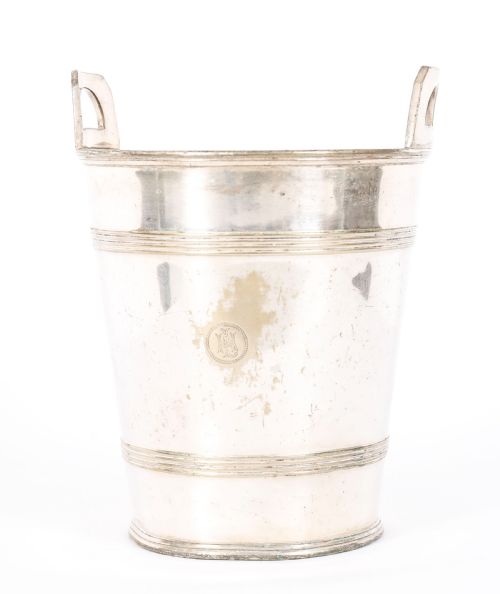
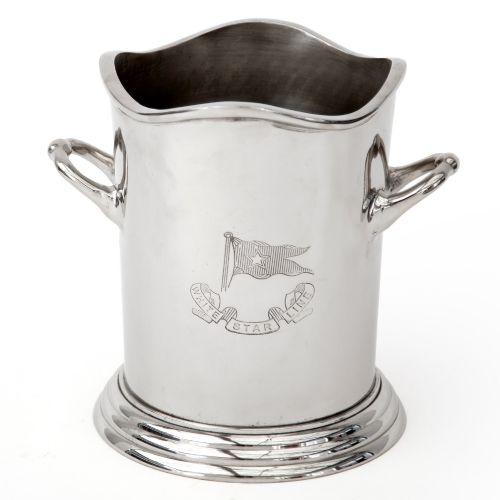
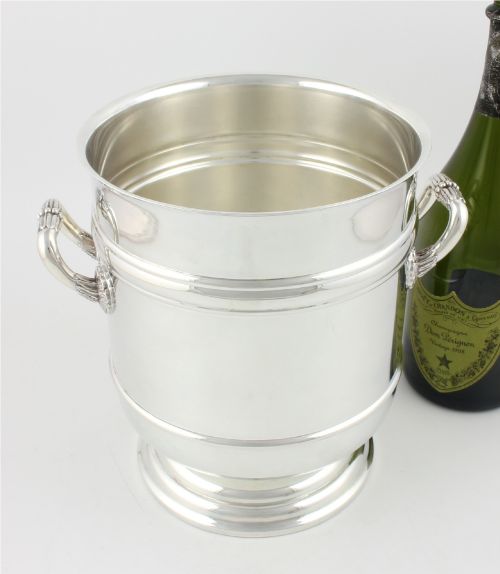
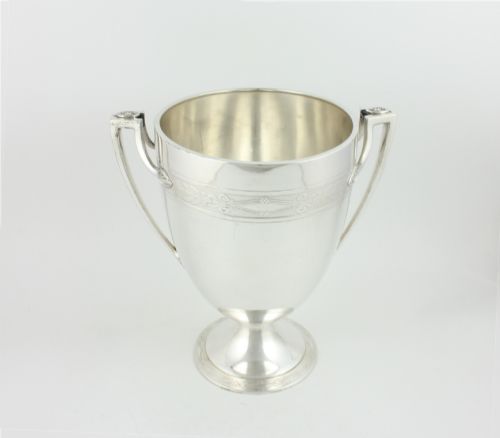
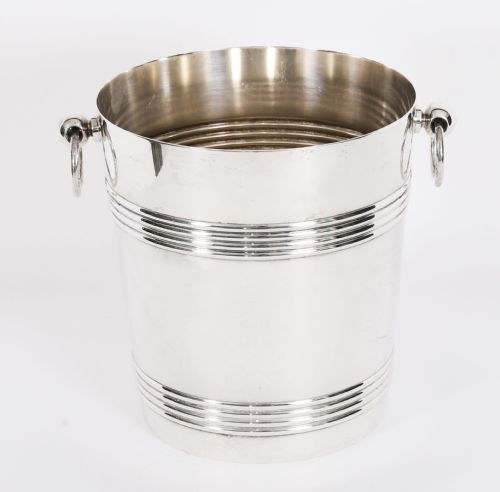
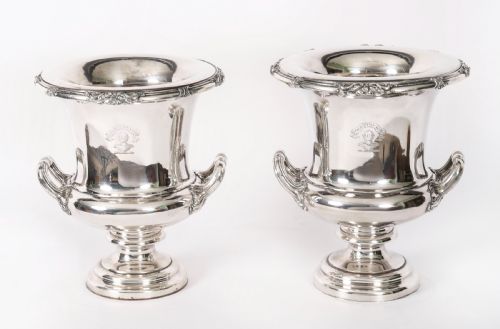
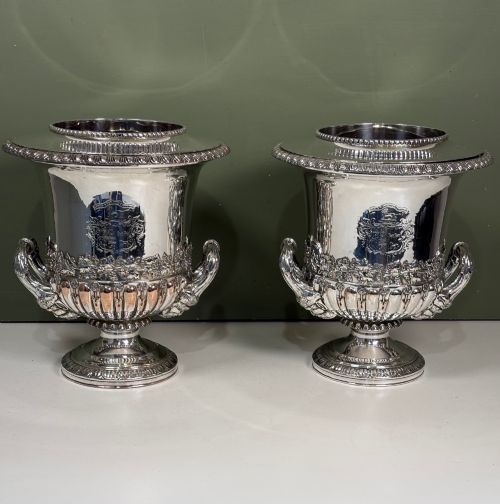
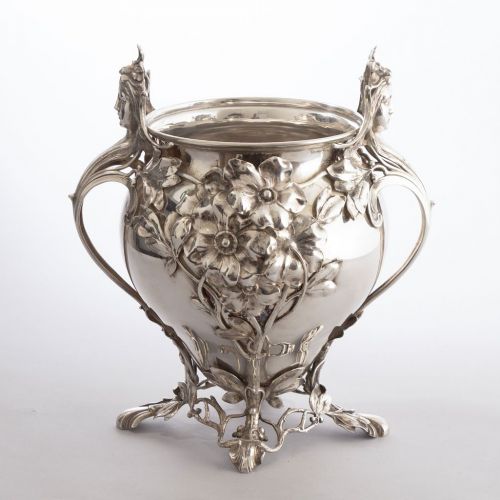
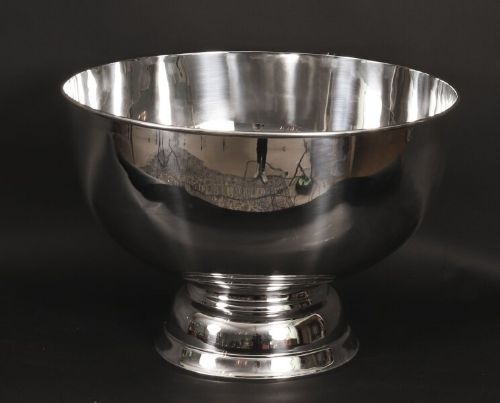
A silver plated champagne bucket functions as a vessel for chilling wine and champagne at the dining table or bar. These pieces emerge in various forms, including straightforward ice pails, twin-handled coolers, and large floor-standing vessels designed for grand dining spaces. Buyers encounter items ranging from Georgian and Victorian examples to streamlined Art Deco designs and mid-century French productions.
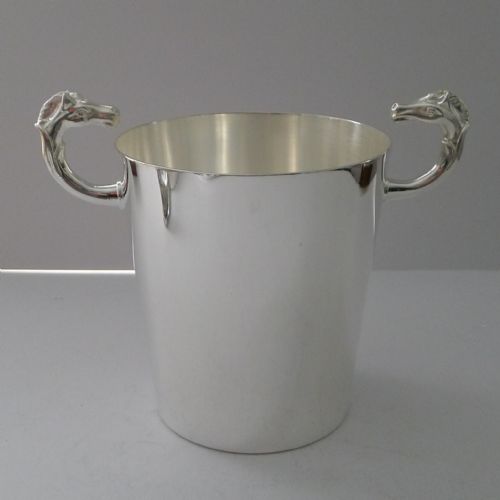
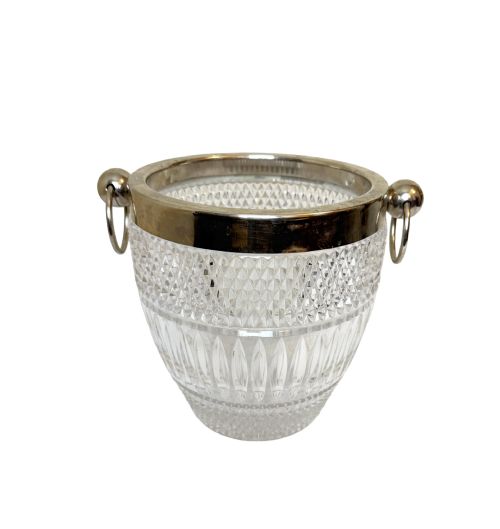
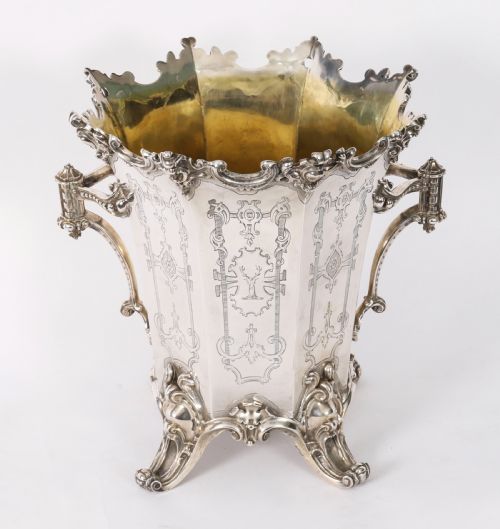
The material foundation typically involves a base metal coated with silver, though early examples frequently employ Old Sheffield Plate, which fuses a thin sheet of silver onto a copper core. Certain pieces incorporate lead crystal inserts or copper bodies beneath the plating. Formats vary from single-bottle holders to substantial champagne magnums and multi-bottle wine coolers featuring cast handles shaped like animal heads, tendrils, or crests.
Materials and construction
Makers utilised silver plate over copper, base metal, or old Sheffield plate to achieve the appearance of solid silver at a lower cost and greater structural durability. Sheffield plate production involved thermal fusion of silver and copper ingots before rolling them into sheets. Later Victorian and twentieth-century makers applied electroplating directly onto white metal, brass, or copper substrates.
Decorative elements often rely on casting techniques for handles, rims, and heraldic crests, which were then soldered onto spun or raised body cylinders. Embossing, chasing, and hand-engraving provide surface detail such as floral motifs or coats of arms. Glass-lined variants combine lead crystal bodies with silver-plated mounts and rims.
Silver Plated Champagne Bucket Retail Price Guide 2026
Typical asking prices for silver plated champagne bucket among the pieces listed under this phrase on Sellingantiques today, from the lower quarter to the upper quarter. They describe what is for sale here now, not the wider market.
Listings span from the 18th century through the mid-20th century, encompassing styles from Georgian and Victorian to Art Deco and Mid-Century Modern.
Assessing quality and manufacture
The thickness and retention of the silver layer determine longevity, as heavier plating resists wearing down to the base metal through repeated polishing. Superior vessels display crisp casting work on handles and mounts, with secure joints and well-balanced proportions that prevent tipping when holding a chilled bottle.
Provenance and maker attribution elevate certain items, particularly those bearing marks from established silversmiths and luxury retailers. The integration of specialised design elements, such as maker-specific crests, heavy gauge metal, or custom floor stands, separates standard hotel barware from presentation-grade pieces.
Hutton Sheffield·Christofle·Elkington Mason And Co·Mappin And Webb·Barker Ellis·Ercuis Paris·Puiforcat Paris·WMF
The Silver Plated Champagne Bucket Glossary
- Old Sheffield Plate
- A composite material made by fusing a sheet of silver to a copper core, common in pieces dating around the late eighteenth and early nineteenth centuries. The underlying copper often becomes visible at high-wear edges over time.
- Electroplate
- A method of depositing a layer of silver onto a base metal utilising an electrical current, introduced commercially during the nineteenth century. This technique largely superseded Sheffield plating for mass production.
- Magnum
- A larger vessel format engineered to accommodate oversized wine and champagne bottles. These pieces feature wider bodies and reinforced handles to manage the increased weight.
- Base metal
- The underlying alloy used for silver plating, typically consisting of brass, white metal, or nickel copper. The quality of this substrate affects the overall weight and rigidity of the bucket.
Silver Plated Champagne Bucket: Frequently Asked Questions
How do I clean a silver plated champagne bucket?
Wash the interior with warm soapy water and dry thoroughly after use to prevent moisture damage. Apply a mild silver cream with a soft cloth for the exterior plating.
Avoid abrasive scouring pads that strip the thin silver layer from the base metal. Store the vessel in a dry environment to minimise tarnishing.
How can I date an unmarked silver plated bucket?
Examine the manufacturing style, such as the geometric lines of Art Deco pieces or the ornate floral motifs of Victorian Rococo Revival items. The weight and method of construction also provide clues to the period.
Old Sheffield Plate indicates an origin around the late eighteenth or early nineteenth century. Standard electroplate marks generally point toward the mid-nineteenth century and later.
Can these buckets be used for daily dining?
These vessels suit regular table use provided they are handled with care and dried immediately after cooling wine. The sturdy metal construction handles ice and bottled beverages reliably.
Take care when placing heavy bottles into pieces with delicate crystal inserts or thin plating. Regular maintenance preserves the decorative exterior finish during frequent use.