


Silver Plate Basket
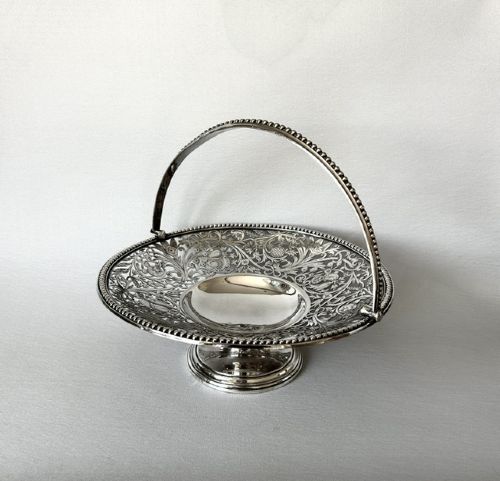
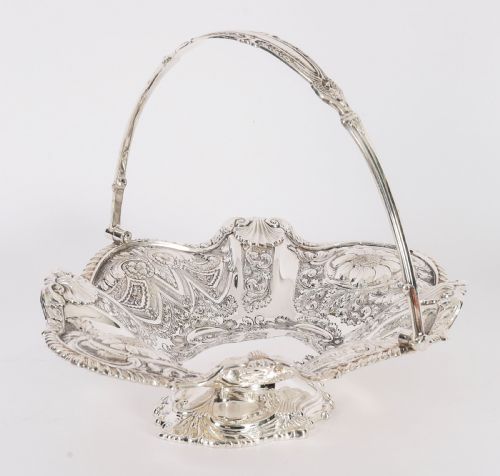
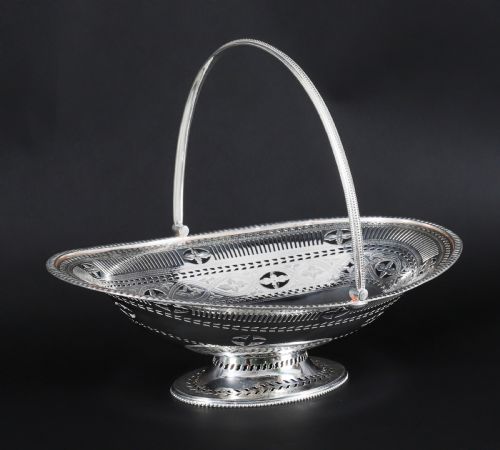
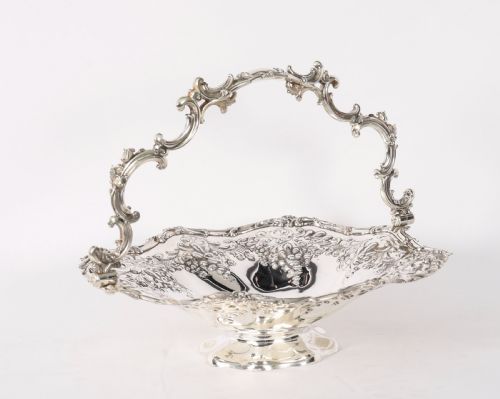
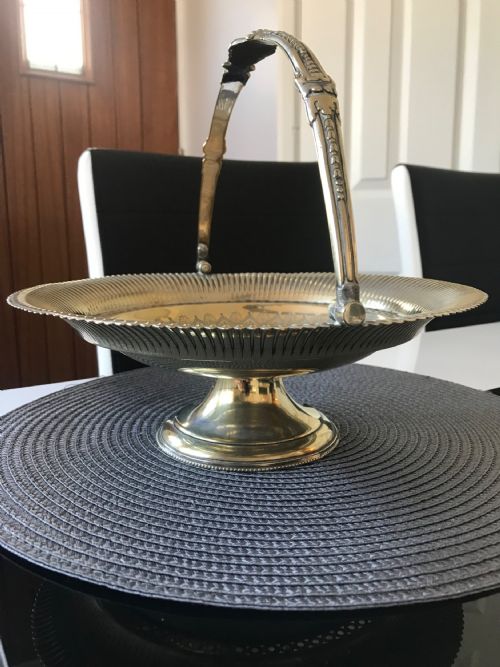
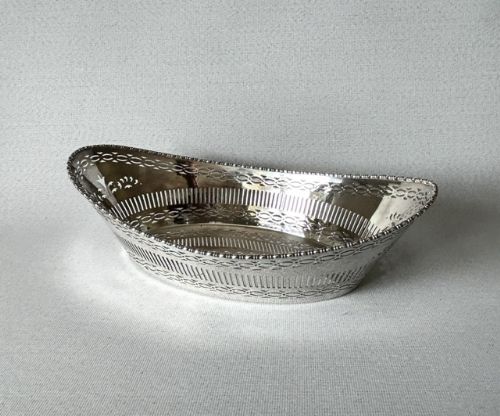
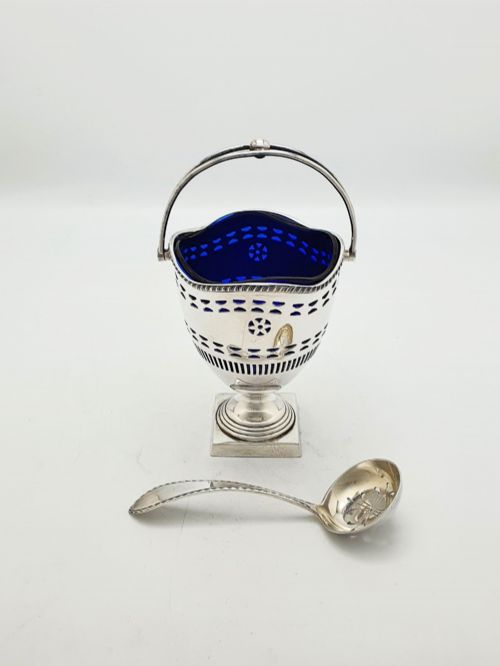
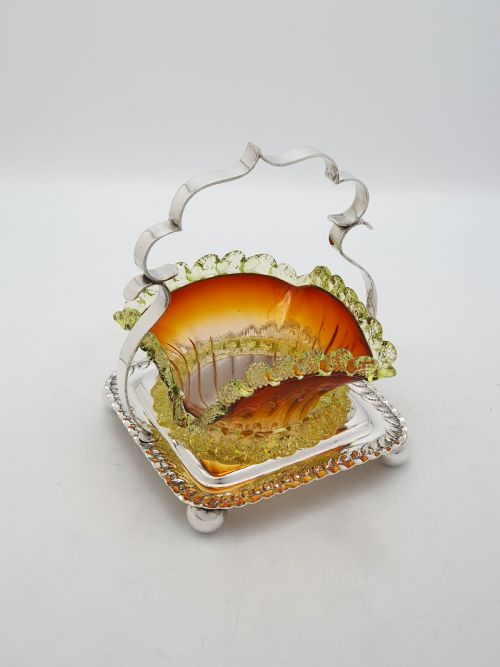
A silver plate basket brings the decorative flair of the dining table into focus through pierced metalwork and coloured glass liners.
Silver Plate Basket
A silver plate basket serves primarily as a fruit, bread, cake or sweetmeat container for formal dining and tea service across the Georgian, Victorian and Edwardian periods.
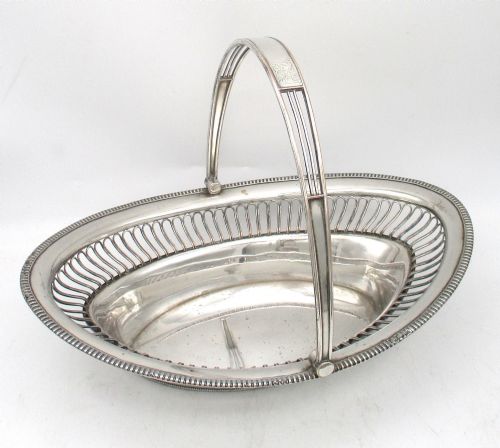
The buyer meets many variations on this page, ranging from early nineteenth-century Old Sheffield Plate wirework designs to mid-Victorian pierced fruit baskets and Edwardian swing-handle tableware.
Continental examples, notably Art Nouveau metalware paired with vaseline or ruby glass bowls from makers such as WMF, sit alongside robust English serveware from firms like Elkington and Mappin & Webb.
Materials and Techniques
Early pieces utilise Old Sheffield Plate, a process fusing a thin sheet of silver onto a heavier copper body, often visible at cut edges or wear points.
Later nineteenth-century and twentieth-century production relies on electroplated nickel silver, known as EPNS, which permits complex cast mounts and durable uniform coatings.
Many designs incorporate blown or moulded glass inserts, including cobalt, ruby, amber and green vaseline glass, held within pierced metal frames or wirework lattices.
Some Victorian manufacturers produced novelty chicken egg basket cruets, combining practical breakfast service with whimsical animal forms.
Judging Quality
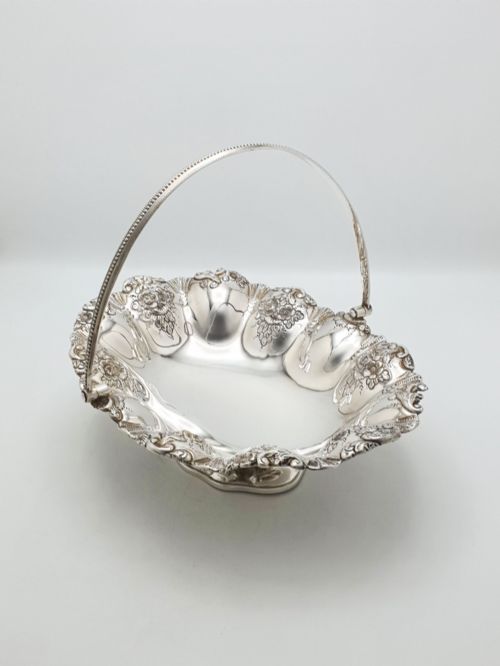
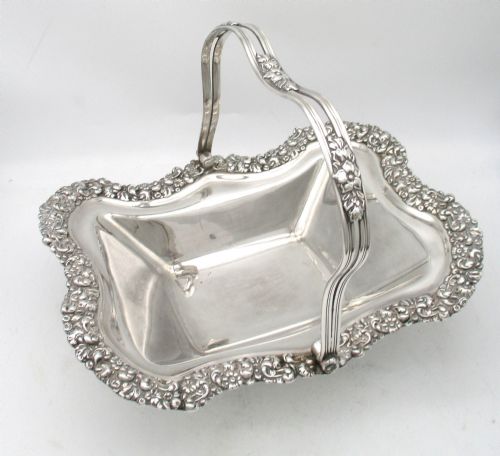
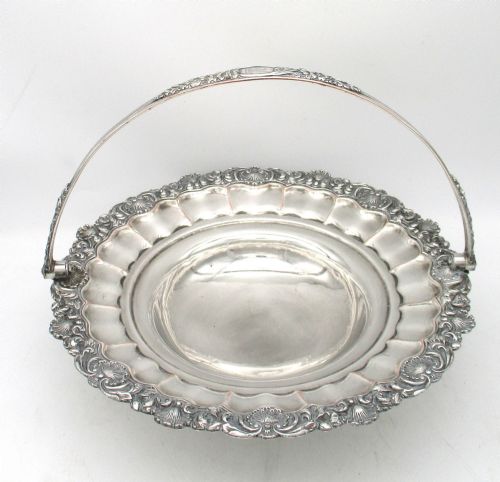
Quality rests on the crispness of the chasing, repoussé and piercing work, where sharper floral motifs and cleaner openwork separate master output from mass production.
The integrity of the plating matters greatly, distinguishing pieces that retain their original silver layer across high-relief surfaces from those worn down to the base copper.
Design ambition elevates certain items, such as those featuring integrated coloured glass liners or structural wirework by known makers, above standard domestic tableware.
George W Scott And Sons Ltd·Mappin And Webb·Elkington And Co·Thomas Bradbury·Roberts And Belk·Walker And Hall·Martin Hall And Co·William Hutton And Son·Henry Atkins And Co·Samuel Godbehere·William Gallimore And Co·Christofle·Alfenide
The Silver Plate Basket Glossary
- Old Sheffield Plate
- An early fusing technique bonding silver to copper before the invention of electroplating. This method produces a distinct warm tone and reveals copper beneath heavy wear.
- Electroplated Nickel Silver
- A mid-nineteenth-century chemical plating method abbreviated as EPNS. It coats a base alloy of copper, nickel and zinc with a layer of pure silver.
- Repoussé
- A metalworking technique where the artisan hammers the design from the reverse side to form raised floral or scroll reliefs on the rim.
- Wirework
- An open lattice construction formed from interwoven silver-plated wires. This airy technique appears frequently on eighteenth-century and nineteenth-century sweetmeat baskets.
- Sweetmeat
- A small confection or sugar-plum served in specialised dishes during dessert courses. These smaller vessels often include coloured glass liners.
- Vaseline glass
- A transparent glass coloured with uranium oxide that yields a characteristic yellow-green fluorescence under ultraviolet light. It appears in many Art Nouveau centrepieces.
Silver Plate Basket: Frequently Asked Questions
How do I clean a silver plate basket?
Wash the metal gently using warm water and mild soap, avoiding harsh abrasive dips that strip the remaining silver layer.
Dry the surface immediately with a soft cloth to prevent water spots and tarnishing.
What were silver plate baskets used for?
These vessels held bread, cakes, fruit or sweetmeats during formal dining and afternoon tea services in wealthy households.
Some examples also functioned as decorative centrepieces when paired with coloured glass bowls or flower pots.
How can I tell Old Sheffield Plate from EPNS?
Old Sheffield Plate shows subtle hints of copper showing through along the edges and high points due to the fusion manufacturing method.
Electroplated nickel silver displays a more uniform white metal appearance with stamped maker marks indicating the later process.
Are glass liners original to the baskets?
Original liners fit snugly into the wirework or pierced frame and match the period style of the metal basket body.
Many surviving pieces retain their coloured vaseline, ruby or cobalt glass inserts, which add considerable interest to the design.