
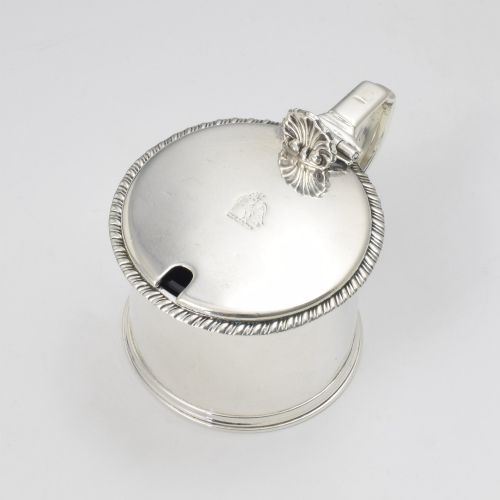


Silver Mustard Drum Pot
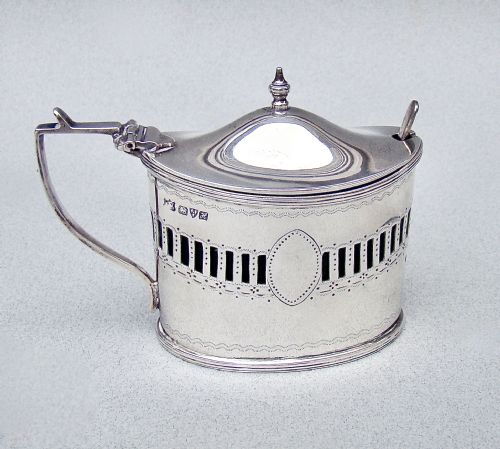
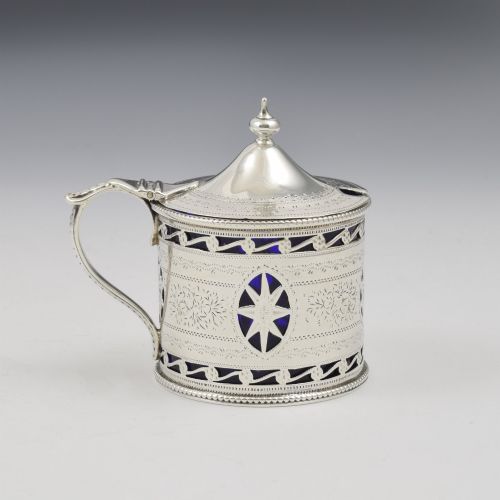
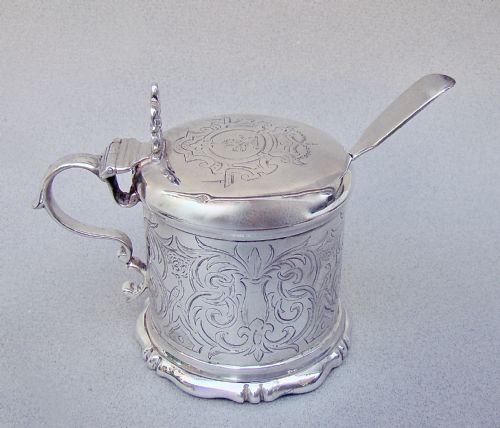
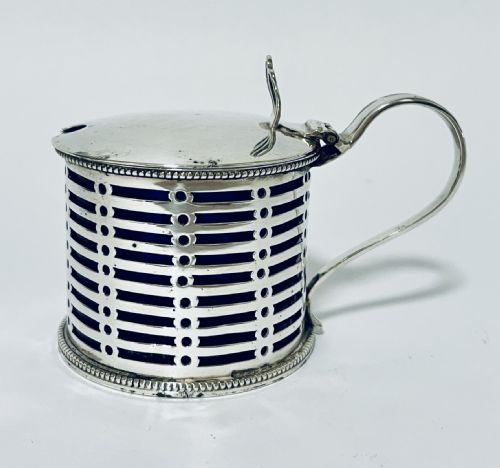
These silver mustard drum pot examples are compact table vessels designed to hold mustard, bringing functional elegance to the dining table.
Silver Mustard Drum Pot
A silver mustard drum pot is a small, cylindrical condiment vessel typically featuring a flat hinged lid and a sturdy handle. These table pieces date from the Georgian, Regency, and Victorian periods, extending through to Edwardian and later twentieth-century iterations.
The most common form encountered on this page is the Victorian drum mustard pot, often accompanied by delicate piercing on the silver body and a contrasting glass liner. Makers frequently utilised cobalt blue glass within pierced sterling silver frames to showcase the rich colour beneath.
Earlier Georgian and later Edwardian examples also appear, spanning plain surfaces and finely engraved bodies. Collectors seek these pieces for their combination of miniature scale, utility, and decorative craftsmanship.
Materials and construction methods
Silversmiths constructed these drum pots primarily from sterling silver, shaping the cylindrical bodies through hammering, soldering, and turning. Many examples incorporate intricate pierced work, where artisans cut openwork patterns into the silver sheet before polishing.
Fitted glass liners, particularly in cobalt blue glass, were blown and ground to sit securely inside the pierced silver cylinders. Hinged lids with thumbpieces and cast handles completed the construction, soldered carefully to the main body.
Military presentation pieces occasionally appear in the record, suggesting some officers took their mustard very seriously indeed.
Assessing quality in drum mustard pots
Quality rests heavily on the crispness of the silversmith's piercing and the weight of the sterling silver used in the cylindrical body and hinged lid. Finer pots display precise openwork patterns and well-fitted components that close securely without wobble.
The presence of the original matching glass liner, particularly when intact in cobalt blue glass, elevates a piece significantly. Maker marks from notable silversmiths also distinguish superior examples within the range.
Alfred Marston·Nathan & Hayes·Charles & George Fox·Charles Fox II·Charles Stuart Harris·William Summers·Hamilton & Inches·Robert Hennell·Goldsmiths & Silversmiths Co
The Silver Mustard Drum Pot Glossary
- Drum pot
- A cylindrical condiment vessel shaped like a small drum, typically featuring a flat top and vertical sides. This form is characteristic of eighteenth and nineteenth-century tableware.
- Cobalt glass
- A deep blue glass produced by adding cobalt oxide to the molten batch. It provides a striking visual contrast when viewed through pierced silver work.
- Piercing
- A decorative technique where metal is cut away to create openwork designs such as lattices or geometric bands. It allows coloured glass liners to remain visible.
- Sterling silver
- An alloy consisting of silver and other metals, usually copper, to increase durability. British pieces typically bear hallmarks verifying this standard.
- Thumbpiece
- A small projection attached to the hinged lid of a pot, allowing the user to lift the lid with a thumb. It is a key functional detail on mustard pots.
Silver Mustard Drum Pot: Frequently Asked Questions
How were silver mustard pots used?
These pots sat upon dining tables alongside other condiment vessels to dispense mustard for meats and side dishes. A small spoon often accompanied the pot to serve the mustard.
Today, collectors use them as decorative accents, small display pieces, or occasionally for their original purpose during formal dining.
How do I identify a Victorian drum pot?
Victorian examples frequently display hallmarks stamped directly onto the silver, indicating the assay office and the year of manufacture. Stylistic markers include pierced lattice bodies and cobalt blue glass liners.
Examining the maker's mark and consulting hallmarking records provides an exact date of production for these nineteenth-century items.
Why do some pots have blue glass liners?
The blue glass liners protected the sterling silver from the corrosive acids present in prepared mustard. Cobalt blue glass was chosen for its vibrant hue, which created a pleasing visual contrast behind pierced silver patterns.
Original liners add authenticity and completeness to antique condiment vessels.