
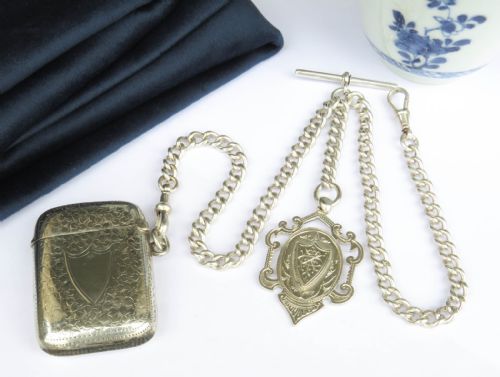
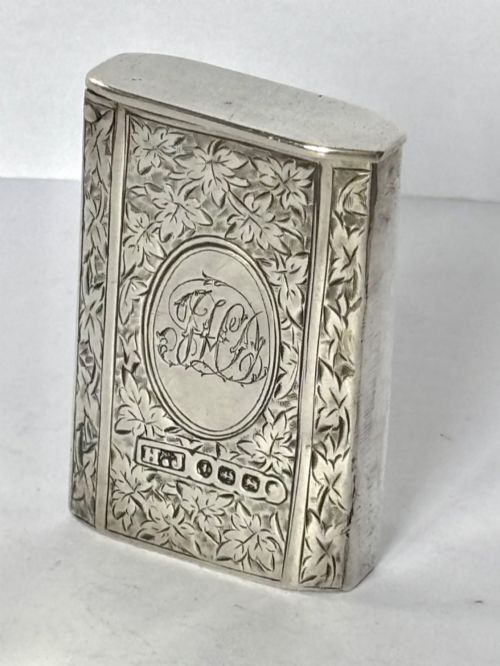
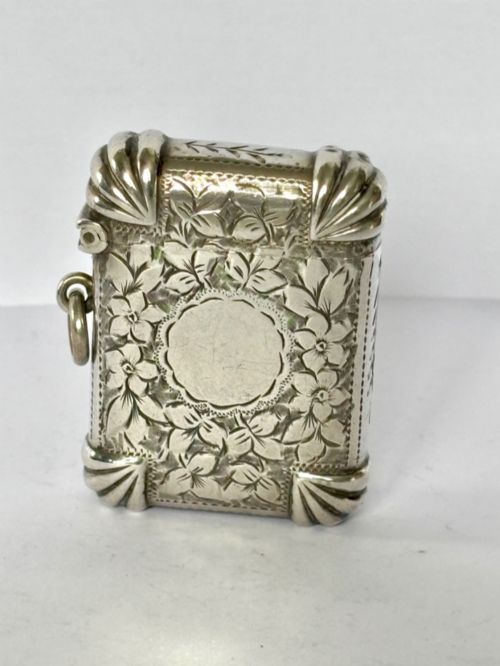
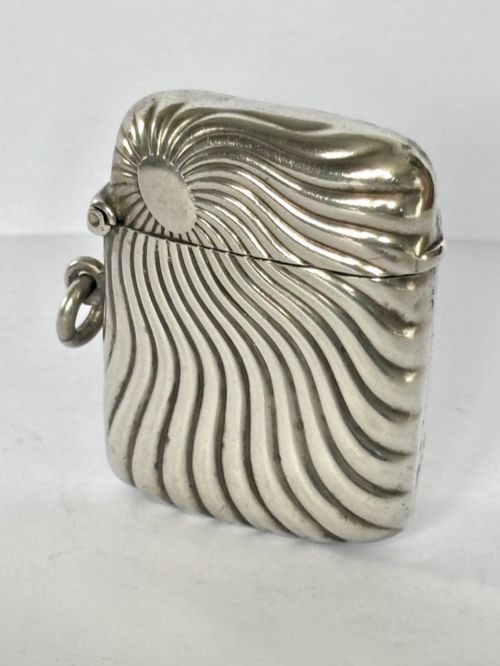
Silver Match Case
A silver match case protects fragile matches and lights them safely on the go.
Silver Match Case
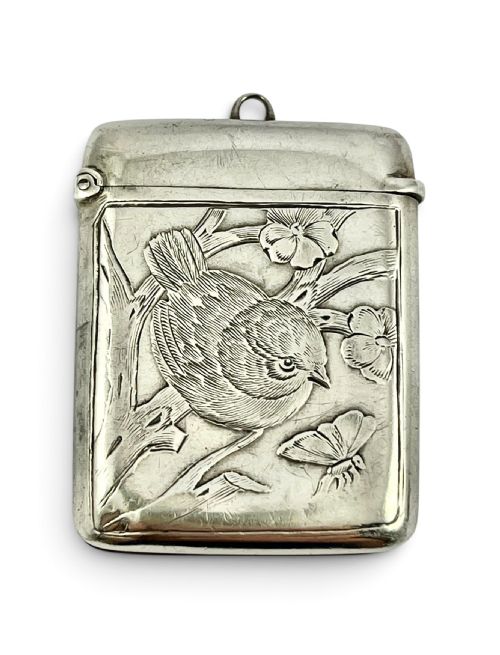
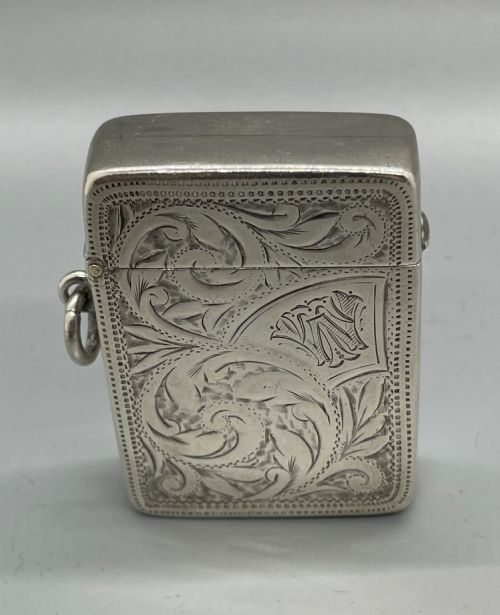
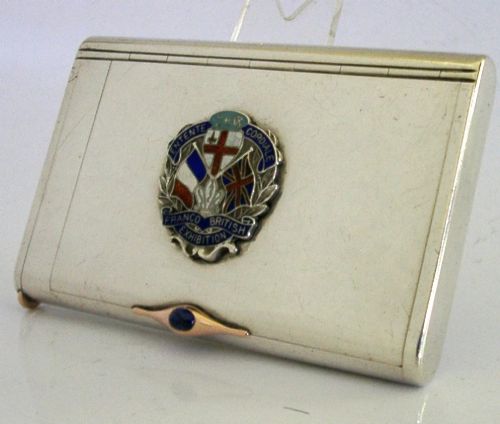
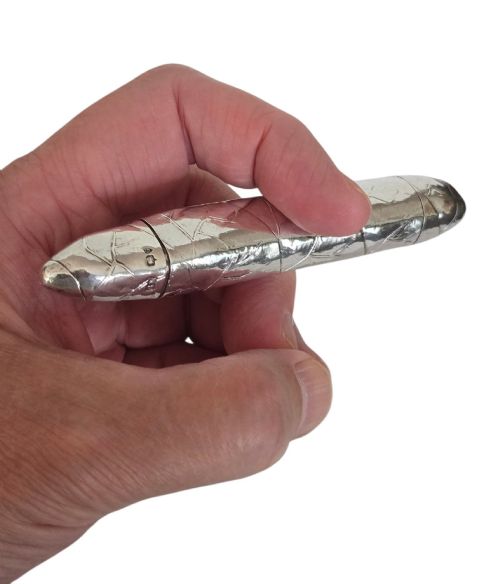
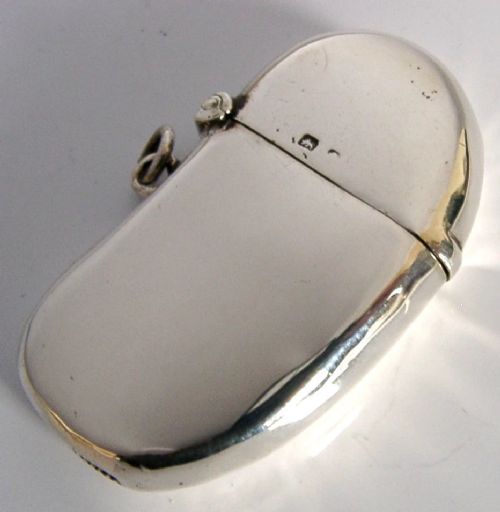
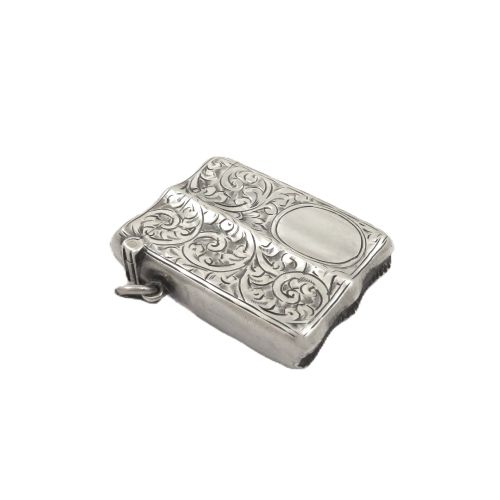
A silver match case serves as a portable container designed to carry wooden vestas and strike them on an integrated abrasive panel. These pocket-sized accessories appear frequently from Victorian, Edwardian, and George V periods in rectangular, kidney, and novelty forms.
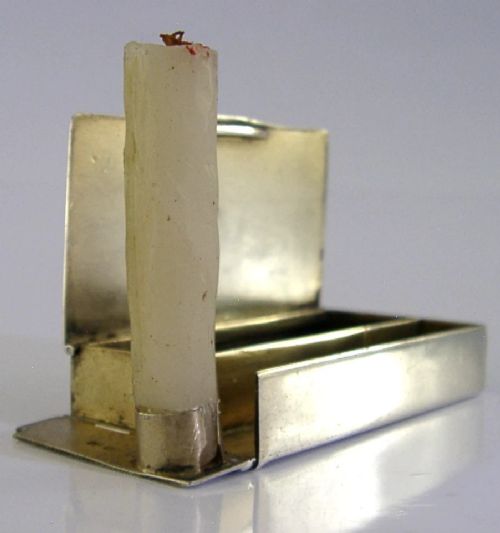
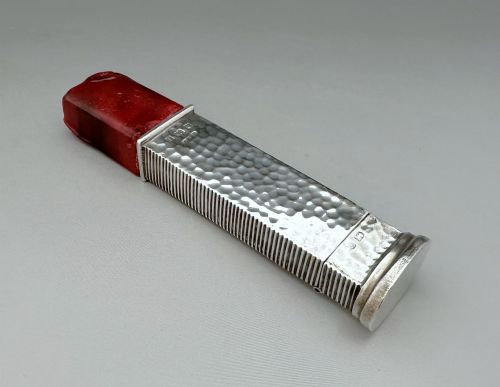
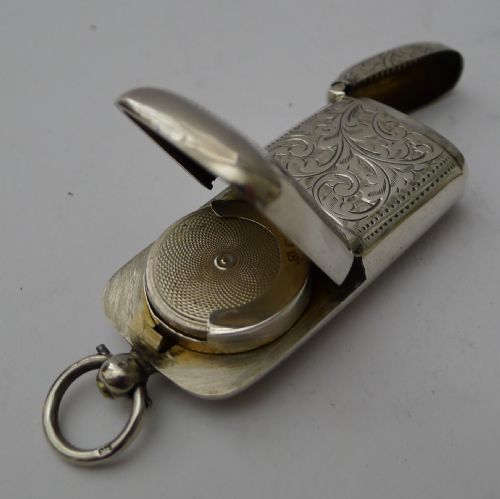
Makers fashioned standard pocket vestas alongside combination pieces that integrated sovereign holders, wax tapers, photo frames, or pocket watch chains. Novelty iterations take shapes like fish, books, boots, or sentry boxes, while matchbox covers and strikers serve table or desk use.
How they were made
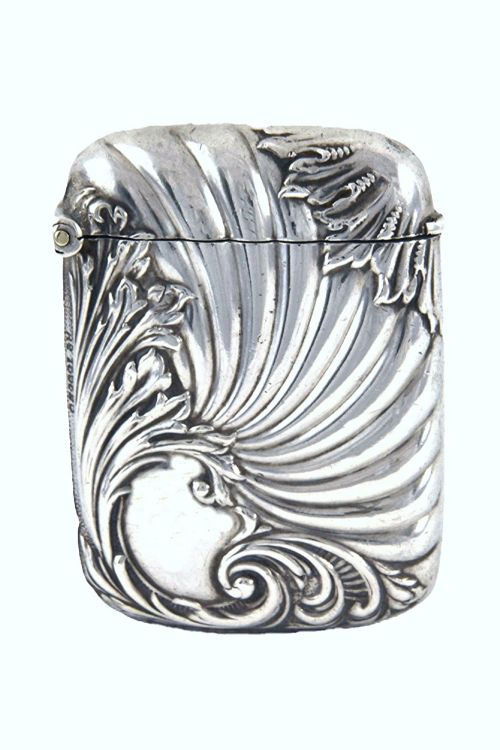
Silversmiths constructed these items primarily from sterling silver or continental silver, often employing hinge mechanisms for spring-loaded flip tops and secure snap closures. Techniques such as repoussé, chasing, casting, and planishing created textured relief decoration and smooth structural bodies.
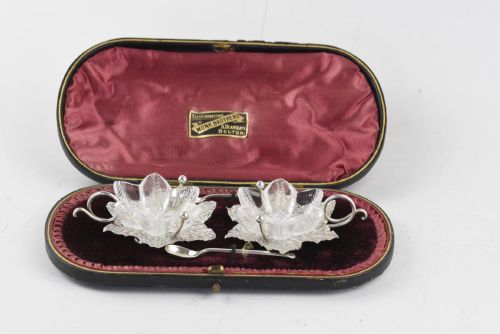
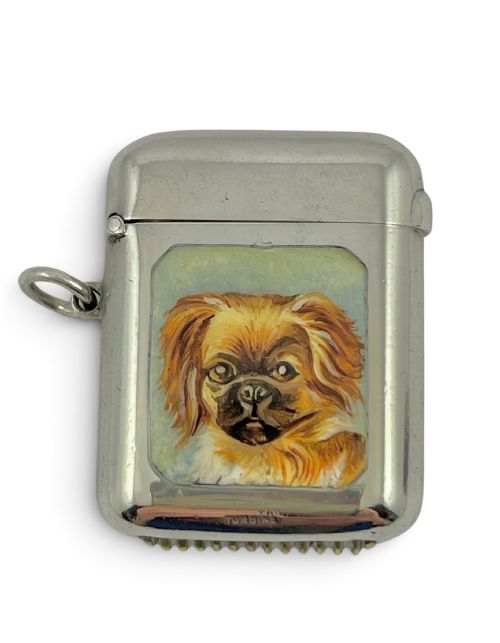
Surface ornamentation frequently incorporates hand-painted enamel, guilloché enamel, gold accents, and engraved crests or monograms. Internal components sometimes include velvet linings or specialised compartments for wax tapers and sealing wax.
Materials across the inventory include sterling silver, enamel, glass, gold, sealing wax, wax taper, and velvet across Victorian, Edwardian, and George V eras.
What varies in quality
Construction weight and metal gauge distinguish sturdier examples from lighter mass-produced containers. A crisp hinge action and a tightly closing lid indicate superior original manufacturing standards.
Artistry in hand-painted enamel panels, complex novelty engineering, and well-executed chasing or cast relief elevate individual pieces above plain utility boxes.
Howard James Birmingham·EV Pledge & Son·Robert Chandler·Sampson Mordan & Co·A & J Zimmerman·William Neale·Robert Pringle·Minshull & Latimer·Alfred Clark·Turner Simpson·Stephen J Rose·Walker & Hall
The Silver Match Case Glossary
- Vesta case
- A small pocket container specifically designed to hold short matches known as vestas. These items usually feature a striated striking surface on the base.
- Guilloché enamel
- A decorative technique where translucent enamel is applied over precise machine-turned metal patterns. This method creates geometric waves and light-reflecting depth beneath the coloured glaze.
- Sovereign case
- A dual-purpose pocket holder incorporating spring clips to store gold sovereign coins alongside matches. These combination items reflect the specific currency carriage needs of the late nineteenth and early twentieth centuries.
- Castle top
- A detailed pictorial engraving on a silver lid depicting a specific British landmark or architectural structure. Royal Windsor stands out among these regional topographical views.
- Planished
- A surface finish produced by hammering metal with small, polished blows to create subtle overlapping facets. This texture appears on Arts and Crafts examples.
Silver Match Case: Frequently Asked Questions
How do I use a vesta case?
Open the spring-loaded lid to access the matches stored inside the main compartment. Pull a match out and draw its head sharply across the textured striking strip located on the exterior base.
Close the lid firmly once the match is lit to keep the remaining contents secure and dry within your pocket.
What is the difference between a vesta and a matchbox cover?
A vesta case is a fully enclosed, hinged container that houses matches directly in an internal cavity and includes its own striking surface. It protects the matches from moisture and pressure in daily pocket transport.
By contrast, a matchbox cover or sleeve is an open-ended frame designed to slide over a standard cardboard box of matches, leaving the original box exposed at both ends.
How do I date a silver match case?
Inspect the interior or rim for British hallmarks stamped into the metal. These small marks typically include a standard purity symbol like a lion passant, a town mark for assay offices such as Birmingham or Chester, and a date letter.
Matching that specific letter against official assay office tables reveals the exact year the item was hallmarked.
Can I still carry matches in them?
Modern safety matches require a specific chemical strip found on modern boxes and will not ignite on antique vesta strike plates. Finding suitable matches requires sourcing traditional strike-anywhere vestas that match the historical friction ignition method.
Ensure the antique hinge and closure remain secure so matches stay safely contained while carried in a pocket.