
Victorian Match Case
When you search for a victorian match case, you are looking at pocket-sized metal containers designed to keep safety matches dry.
Victorian Match Case
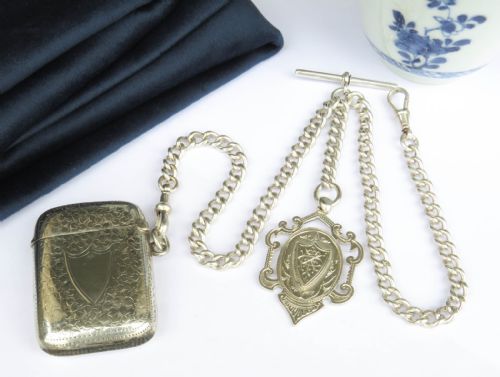
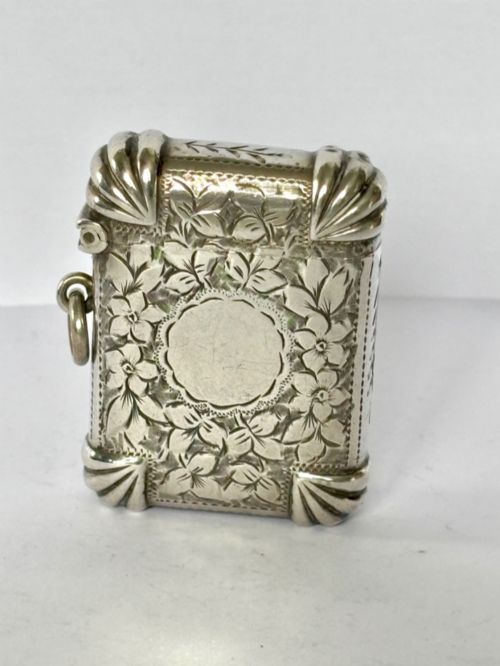
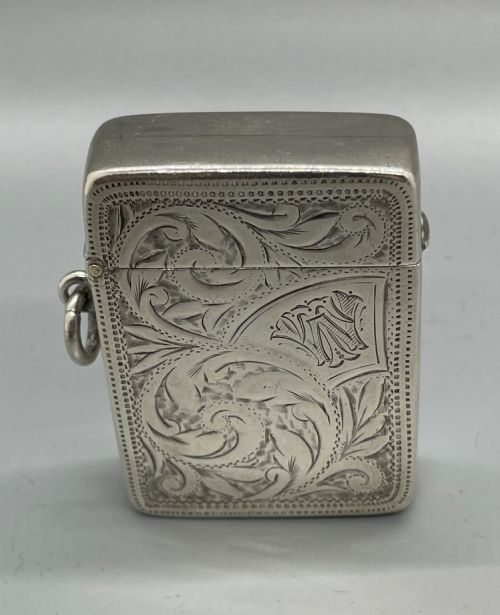
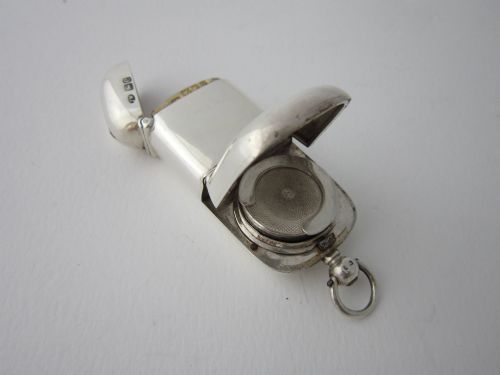
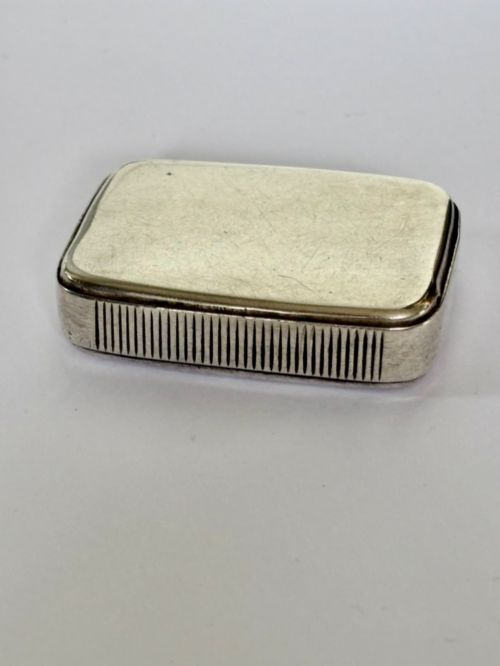
A victorian match case is primarily encountered as a small sterling silver vesta case designed to fit comfortably in a waistcoat pocket or attach to a pocket watch chain. These pieces date predominantly from the late nineteenth century, reflecting the Victorian and Edwardian periods when pocket safety matches were a daily necessity.
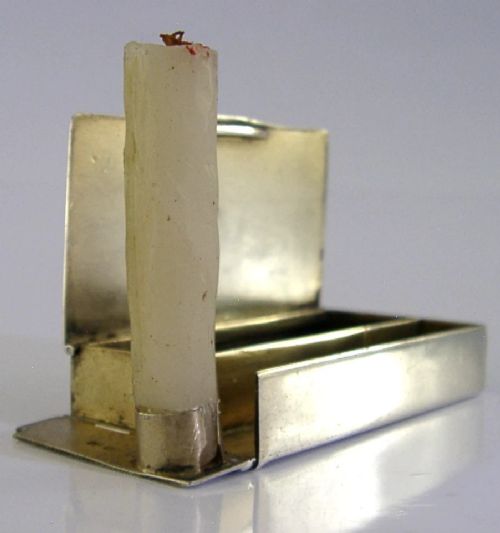
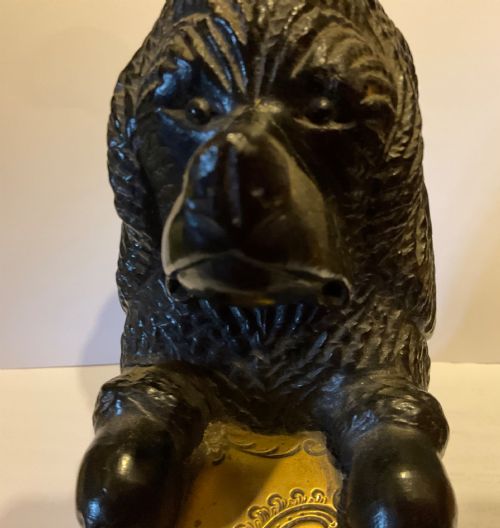
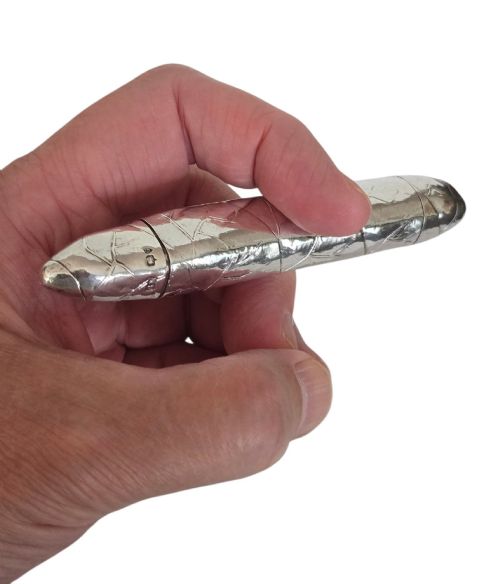
Beyond standard rectangular shapes, the form extends into novelty designs modelled as animals, boots, or miniature books, alongside combination pieces that incorporate stamp holders, sovereign cases, or photograph frames.
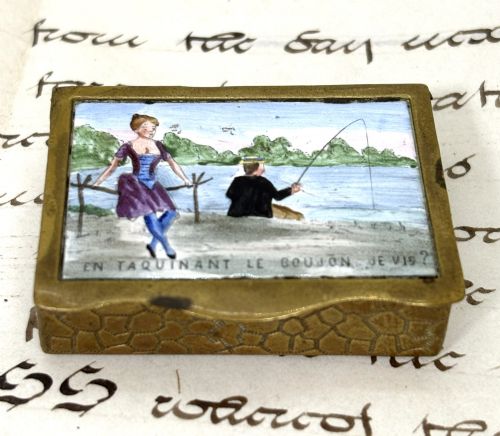
The materials span sterling silver, brass, enamel, and carved wood, with continental silver and nickel-plated variants also appearing across the selection.
Materials and construction
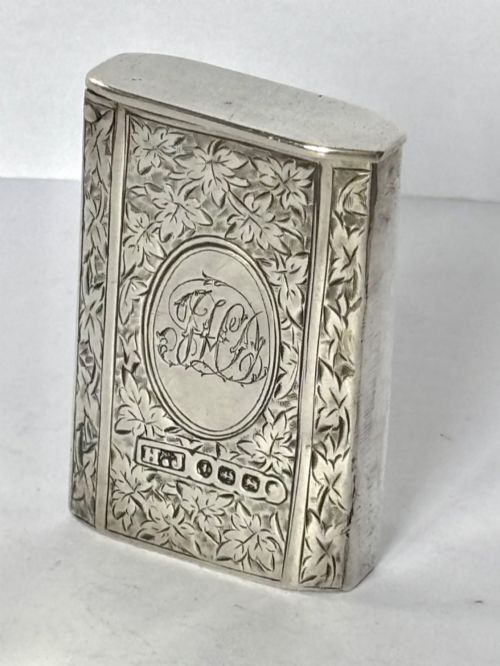
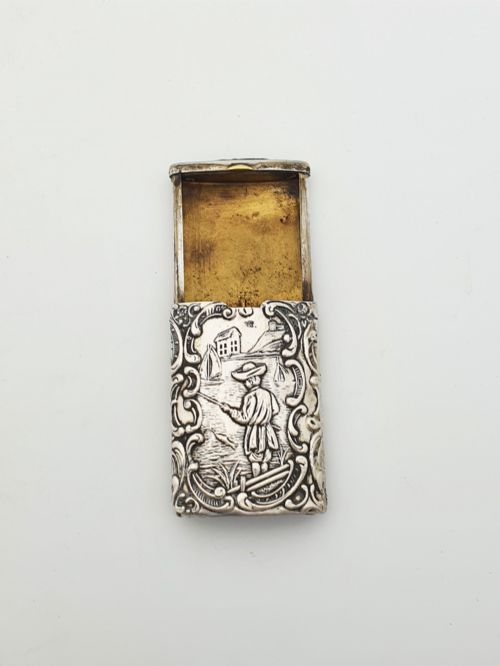
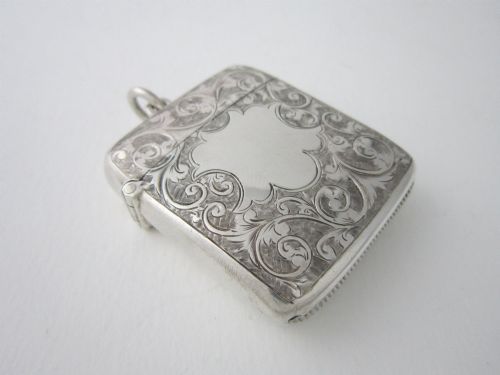
Sterling silver formed the primary body of these objects, shaped through pressing, stamping, and hand-engraving with floral, geometric, or pictorial motifs such as golfers and scenic reliefs.
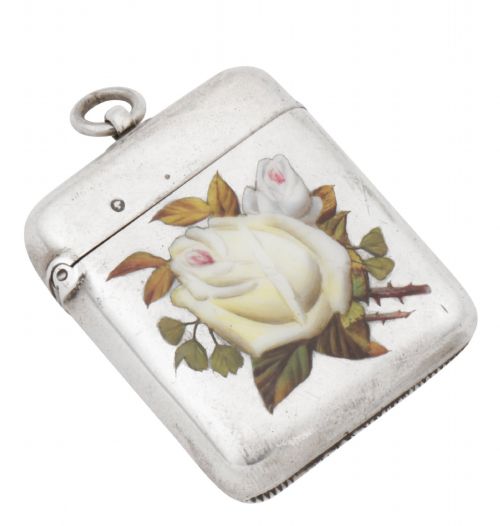
Enamel work provided colourful surface decoration, particularly on floral panels or portrait pieces, while brass and carved wood sustained more robust novelty forms like animal figures and standing match dispensers.
Listings feature sterling silver, brass, enamel, and carved wood, spanning Victorian, Edwardian, and Art Nouveau styles alongside novelty animal forms.
Assessing quality
Quality in these pocket containers rests on the crispness of the hallmark stamps, the depth and clarity of hand-engraved or repoussé relief work, and the precision with which the spring-loaded hinged lid closes.
Howard James Birmingham·EV Pledge And Son·Sampson Mordan And Co·A And J Zimmerman·William Neale·Minshull And Latimer·William Hair Haseler·George Unite
The Victorian Match Case Glossary
- Vesta case
- A small pocket container designed to hold matches, featuring a textured striking strip on the base. These were essential accessories before the widespread adoption of lighters.
- Hallmark
- An official stamp applied to precious metals indicating the assay office, purity standard, and year of manufacture. British sterling silver pieces typically carry a set of these small indented marks.
- Sovereign case
- A small circular pocket container made to hold British gold sovereign coins. Many examples combine this function with a matching compartment for matches.
- Pocket watch chain
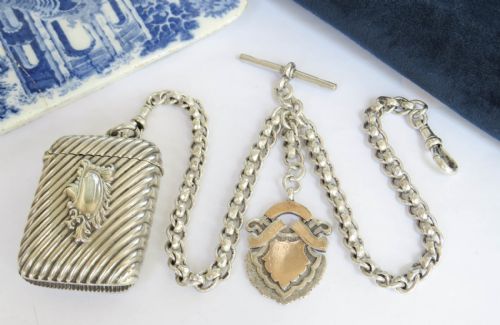
- A length of metal chain used to secure a pocket watch in a waistcoat pocket. Vesta cases were frequently clipped directly to these chains as dangling fobs.
- Repoussé
- A metalworking technique where the design is hammered into relief from the reverse side. This method creates raised decorative patterns across the exterior surface of the silver.
Victorian Match Case: Frequently Asked Questions
What is a vesta case?
A vesta case is a pocket-sized container manufactured to hold matches securely while protecting them from moisture. They feature an integrated serrated strip on the bottom for striking the match.
Most examples are made of sterling silver and include a hinged lid with a tight spring mechanism to keep the interior dry during daily carry.
How were they carried?
These cases were typically slipped directly into a gentleman's waistcoat pocket or attached to a pocket watch chain using a small suspension loop. Ladies also suspended them from chatelaines clipped to their waistbands.
The attachment loop at the top of the case allowed the piece to hang securely as a practical fob alongside a pocket watch.
How do I date a silver match case?
Dating relies heavily on the assay office hallmarks stamped into the metal, which include a specific letter code corresponding to the year of production. Stylistic clues such as Art Nouveau curves or Aesthetic Movement motifs also point to specific decades.
Matching the maker's mark against historical registry records provides a precise year of manufacture for pieces produced in Birmingham, Chester, or London.
Why do some have engraved initials?
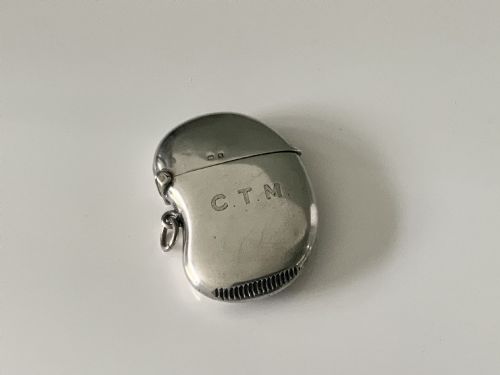
Many pieces were purchased as personal gifts and engraved with the original owner's monogram or family crest on a small unadorned shield. This personalization was a standard practice among Victorian retailers.
These monogram panels provide a direct connection to the original nineteenth-century user who carried the piece daily.