



Silver Glass Cruet Set
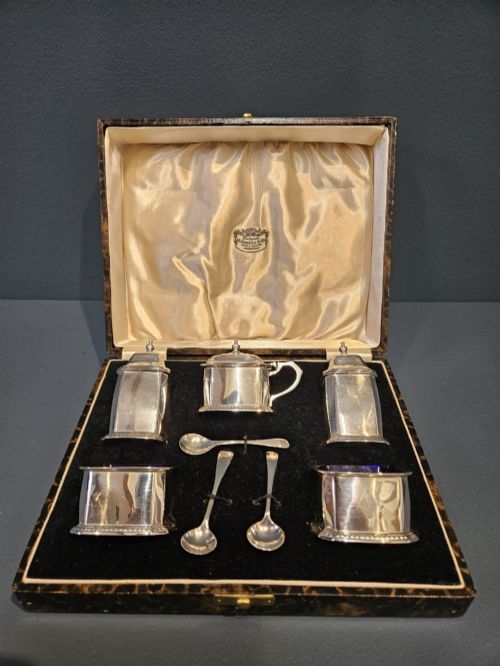
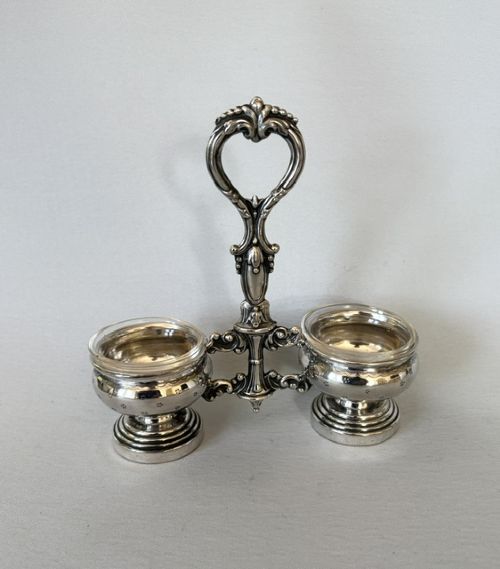
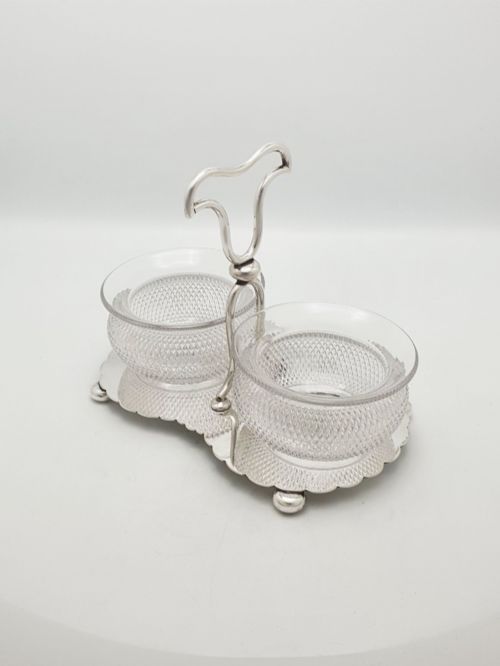
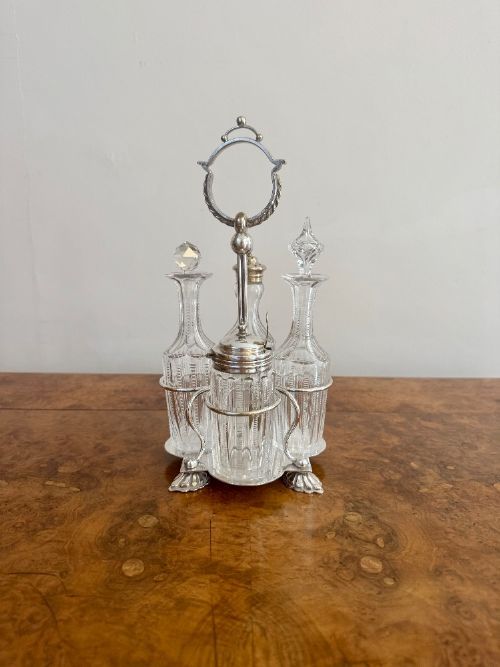
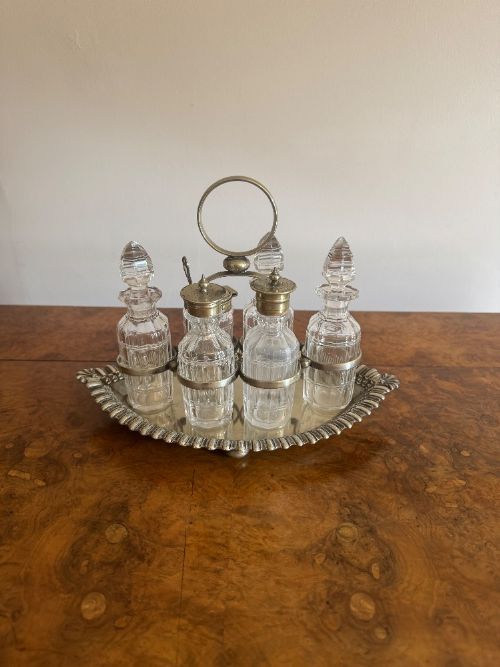
A silver glass cruet set brings together cut glass bottles and precious metal frames to hold dining table condiments with considerable elegance.
Silver Glass Cruet Set
A silver glass cruet set comprises a metal frame holding glass bottles, cruets, or jars for condiments such as oil, vinegar, mustard, and pepper. These pieces span from the Georgian period through the Victorian and Edwardian eras into the Art Deco decades of the twentieth century.
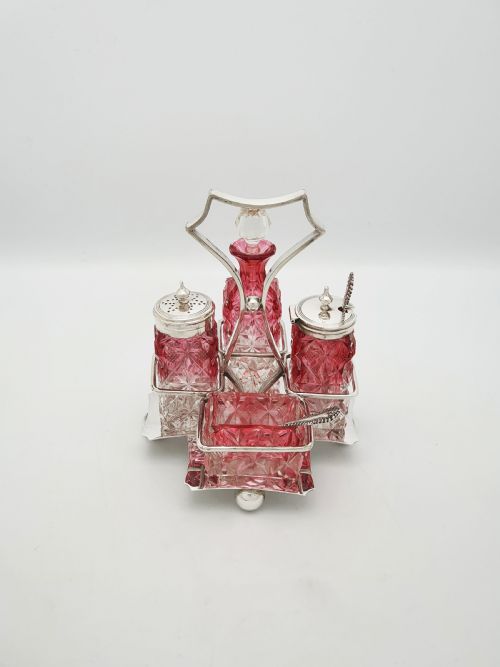
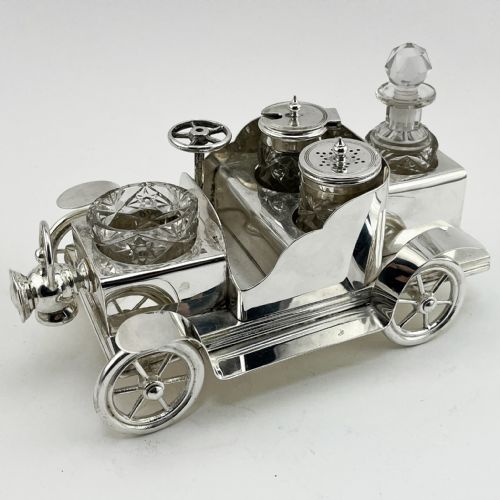
The most common examples encountered on this page are Edwardian and late Victorian silver plated frames fitted with cut glass bottles. Collectors also find sterling silver stands, bachelor sets with fewer bottles, and novelty frames shaped like cars or carriages.
Cruet sets served a practical purpose on the dining table, allowing diners to season their food personally. Today, they function as decorative tableware items that display the brilliance of cut glass alongside silver mounts.
Materials and construction
Makers combined sterling silver or silver plate with blown and cut glass to construct these table stands. Frames were cast, stamped, or soldered into various configurations, often incorporating handles for carrying the set between guests.
Glass bottles and jars were shaped by blowing into moulds or free-blowing, then finished with wheel-cut geometric patterns or flashed with cranberry colour. Silver mounts and collars were fitted to the glass necks, and stoppers were ground to fit individual bottles precisely.
Victorian motorists could dine on the move with novel carriage and car cruet sets designed to stay stable on bumpy roads.
Assessing quality in sets
Quality rests heavily on the completeness of the set and whether the glass bottles match the frame originally. Sets retaining their original matched cut glass bottles and matching stoppers command greater regard from collectors.
The weight and crispness of the metalwork also define the grade of the piece, from heavy cast sterling silver frames down to lighter silver plate over base metal. Hand-cut facets on the glass and maker marks stamped clearly into the metal indicate superior manufacture.
Goldsmith & Silversmith's·William Neale·Mappin Brothers·Charles Thomas Fox·Walker & Hall·Elkington & Co·Hester bateman·William Neale & Son·Deykin & Harrison·HEATH AND MIDDLETON
The Silver Glass Cruet Set Glossary
- Cruet set
- A matched assembly of small bottles and jars held within a frame for table condiments. These sets evolved in size from small bachelor versions holding two bottles up to grand Georgian frames with seven or eight pieces.
- Silver plate
- A layer of silver fused or electroplated onto a base metal such as copper or Britannia metal. Most surviving Edwardian and Victorian frames utilise this technique to achieve the look of solid silver at a lower cost.
- Cut glass
- Glass decorated by cutting facets and patterns into the surface using rotating wheels. This technique scatters light through the glass and appears frequently on Victorian and Edwardian condiment bottles.
- Bachelor set
- A smaller scale cruet set designed for single diners or small households. These compact stands typically hold two to four bottles rather than the larger configurations found on grand dining tables.
- Old Sheffield plate
- An early method of fusing a thin sheet of sterling silver to a thicker copper ingot before rolling them together into sheets. Pieces made this way date generally to the eighteenth and early nineteenth centuries.
Silver Glass Cruet Set: Frequently Asked Questions
What is a silver glass cruet set used for?
These sets held liquid and dry seasonings for the dining table, including oil, vinegar, mustard, salt, and pepper. Diners used them to adjust the flavour of their food during meals.
Over time, dining habits shifted away from multi-bottle condiment frames, turning these sets into decorative table centrepieces and collectible tableware.
How do I date a cruet set?
Silver frames often carry hallmarks that reveal the exact year of manufacture and the assay office. Stylistic clues like Art Deco geometric lines or Victorian ornamentation also help narrow down the period.
Glass cutting styles and frame shapes provide further context when hallmarks are absent or worn down from cleaning.
Are the glass bottles usually original?
Many sets retain their original blown and cut glass bottles, though replacements do occur due to breakages over the decades. Bottles that fit snugly into the frame rings and match the glass colour and cutting style are most likely original.
Inspect the bases and rims of the bottles for signs of age and wear that match the metal stand.
How do I clean tarnished silver plate?
Use a gentle silver polishing cloth or a mild proprietary silver cream applied with a soft sponge. Avoid harsh dips that can strip silver plate down to the base metal.
Glass inserts should be removed from the metal frame and washed in warm soapy water separately to protect both materials.