



Silver Flatware Accessories
Silver flatware accessories gather the specialised implements outside standard place settings, from caddy spoons to marrow scoops that elevate a dining table.
Silver Flatware Accessories
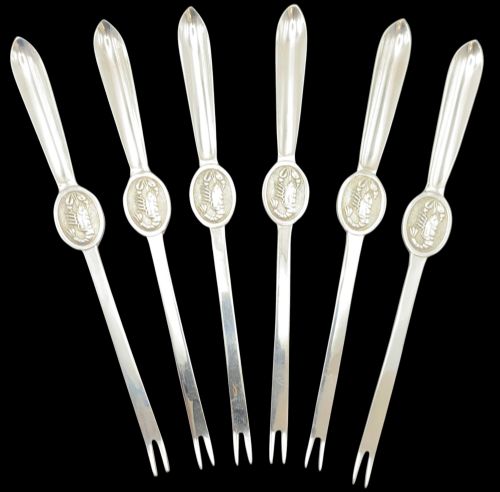
Silver flatware accessories encompass the diverse supporting implements designed for specific foods and hospitality rituals beyond the basic knife and fork. When exploring silver flatware accessories, buyers encounter forms ranging from delicate sugar tongs and caddy spoons to heavy grape scissors and game skewers.
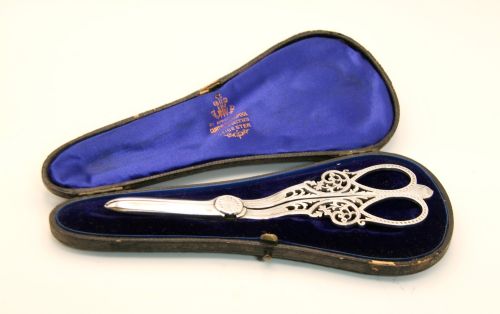
The pieces appearing on this page span several centuries, with particular strength in Georgian and Victorian examples fashioned from sterling silver or silver plate. Caddy spoons and teaspoons dominate the selection, often presented individually or within fitted velvet and leatherette cases alongside matching sugar tongs.
Originating from British and continental workshops, these items reflect the changing dining habits and social customs of the eighteenth, nineteenth, and early twentieth centuries. Each tool serves a dedicated purpose, whether portioning tea leaves, extracting marrow, or serving asparagus at formal meals.
Assessing quality in silver accessories
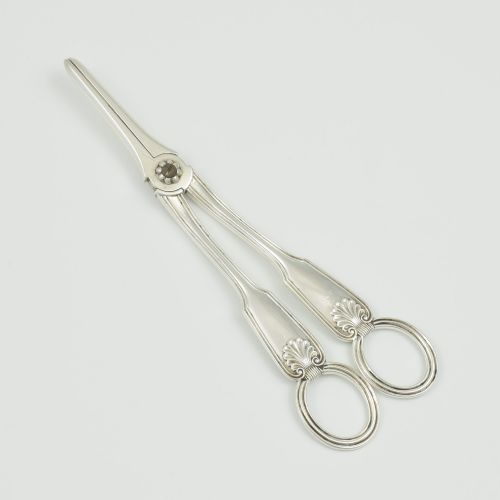
Quality in these implements rests upon the crispness of the original chasing, the weight of the metal, and the preservation of maker marks. Superior examples exhibit balanced proportions and robust construction, particularly in hinged items like sugar tongs and grape scissors.
The integrity of the decorative engraving and the original polish dictate desirability among collectors, alongside whether cased sets retain their original silk and velvet linings. Pieces showing heavy wear to the silver layer on plated items or excessive thinning from over-polishing sit lower in the range.
Bateman Family·George Unite·Goldsmiths Silversmiths Co·Georg Jensen·Garrard Co
The Silver Flatware Accessories Glossary
- Caddy spoon
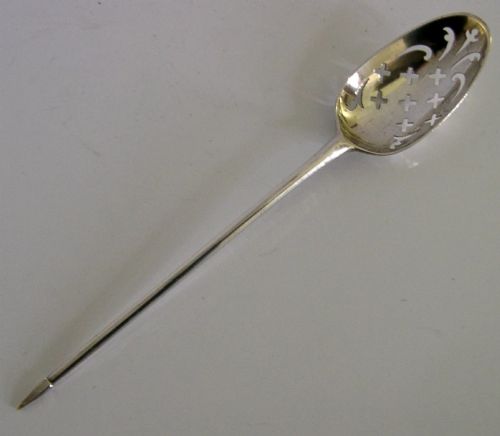
- A short-handled spoon specifically designed for measuring loose tea leaves from a caddy into a teapot. These often feature decorative bowls shaped like shells, leaves, or hands.
- Marrow scoop
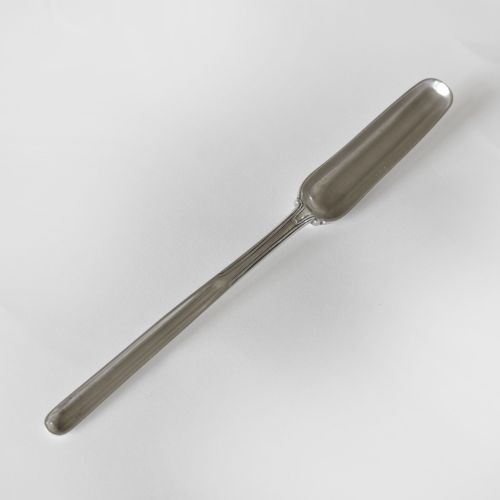
- A narrow, elongated utensil with a small trough at each end, historically used for extracting marrow from animal bones. Georgian examples frequently feature double-ended designs with varied bowl sizes.
- Sugar tongs
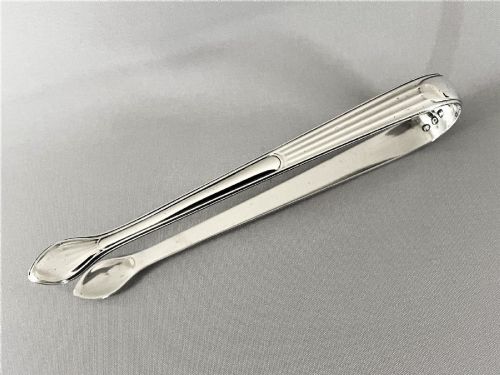
- Spring-action implements used for transferring sugar lumps into cups, varying from simple wire forms to heavily cast and pierced Victorian pairs. They often accompany matching teaspoons in fitted presentation cases.
- Game skewer
- A long, pointed metal pin used for securing meat or poultry during roasting and serving. These pieces showcase decorative terminals shaped as rings or hunting motifs.
- Hallmark
- A series of official marks stamped on precious metal items to guarantee the purity of the silver, the maker, and the year of assay. British pieces typically display a leopard head, lion passants, and date letters.
Silver Flatware Accessories: Frequently Asked Questions
What are silver flatware accessories used for?
These items serve specific culinary and hospitality tasks that standard cutlery cannot perform efficiently, such as portioning tea leaves or serving delicate fruit. Each piece corresponds to a distinct dining custom of the Georgian and Victorian eras.
Collectors and hosts continue to utilise them for their original purposes or display them as decorative examples of period silversmithing skill.
How do I care for antique silver accessories?
Regular, gentle cleaning with a soft cloth and proprietary silver polish prevents tarnish build-up without removing the underlying metal. Avoid abrasive cleaners that can damage delicate hand engraving or wear down thin silver plating.
When storing items lined with silk or velvet, keep them in dry environments away from direct sunlight to preserve the original presentation cases.
How can I tell the age of silver accessories?
Assay office hallmarks stamped directly onto the metal provide the most reliable indicator of age, linking the piece to specific date letters and tax marks. Stylistic clues such as handle shapes, engraving styles, and construction techniques also help narrow down the period.
Comparing items against documented examples from makers like the Bateman family or George Unite confirms manufacturing eras.
Were these items always sold in sets?
Many smaller accessories like caddy spoons and individual marrow scoops were produced and sold as single items for specific domestic tasks. Larger serving implements often appeared as pairs, such as grape scissors or asparagus tongs.
By the Victorian and Edwardian periods, manufacturers frequently assembled matched teaspoons and sugar tongs into dedicated cased sets for presentation.