




Solid Silver Sugar Tongs
Solid silver sugar tongs are functional table silver designed for lump sugar, appearing in diverse forms from Georgian and Victorian eras.
Solid Silver Sugar Tongs
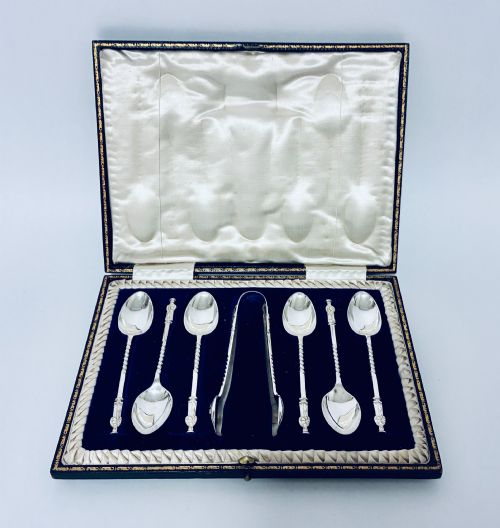
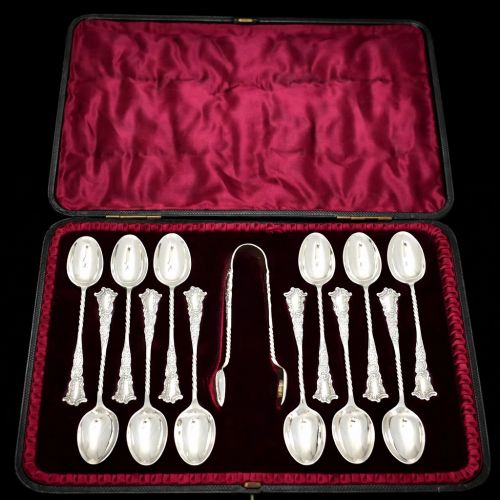
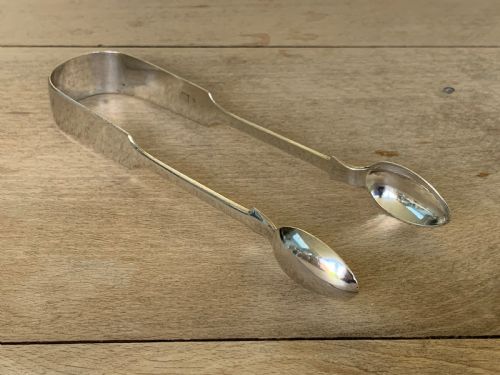
Solid silver sugar tongs are small domestic implements designed for lifting sugar lumps into tea or coffee cups. When you search for solid silver sugar tongs, you encounter items ranging from simple early Georgian hinged nips to elaborate Victorian and Art Deco sprung designs. Many examples appear alongside teaspoons in fitted presentation cases lined with silk, velvet, or satin.
The material seen across these items is sterling silver or standard silver, often paired with presentation cases finished in leatherette. Formats vary from standard scissor-action nips to cast and bright-cut sprung arms, sometimes incorporating novelty shapes like wishbones or harlequin figures.
Manufacturing and materials
Silversmiths produced these implements through casting, hand-engraving, and spring-forming. Mid eighteenth-century pieces often relied on cast construction, yielding heavier, solid forms with textured details. Later production incorporated bright-cut engraving and naturalistic foliate designs stamped or chased onto the silver arms.
Presentation sets combined the silver tongs with matching spoons, housed in fitted boxes lined with velvet, silk, or satin inside protective leatherette covers. Individual makers stamped their hallmarked initials and town marks directly into the metal surface.
Solid Silver Sugar Tongs Retail Price Guide 2026
Typical asking prices for solid silver sugar tongs among the pieces listed under this phrase on Sellingantiques today, from the lower quarter to the upper quarter. They describe what is for sale here now, not the wider market.
Among the more imaginative workshop designs are wishbone and harlequin figures gripping sugar lumps across the tea table.
Judging the range
Quality in solid silver sugar tongs rests on the crispness of the chased or engraved decoration and the resilience of the sprung or pivoted hinge. Early cast pairs demonstrate substantial weight and careful hand-finishing, whereas later mass-produced examples rely on simpler stamped patterns.
The presence of a complete original cased set containing matching spoons enhances the integrity of the piece. Makers with established reputations for specialist silver production achieve greater distinction than standard anonymous workshop output.
Georg Jensen·Josiah Williams and Co·Francis Higgins·Robert Stebbings·Asprey·William Eley and William Fearn·Berthold Muller·Hester Bateman·Cooper Brothers and Sons·Robert Scott·James Deakin and Sons·Aldwinckle and Slater
The Solid Silver Sugar Tongs Glossary
- Sugar nips
- Early hinged implements used for cutting and lifting sugar lumps before standard sprung tongs became common.
- Bright-cut
- An engraving technique using faceted V-cuts to create reflective, geometric patterns across the silver surface.
- Cast silver
- Molten metal poured into a mould to form solid, three-dimensional shapes with tactile relief work.
- Hallmark
- Official stamps struck into precious metal indicating the assay office, standard of silver, and date letter.
Solid Silver Sugar Tongs: Frequently Asked Questions
How do I clean solid silver sugar tongs?
Wash the silver gently in warm water with mild detergent and dry with a soft cloth to protect the metal finish.
Avoid harsh abrasive dips that strip the natural patina accumulated over centuries of handling.
Were these tongs used for sugar lumps?
These implements were specifically fashioned to transfer sugar lumps from a bowl into hot beverages at the tea table.
Earlier eighteenth-century nips were also utilised for cutting smaller portions from large sugar loaves.
How do I date solid silver sugar tongs?
Examine the stamped hallmarks on the silver surface to identify the assay office and specific date letter assigned by the guild.
Stylistic elements like bright-cut engraving or cast foliate motifs further narrow down the manufacturing period.
Why are some tongs sold in cases?
Many Victorian and Edwardian sets paired the tongs with matching teaspoons inside fitted boxes lined with silk or velvet.
These presentation cased sets were intended as gifts for weddings or special domestic occasions.