


Georgian Silver Sugar Tongs
Georgian silver sugar tongs are delicate implements for the tea table that collectors seek for their fine craftsmanship and bright-cut decoration.
What Georgian Silver Sugar Tongs Are
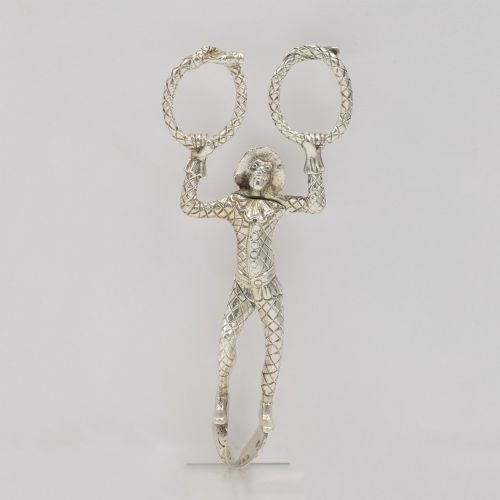
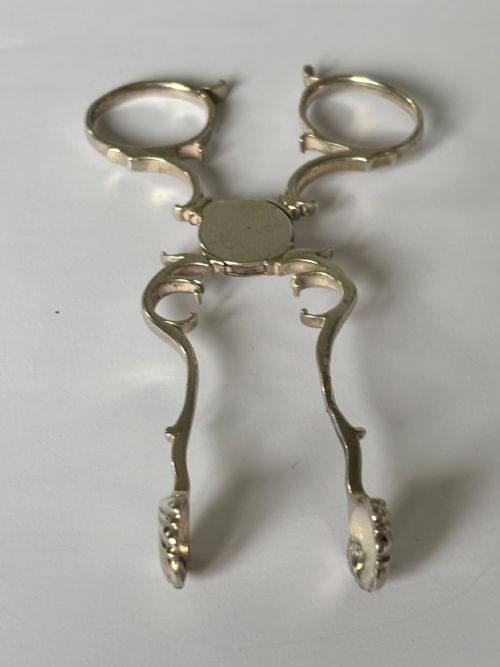
Georgian silver sugar tongs comprise small spring-arms or pivoted scissors designed to lift sugar lumps into a cup. The pieces appearing here span the eighteenth century and the Regency era up to the Victorian period, originating from English, Scottish, Irish, and provincial workshops. Buyers encounter both plain sprung stems and elaborate cast forms.
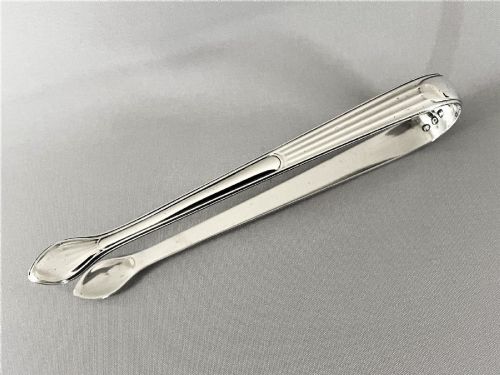
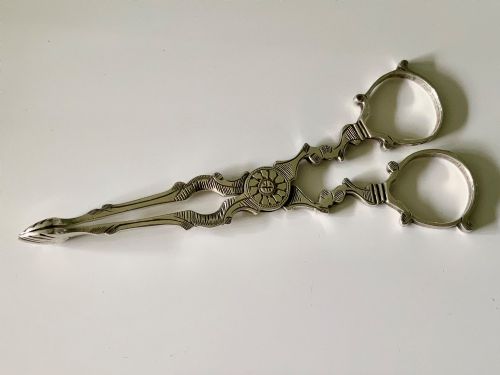
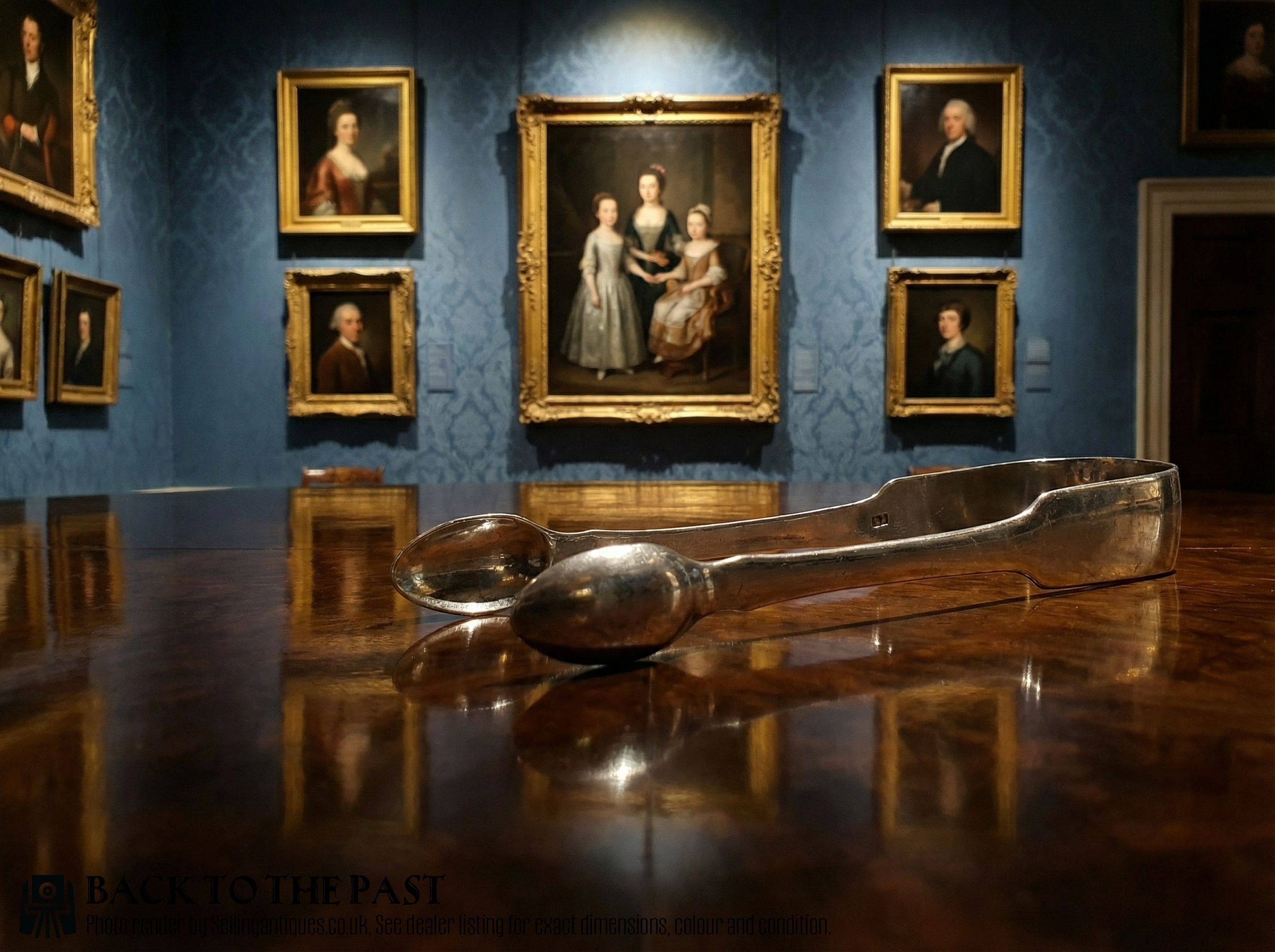
Forms divide principally between scissor-action nips and sprung bow tongs. Scissor types usually feature delicate finger rings and pivot pins, frequently found in mid-eighteenth-century examples. Bow tongs rely on the natural spring of bent metal, terminating in acorn, spoon, or claw grips.
How They Were Made
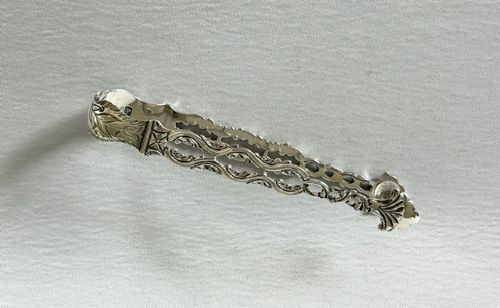
Silversmiths shaped sterling silver either by hammering sheet metal into spring-arms or by casting molten metal in moulds to produce substantial, highly ornamented shanks. Piercing and bright-cut engraving added surface pattern to the flat stems, while makers soldered cup-shaped grips or shell terminals to the ends.
Assay office marks, maker's initials, and date letters were punched directly into the silver surface after fabrication. These hallmarks verify the sterling standard and record the city of origin, such as London, Newcastle, or Sheffield.
Retail Price Guide 2026
Typical UK retail prices for georgian silver sugar tongs, calculated from the Sellingantiques database of over a million retail prices indexed since 2003. This retail price guide relies exclusively on Sellingantiques data; no external sources or auction records are used, so the figures do not describe the wider market.
What Varies in Quality
The distinction between ordinary and exceptional pieces rests on the weight of the metal and the crispness of the decoration. Cast tongs with naturalistic grapevine motifs or pierced agricultural patterns demand greater technical skill than plain sprung arms.
Attribution to documented makers elevates a piece considerably. Tongs bearing the marks of specialist silversmiths command attention through superior proportion, balanced spring tension, and refined engraving.
Thomas Tookey·Thomas Purver·Peter Ann and William Bateman·Hester Bateman·William Eley and William Fearn·Thomas Law·John Bourne·William Sumner I·Philip Batchelor
The Georgian Silver Sugar Tongs Glossary
- Bright-cut engraving
- A faceted engraving technique using flat-bottomed gravers to create glittering geometric or floral patterns. This ornamentation reflects light sharply from the silver surface.
- Sugar nips
- An early scissor-type implement used before sprung bow tongs became standard. They typically possess two circular finger loops and pivoting blades.
- Bow tongs
- A single strip of silver bent into a U-shape that provides spring action for the grip. The upper arch often bears maker's marks and assay stamps.
- Sterling silver
- An alloy containing a fixed proportion of pure silver and other metals for durability. British silver pieces carry standard hallmarks to verify this composition.
Frequently Asked Questions
How do I use them today?
These pieces serve well on a modern tea tray for sugar lumps or ice cubes. Their resilient silver springs function precisely as they did centuries ago.
Care requires only warm soapy water and a soft cloth to maintain the polished surface. Avoid harsh dips that strip away the aged character.
What is the difference between nips and tongs?
Nips operate with a scissor pivot and finger rings, common in earlier eighteenth-century examples. Tongs rely on a bent bow of metal that springs back when released.
Both tools performed the same domestic duty at the tea table. Collectors often prize the scissor action for its mechanical complexity.
How do I read the hallmarks?
British silver typically displays a lion passant for sterling quality, a town mark for the assay office, and a date letter. Maker's initials appear alongside these symbols to identify the workshop.
Reference books match these punch marks to specific silversmiths and exact years of production. Provincial offices like Newcastle and Sheffield used distinct town marks.
What design styles should I look for?
Bright-cut engraving, naturalistic grapevine motifs, and acorn terminals appear frequently across the period. Plain fiddle-pattern stems also occur alongside pierced architectural designs.
Styles shifted from delicate scissor nips towards robust cast designs during the Regency era. Each decorative choice reflects the prevailing taste of its decade.