
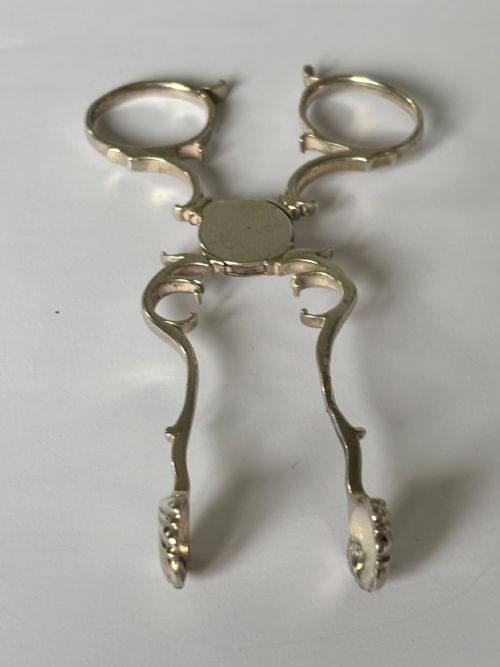


Georgian Silver Tongs
When you handle georgian silver tongs, you hold small domestic instruments shaped by Hester Bateman and regional silversmiths for the tea table.
Georgian Silver Tongs
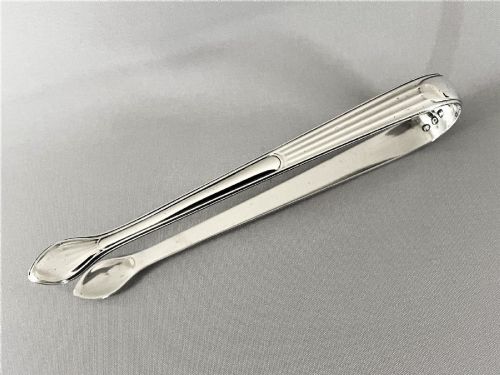
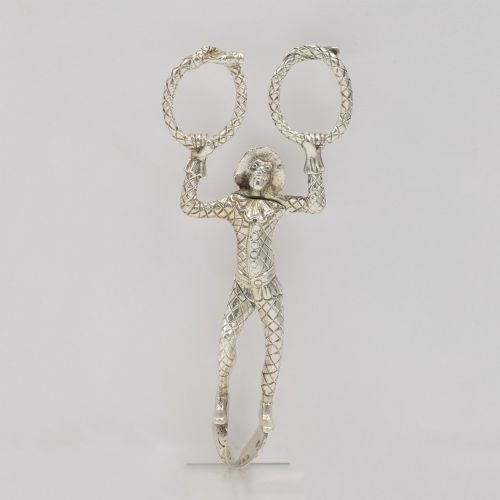
When searching for georgian silver tongs, collectors encounter domestic instruments primarily designed for sugar service at the tea table, alongside occasional larger serving pieces for asparagus or sandwiches. The examples on this page span the eighteenth and nineteenth centuries, featuring regional assay offices such as Newcastle and York alongside London marks. Most items meet the criteria of tea tongs, sugar nips, or smaller scissor-action implements made to handle loaf sugar.
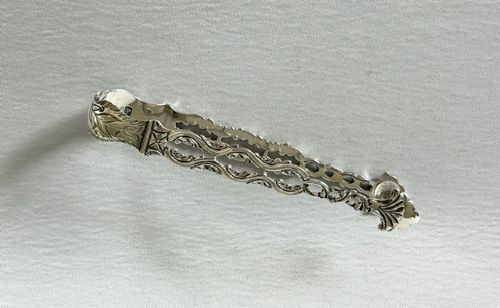
Beyond the standard tea table forms, the evidence records specialised serving pieces including heavy asparagus tongs and various iterations of fireplace accessories fashioned from polished steel and iron. The material record centres heavily on sterling silver and silver, with occasional manifestations in polished steel and velvet. Stylistic variations shift from early cast and pierced sugar nips to bright-cut engraving and naturalistic grapevine or acorn motifs.
Materials and Technique
Silversmiths utilised sterling silver and silver alloy as the primary medium, shaping the metal through casting, piercing, and bright-cut engraving. Early mid-eighteenth-century examples rely on cast construction, yielding substantial arms and detailed bowl ends, whereas later pieces incorporate sheet silver bent into sprung bows.
The decorative vocabulary depends on crisp piercing, delicate bright-cut chasing, and applied cast elements such as acorn or grapevine designs. In parallel, the metalworking techniques for utilitarian hearth equipment involve forged iron and polished steel assembled into companion tool sets.
Assessing Quality
Quality rests upon the crispness of the maker's mark, the retention of original bright-cut engraving, and the structural integrity of the spring or pivot. Cast examples demonstrate superiority through the depth and clean separation of the pierced decoration rather than smooth, worn surfaces.
The distinction between ordinary production and top-tier workshop output involves the precision of the smith's hand in executing naturalistic motifs, such as acorn or grapevine bowls, and the preservation of clear hallmarks showing London or provincial assay origins.
Bateman Family·Dee & Fargus·Thomas Tookey·Wilkes Booth·Paul Storr·George Murray·Peter and Ann Bateman·William Eley·William Fearn·Thomas Law·Thomas Northcote·George Bourne·John Bourne·William Sumner I
The Georgian Silver Tongs Glossary
- Sugar Nips
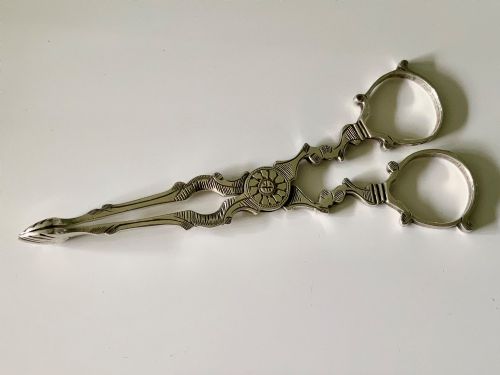
- Early scissor-type implements with ring handles and bowl terminals used for breaking or grasping sugar lumps before the widespread adoption of spring tongs.
- Bright-Cut
- An engraving technique utilising faceted V-section cuts made with a graver to produce glittering, geometric patterns across the silver surface.
- Assay Office
- The official body responsible for testing the purity of precious metals and stamping items with hallmarks denoting origin and date.
- Cast Silver
- Molten metal poured into a mould to create three-dimensional decorative forms, often found on heavier eighteenth-century sugar implements.
- Spring Bow
- The flexible U-shaped arch connecting the two arms of sugar tongs, designed to provide the tension needed for gripping.
Georgian Silver Tongs: Frequently Asked Questions
What is the difference between sugar nips and sugar tongs?
Sugar nips operate with scissor handles and pivot points, typical of the earlier eighteenth century.
Sugar tongs rely on a sprung metal bow at the top to squeeze the bowls together.
How do I read the hallmarks on these pieces?
British silver typically bears a maker's mark, a standard mark for sterling quality, and a date letter.
Provincial pieces may also display town marks such as the three castles for Newcastle or the leopard's head for London.
Were these items only used for tea?
While the smaller variants served the tea table for sugar cubes, larger examples were forged for asparagus and sandwiches.
The record also encompasses steel fireplace tools used for tending hearths.
What does bright-cut engraving look like?
Bright-cut decoration consists of angled incisions that catch the light to form geometric or floral borders.
This technique was popular on late eighteenth-century silver items.