




Solid Silver Tongs
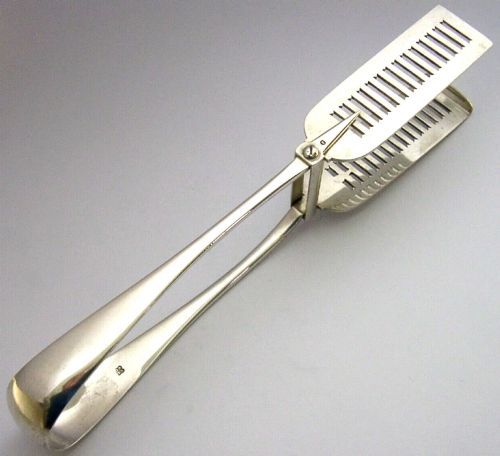
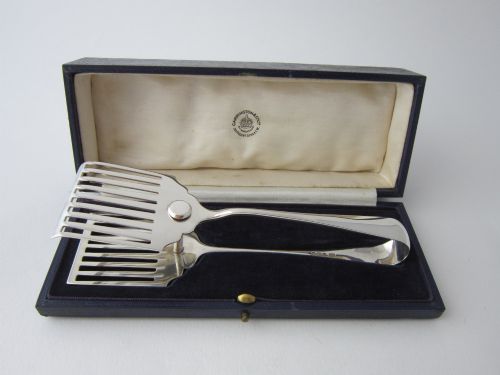
Solid silver tongs arrive in varied forms from sugar nips to asparagus servers, offering functional utility and historical craftsmanship for a well-set table.
Solid Silver Tongs
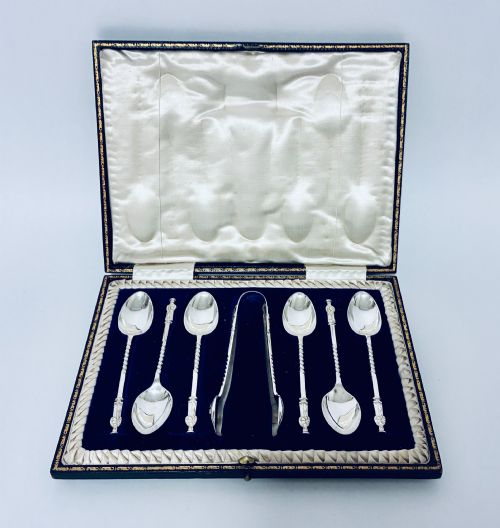
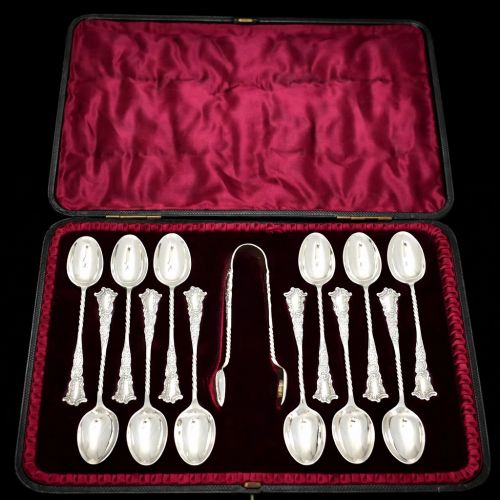
Georgian and Victorian examples dominate the available selection, often appearing either individually or matched within cased cutlery and spoon sets. Domestic dining traditions dictated the specific form, leading to specialised designs ranging from delicate scissor-action nips to robust spring-arm servers.
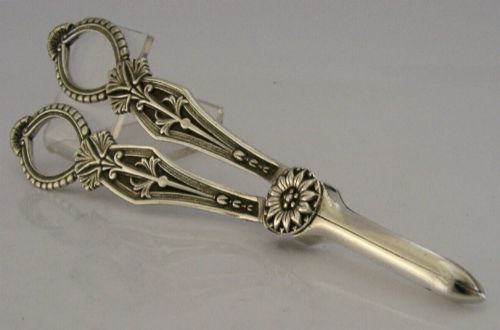
Origins stretch beyond British workshops to include continental European makers and Chinese export silver, expanding the stylistic range available to collectors. Buyers regularly discover pieces decorated with naturalistic foliage, family crests, or traditional patterns such as Kings and feather edge.
What Varies in Quality
Quality rests significantly upon the thickness and weight of the silver utilised in the body, as heavier gauge metal resists bending during everyday use. Superior pieces maintain robust tension in the spring arch or smooth alignment in the hinge mechanism.
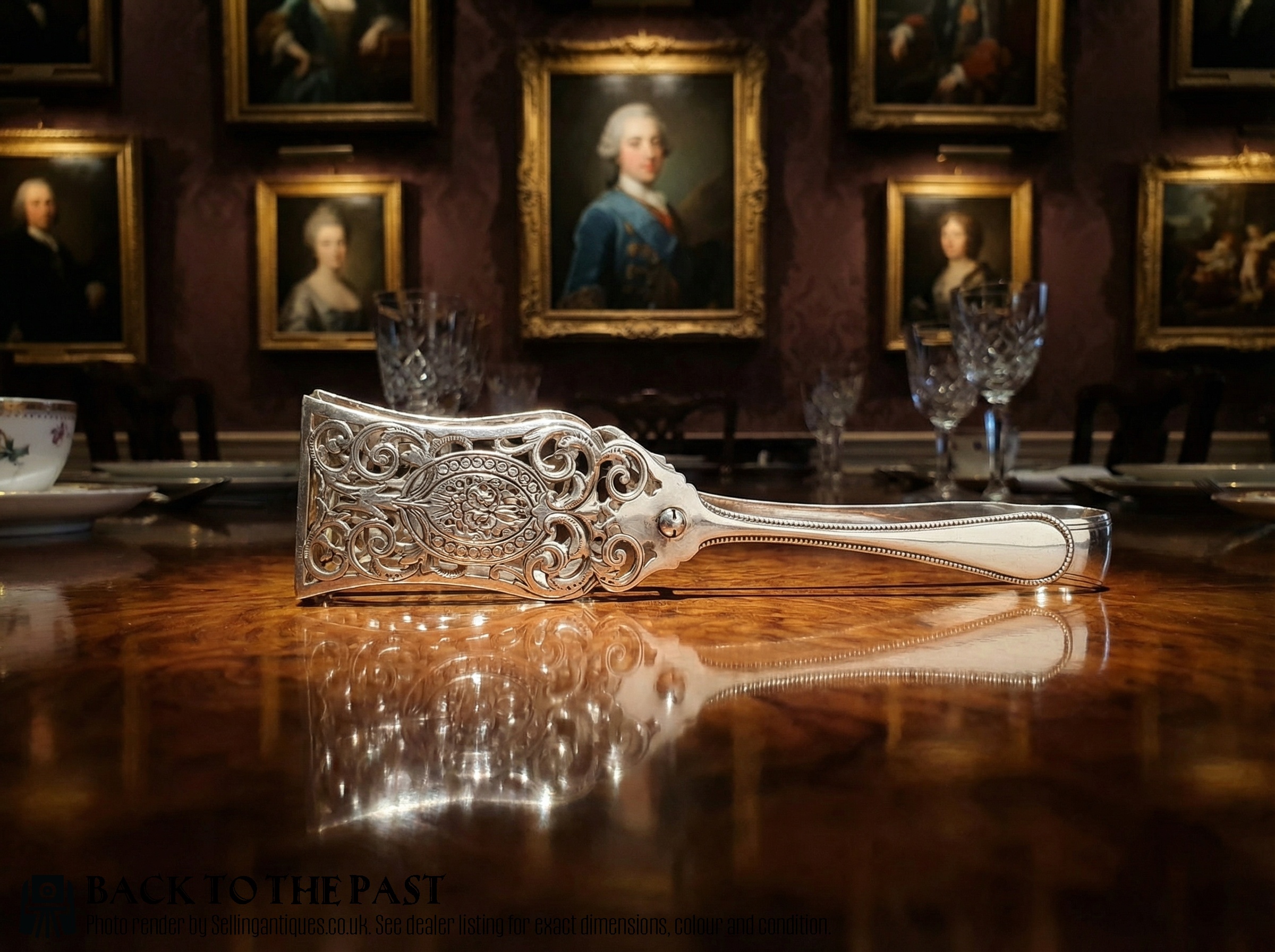
Artistic execution distinguishes standard utilitarian wares from exceptional productions, particularly in hand-engraved crests, pierced detailing, and cast naturalistic foliate or figural designs by recognised silversmiths. The crispness of hallmarks struck into the metal further indicates the original standard of manufacture and preservation.
Wilkes Booth·Josiah Williams And Co·Francis Higgins·Georg Jensen·Robert Stebbings·Asprey·Philippe Berthier·Hukin And Heath·Bateman And Law·William Eley And William Fearn·Berthold Muller·Hester Bateman
The Solid Silver Tongs Glossary
- Sugar Nips
- A specialised scissor-type implement used for breaking and serving sugar from a larger loaf before the widespread availability of refined sugar cubes.
- Hallmark
- An official stamp applied to precious metals indicating the standard of purity, the maker, and the year of assay.
- Vermeil
- Sterling silver that has been coated with a layer of gold, frequently seen on fine presentation and dessert sets.
- Caddy Spoon
- A small scoop designed for measuring loose tea leaves, often found grouped with tongs in boxed sets.
- Feather Edge
- A decorative border technique featuring fine, engraved notches resembling bird feathers along the handle rim.
Solid Silver Tongs: Frequently Asked Questions
What were solid silver tongs used for?
These implements served specific dining and hospitality functions, primarily transferring sugar lumps or crystals from a bowl to a teacup without touching the food by hand.
Larger variations emerged later for serving delicate foods such as asparagus, sandwiches, and grapes during formal Victorian and Edwardian meals.
How do I date antique silver tongs?
Dating relies heavily upon the stamped hallmarks, which record assay offices, date letters, and maker marks unique to specific operational years.
Stylistic shifts, such as the transition from eighteenth-century cast Rococo designs to nineteenth-century naturalistic foliate motifs, also help determine the period.
Are sugar tongs and sugar nips different?
Sugar nips typically feature a scissor action with finger rings and small gripping bowls, designed for snipping pieces from a solid sugar loaf.
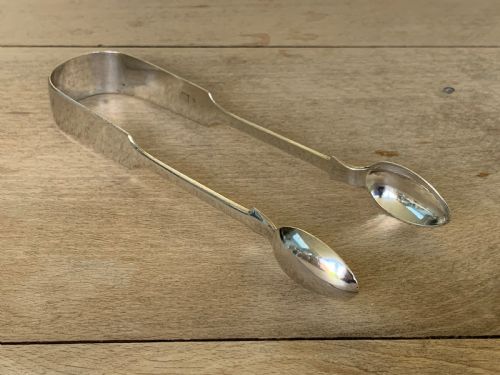
Sugar tongs usually consist of a single bent piece of spring silver with spoon-shaped or claw terminals intended to lift loose sugar cubes.
How should I clean antique silver tongs?
Maintenance requires gentle washing in warm soapy water followed by thorough drying with a soft cloth to preserve the original surface finish.
Frequent abrasive polishing wears down delicate hand engravings and antique hallmarks over time, so specialist silver dips should be used sparingly.