




Victorian Silver Sugar Tongs
Victorian silver sugar tongs are small, functional implements for taking lumps or grains of sugar, prized by collectors for their varied provincial hallmarks and intricate decorative patterns.
Victorian Silver Sugar Tongs
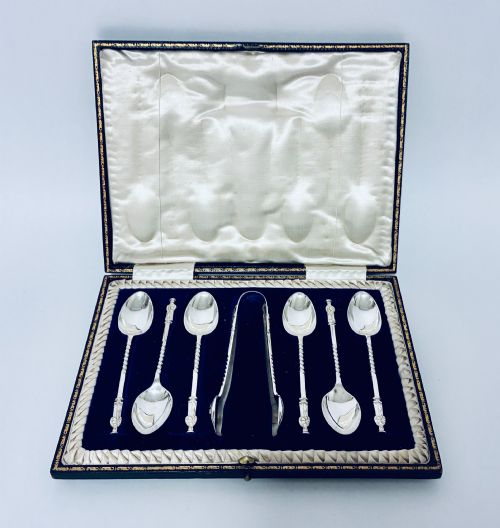
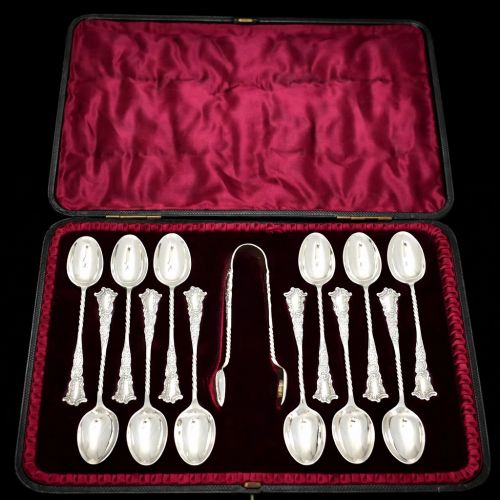
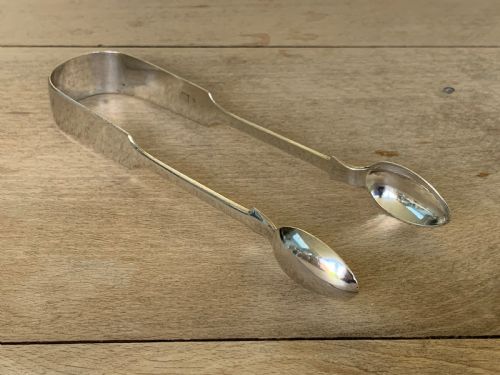
Victorian silver sugar tongs are small domestic pieces designed for the tea table, appearing as sprung bows or scissor-action nips. The version you are most likely to meet on this page is the sterling silver sprung pair, often found alongside matching spoons in fitted presentation cases.
The listings span the Victorian period into the Edwardian era, incorporating provincial assay offices such as Exeter, Chester, Newcastle, and Glasgow alongside London and Birmingham. Makers frequently decorated these items with naturalistic foliate designs, the Albany pattern, the King's pattern, or pierced Art Nouveau motifs.
What varies in quality
The distinction between standard and superior pieces rests on the crispness of the chased or pierced decoration and the strength of the spring. Plain sprung bows contrast with heavily cast naturalistic designs, scissor-action nips, or complex pierced Art Nouveau work.
The presence of an original fitted case lined in silk or velvet, especially when paired with matching apostle spoons, tea caddy spoons, or cream jugs, elevates the set. Maker attribution to known provincial or London silversmiths also distinguishes individual pairs.
The listings show materials spanning sterling silver, silver-gilt, velvet, silk, leather, and leatherette across Victorian and Edwardian periods.
Josiah Williams & Co·John Walton·Francis Higgins·Robert Stebbings·George Maudsley Jackson·James and Andrew Kelly·Robert Pringle and Sons·William Pope
The Victorian Silver Sugar Tongs Glossary
- Sterling silver
- A silver alloy containing 92.5 percent pure silver by mass, standard for British cutlery and silverware. This metal forms the primary material for the majority of these tongs.
- Silver-gilt
- Sterling silver that has been coated with a thin layer of gold on the surface. This technique provides a warm, rich tone often seen on matched spoon and tong sets.
- Sugar nips
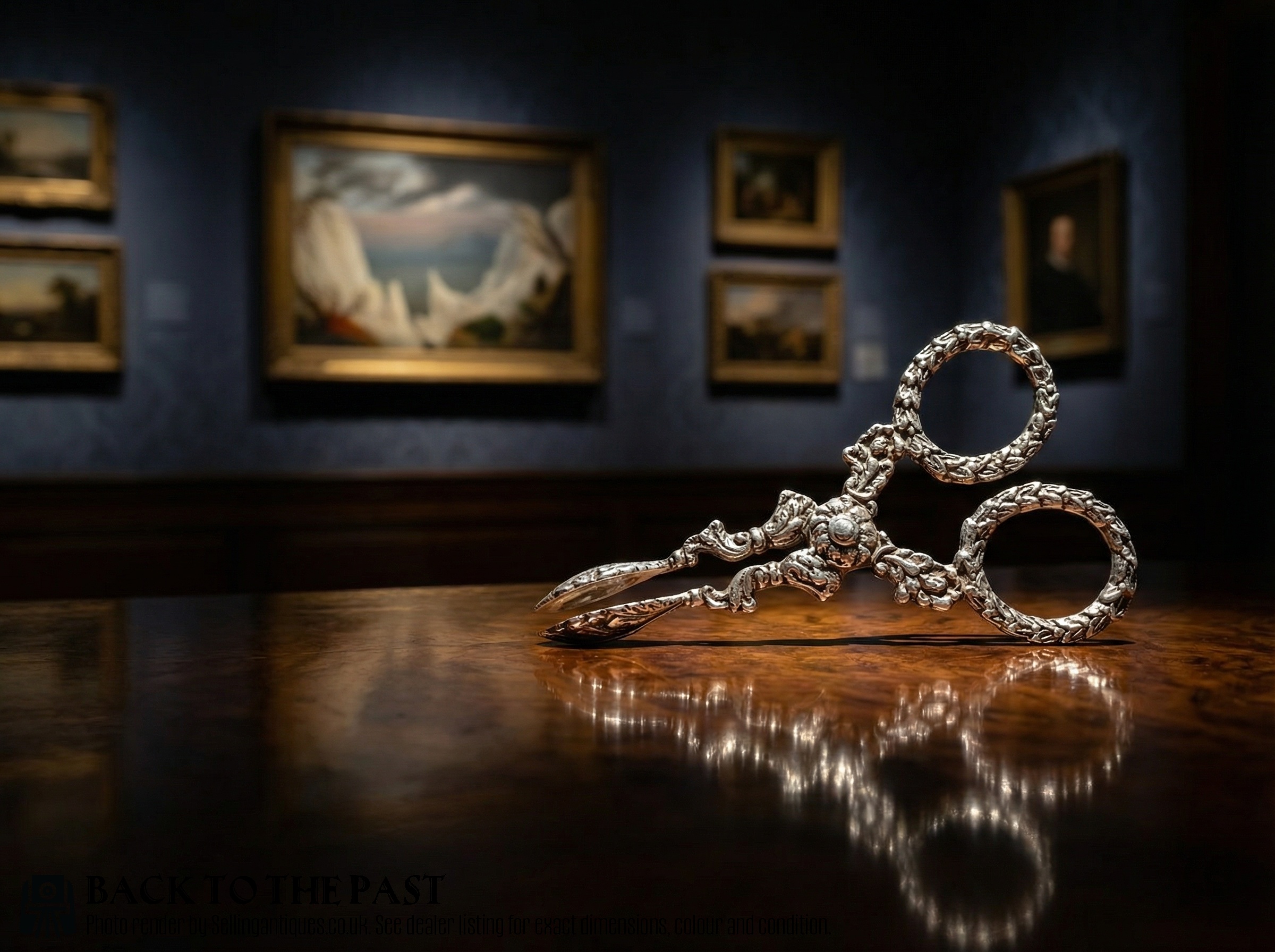
- A hinged or scissor-action variant of sugar tongs designed for gripping sugar lumps. They offer an alternative mechanical action to the standard sprung bow.
- Assay office
- A body that tested the purity of precious metals and stamped items with official hallmarks. Provincial offices such as Exeter, Chester, Newcastle, and Glasgow marked many Victorian pieces.
- Foliate design
- Ornamental detailing that incorporates leaves, branches, and plant motifs. Makers often hand-engraved or cast these naturalistic patterns onto the silver bows.
Victorian Silver Sugar Tongs: Frequently Asked Questions
How do I identify provincial hallmarks?
Provincial marks include town marks specific to assay offices outside London, such as Exeter, Chester, Newcastle, and Glasgow. These symbols appear alongside the maker's initials and the lion passant denoting sterling silver.
Examining the duty mark and date letter helps narrow down the exact decade of manufacture during the Victorian era.
What is the difference between tongs and nips?
Sprung tongs consist of a single piece of metal folded into a bow that pinches together under hand pressure. Sugar nips typically feature a scissor-action pivot with finger loops.
Both forms served the same purpose on the Victorian tea table but required different mechanical actions from the user.
Were these pieces always sold in sets?
Many Victorian silver sugar tongs were sold individually or as matched pairs with tea spoons, caddy spoons, or apostle spoons. Fitted presentation cases lined with silk, velvet, or satin often accompanied these larger sets.
Cased sets frequently include cream jugs and sugar bowls alongside the primary cutlery.
How should I care for Victorian silver?
Regular, gentle cleaning with a specialist silver cloth removes tarnish without wearing down the hand-engraved or embossed details. Storing the pieces away from direct moisture preserves both the silver and any original leatherette or velvet-lined cases.
Avoiding harsh abrasive pastes protects the antique hallmarks stamped into the metal.