


Silver Dessert Serving Cutlery
Silver dessert serving cutlery brings elegance to the table, offering specialised utensils shaped for fruit, berries, and cakes.
Silver Dessert Serving Cutlery
Silver dessert serving cutlery comprises specialised implements designed for the final course of a meal, ranging from grape shears and fruit knives to berry spoons and cake forks. When exploring silver dessert serving cutlery, you encounter items shaped specifically for fruit, cakes, and nuts rather than general dining.
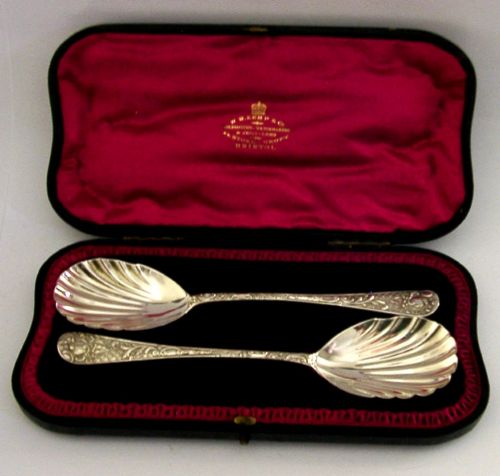
The pieces listed originate across the Georgian, Victorian, and Edwardian eras, extending into the Art Deco period of the nineteen thirties. These utensils often appear as matched pairs or within fitted presentation cases lined with satin, silk, or velvet.
Forms include large ornate serving spoons, fruit sets complete with nutcrackers and grape scissors, and individual cake forks accompanied by a matching server. Both solid sterling silver and silver plate constructions feature across these historical periods.
Materials and manufacturing techniques
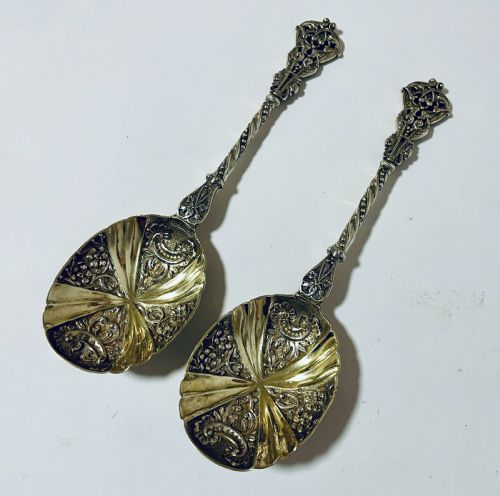
Items are principally fabricated from sterling silver or silver plate, with certain Victorian examples exhibiting a rich silver gilt finish upon solid silver surfaces. Manufacturing methods combine traditional silversmithing techniques such as casting, piercing, and hand engraving.
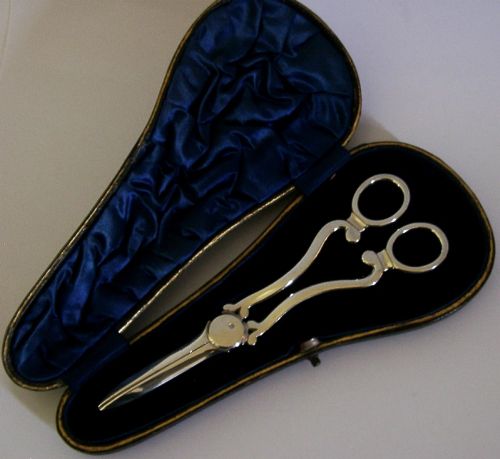
Handles and blades receive meticulous attention, demonstrated by cast silver grape scissors and naturalistic leaf spoons fashioned by period silversmiths. Many sets incorporate fitted protective boxes lined with textiles to safeguard the polished metal.
Victorian diners required specialist scissors just to harvest grapes politely from the communal fruit bowl.
Distinctions in quality and execution
Quality rests in the crispness of the chased or engraved decoration upon the handles and the substantial weight of the silver itself. Finely cast naturalistic motifs, such as leaf forms or intricate grape scissors, separate standard production from superior examples.
The presence of original fitted cases lined with silk or velvet enhances the desirability of a service. Furthermore, distinct maker marks and clear hallmarks contribute to the historical standing and integrity of the piece.
William Chawner II·Sebastian Crespell·Hukin & Heath
The Silver Dessert Serving Cutlery Glossary
- Sterling silver
- An alloy containing ninety-two point five percent silver by mass, with the remainder consisting of other metals like copper. This standard represents the primary material for high-grade antique cutlery.
- Silver plate
- A base metal coated with a thin layer of pure silver through electrochemical processes or mechanical bonding. This technique offered an accessible alternative to solid sterling silver during the nineteenth and twentieth centuries.
- Silver-gilt
- Silver that has been coated with a thin layer of gold on its surface, also known as vermeil. This treatment provides a warm golden tone over the underlying silver.
- Berry spoon
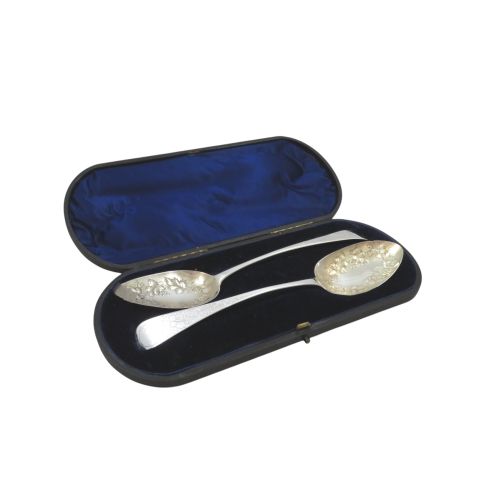
- A large serving spoon, often originally Georgian, subsequently embellished with embossed fruit and foliage during the Victorian era. These spoons were specifically utilised for serving soft fruits.
- Hallmark
- An official stamp applied by an assay office to indicate the purity of the metal, the maker, and the year of manufacture. These marks allow collectors to date British silver with precision.
Silver Dessert Serving Cutlery: Frequently Asked Questions
What are silver berry spoons used for?
Berry spoons were designed to serve soft fruits, featuring large bowls that accommodated strawberries, raspberries, and similar produce at the dining table.
Many of these spoons date from the Georgian period and received decorative fruit embossing later in the Victorian era.
How do I store antique silver cutlery?
Keep silver in tarnish-resistant cloth rolls or lined presentation cases to protect the metal from airborne sulphur and physical scratches.
Avoid storing silver in direct contact with rubber or certain treated woods that accelerate tarnishing.
Are silver plated items antique?
Silver plating was widely used during the Victorian and Edwardian periods to produce accessible tableware alongside solid sterling silver.
Items from the late nineteenth and early twentieth centuries possess genuine antique status despite lacking solid silver construction.
What is the purpose of grape shears?
Grape shears are specialised scissors designed to sever small bunches of grapes from the main vine without bruising the fruit.
Victorian examples often feature ornate cast silver handles and robust blades tailored for formal dining rituals.