


Repousse Fruit Serving Spoons
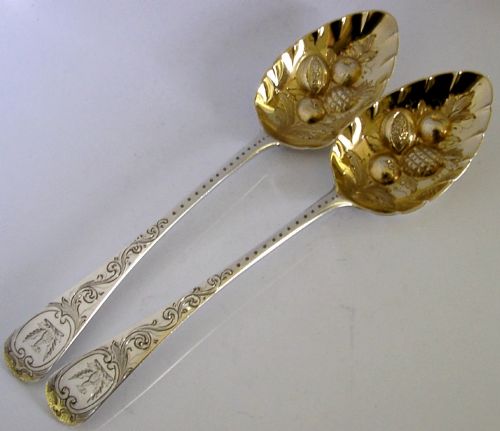
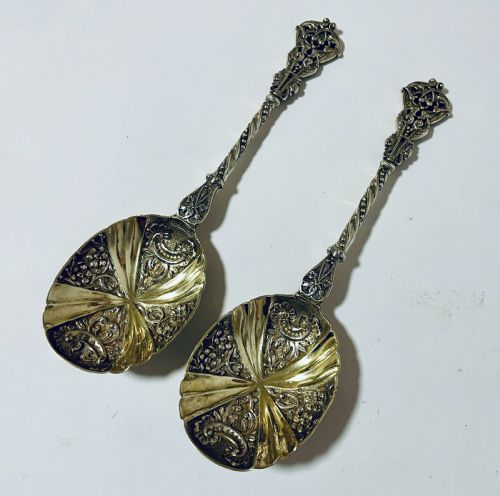
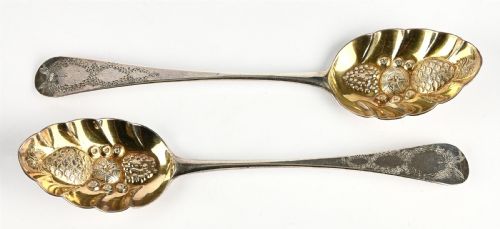
These repousse fruit serving spoons are grand silver utensils fashioned for dessert and fruit, bringing Georgian and Victorian elegance to the table.
Repousse Fruit Serving Spoons
When you search for repousse fruit serving spoons, you encounter specialised sterling silver serving utensils designed for dessert or fruit courses. These pieces frequently appear as pairs or sets housed within fitted cases, often lined with velvet, silk, or leatherette.
The selections on this page span the Georgian and Victorian periods, including specific years from the mid eighteenth century through the end of the nineteenth century. Makers such as Peter and Anne Bateman and William Chawner II contributed to these forms, alongside Irish silver examples and crested family pieces.
How they were made
Makers shaped these utensils from sterling silver, occasionally applying silver gilt or gilt finishes to create a rich surface texture. The characteristic ornamentation relies on repousse work, pressing and hammering the metal from behind to raise decorative fruit and floral motifs.
Handles received careful attention, featuring hand engraving alongside cast crests such as the Fenwick family crest. Many surviving examples are accompanied by custom cases finished with leatherette exteriors and soft interior linings.
What varies in quality
Quality rests in the crispness of the raised repousse work and the depth of the chased detailing upon the bowl and handle. Superior examples maintain sharp definition in fruit and leaf patterns without thinning the silver wall.
The presence of original fitted cases lined in silk or velvet elevates a set, as does documented provenance through clear hallmarks and engraved armorial crests.
Peter and Anne Bateman·William Chawner II
The Repousse Fruit Serving Spoons Glossary
- Repousse
- A metalworking technique where the design is hammered into relief from the reverse side. This method creates the characteristic raised fruit and leaf patterns seen on the bowls of these spoons.
- Silver gilt
- Sterling silver that has been coated with a thin layer of gold. This treatment provides a warm dual tone across the spoon bowl.
- Berry spoon
- A large serving spoon adapted for fruit, typically featuring embossed or chased fruit motifs added during the Georgian or Victorian eras.
- Hallmark
- An official stamp applied to precious metals indicating the standard of purity, the assay office, and the date letter. These marks allow precise dating of Georgian and Victorian silver.
- Sifter
- A pierced serving spoon designed for dusting sugar over fruit or desserts. These sometimes accompany sets of serving spoons within fitted presentation boxes.
Repousse Fruit Serving Spoons: Frequently Asked Questions
What are repousse fruit serving spoons used for?
These utensils were created to serve fruit, berries, and desserts at the formal dining table during the Georgian and Victorian periods. Their large bowls made them practical for portioning soft fruits.
Today, collectors utilise them for traditional table settings or display them within their original fitted presentation cases.
How do I identify Georgian repousse fruit serving spoons?
Georgian examples display hallmarks indicating dates in the late eighteenth or early nineteenth centuries, often featuring crisp hand engraving and family crests. The silver gauge tends to be substantial.
Maker marks such as those associated with the Bateman family help confirm the period of manufacture.
Why do some spoons have gilt finishes?
Silver gilt was applied to protect the silver from the acidic juices of fresh fruit and berries. This process also added a distinct golden lustre to the bowl.
Victorian makers continued this tradition to enhance the decorative appeal of boxed presentation sets.
Are these spoons usually found in sets?
Many survive in matched pairs or small sets, frequently accompanied by original fitted cases lined in velvet, silk, or leatherette. Some groupings include specialised items like sugar sifters.
Complete boxed sets reflect their original status as treasured household possessions.