


Silver Carafe Decanter
A silver carafe decanter brings refined elegance to the dining table, combining clear or coloured glass with precious metal mounts for serving wine and spirits.
Silver Carafe Decanter
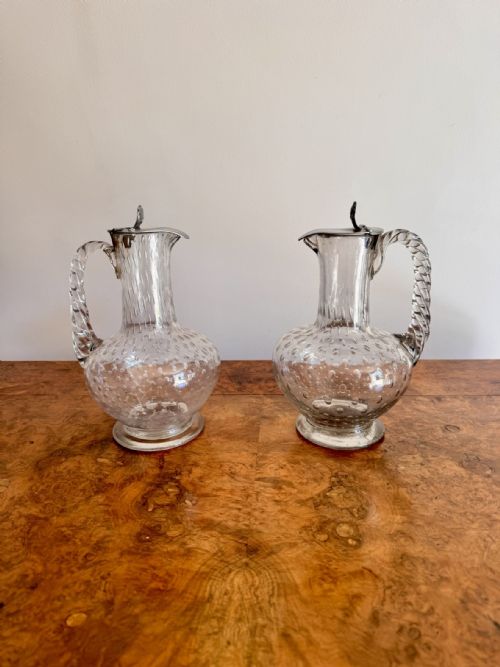
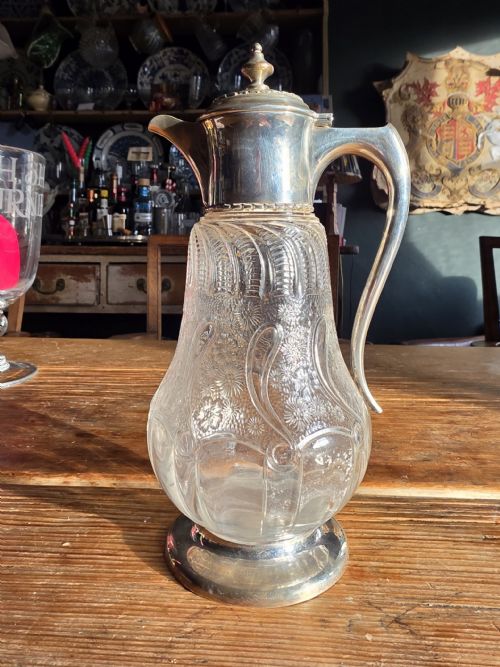
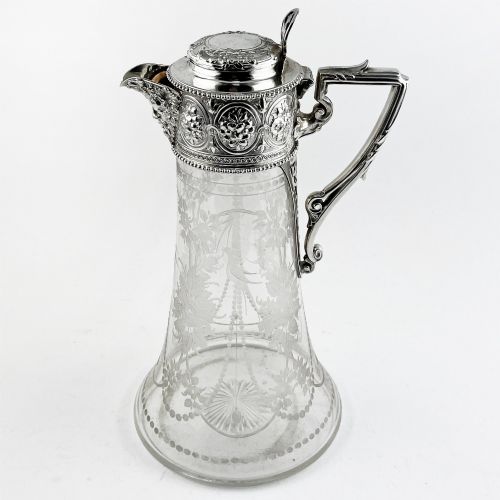
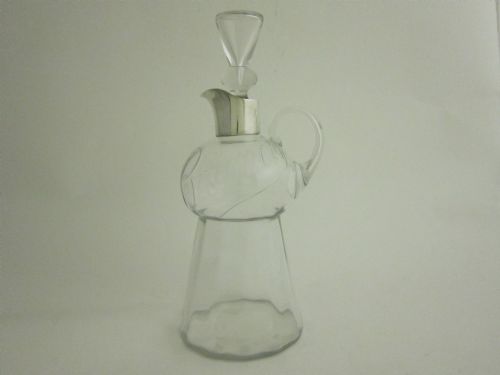
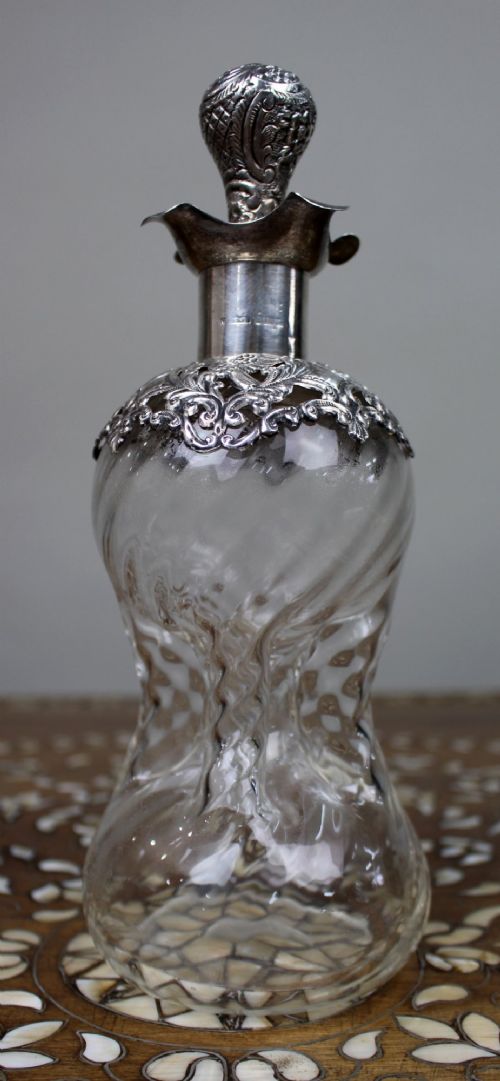
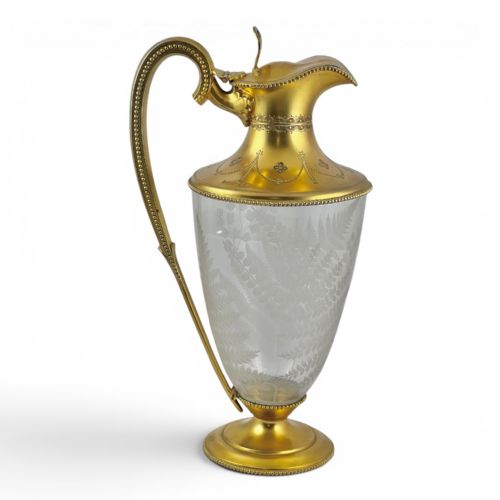
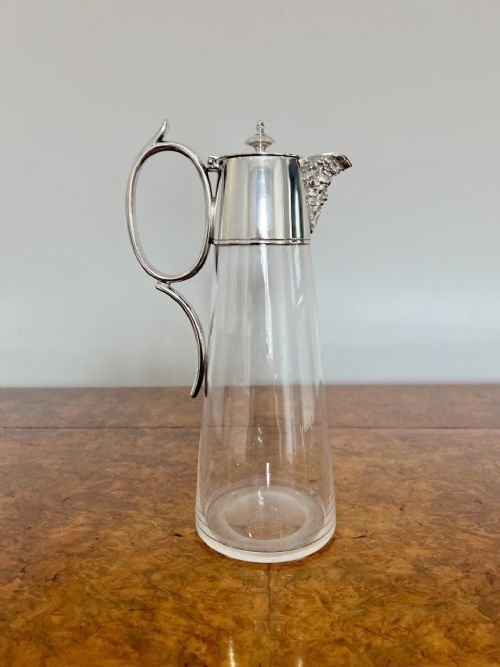
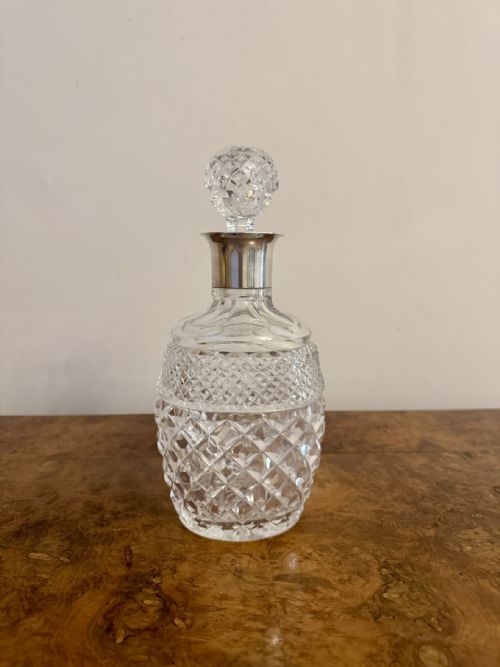
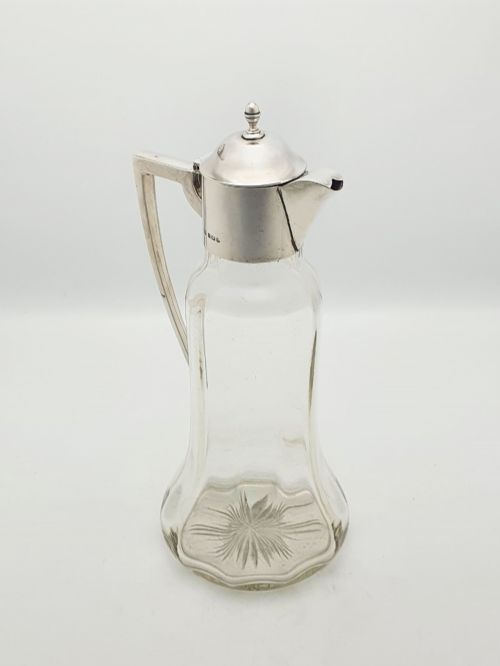
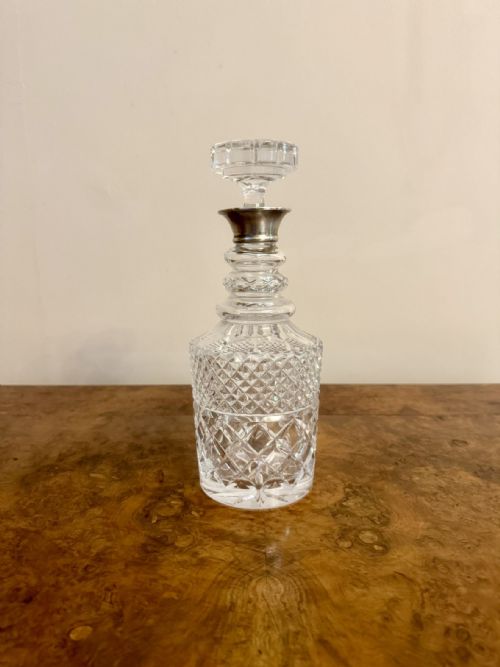
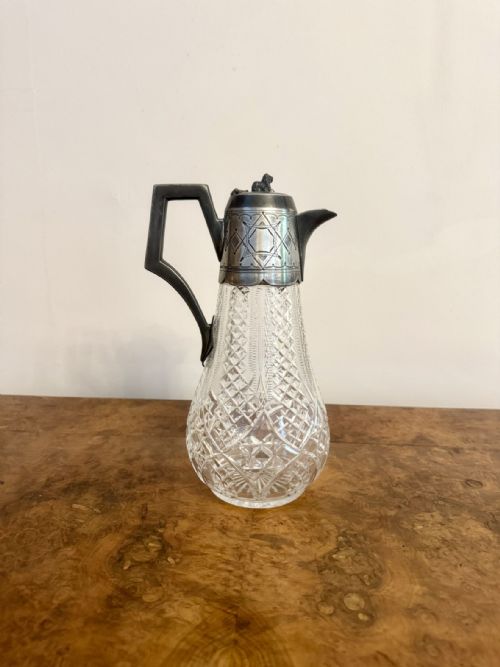
When searching for a silver carafe decanter, buyers encounter a variety of serving vessels designed for wine, claret, brandy, and whisky. The selections span the Victorian, Edwardian, and Art Deco periods, encompassing distinct forms like claret jugs, spirit bottles, and whisky noggins.
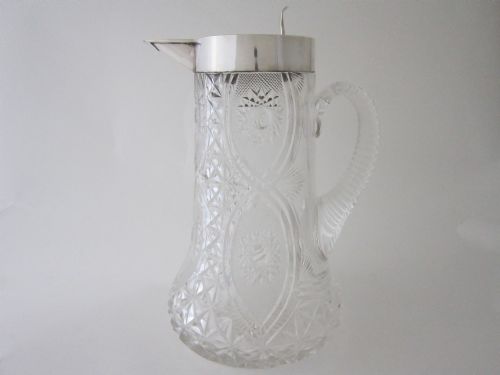
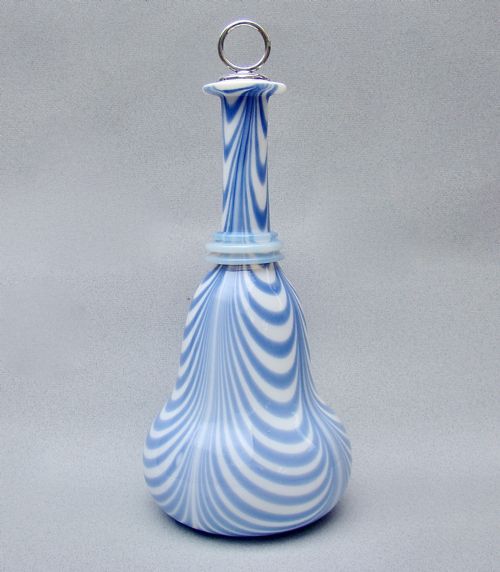
The pieces on this page pair glass bodies with silver or silver-plated metalwork. Common material combinations include cut crystal, etched glass, and coloured glass paired with sterling silver collars, mounts, or handles.
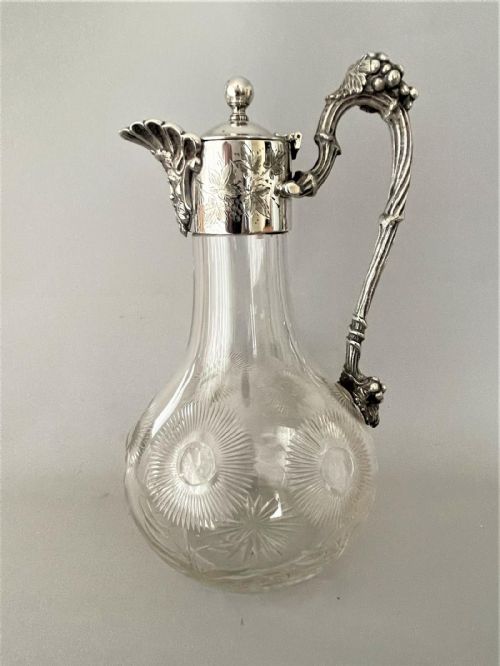
Victorian and Edwardian examples predominate, showing diverse silhouettes ranging from tall, slender wine jugs with Bacchus masks or serpent handles to compact spirit decanters and complete barware sets.
How They Were Made
Makers combined glassblowing and cutting techniques with silversmithing to construct these vessels. Glass bodies were blown into moulds or free-blown, then finished with wheel-cut facets, floral engravings, or rich colour infusions like cranberry, ruby, green, and amethyst.
Silver components were cast, hammered, or spun from sterling silver or silver plate, then mounted securely to the necks, rims, and handles of the glass containers. Hallmarks stamped into the metal often record the assay office, date letter, and maker's mark for pieces originating in the nineteenth and twentieth centuries.
What Varies in Quality
The standard of craftsmanship depends on the depth and precision of the glass cutting, the clarity of the crystal, and the weight of the silver mounts. Heavier gauge silver and intricate cast details indicate superior production.
Design complexity also distinguishes individual pieces, with sculptural elements such as serpent handles, Bacchus masks, and fully integrated ice tubes marking the upper tier of execution.
Asprey and Co. Ltd·Mappin and Webb·Hukin and Heath
The Silver Carafe Decanter Glossary
- Claret jug
- A specialised pouring vessel designed specifically for serving red wine, typically featuring a hinged silver lid and handle.
- Whisky noggin
- A small spirit decanter with a single handle and pouring lip, often produced during the Victorian and Edwardian periods.
- Silver gilt
- Silver that has been coated with a thin layer of gold on its surface, creating a warm two-tone appearance.
- Old Sheffield plate
- An early form of plated metal produced by fusing a sheet of silver to a copper base before shaping.
Silver Carafe Decanter: Frequently Asked Questions
What is a silver carafe decanter used for?
These vessels serve wine, claret, whisky, and brandy at the dining table or sideboard. They hold spirits and wines ready for pouring during social gatherings.
The combination of glass and metal allows hosts to present beverages attractively while utilising a secure handle and pouring spout for controlled dispensing.
How do I clean an antique decanter?
Wash the glass interior gently with warm water and specialised cleaning beads rather than harsh detergents. Dry the metal mounts carefully to preserve the silver and plate.
Avoid submerging antique pieces with fitted stoppers or corks for extended periods to protect the internal seals and historical materials.
Are these pieces made of solid silver?
The metal components vary between sterling silver and silver plate over a base metal like copper or Britannia metal. Hallmarks on the silver parts indicate solid sterling standards.
Items without full hallmarks typically feature silver plating applied over the underlying structure during manufacturing.
How do I date a glass decanter?
Dating relies on the style of the glass cutting, the shape of the vessel, and any accompanying silver hallmarks. Victorian pieces often display floral engravings and heavy mounts.
Edwardian and Art Deco examples show cleaner geometric lines, alternative glass colours like blue, and distinct manufacturer marks.