
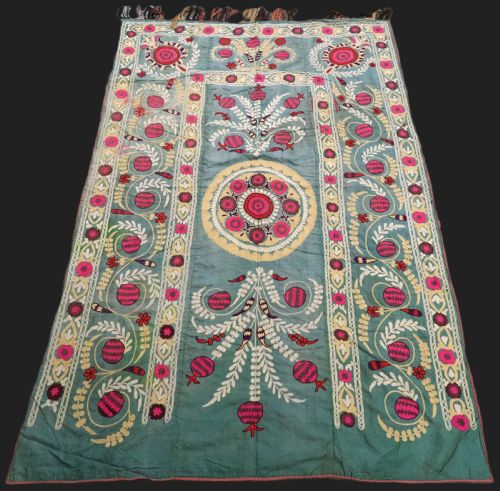
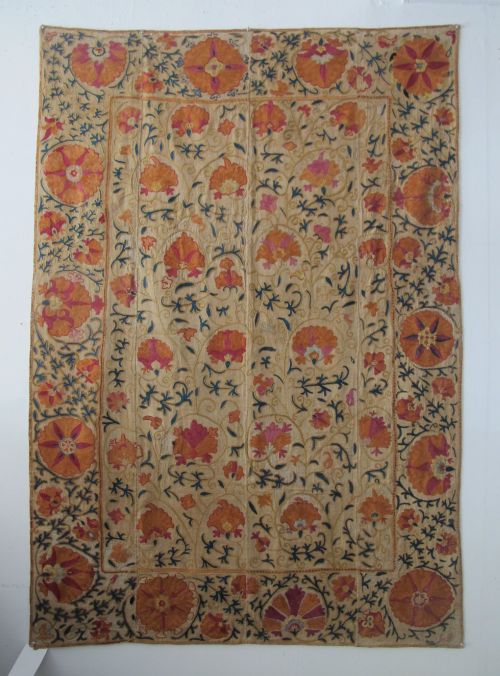
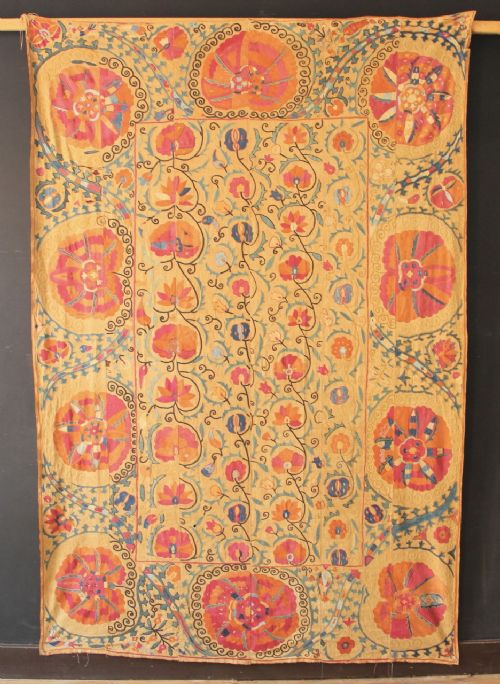


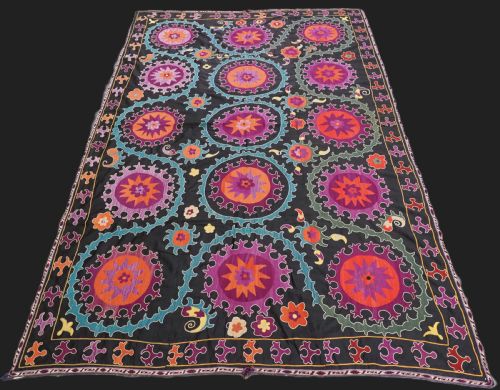



Silk Embroidered Bedspread
A silk embroidered bedspread brings Central Asian textile tradition into a room, offering large-scale needlework panels that function as decorative wall hangings or bed covers.
Silk Embroidered Bedspread
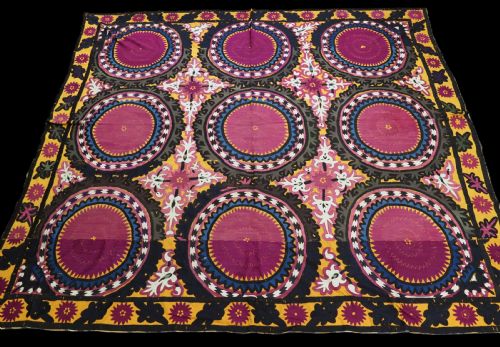
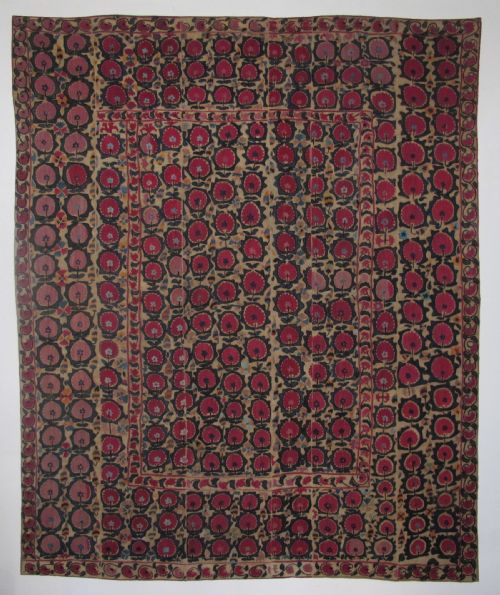
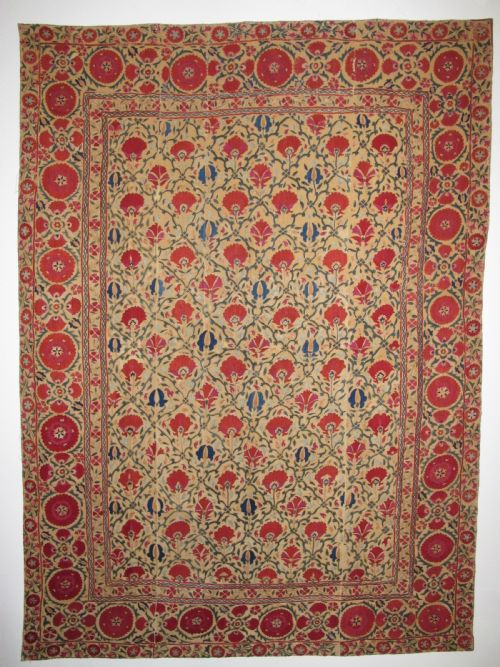
A silk embroidered bedspread typically refers to a suzani or bed cover originating from Uzbekistan and surrounding Central Asian regions. These large textiles include regional variations such as Ura Tube, Bukhara, Shahrisabz, Samarkand, and Tashkent types, alongside specific formats like the 'ru-i-jo' bed cover or 'nim suzani'.
Objects on this page serve primarily as decorative textiles, wall hangings, and tapestries rather than everyday utility bedding. Their scale ranges from smaller formats up to room-dominating panels exceeding two and a half metres in length.
Materials and construction methods
Artisans stitch silk thread embroidery onto ground fabrics that consist of cotton, plain silk, or mixed adras textiles. Grounds appear in various shades, including red, yellow, and black backgrounds.
Needlework techniques involve intricate hand embroidery executed across distinct regional workshops and tribal groups such as the Lakai. The combination of lustrous silk threads on sturdy cotton or silk foundations provides both flexibility and visual depth.
Silk Embroidered Bedspread Retail Price Guide 2026
Typical asking prices for silk embroidered bedspread among the pieces listed under this phrase on Sellingantiques today, from the lower quarter to the upper quarter. They describe what is for sale here now, not the wider market.
Listings feature textiles from the nineteenth and early twentieth centuries, incorporating cotton, silk, and adras grounds.
Assessing quality in antique needlework
The standard of execution depends on the density of the needlework and the complexity of the regional design layout. Full work panels display rigorous needle application across the entire ground fabric.
Visual impact relies heavily on the survival and saturation of the silk threads used in the embroidery. Original ground integrity and the clarity of regional folk art motifs further distinguish individual examples.
The Silk Embroidered Bedspread Glossary
- Suzani
- A traditional embroidered tribal textile from Central Asia, often created as part of a bride's dowry. The word derives from the Persian term for needle.
- Adras
- A traditional woven fabric made from a mixture of silk and cotton threads. It forms the foundation ground for specific regional embroidery types.
- Nim Suzani
- A smaller half-format embroidered textile variant. These pieces measure roughly half the size of a full-scale wall hanging or bed cover.
- Ru-i-jo
- A specific traditional Central Asian bed cover format utilised in domestic settings. Examples are frequently associated with Uzbek and Tajik maker traditions.
- Full work
- An embroidery style where the decorative silk stitching covers the vast majority of the ground fabric. This density requires extensive labour and fine needle control.
Silk Embroidered Bedspread: Frequently Asked Questions
How were these textiles originally used?
These large embroidered textiles served primarily as ceremonial bed covers and dowry items within Central Asian households. Families displayed them during significant domestic events.
Over time, collectors adapted them into decorative wall hangings and tapestries for interior display. Their substantial scale allows them to function effectively as focal points in large rooms.
How do I care for an antique textile?
Protect antique silk embroidery from direct sunlight to prevent the fading of natural threads and ground fabrics. Avoid hanging pieces in areas with high humidity or fluctuating temperatures.
Consult a specialist textile conservator for cleaning rather than attempting domestic washing. Support the weight evenly across the hanging mechanism if displayed on a wall.
How do I identify different regional styles?
Regional attribution relies on specific needlework structures, colour palettes, and motif distributions associated with towns like Bukhara, Samarkand, and Shahrisabz. Tashkent pieces often feature dense full work compositions.
Tribal groups like the Lakai exhibit distinct geometric tendencies and colour combinations that set them apart from urban workshop output.
What is the difference between a suzani and a bed cover?
The term suzani applies broadly to any large embroidered wall hanging or textile panel from the region. A ru-i-jo specifically denotes a bed cover format created for domestic use.
Both categories utilise similar silk embroidery techniques on cotton or silk grounds. Collectors often use the terms interchangeably depending on the specific proportions and origin.