





Sheraton Side Cabinet
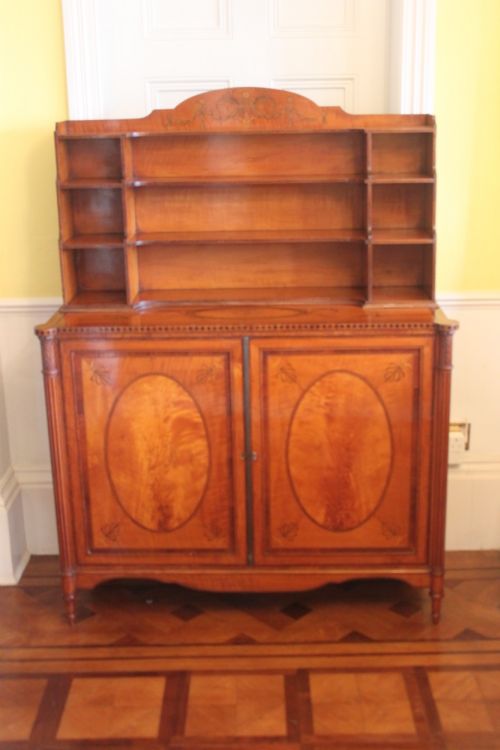
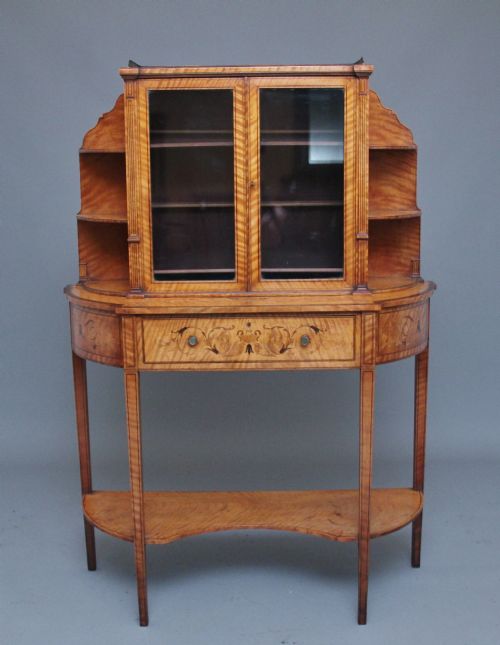
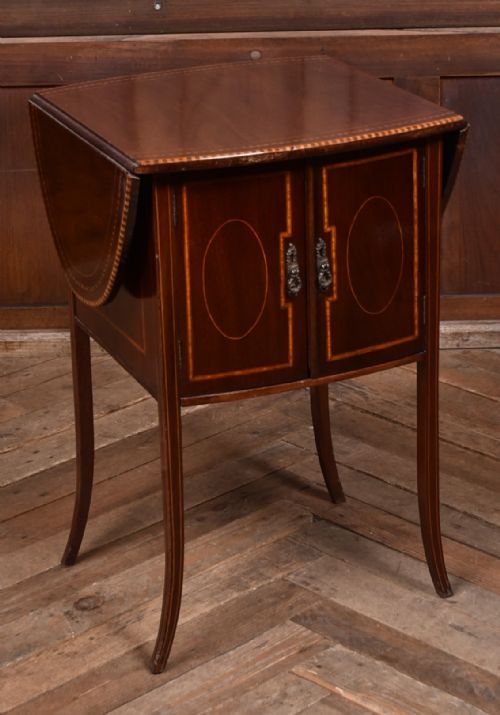
When you search for a sheraton side cabinet, you are looking at refined neoclassical case pieces built for elegant storage.
Sheraton Side Cabinet
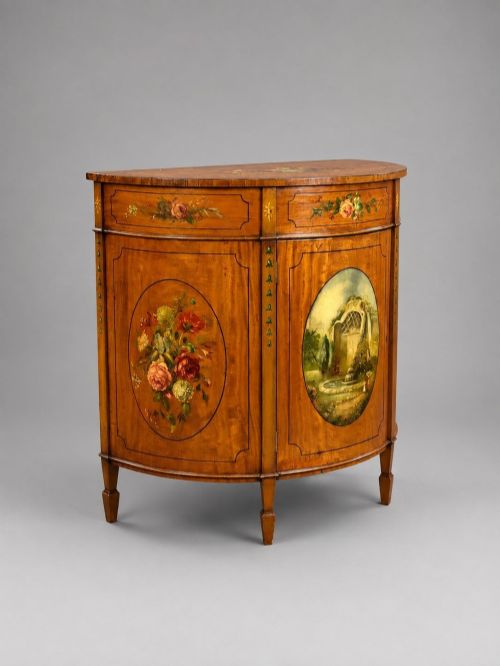
A sheraton side cabinet represents an intersection of classical proportion and decorative refinement, originating in the eighteenth century and finding renewed popularity during the Edwardian era and the Sheraton Revival period. These pieces encompass sideboards, display cabinets, bedside cupboards, and commodes, designed to provide formal storage in drawing rooms, dining spaces, and bedrooms.
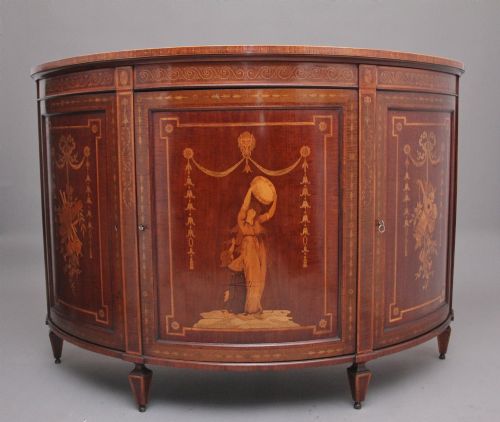
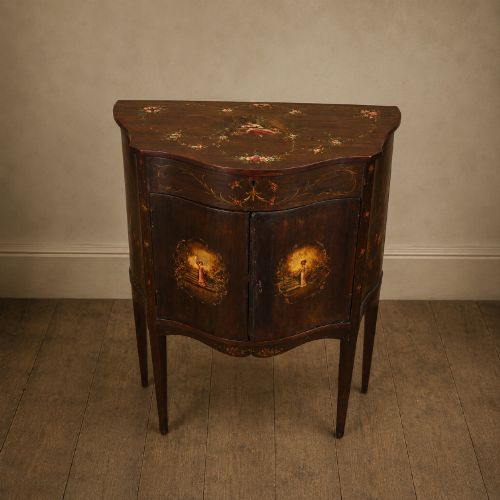
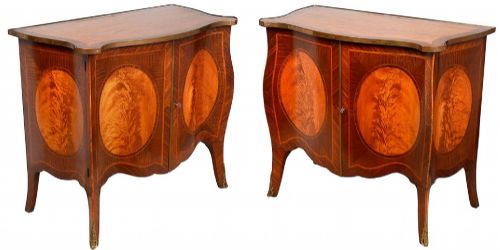
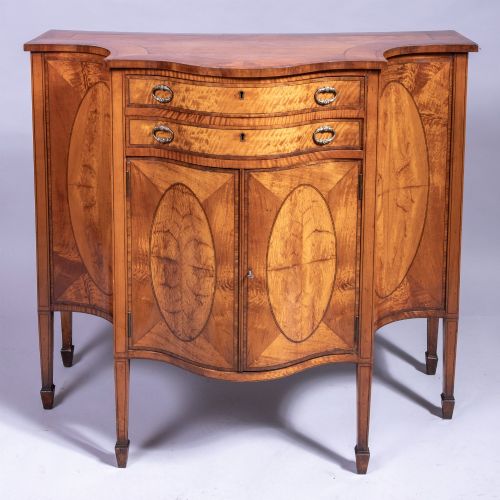
The versions most commonly met on this page span from George III originals down to late Victorian and early twentieth-century Sheraton Revival interpretations. They appear in forms such as the demi-lune, the bow-front, and the rectangular side cabinet, utilising shapes that frame inlaid timber and painted panels with architectural restraint.
How They Were Made
Cabinetmakers constructed the carcase primarily from mahogany or satinwood, often employing rosewood and harewood for contrasting surfaces and borders. Crossbanding and marquetry formed intricate geometric and classical motifs, requiring precise hand-cutting of diverse timber veneers.
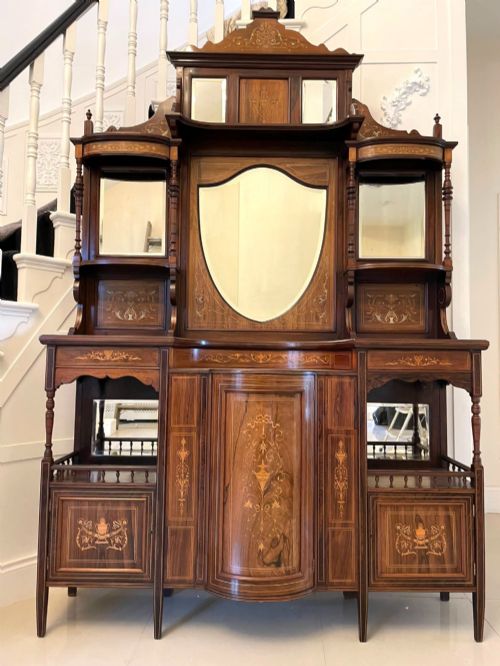
Surface ornament frequently included hand-painted classical panels, floral festoons, and delicate boxwood stringing. Brass hardware, glass doors, and mirrored backs completed the construction, balancing structural utility with decorative finesse.
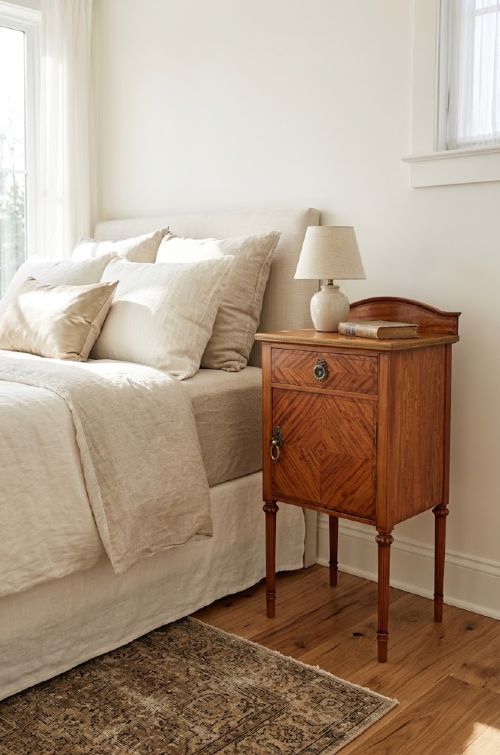
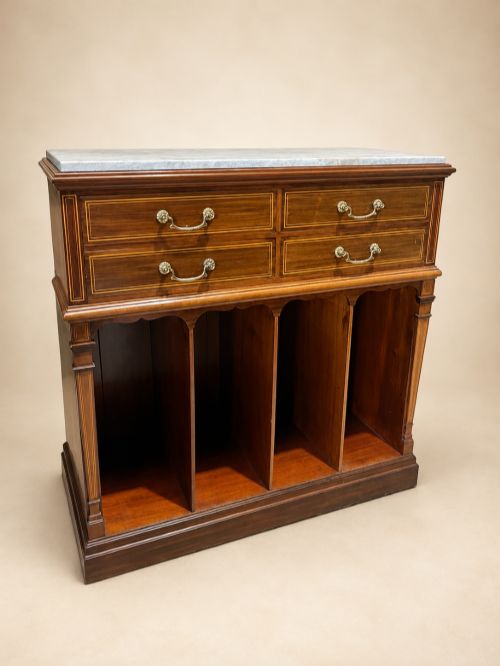
Object forms include demi-lune commodes, display cabinets, music cabinets, and bedside cupboards.
What Varies in Quality
The tier of quality rests upon the crispness of the inlay and the fidelity of the painted decoration. Superior examples display tight, seamless joints in the boxwood stringing and hand-painted panels executed with artistic depth rather than mechanical uniformity.
Material selection dictates the upper range, where figured satinwood and rich mahogany exhibit natural depth. Secondary timbers and the integrity of the original hardware further separate standard production items from workshop pieces bearing identifiable craftsmanship.
Edwards and Roberts
The Sheraton Side Cabinet Glossary
- Demi-lune
- A half-moon shape used for commodes and side cabinets designed to sit flush against a wall. This form became particularly popular during the Sheraton Revival period for satinwood and painted pieces.
- Marquetry
- The art of creating decorative patterns on a carcase by fitting together veneers of different woods, metals, or shells. It differs from inlay by covering the entire surface in a mosaic picture.
- Crossbanding
- A border of veneer laid around the perimeter of a tabletop, door, or drawer front with the grain running perpendicular to the central panel. This technique frames the primary timber and adds visual structure.
- Satinwood
- A lustrous, yellowish timber native to the tropics, prized for its golden sheen and smooth texture. It served as the primary canvas for neoclassical and Sheraton Revival painted cabinets.
Sheraton Side Cabinet: Frequently Asked Questions
What periods do these cabinets come from?
The pieces span from the eighteenth-century Georgian era, particularly the George III period, through to the late nineteenth and early twentieth centuries. Many of the surviving examples represent the Sheraton Revival movement of the Victorian and Edwardian epochs.
Makers of the later revival periods meticulously copied the proportion and lightness of the original eighteenth-century designs, utilising satinwood, mahogany, and marquetry to recreate the neoclassical aesthetic.
Where were these cabinets placed in a home?
These versatile case pieces occupied prominent spaces in drawing rooms, dining rooms, and formal bedrooms. Demi-lune and serpentine side cabinets served as serving surfaces or display areas against perimeter walls.
Smaller iterations, such as bedside cupboards and music cabinets, provided discreet storage for personal items while maintaining the decorative harmony of the principal rooms.
How do I distinguish an original from a revival?
Distinguishing period pieces from later revivals requires examining the construction methods, timber ageing, and secondary woods used inside the carcase. Eighteenth-century pieces exhibit hand-cut dovetails and timber characteristics consistent with Georgian workshop practices.
Revival pieces, manufactured predominantly between 1880 and 1920, often feature machine-assisted elements, standardised hardware, and distinct late-Victorian or Edwardian finishing techniques on the interior surfaces.
How should I care for satinwood and mahogany?
Preserving these polished timber surfaces requires keeping them away from direct sunlight and maintaining stable room humidity. Ultraviolet light degrades satinwood finishes and alters the rich tones of mahogany over time.
Applying a traditional beeswax polish periodically helps nourish the wood and maintain the subtle lustre without building up synthetic residues that dull the marquetry and stringing.