
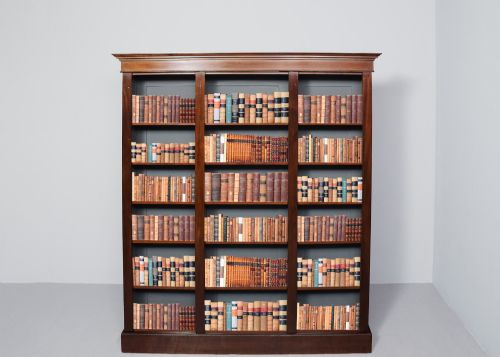
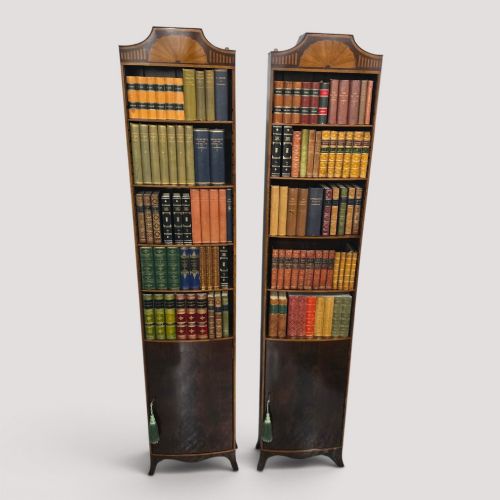
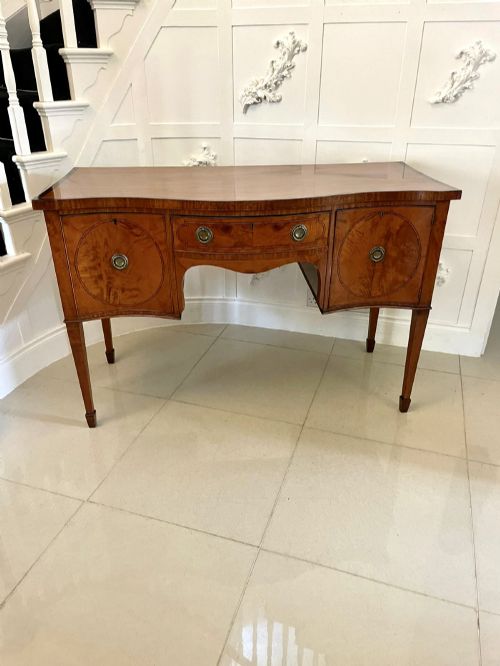
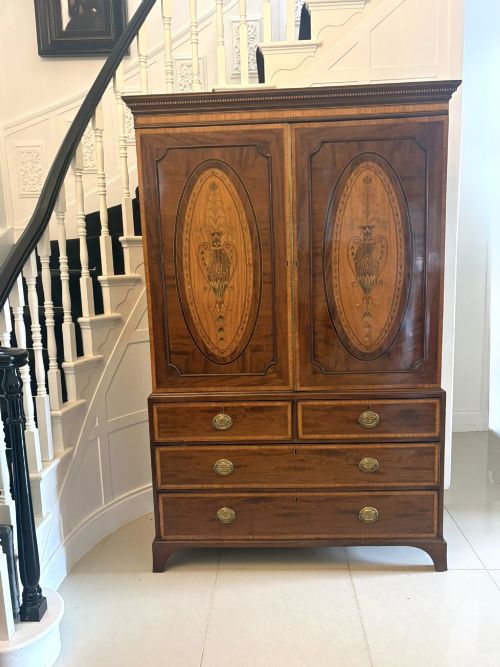

Sheraton Inlaid Cabinet
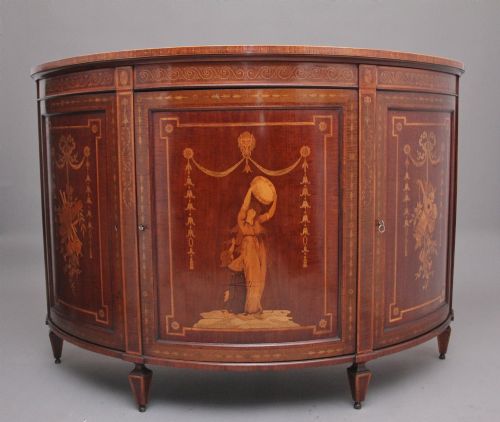
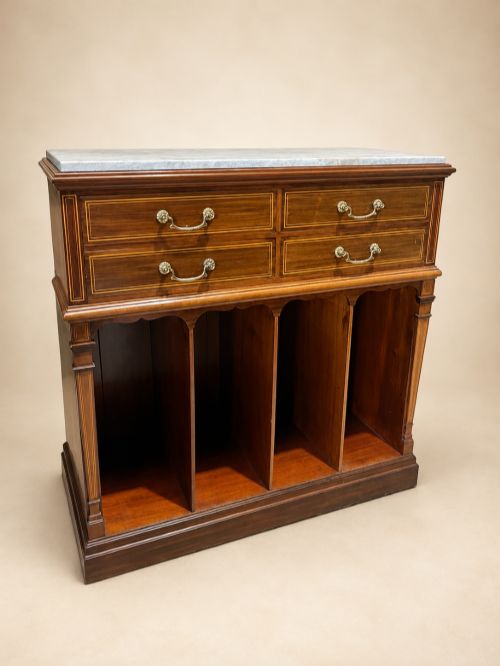
When you search for a sheraton inlaid cabinet, you are looking at light, elegant furniture defined by refined classical lines and delicate wood contrasting.
Sheraton Inlaid Cabinet
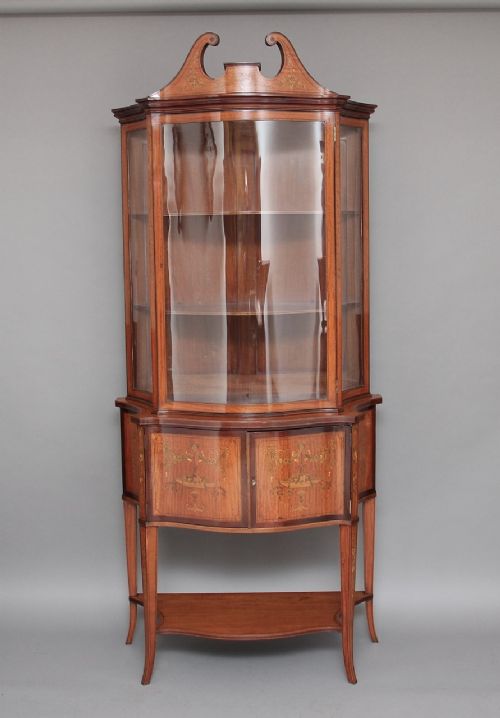
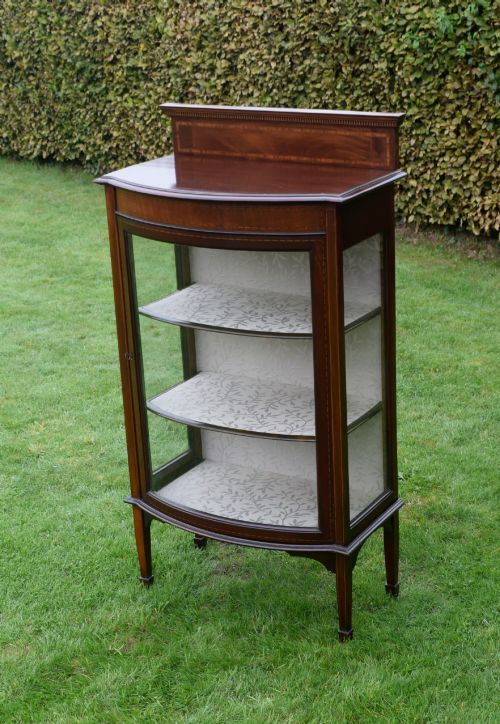
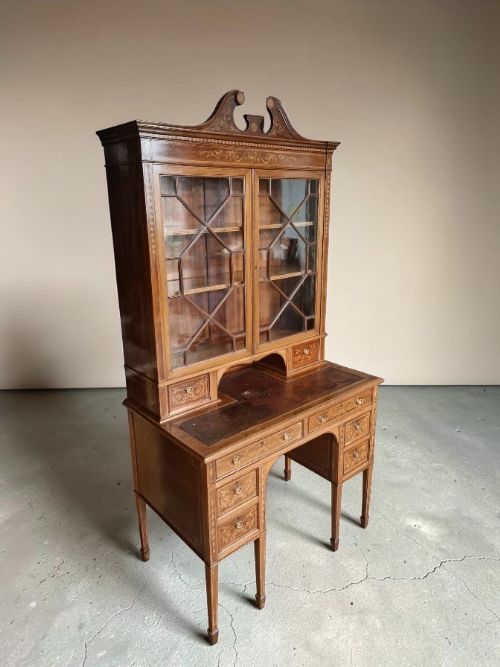
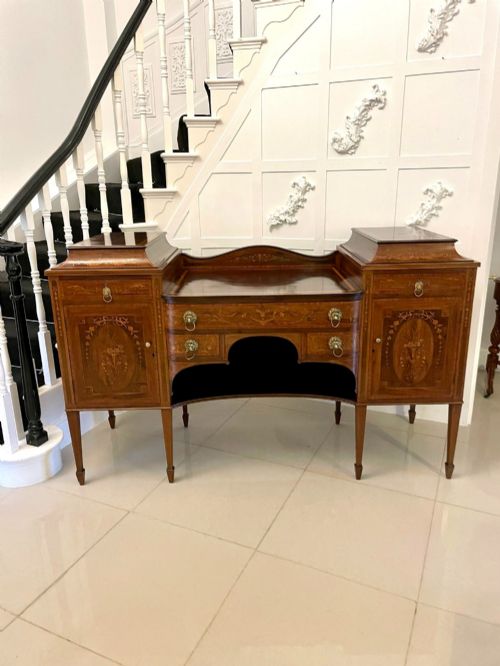
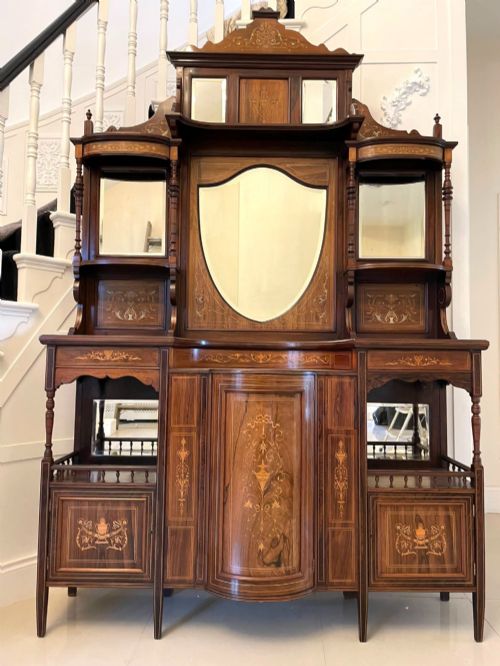
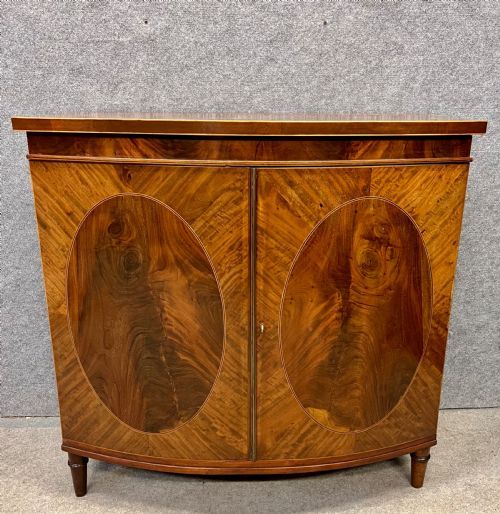
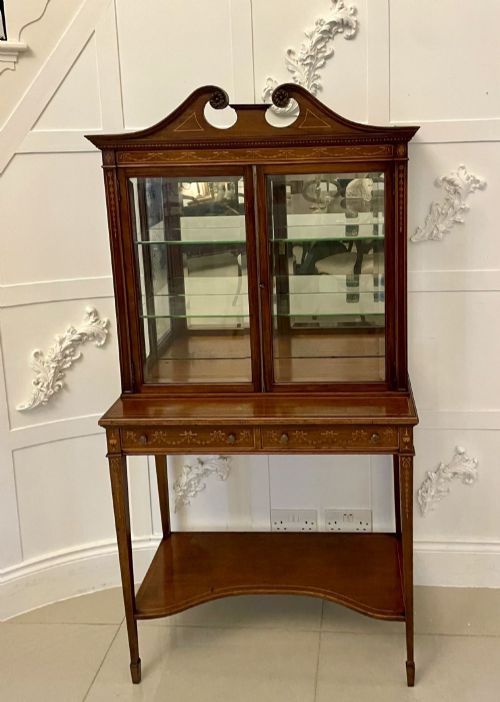
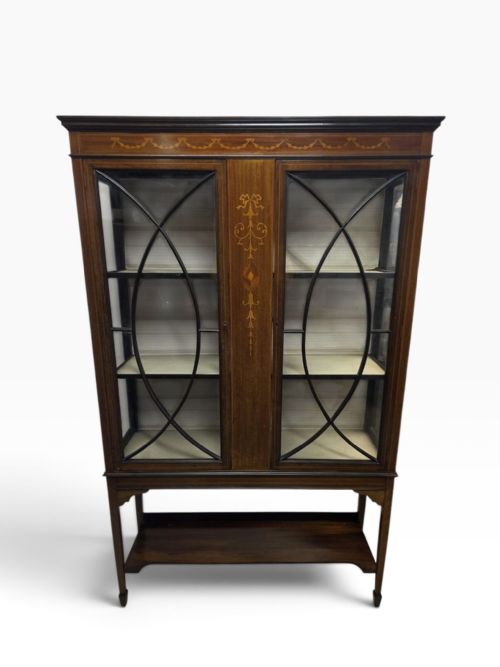
The dominant forms you will encounter on this page are display cabinets and sideboards, frequently constructed from mahogany or satinwood with contrasting decorative banding. These items combine utility with delicate visual lightness, reflecting the neoclassical aesthetic popularised in the Georgian era and revived around 1900.
How they were made
Cabinet makers utilised solid timbers and veneers of mahogany and satinwood, often enhanced with contrasting boxwood and wood inlay to create geometric lines and floral motifs. Marquetry techniques were employed on finer surfaces to produce pictorial or scrollwork designs.
Glazing bars divided glass door panels into delicate geometric panes, while brass hardware complemented the warm tones of the polished wood. Structural integrity relied on traditional joinery housed within sturdy carcases.
Some Edwardian wardrobes secretly doubled as compactums, hiding multi-drawer inner chests behind full-length mirrored doors.
What varies in quality
The distinction between ordinary production and superior craftsmanship lies in the precision of the inlay work and the choice of timbers. Finer examples display tightly grained satinwood and crisp, unbroken stringing without gaps or filler.
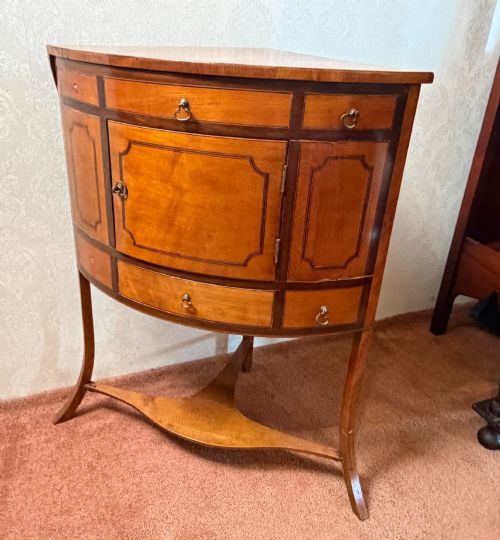
Proportion and execution elevate certain pieces, particularly where serpentine fronts and hand-painted panels meet balanced structural design. Maker attribution and original glass also influence the standing of an individual item.
Hewetsons London·Edwards & Roberts·William Whiteley·Gillow·Maple & Co
The Sheraton Inlaid Cabinet Glossary
- Inlay
- A technique where pieces of contrasting wood or other materials are set into recesses flush with the surface to form a decorative pattern. This defines the linear borders seen on many pieces.
- Satinwood
- A pale, lustrous timber native to the tropics, prized for its golden sheen and smooth texture. It serves as the primary face wood or contrasting veneer on lighter cabinets.
- Marquetry
- Elaborate veneer work arranged in pictorial or decorative patterns using various tinted woods. It differs from simple linear inlay by creating detailed visual scenes.
- Serpentine
- A gently undulating furniture front curving outward at the centre and inward at the sides. This shape demands high skill from the carpenter.
- Breakfront
- A cabinet facade where the central section projects forward from the flanking wings. It adds architectural depth to large bookcases and sideboards.
Sheraton Inlaid Cabinet: Frequently Asked Questions
What is a Sheraton inlaid cabinet?
These are light, elegant storage and display pieces originating in the late 18th century and reproduced extensively during the Edwardian Sheraton Revival period. They typically feature mahogany or satinwood surfaces decorated with fine linear stringing and contrasting timber banding.
Buyers sought these items to bring classical symmetry and a bright, refined aesthetic into domestic interiors. The category covers everything from corner display units to large sideboards and bookcases.
How do I tell an 18th-century piece from a later revival?
Original 18th-century pieces display structural joinery, timber ageing, and hand-cut elements consistent with Georgian workshop practices. Sheraton Revival items, which make up a large portion of available stock, date from the late 19th and early 20th centuries and often show machine-finished secondary woods.
Examining the backboards, drawer linings, and interior carcass construction usually reveals the true age of the piece. Revival pieces frequently employ brighter satinwood veneers and standardised brass hardware.
Where were these cabinets placed in a home?
In period homes, display cabinets and glazed china cabinets stood in drawing rooms or dining rooms to showcase porcelain and decorative objects. Corner cabinets utilised unused angles in smaller rooms to provide both display space and enclosed storage.
Sideboards and side cabinets functioned in dining spaces for serving food and storing linens or cutlery. Their refined silhouettes ensured they remained decorative focal points rather than purely utilitarian furniture.
How should I care for satinwood and mahogany?
Keep these cabinets away from direct sunlight and strong heat sources to prevent the delicate satinwood veneers and boxwood inlay from drying out or fading. Regular dusting with a soft, dry cloth maintains the polish without building up residue.
A light application of traditional beeswax once or twice a year nourishes the timber and preserves the natural lustre of the polished surfaces.