




Seventeenth Century Tapestry
Seventeenth century tapestry works bring historic narrative and rich textile art into a room, offering tactile warmth and centuries of craftsmanship.
Seventeenth Century Tapestry
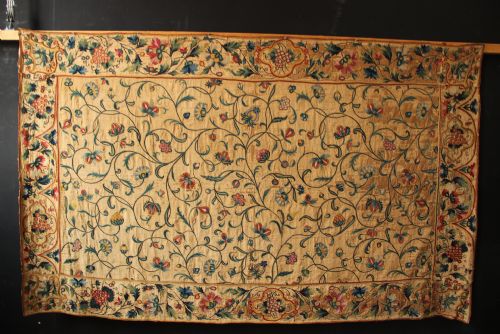
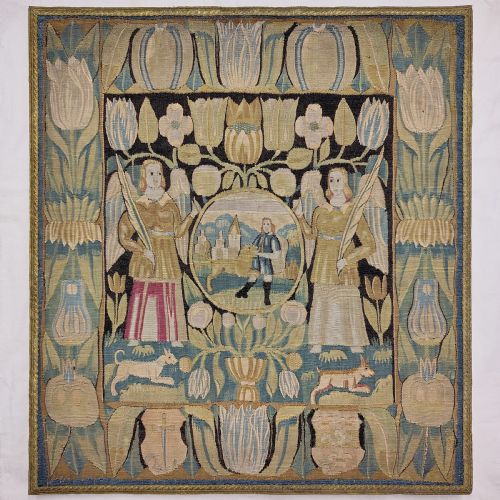
On this page, you are most likely to meet tapestry cushion covers alongside Flemish tapestry fragments, needlework pictures, and crewelwork. Their forms range from small framed beadwork fragments to substantial wall art and joined oak back stools incorporating period textiles.
How they were made
Maker workshops utilised natural materials such as wool, silk, and linen to construct these heavy textiles, often working on vertical or horizontal looms. Skilled hands stitched intricate scenes using dyed threads that have aged into deep, muted tones.
Support elements incorporate wood, glass, glass beads, and gilt wood, particularly in framed pieces and furniture integration. Oak provides the structural integrity for joined back stools that house historic textile elements.
What varies in quality
The fineness of the stitchwork and the complexity of the narrative scene separate standard examples from superior pieces. Super fine early English crewelwork demonstrates a density and precision of needlework that lesser domestic pieces lack.
The survival rate of the original fibres and the integrity of the fragment dictate the visual impact. Flemish fragments and North German cushions show varying degrees of wear across the wool and silk yarns, influencing how clearly the original design reads.
The Seventeenth Century Tapestry Glossary
- Crewelwork
- Embroidery executed in wool yarn on a heavy linen or cotton foundation. This technique allows for textured, multi-layered surface designs common in seventeenth century English textiles.
- Flemish
- Pertaining to Flanders, a historical region renowned for producing sophisticated woven wall hangings. Flemish workshops set the standard for pictorial depth and fine yarn blending.
- Baroque
- An artistic style characterised by dramatic movement, grand scale, and rich detail. It dominates much of the textile and furniture design from this century.
- Jacobean
- The style of design associated with the reign of James I, frequently featuring stylised floral patterns and heavy oak frames. It represents an early phase of seventeenth century aesthetics.
- Beadwork
- The practice of sewing small glass beads onto a backing fabric to create pictorial scenes. Royal hunting themes often appeared in this painstaking medium.
Seventeenth Century Tapestry: Frequently Asked Questions
How were seventeenth century tapestries used?
These textiles served primarily as grand wall hangings to insulate stone walls and display wealth and status in elite homes. Smaller fragments and panels were later adapted into cushions or incorporated into furniture such as back stools.
Today, surviving sections function as framed wall art or decorative cushion covers that bring historic texture into domestic interiors.
What materials make up these pieces?
The primary textile components consist of wool, silk, and linen threads woven or embroidered into pictorial surfaces. Glass beads and wooden frames or structural oak elements also appear in composite objects.
These organic materials require stable environmental conditions to prevent further fibre degradation over the centuries.
How do I identify a Jacobean style piece?
Jacobean pieces often display stylised floral motifs, heavy crewelwork embroidery, and robust construction methods typical of the early seventeen-hundreds. They share visual traits with Stuart period decorative arts.
Examining the specific combination of wool yarns on linen grounds helps confirm the period attribution.
Can I use antique tapestry cushions daily?
Historic cushion covers feature fragile seventeenth century silk, wool, and linen fibres that demand careful preservation. They function best as decorative elements rather than items for heavy everyday use.
Gentle placement away from direct sunlight protects the natural dyes from fading and preserves the delicate structure.