


Green Mounted Picture
A green mounted picture brings together centuries of framed art, taxidermy, and needlework bordered by mounts.
Green Mounted Picture
A green mounted picture encompasses a diverse assembly of framed works, ranging from Victorian taxidermy cases and still life paintings to Japanese woodblock prints and seventeenth-century beadwork fragments. These pieces cross numerous eras, from Stuart and Georgian periods through to mid-century modern works.
The assortment includes sporting prints, lithographs, watercolour paintings, and framed textile art, each set within a mount. Buyers encounter varying forms such as wall art, taxidermy cases, and illustrated book prints.
Originating from different cultural traditions including Japanese Ukiyo-e and traditional Chinese painting, these items reflect varied artistic practices across centuries. The selection provides historical depth through printed, painted, and stitched compositions.
Materials and Techniques
Makers utilised wood, glass, paper, and card to construct the housings and supports for these works, often incorporating gilt wood and gold leaf for framing and highlights. Ink and watercolour dominate the painted and printed examples.
Techniques range from traditional woodblock printing and coloured lithography to delicate beadwork and taxidermy mounting. Works span hand-painted still lifes to mass-produced first edition prints.
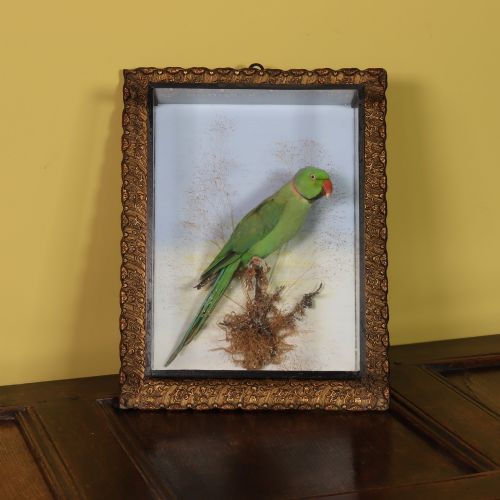
A ring-necked parakeet peers indefinitely from a Victorian taxidermy case, frozen mid-century.
Assessing Quality
Quality reveals itself in the precision of the medium, whether through the fine brushwork of a watercolour painting or the sharp impression of a Japanese woodblock print. The preservation of paper, card, and textile elements dictates the integrity of the piece.
The relationship between the artwork and its surrounding mount and frame influences the overall execution. Superior examples maintain the original harmony between the visual subject and its protective housing.
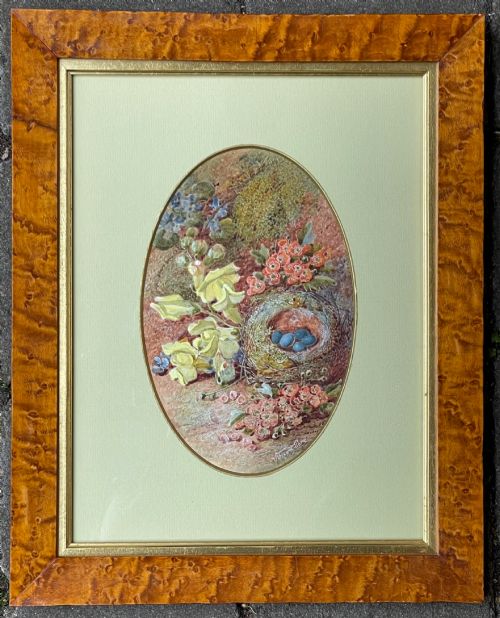
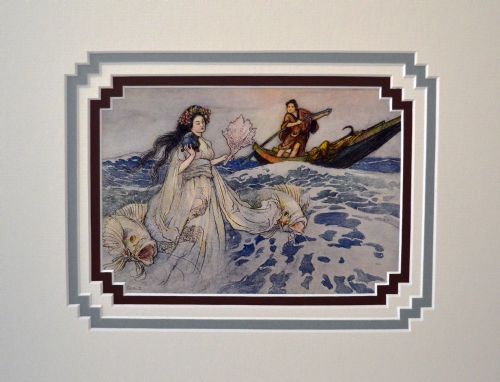
Vincent Clare·William Bazeley And Sons·Warwick Goble·James Tower·Kunisada
The Green Mounted Picture Glossary
- Mount
- A card or paper border placed around a picture to separate the artwork from the frame. It provides a visual transition and structural support.
- Lithograph
- A print made from a method utilising a stone or metal plate. Colours are applied through successive impressions.
- Woodblock print
- An image carved into a block of wood, inked, and transferred to paper. This technique is central to traditional Japanese Ukiyo-e art.
- Taxidermy case
- A three-dimensional display container enclosing preserved specimens. Glass and wood typically form the protective housing.
- Beadwork fragment
- A portion of decorative stitching utilising small beads. These pieces often depict historical or figurative scenes.
Green Mounted Picture: Frequently Asked Questions
What periods do these pieces span?
The selection includes works from the seventeenth century, the Georgian and Regency eras, and the Victorian period. Twentieth-century examples extend into the nineteen-fifties.
Items reflect distinct stylistic movements such as Edwardian, Art Nouveau, and Mid-Century Modern alongside traditional Asian art forms.
How are textiles and taxidermy displayed?
Textile art, such as seventeenth-century beadwork fragments, is secured within protective frames and mounts to preserve the fabric. Taxidermy cases utilise enclosed wooden and glass structures to house specimens like parakeets safely.
These varied housing methods ensure fragile materials remain stable while remaining visible for display.
What types of prints are available?
Listings feature coloured lithographs, sporting prints, Vanity Fair double prints, and Japanese Ukiyo-e woodblock prints. First edition book illustrations also appear within the selection.
Each print type employs specific historical printing methods characteristic of its period of origin.
How do I identify a woodblock print?
Woodblock prints often display distinct ink transfer characteristics and paper textures associated with traditional Japanese printing. Signatures or stamps by artists such as Kunisada frequently accompany these works.
Subject matter commonly includes traditional scenes, figures, and narratives from the Edo period.