





Framed Tapestry Artwork
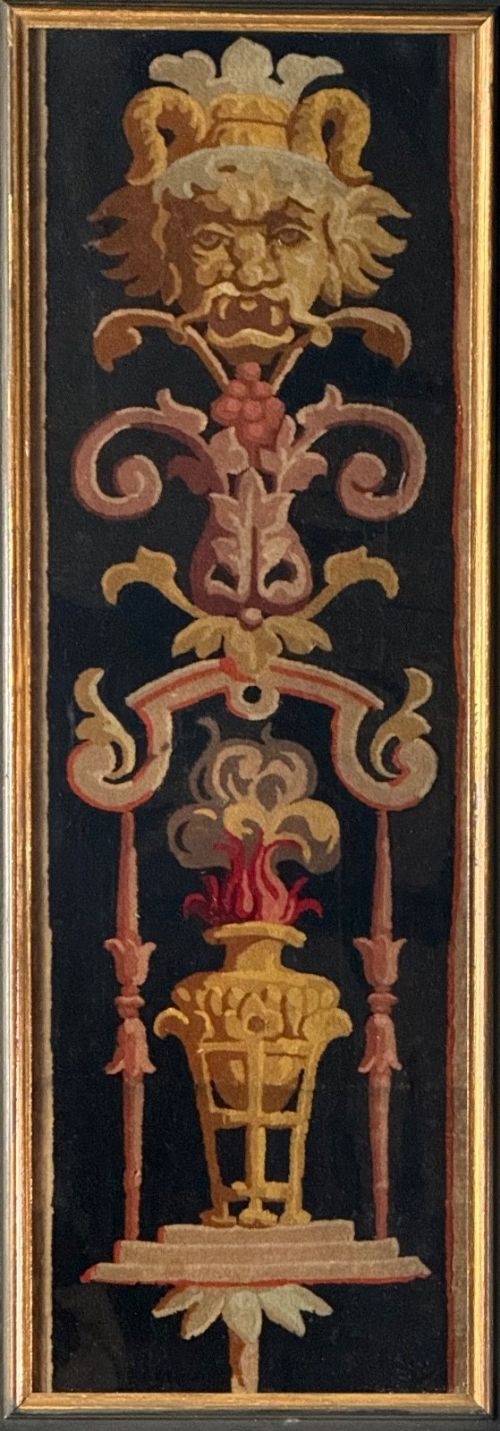
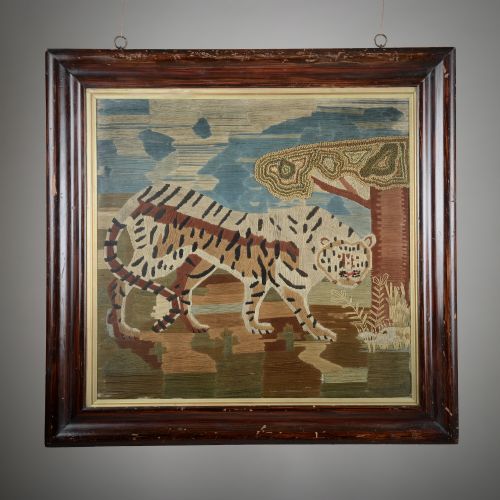
Framed tapestry artwork brings together centuries of hand-stitched needlework, wool work, and embroidered panels housed behind glass in period timber frames.
Framed Tapestry Artwork
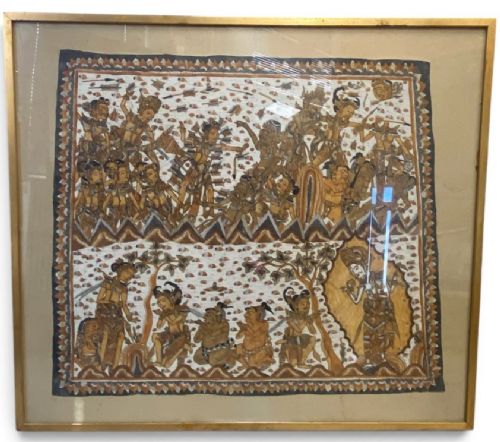
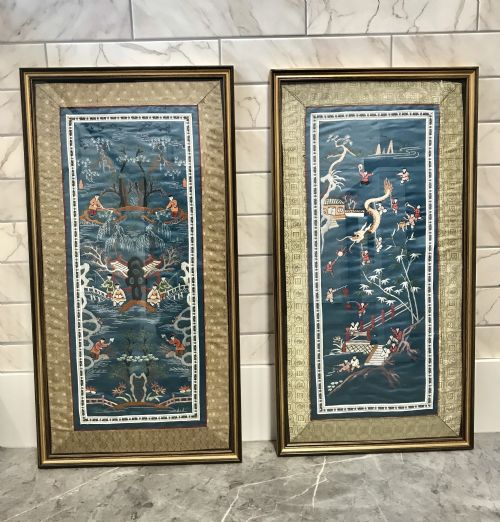
Buyers seeking framed tapestry artwork encounter a diverse selection of stitched textile pieces spanning the seventeenth century through to the early twentieth century. The inventory on this page ranges from early English and Continental needlework pictures and samplers to Asian silk embroideries and Balinese textile paintings.
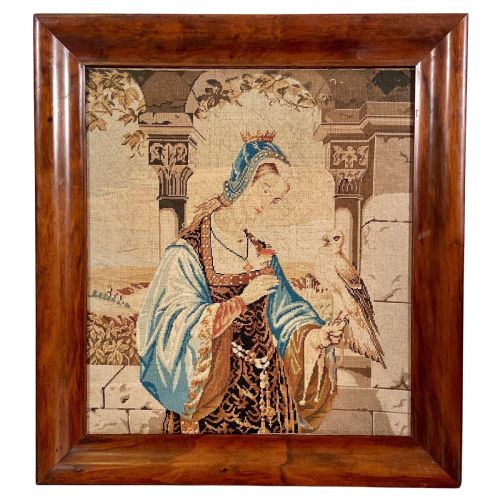
Most examples date from the nineteenth century, including Victorian wool work depictions, gros point panels, and Berlin work subjects. Earlier pieces comprise eighteenth century needlework and seventeenth century embroidered panels or tapestry cushion covers mounted for display.
The forms vary from small oval framed portraits to large wall hangings and detailed maps. Common framing materials recorded in the listings include burr maple, rosewood, oak, and gilt wood, frequently protecting the textiles under glass.
Distinctions in quality
Quality in these textile works rests upon the precision of the stitching and the complexity of the pictorial composition. Fine needlework exhibits tight, uniform thread work and sophisticated handling of colour and perspective, as seen in detailed horse racing scenes, classical portraits, and floral motifs.
The preservation of the textile fibre and the integrity of the original frame dictate the standing of a piece. Examples retaining their period burr maple, rosewood, or gilt wood frames alongside clean, stable wool or silk panels represent the higher end of the range.
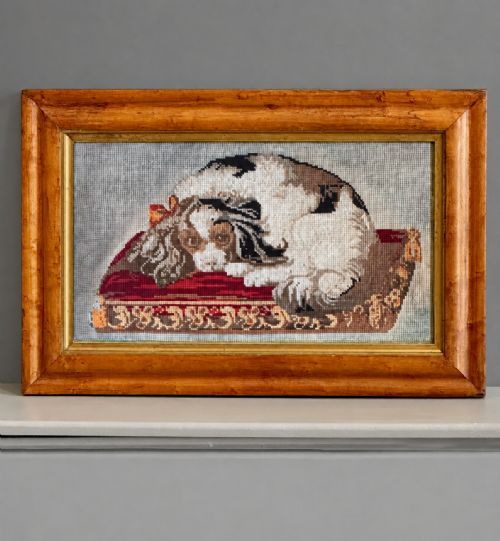
Needlework subjects range from classical deities and religious figures down to a King Charles spaniel and a horse racing track.
The Framed Tapestry Artwork Glossary
- Berlin work
- A style of counted-thread embroidery popular in the nineteenth century using brightly coloured wools on canvas. It allowed makers to follow charted patterns to create pictorial subjects.
- Gros point
- A type of needlepoint stitch worked on canvas that creates a bold, durable texture. It is frequently identified in nineteenth century pictorial panels depicting figures and animals.
- Verre églomisé
- A process of applying cold painting and gilding to the rear of glass panels. These are often incorporated into frames surrounding period textile works.
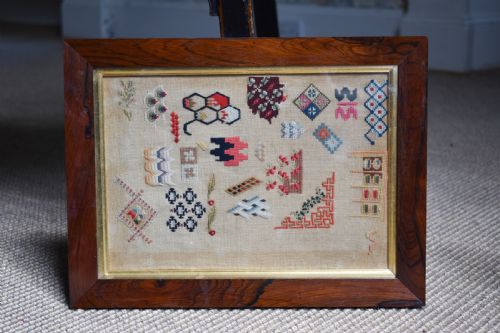
- Sampler
- A piece of needlework produced to demonstrate proficiency in various stitches. Early examples often record alphabets, numbers, or genealogical details alongside decorative motifs.
- Toile de Jouy
- A type of cotton or linen fabric featuring printed pastoral or historical vignettes. Framed fragments preserve these repeating monochrome designs.
Framed Tapestry Artwork: Frequently Asked Questions
How are antique tapestries framed?
Antique tapestries and needleworks are typically stretched over a backing board and secured within timber mouldings made from materials like rosewood, oak, or burr maple.
Many fragile wool and silk pieces are mounted behind protective glass to shield the fibres from dust, atmospheric moisture, and handling.
What periods do these pieces date from?
The pieces span multiple centuries, with significant representation from the seventeenth, eighteenth, and nineteenth centuries. Listings also include examples from the Regency and Victorian eras.
Materials and stitching styles often help anchor an object to a specific decade or century, such as seventeenth century embroidered panels or mid nineteenth century gros point.
How do I care for framed textiles?
Framed textiles require placement away from direct sunlight to prevent the fading of natural wool and silk threads. Maintaining a stable indoor environment protects both the fabric and the wooden frame from temperature fluctuations.
Glass fronts should be cleaned carefully with a cloth sprayed with cleaner rather than applied directly, ensuring liquid does not seep behind the frame.
What is the difference between needlework and tapestry?
Needlework is stitched by hand onto an existing woven foundation fabric, such as canvas or linen, using threads like wool or silk. Examples include samplers, Berlin work, and gros point.
Tapestry is traditionally a woven textile where the design is built up on a loom during the creation of the fabric itself, though the term is often applied broadly to decorative wall hangings.