





Historic Wall Hanging
Historic wall hanging pieces span centuries of textile artistry, offering rich textures and narrative scenes that bring architectural depth to an interior.
Historic Wall Hanging
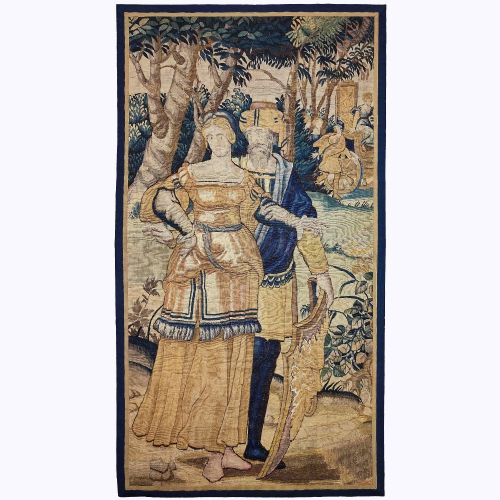
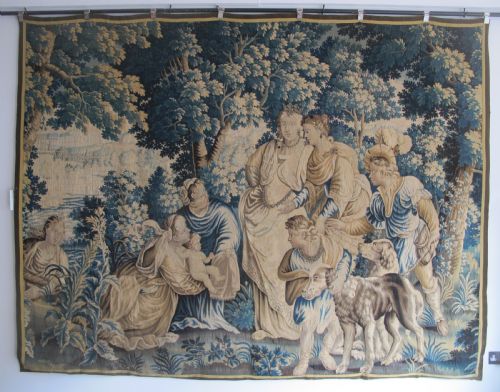
A historic wall hanging encompasses woven tapestries, crewelwork panels, and embroidered textiles originating primarily from the sixteenth to the eighteenth centuries. These items serve as substantial interior decorations, often depicting verdure landscapes, biblical scenes, or mythological figures.
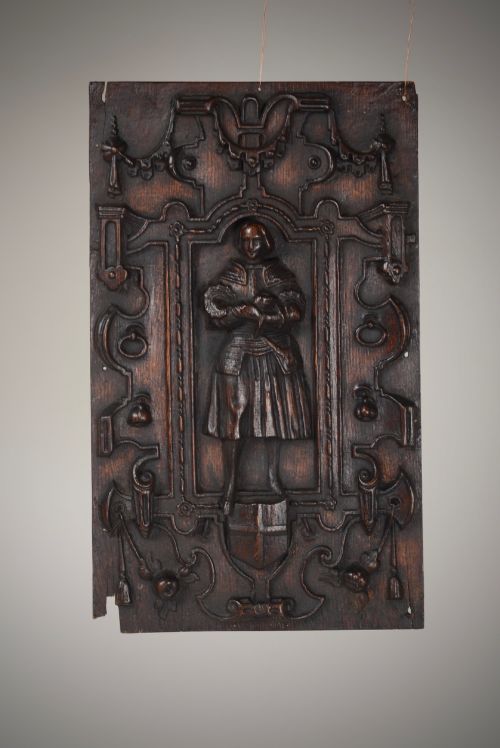
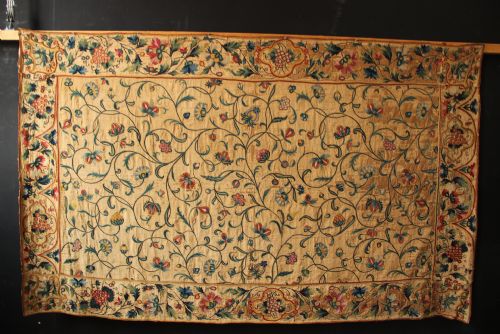
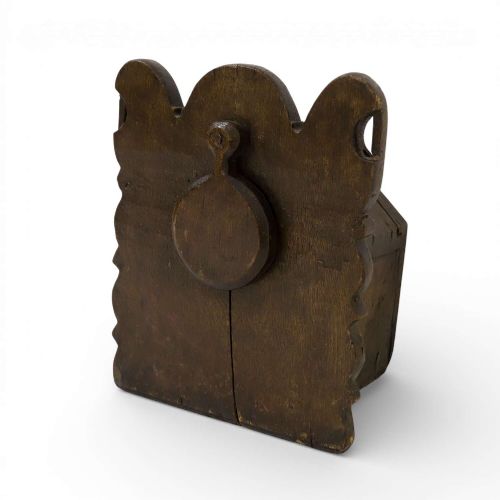
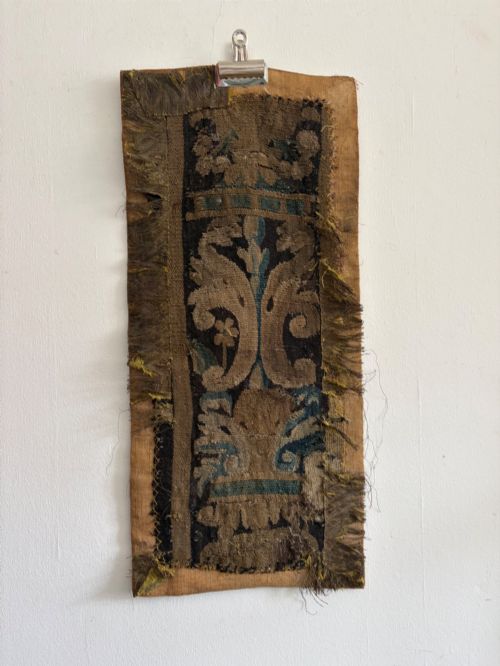
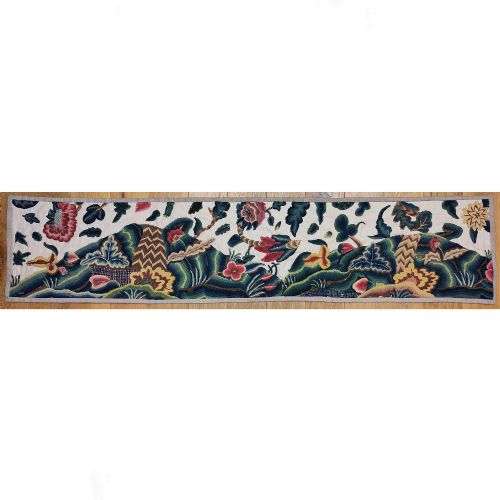
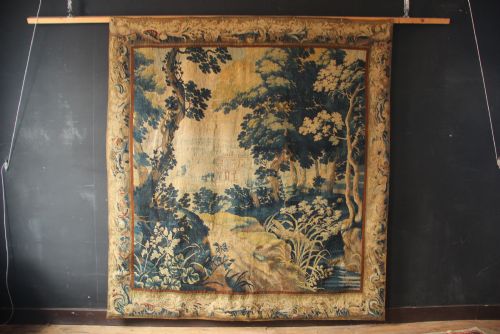
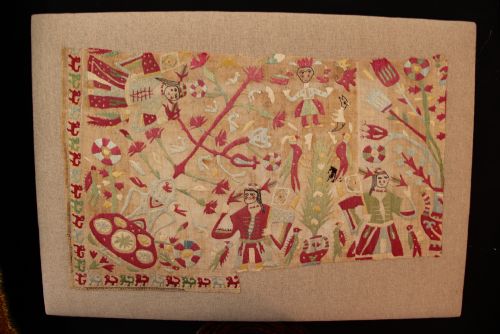
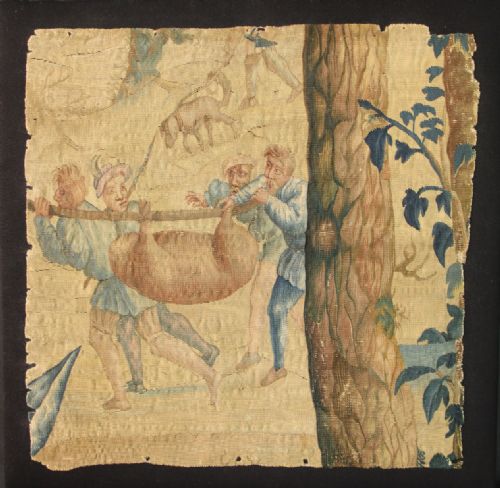
Buyers frequently encounter Flemish verdure tapestries and English crewelwork panels within these listings, alongside framed fragments and textile borders mounted to linen. The selection also includes carved wooden panels and salt boxes, demonstrating the broad definition of wall-mounted historic artefacts.
Origins range across European workshops, with pieces originating from Flemish, French, British, and Greek Island traditions. Each format reflects the specific domestic or ceremonial requirements of its period, from large-scale castle displays to smaller residential spaces.
Materials and Construction Techniques
Materials rely heavily on natural fibres such as wool, silk, linen, and cotton, frequently combined with metal threads to create luminous details. Structural integrity often involves oak frames or wooden panels, supported by original iron hardware.
Weaving techniques include high-warp and low-warp methods used in tapestries, alongside needlepoint and crewelwork embroidery executed on robust linen grounds. Silk velvet panels demonstrate ciselé cutting techniques, while other items incorporate painted wooden surfaces and traces of original red paint.
The listings span from the 16th century to the 1930s, incorporating wool, silk, linen, oak, and iron across various European traditions.
Distinguishing Quality in Historic Textiles
Quality differentiates through the fineness of the weave, the complexity of the design, and the survival rate of the original colour palette. Superior examples display intricate detailing in figurative work and lush foliage, whereas lesser pieces show simplified execution or heavy fragmentation.
The integrity of the mounting and the preservation of original metal threads or hardware also dictate the standing of a piece. Complete panels command greater scholarly interest compared to small fragments, though mounted borders retain considerable decorative merit.
The Historic Wall Hanging Glossary
- Verdure tapestry
- A woven wall hanging featuring a stylized landscape design dominated by foliage, trees, and often birds or animals. These scenes were immensely popular in Flemish workshops.
- Crewelwork
- A type of embroidery utilising wool yarn on a linen or cotton foundation, traditionally employing a wide variety of stitches. Early English examples often depict flowing floral and fauna motifs.
- Ciselé velvet
- A velvet fabric where the pile is cut at different heights or left uncut to create a patterned relief effect. This technique produces rich textures suitable for pilaster hangings.
- Tapestry fragment
- A surviving portion of a larger woven hanging, usually edged and mounted for modern display. Fragments allow collectors to acquire historic weaving on a manageable scale.
Historic Wall Hanging: Frequently Asked Questions
Can these textiles be displayed in direct sunlight?
Direct sunlight causes rapid fading in natural dyes like wool, silk, and cotton, permanently altering the original colour balance of the piece.
Position historic wall hangings on interior walls away from windows, or utilise UV-filtering glass if the textile is framed.
How do I clean an antique wall hanging?
Routine maintenance is limited to very gentle surface dust removal using a soft brush with low suction through a protective mesh screen.
Professional textile conservators should handle any deep cleaning or wet treatments to prevent shrinkage and structural collapse.
How are Flemish tapestries dated?
Dating relies on stylistic analysis of the border designs, the weaving density, the subject matter, and comparative examples found in museum archives.
Weavers' marks or town ciphers woven into the selvedge occasionally provide more precise origins when present.