






Gold Silk Tapestry
These gold silk tapestry pieces combine woven textiles with metallic threads to bring historic wall art and framed panels into a room.
Gold Silk Tapestry
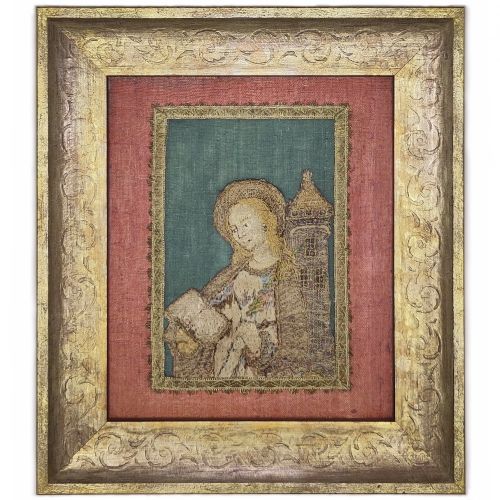
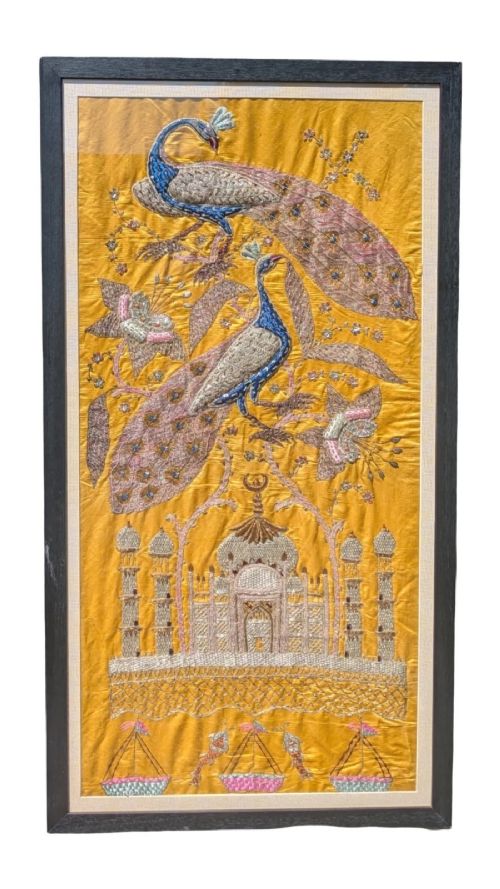
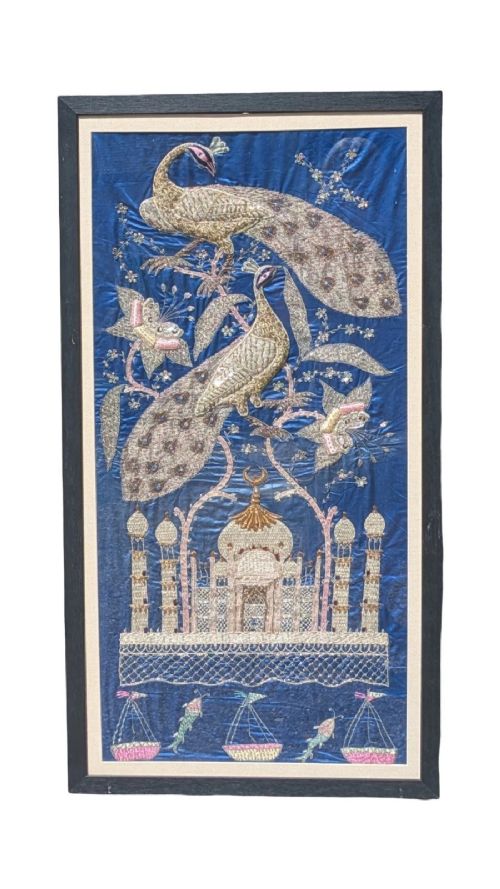
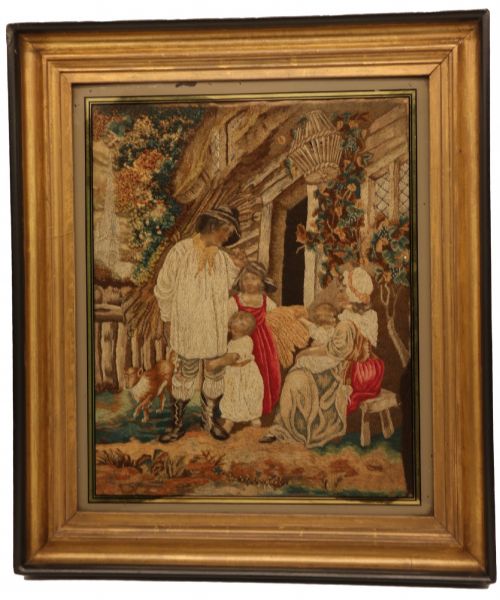
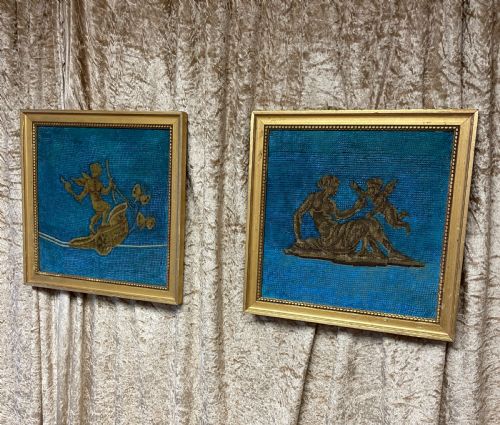
A gold silk tapestry selection spans framed textile art, needlework pictures, cushions, and rugs created across several centuries. The pieces range from 17th century cushion covers and stumpwork panels to 18th century Dutch metal thread embroideries and Indian silk works depicting the Taj Mahal.
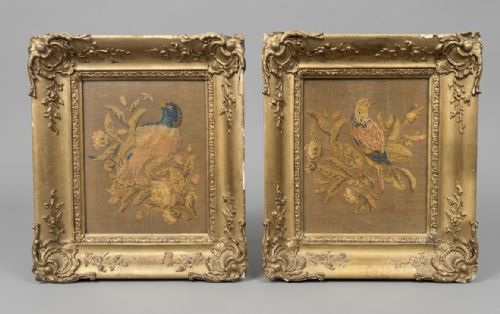
Buyers will encounter various wall art formats, including pairs of framed bird embroideries, English horse racing scenes, and large relief hanging embroideries. The inventory covers styles from Georgian and Victorian periods to Ottoman, Indian, and Anglo-Indian designs.
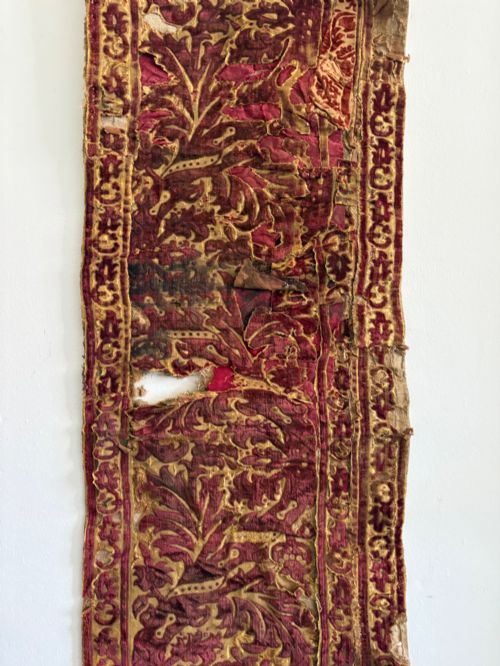
Origin points stretch from English needlework panels and Flemish tapestries to Anatolian prayer rugs and Chinese embroidered panels. Framed textile works frequently appear alongside velvet hangings and crewel work embroidery.
Materials and construction methods
Makers utilised natural silk, wool, and metallic thread combined with glass, wood, gilded wood, and giltwood frames. Needlework and embroidery techniques form the primary construction methods across the textile pieces.
Textiles often incorporate metal threads alongside silk stitching to create detailed pictorial panels and relief hangings. Frames feature carved giltwood and gilded wood constructions designed to mount and protect the historic needlework.
Gold Silk Tapestry Retail Price Guide 2026
Typical asking prices for gold silk tapestry among the pieces listed under this phrase on Sellingantiques today, from the lower quarter to the upper quarter. They describe what is for sale here now, not the wider market.
King Charles II and his favourite mistress gaze out from a 17th century stumpwork embroidery.
Distinctions in craftsmanship
Quality rests on the intricacy of the needlework and the preservation of the silk and metallic threads. Superior examples demonstrate precise long stitch work and detailed pictorial composition.
The integration of the textile with its original frame, whether giltwood or glass-fronted, contributes to the overall integrity of the piece. The complexity of the design, from simple bird motifs to elaborate architectural scenes, marks the distinction between standard and finer items.
The Gold Silk Tapestry Glossary
- Metallic Thread
- A thread incorporating metal used in embroidery to add reflective qualities to the textile design. It frequently appears in 18th century and regional decorative panels.
- Giltwood
- Wood carved and covered with a thin layer of gold leaf or gold paint. It is commonly found on the frames housing antique needlework pictures.
- Stumpwork
- A raised embroidery style popular in the 17th century that uses padding to create a three-dimensional effect. Figures and architectural elements project from the background fabric.
- Crewel Work
- Embroidery executed using wool yarn on a plain woven fabric. It appears in early 19th century decorative pieces.
- Ciselé Velvet
- Velvet featuring a pattern created by cutting some loops of the pile while leaving others uncut. This technique produces textured contrast on historic hanging panels.
Gold Silk Tapestry: Frequently Asked Questions
How should I clean antique silk embroidery?
Historic silk and metallic thread textiles require specialist conservation rather than standard washing.
Professional textile conservators can assess the fabric stability and address accumulated dust safely.
Are these tapestries suitable for direct sunlight?
Direct sunlight causes natural silk fibres and metallic threads to fade and degrade over time.
Placement away from windows helps preserve the colour and structural integrity of the textile.
How are framed textile pieces mounted?
Frames typically utilise wood or giltwood surrounds, sometimes incorporating glass to protect the delicate embroidery.
Backing materials secure the textile flat within the frame without relying on harmful adhesives.
What is the difference between tapestry and needlework?
Tapestries are woven on a loom as part of the fabric structure, while needlework is stitched onto an existing foundation fabric.
Both techniques create pictorial wall art using materials like wool, silk, and metal thread.