



Renaissance Textile Art
These renaissance textile art pieces are woven wall hangings and embroidered panels that bring historic textile craft into contemporary rooms.
Renaissance Textile Art
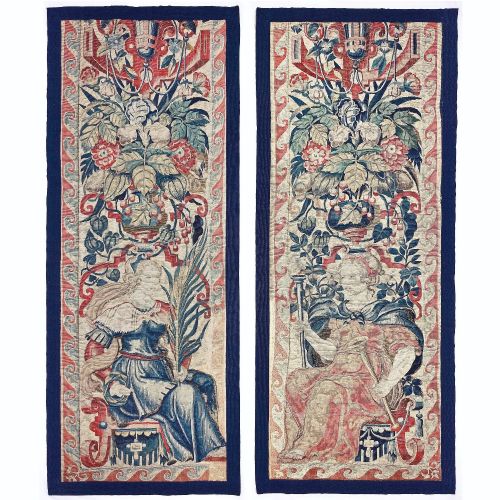
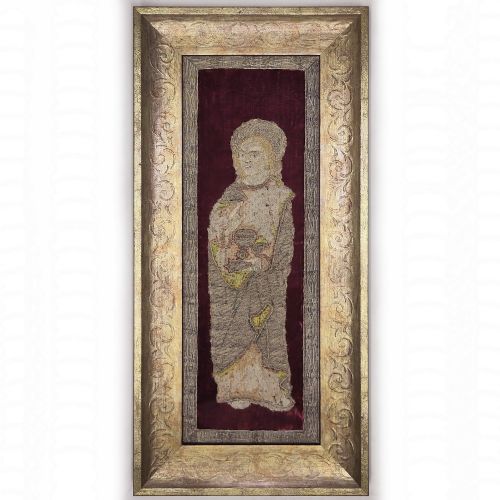
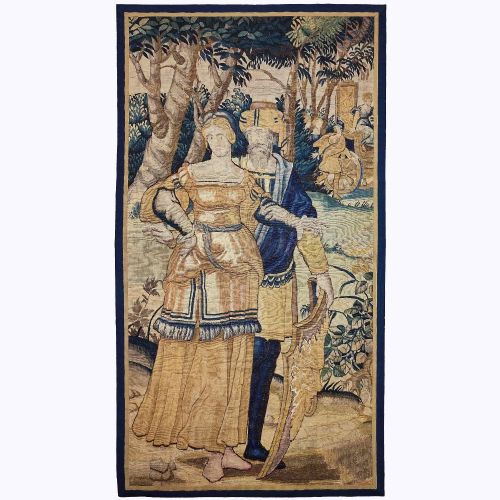
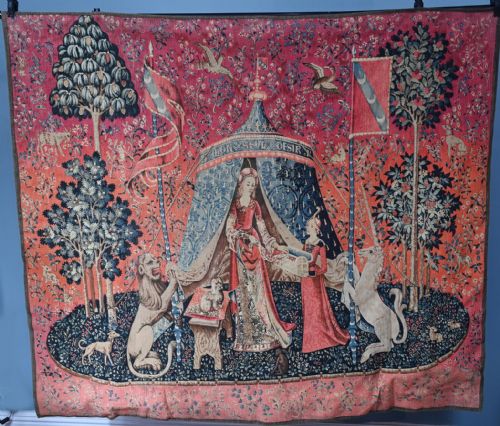
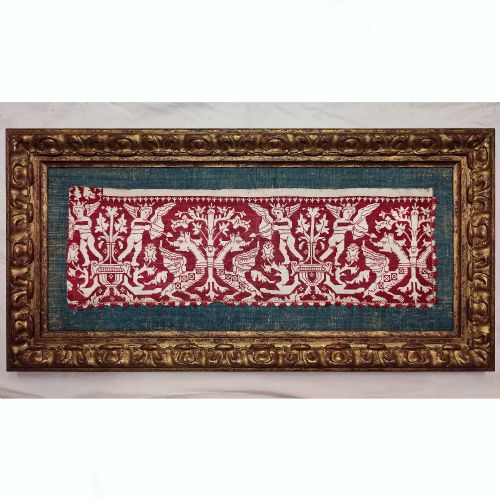
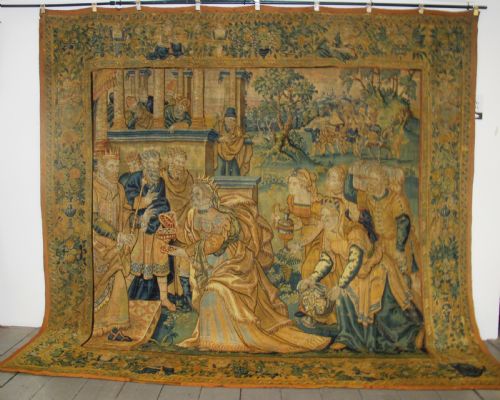
When you search for renaissance textile art, you encounter woven wall hangings, framed panels, and historic tapestries originating from the sixteenth and seventeenth centuries, alongside later nineteenth-century revivals. The selection on this page centres primarily on Flemish tapestries, Italian embroidered borders, and French needlepoint panels designed for architectural display.
Most examples function as wall art, ranging from large room-scale floor coverings adapted for hanging to narrow pilaster strips and square pictorial panels. Materials vary from heavy wool and silk to delicate metal thread and velvet backing, reflecting the grand interiors they originally inhabited.
How they were made
The construction of renaissance textile art relies on traditional loom weaving and detailed needlework utilising wool, silk, and metal thread. Artisans built complex pictorial narratives using dyed yarns, sometimes incorporating glass elements or mounting panels onto wooden frames and velvet backings.
Surviving pieces often take the form of fragments or entire panels, where the density of the weave and the quality of the thread determine the structural integrity of the textile. Workshops employed specialised techniques for Flemish and Italian formats, combining wool and silk to create layered textures.
Renaissance Textile Art Retail Price Guide 2026
Typical asking prices for renaissance textile art among the pieces listed under this phrase on Sellingantiques today, from the lower quarter to the upper quarter. They describe what is for sale here now, not the wider market.
Some seventeenth-century panels secretly hide grotesque masks and tiny mythical beasts among their floral borders, waiting to be spotted.
What varies in quality
Quality in renaissance textile art rests on the complexity of the design, the richness of the materials, and the preservation of the woven surface. Pieces featuring metal thread and intricate pictorial subjects like grotesques or figurative scenes represent the upper tier of execution.
The distinction between a sixteenth or seventeenth-century original and an 1880 or 1940 revival lies in the depth of the palette and the finesse of the needlepoint or loom work. Structural completeness also matters, as many authentic works survive as fragments or paired hangings rather than intact compositions.
The Renaissance Textile Art Glossary
- Tapestry
- A form of textile art woven on a vertical or horizontal loom using coloured woof threads to create a pictorial design. These hangings served both decorative and insulating purposes in historic interiors.
- Needlepoint
- A type of canvas work embroidery stitched by hand using wool or silk yarn. It forms a dense, durable surface often seen in historical panels.
- Grotesque
- A style of decorative ornamentation featuring whimsical combinations of human, animal, and plant forms. It appears frequently in sixteenth and seventeenth-century ornamental borders.
- Pilaster hanging
- A long, narrow textile panel designed to fit the flat vertical projection of a pilaster on a wall. These pieces emphasise architectural framing.
- Mille-fleurs
- A French term meaning thousand flowers, describing a background style filled with small, distinct plants and blossoms. This pattern is characteristic of early tapestries.
Renaissance Textile Art: Frequently Asked Questions
What is renaissance textile art?
Renaissance textile art encompasses hand-woven tapestries, embroidered panels, and wall hangings produced during the sixteenth and seventeenth centuries, alongside nineteenth-century revival pieces. These works were created in European workshops using wool, silk, and metal thread.
The category includes large pictorial wall coverings, narrow architectural pilaster hangings, and framed fragments depicting classical motifs, figures, and floral patterns.
How were these tapestries used?
Historically, these textiles were hung on the stone or wood-panelled walls of great houses and palaces to provide insulation and display wealth or narrative scenes. They transformed large, cold rooms into richly decorated spaces.
Today, they function as statement wall art in domestic interiors, mounted on walls or housed in custom frames to preserve the delicate fabrics.
How do I date a textile piece?
Dating relies on stylistic analysis of the motifs, such as sixteenth-century mille-fleurs patterns versus seventeenth-century classical grotesques, alongside the types of weave and thread used. Evidence from borders, figures, and framing materials also assists in placing a piece in its correct century.
Later nineteenth-century revival works often employ historical styles with distinct material compositions and backing methods that distinguish them from sixteenth or seventeenth-century originals.
Are these pieces whole or fragments?
Many surviving pieces are fragments or paired sections salvaged from larger wall hangings due to centuries of wear and interior alterations. Complete large-scale tapestries are less common than trimmed panels or embroidered borders.
These fragments are mounted and displayed as independent artworks, retaining the artistic and material qualities of the original larger compositions.
How do I care for wall hangings?
Wall hangings require stable environmental conditions away from direct sunlight, which can fade delicate wool, silk, and metal threads. Proper mounting distributes the weight evenly across the textile to prevent strain on the historic fibres.
Professional conservation cleaning is recommended rather than domestic washing, due to the fragile nature of sixteenth and seventeenth-century materials.