



Seventeenth Century Side Table
A seventeenth century side table brings heavy timber, turned legs and historic proportions into a modern room.
Seventeenth Century Side Table
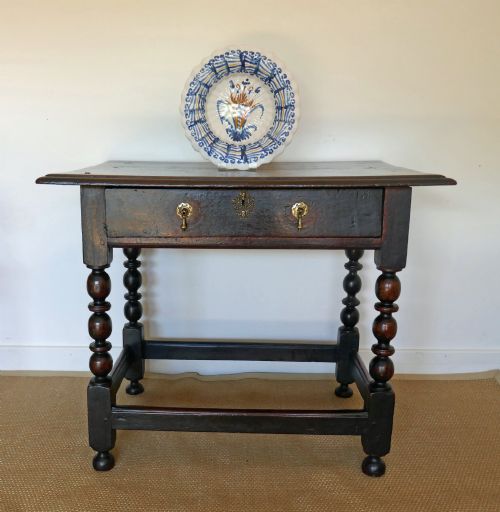
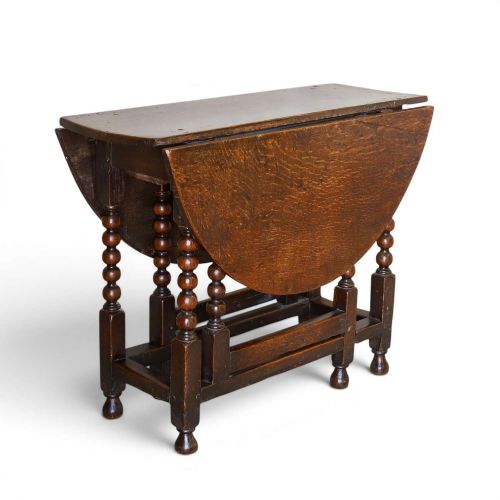
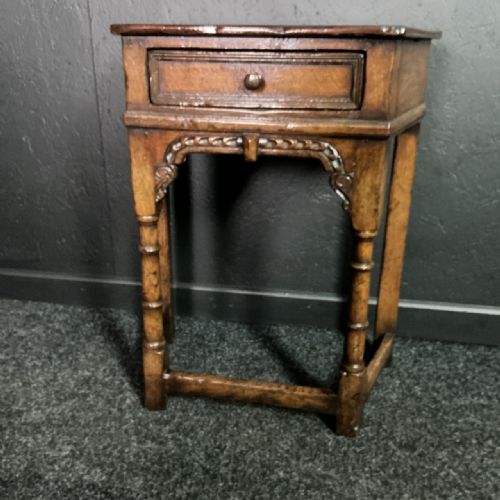
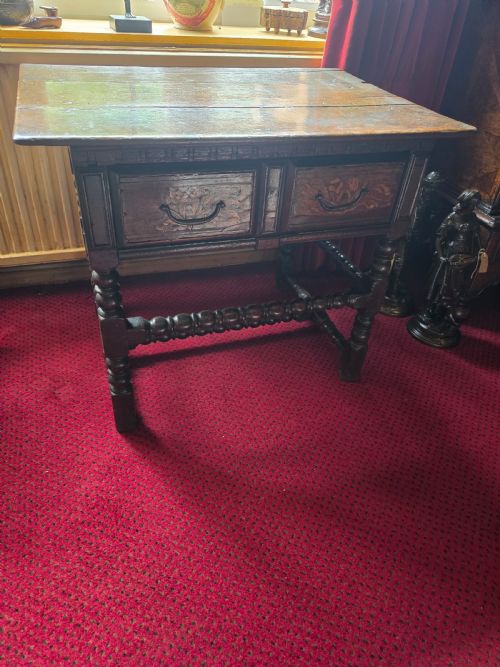
When a buyer searches for a seventeenth century side table, they encounter solid oak and walnut timber built with structural joinery rather than modern fixings. The forms span lowboards, low dressers, gateleg drop-leaf tables, and occasional tables designed for practical household use in early domestic settings.
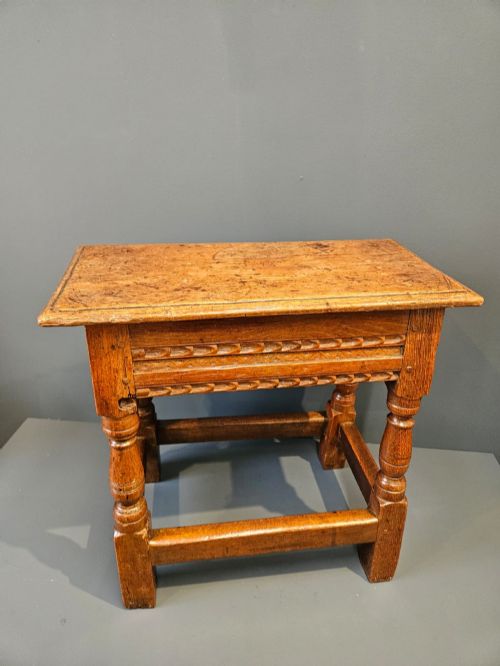
The versions most common on this page range from authentic period pieces dating back to the sixteen-hundreds up to later revivals from the twentieth century. Alongside standard side tables, related forms like joint stools and credence tables appear frequently under this heading, reflecting the sturdy utilitarian shapes of the era.
How they were made
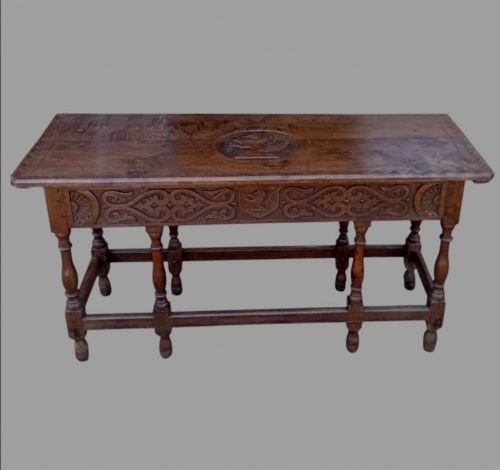
Makers built these pieces primarily from solid oak and walnut, utilising heavy boards joined by mortise and tenon construction secured with wooden pegs. Surfaces often show geometric mouldings, carved details, and inlaid panels that demonstrate traditional hand-working methods.
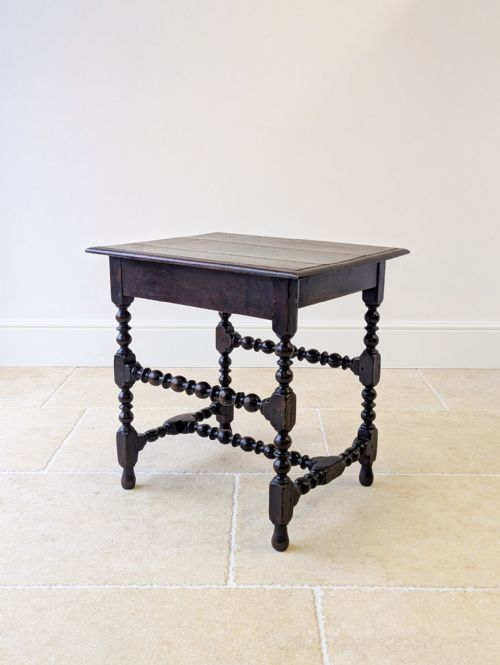
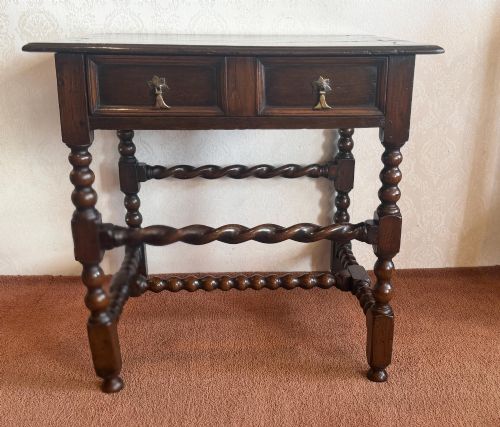
Turning lathes shaped the distinctive legs seen on many examples, producing bobbin-turned, barley twist, and columnar supports. Iron and brass hardware, including hinges and drawer pulls, completed the functional construction of these early tables.
Seventeenth Century Side Table Retail Price Guide 2026
Typical asking prices for seventeenth century side table among the pieces listed under this phrase on Sellingantiques today, from the lower quarter to the upper quarter. They describe what is for sale here now, not the wider market.
Listings under this phrase include oak, walnut, yew wood, and rosewood items spanning from the seventeenth century through to nineteen-thirty revival pieces.
What varies in quality
The integrity of the timber and the depth of the original patination dictate the standing of a piece within its type. Tables retaining their early surface finish and original structural members hold greater authority than those altered by extensive timber replacement.
The crispness of hand-carved ornament and the finesse of the joinery separate ordinary examples from superior ones. Proportion and balance across the legs, rails, and top boards also determine how successfully a piece holds its architectural presence.
The Seventeenth Century Side Table Glossary
- Gateleg table
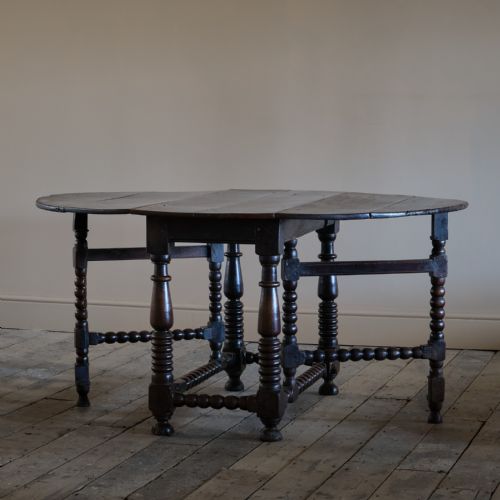
- A drop-leaf table with hinged flaps supported by movable legs that swing outward like gates. This form allowed tables to fold compactly when not in use.
- Joint stool
- A sturdy wooden stool built with mortise and tenon joints, commonly used for seating or as a small side table in early households. The construction relies on pegged framing rather than glue.
- Lowboy
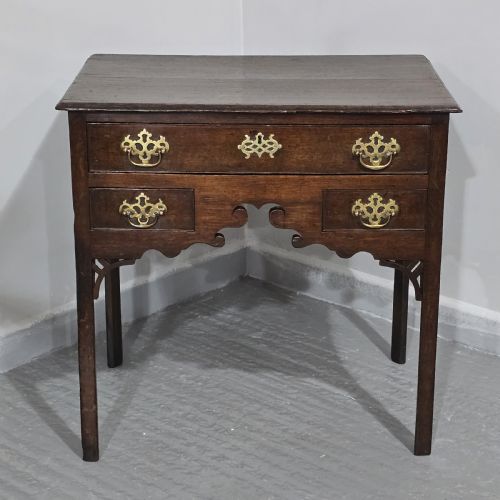
- A small table with one or more drawers, standing on relatively short legs and often used as a dressing table or side serving surface. The form originated during the latter part of the seventeenth century.
- Bobbin-turned
- A style of leg or stretcher shaped on a lathe to resemble a series of wooden beads or bobbins threaded together. This decorative turning appears frequently on seventeenth century furniture frames.
- Credence table
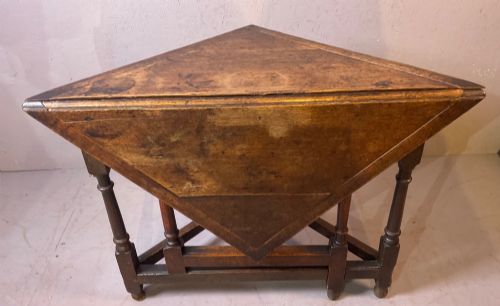
- A triangular or semicircular folding table with a pivoting top leaf, traditionally used for holding church sacraments or domestic utility items. Surviving examples from the period display specialised hinged mechanisms.
- Dresser base
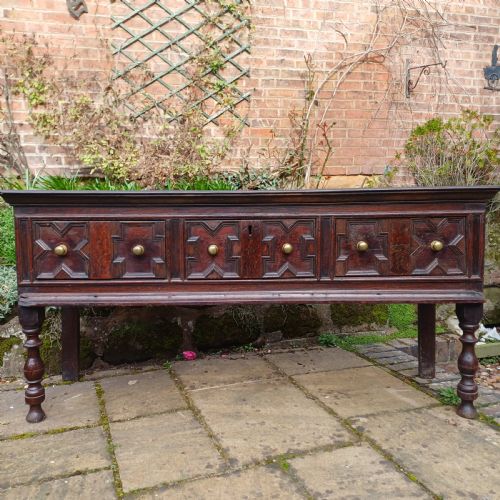
- A low wooden storage cabinet featuring drawers and sometimes cupboards beneath a flat top surface. These substantial pieces served utilitarian functions in early kitchens and halls.
Seventeenth Century Side Table: Frequently Asked Questions
How do I spot a later revival piece?
Revival pieces from the twentieth century often display machine-cut timber marks and lighter wood weights compared to period examples.
Examine the underside and drawer interiors for modern tool impressions and uniform fixings that reveal a later date of manufacture.
Were these tables used for dining?
Smaller formats served multiple household functions including writing, sewing, and holding objects rather than formal dining.
Larger gateleg and drop-leaf variations provided flexible surfaces that could expand for meals when needed in smaller rooms.
What is the difference between oak and walnut furniture?
Oak furniture tends to have a heavy, coarse-grained texture with prominent medullary rays typical of English domestic production.
Walnut offers a finer, smoother grain with richer brown tones that suited the more ornate continental and domestic styles of the later seventeenth century.
How should I care for historic timber surfaces?
Keep these tables away from direct heat sources and rapid humidity changes to prevent the old timber from splitting.
Apply occasional traditional wax polish to nourish the surface without building up synthetic residues on the historic finish.